Edema, a common medical condition characterized by abnormal fluid accumulation in tissues, affects millions of people worldwide. Proper diagnosis and coding of edema are crucial for accurate medical billing, treatment planning, and statistical tracking. The International Classification of Diseases, 10th Revision (ICD-10) provides specific codes for different types and locations of edema, ensuring standardized documentation across healthcare systems.
This comprehensive guide explores the ICD-10 codes for edema, its clinical implications, coding challenges, and best practices for accurate documentation. Whether you’re a medical coder, physician, or healthcare administrator, this article will serve as an essential resource for understanding and applying edema-related ICD-10 codes effectively.
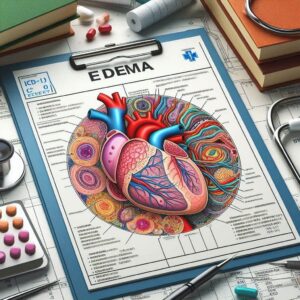
ICD-10 Code for Edema
2. Understanding Edema: Definition and Types
Edema occurs when excess fluid leaks from capillaries into surrounding tissues, leading to swelling. It can be localized (affecting a specific area) or generalized (affecting multiple body parts).
Types of Edema:
-
Peripheral Edema (swelling in legs, ankles, feet)
-
Pulmonary Edema (fluid in lungs)
-
Cerebral Edema (swelling in the brain)
-
Macular Edema (fluid buildup in the eye’s retina)
-
Lymphedema (caused by lymphatic system blockage)
Each type requires precise ICD-10 coding for proper diagnosis and treatment.
3. Clinical Significance of Edema in Medical Practice
Edema is not a disease itself but a symptom of underlying conditions such as:
-
Heart failure
-
Kidney disease
-
Liver cirrhosis
-
Venous insufficiency
-
Allergic reactions
Accurate ICD-10 coding ensures proper reimbursement and helps track epidemiological trends.
4. ICD-10 Coding System: An Overview
The ICD-10-CM (Clinical Modification) system is used in the U.S. for diagnostic coding. It includes:
-
Alphabetic Index (to locate codes by condition name)
-
Tabular List (detailed code descriptions)
Edema codes fall under Chapter 9: Diseases of the Circulatory System (I00-I99) and Chapter 18: Symptoms, Signs, and Abnormal Clinical Findings (R00-R99).
5. ICD-10 Codes for Edema: Complete Breakdown
General Edema Codes
| ICD-10 Code | Description |
|---|---|
| R60.9 | Edema, unspecified |
| R60.0 | Localized edema |
| R60.1 | Generalized edema |
Site-Specific Edema Codes
| ICD-10 Code | Description |
|---|---|
| I50.1 | Left ventricular failure with pulmonary edema |
| H35.81 | Macular edema (diabetic or post-surgical) |
| G93.6 | Cerebral edema |
| J81.0 | Pulmonary edema |
| T78.40XA | Angioedema, initial encounter (allergic) |
Lymphedema Codes
| ICD-10 Code | Description |
|---|---|
| I89.0 | Lymphedema, not elsewhere classified |
| Q82.0 | Hereditary lymphedema |
6. Common Causes and Associated Conditions of Edema
Edema can result from:
-
Cardiovascular disorders (e.g., CHF, venous insufficiency)
-
Renal diseases (e.g., nephrotic syndrome)
-
Hepatic conditions (e.g., cirrhosis)
-
Medications (e.g., calcium channel blockers, steroids)
-
Pregnancy-related edema (O12.0, O12.2)
Proper documentation of the underlying cause is essential for accurate coding.
7. Documentation and Coding Best Practices
-
Specify the location (e.g., lower limb, pulmonary).
-
Indicate laterality (left, right, bilateral).
-
Link to the underlying condition (e.g., heart failure, kidney disease).
-
Avoid unspecified codes (R60.9) when possible.
8. Differences Between Edema, Lymphedema, and Other Fluid Retention Disorders
-
Edema: Caused by fluid leakage from blood vessels.
-
Lymphedema: Due to lymphatic system blockage.
-
Lipedema: Fat-related swelling (not fluid).
Each has distinct ICD-10 codes and treatment approaches.
9. Case Studies: Real-World Examples of Edema Coding
Case 1: Congestive Heart Failure with Pulmonary Edema
-
Diagnosis: CHF (I50.9) + Pulmonary edema (J81.0)
-
Coding: I50.9, J81.0
Case 2: Post-Surgical Lymphedema
-
Diagnosis: Secondary lymphedema after mastectomy (I97.2)
-
Coding: I97.2
10. Frequently Asked Questions (FAQs)
Q1: What is the ICD-10 code for swollen legs?
A: Use R60.0 (localized edema) or I87.2 (venous insufficiency with edema).
Q2: How do you code bilateral lower extremity edema?
A: R60.1 (generalized edema) or R60.0 (if specified as bilateral).
Q3: Is lymphedema coded differently from regular edema?
A: Yes, lymphedema has specific codes (I89.0, Q82.0).
Q4: What is the code for edema due to kidney disease?
A: Use N39.0 (renal edema) along with the primary kidney condition.
11. Conclusion
Accurate ICD-10 coding for edema ensures proper diagnosis, treatment, and billing. This guide covered essential codes, documentation tips, and clinical considerations. Always specify the type and underlying cause of edema to avoid claim denials.