We’ve all had those days. You know the ones. You wake up after what felt like a full night’s sleep, yet you feel as if you haven’t rested at all. Your body feels heavy, your mind is foggy, and even the smallest tasks seem monumental. Is it fatigue? Is it malaise? And more importantly, when you go to the doctor, how is this feeling translated into the universal language of medical billing and coding?
Understanding the ICD-10 code for fatigue and malaise is crucial not just for healthcare professionals, but for patients who want to understand their medical records. It’s the bridge between how you feel and how the healthcare system documents it.
In this guide, we’ll walk through everything you need to know about these codes. We’ll keep it simple, clear, and practical. Whether you are a medical coder, a busy clinician, or just someone trying to decipher a recent diagnosis, you are in the right place.
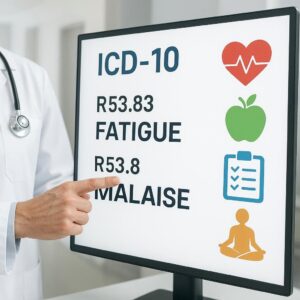
ICD-10 Code for Fatigue and Malaise
Table of Contents
ToggleWhat is the Difference Between Fatigue and Malaise?
Before we dive into the specific numbers and letters of the ICD-10 codes, it’s important to understand what we are actually describing. In everyday conversation, we might use these words interchangeably. In the medical world, however, they point to different experiences.
Think of it this way: fatigue is about energy, while malaise is about discomfort.
Defining Fatigue in a Medical Context
Fatigue is a persistent feeling of tiredness, weakness, or exhaustion. It is different from the normal drowsiness you feel at the end of a long day. Medical fatigue is pervasive. It doesn’t always go away with rest.
-
Physical Fatigue: You might feel like your muscles are heavy. Climbing stairs or carrying groceries becomes a challenge.
-
Mental Fatigue: This is often called “brain fog.” You struggle to concentrate, remember things, or focus on tasks.
Fatigue is a symptom, not a disease itself. It’s your body’s way of signaling that something is off.
Defining Malaise: More Than Just Feeling “Off”
Malaise is a broader, more general feeling of discomfort, illness, or unease. It is often described as a feeling that something is wrong in the body. When a patient says, “I just don’t feel right,” they are often describing malaise.
Unlike fatigue, which specifically relates to energy levels, malaise can encompass:
-
A general sense of weakness.
-
Mild nausea or queasiness.
-
A feeling of being “flushed” or feverish, even without a fever.
-
A lack of well-being.
In many cases, malaise is the precursor to an illness. It’s the body’s early warning system.
The Primary ICD-10 Code for Fatigue and Malaise
In the vast library of ICD-10 codes, symptoms like fatigue and malaise live under a specific parent category. The code you are looking for is found in Chapter 18: Symptoms, Signs, and Abnormal Clinical and Laboratory Findings, Not Elsewhere Classified (R00-R99).
For the general combination of fatigue and malaise, the most commonly used code is:
R53.81: Other Malaise and Fatigue
This is the go-to code for most situations where a patient presents with these symptoms, but a definitive underlying cause has not yet been diagnosed.
R53.81 is a specific code that bundles both sensations together. It tells the insurance company and other healthcare providers: “This patient is experiencing a combination of tiredness and a general feeling of being unwell.”
Important Note: R53.81 is a “symptom code.” In the world of coding, we always want to code to the highest level of specificity. This means that if a doctor diagnoses the cause of the fatigue—for example, anemia or hypothyroidism—we would use the code for that specific condition instead of R53.81.
Breaking Down the Specific Codes
While R53.81 is the star of the show, it is not the only player on the field. The ICD-10 system is incredibly detailed, and there are specific codes for specific types of fatigue. Using the right one is key to a clear medical record.
Here is a look at the codes within the R53 family:
R53.0: Neoplastic (Malignant) Related Fatigue
This is a very specific code used for patients who are experiencing fatigue directly related to cancer or its treatment. Cancer-related fatigue is different from “regular” fatigue—it is often more severe and not relieved by rest. This code helps oncologists and specialists track this common and debilitating side effect.
R53.1: Weakness
While related to fatigue, weakness is a distinct clinical finding. It refers to a demonstrable lack of physical strength. A doctor might find weakness during a physical exam (like asking a patient to push against resistance). If a patient complains of “feeling weak” but the exam shows they have normal muscle strength, the symptom might still be coded as fatigue (R53.81) rather than weakness (R53.1).
R53.2: Functional Quadriplegia
This is a profound and specific code. It is not for fatigue. It describes a patient who is immobile and unable to perform any activities of daily living due to conditions like severe dementia or advanced stroke, even though they are not technically “paralyzed” from a spinal injury.
R53.81: Other Malaise and Fatigue
As discussed, this is the workhorse code. Use this when a patient reports feeling tired, run down, lethargic, or just generally “unwell.”
R53.83: Other Fatigue
This code was created to capture fatigue that is not covered elsewhere. It includes:
-
R53.82: Chronic fatigue, unspecified. This is often used in the context of suspected Chronic Fatigue Syndrome (Myalgic Encephalomyelitis), though specific diagnostic criteria must be met.
-
R53.83: Other fatigue. This can include things like post-viral fatigue (tiredness after a bad flu).
A Simple Comparison Table
To make this easier to digest, here is a quick comparison of the main codes:
| ICD-10 Code | Description | When to Use It |
|---|---|---|
| R53.0 | Neoplastic (Malignant) Related Fatigue | For a cancer patient whose fatigue is linked to their disease or treatment. |
| R53.1 | Weakness | When a physical exam or test shows a loss of muscle strength. |
| R53.81 | Other Malaise and Fatigue | The most common code. Use for a patient feeling tired and unwell without a clear, diagnosed cause yet. |
| R53.82 | Chronic Fatigue, Unspecified | For long-standing, persistent fatigue that has lasted for months, potentially pointing to conditions like ME/CFS. |
| R53.83 | Other Fatigue | A catch-all for specific types of fatigue not listed above, such as post-surgery fatigue or post-infection fatigue. |
How to Use These Codes Correctly (Without Getting in Trouble)
Coding might seem like a simple lookup process, but there is an art and a science to it. Using the wrong code can lead to denied insurance claims or an inaccurate picture of a patient’s health.
Here are some ground rules for using the ICD-10 code for fatigue and malaise.
The “Symptom vs. Diagnosis” Rule
This is the golden rule of coding. If a patient comes in with a headache, you code the headache (R51). If the doctor discovers the headache is caused by a brain tumor, you code the brain tumor (C71, and then a specific code for the location).
The same applies to fatigue.
-
Scenario A: A patient feels tired. The doctor runs tests and finds nothing specific. The diagnosis is “fatigue.” You code R53.81.
-
Scenario B: A patient feels tired. The doctor runs tests and finds the patient has severe iron deficiency anemia. The diagnosis is “anemia with fatigue.” You code the anemia (D50.9), and you may or may not also code the fatigue. Usually, the anemia code takes precedence because it explains the fatigue.
Coding for Chronic Fatigue Syndrome
Chronic Fatigue Syndrome (CFS), now more commonly known as Myalgic Encephalomyelitis (ME/CFS), is a specific, complex disorder. It is not simply “being tired a lot.”
The diagnosis of ME/CFS requires specific criteria (like post-exertional malaise, unrefreshing sleep, and cognitive issues). Once a doctor has formally diagnosed ME/CFS, the code is G93.32 (Myalgic encephalomyelitis/chronic fatigue syndrome).
However, while the patient is undergoing testing to rule out other causes (a process that can take months), the appropriate code would be R53.82 (Chronic fatigue, unspecified).
The Importance of Specificity
Insurance companies and health systems love data. They want to know exactly what is going on. This is why you should avoid just using the general “R53.81” if a more specific code fits.
-
If the fatigue is due to cancer treatment? Use R53.0.
-
If the patient is weak after a stroke? Look for a specific after-effect code, or use R53.1.
-
If the patient has been tired for six months with no known cause? R53.82 is more specific than R53.81.
What Causes Fatigue and Malaise? A Look at Common Underlying Conditions
Why do we code for symptoms? Because they are the clues that lead to the diagnosis of an underlying disease. Fatigue and malaise are two of the most common reasons people visit a doctor, and the list of potential causes is incredibly long.
Here are some of the frequent culprits that a doctor will investigate when a patient presents with R53.81.
Lifestyle Factors
Sometimes, the answer is not a disease but a habit.
-
Sleep Disorders: Insomnia, sleep apnea, or restless leg syndrome can prevent deep, restorative sleep.
-
Diet: Poor nutrition, dehydration, or vitamin deficiencies (like Vitamin D or B12) can drain energy.
-
Stress: Chronic stress floods the body with cortisol, leading to adrenal exhaustion over time.
-
Lack of Exercise: It sounds counterintuitive, but a sedentary lifestyle can actually lead to lower energy levels.
Mental Health Conditions
The mind and body are deeply connected. Mental health struggles often manifest as physical symptoms.
-
Depression: One of the hallmark signs of depression is a profound lack of energy and interest in life.
-
Anxiety: The constant state of “fight or flight” is mentally and physically exhausting.
-
Burnout: This is a state of emotional, physical, and mental exhaustion caused by excessive and prolonged stress.
Acute Medical Conditions
These are short-term illnesses that usually resolve on their own.
-
Infections: The common cold, the flu, or a urinary tract infection (UTI) will almost always cause fatigue and malaise as your body fights the invaders.
-
Post-Viral Syndrome: After a bad viral infection, it is common to feel weak and tired for weeks or even months.
Chronic Medical Conditions
If fatigue persists, doctors will look for long-term health issues.
-
Anemia: A lack of healthy red blood cells means your body isn’t getting enough oxygen, leading to severe fatigue.
-
Thyroid Disorders: Both hypothyroidism (underactive thyroid) and hyperthyroidism (overactive thyroid) can disrupt energy levels.
-
Diabetes: Uncontrolled blood sugar can lead to significant fatigue.
-
Autoimmune Diseases: Conditions like Lupus, Rheumatoid Arthritis, and Multiple Sclerosis have fatigue as a primary symptom.
-
Heart Disease and COPD: When the heart or lungs aren’t working efficiently, the body’s tissues are starved of oxygen, causing fatigue.
-
Chronic Kidney Disease: A buildup of toxins in the blood due to kidney failure can cause profound fatigue and malaise.
The Patient’s Journey: From “Feeling Tired” to a Correct Code
Let’s walk through a realistic scenario to see how these codes are used in practice.
Step 1: The Appointment
Sarah walks into her doctor’s office. “Doctor, I’m so tired. I’ve been tired for months. I wake up tired. I just feel… off. Everything is an effort.” The doctor notes her symptoms: fatigue, malaise, and a general lack of well-being.
Step 2: The Initial Coding
The doctor performs an exam and orders some initial blood work. At the end of the visit, a diagnosis hasn’t been made. For this encounter, the doctor will use the symptom code. The most accurate one is R53.81 (Other malaise and fatigue) . This code justifies the visit and the doctor’s decision to run tests.
Step 3: The Investigation
Sarah’s blood work comes back. Her iron levels are dangerously low, and her hemoglobin is low. She is diagnosed with Iron Deficiency Anemia.
Step 4: The Follow-Up and Final Coding
Sarah returns for a follow-up. The doctor says, “Sarah, the cause of your fatigue is anemia. We need to treat that.” Now, the diagnosis is no longer a mystery. It is a specific condition. The doctor codes this encounter using the code for the anemia: D50.9 (Iron deficiency anemia, unspecified) . The symptom code (R53.81) is no longer the primary focus.
Frequently Asked Questions (FAQ)
Here are some common questions people have about the ICD-10 code for fatigue and malaise.
Q: What is the specific ICD-10 code for “general tiredness”?
A: The most appropriate code for general tiredness, weakness, or lack of energy is R53.81. It covers “other malaise and fatigue.”
Q: Is there a difference between coding for “malaise” alone and “fatigue” alone?
A: In the ICD-10 system, they are combined under the single code R53.81. While they are distinct clinical concepts, the code itself does not separate them. You would use this code whether the patient complains of one or both.
Q: My doctor diagnosed me with “Chronic Fatigue Syndrome.” What code is used?
A: Once a formal diagnosis of Myalgic Encephalomyelitis/Chronic Fatigue Syndrome (ME/CFS) is made, the correct code is G93.32. During the diagnostic process, a doctor might use R53.82 (Chronic fatigue, unspecified) .
Q: Can I use R53.81 for a patient who is weak after a stroke?
A: You would generally not use R53.81 for this. You would first look for a specific code related to the stroke’s after-effects. For example, you might use I69.3 series codes for sequelae of cerebral infarction. If the specific issue is weakness on one side, you would use a code for hemiplegia/hemiparesis, not a general fatigue code.
Q: Is R53.81 covered by Medicare and other insurance?
A: Yes, R53.81 is a valid, billable ICD-10 code. It is generally covered. However, coverage is based on medical necessity. The doctor’s documentation must support why they were investigating the fatigue. Insurers expect that if a patient keeps coming back with this code over many months, the doctor should be actively trying to find an underlying cause.
Practical Tips for Medical Coders and Clinicians
Navigating these codes can be tricky. Here are a few professional tips to keep your documentation clean and your billing accurate.
-
Document, Document, Document: The code is only as good as the note behind it. If you use R53.81, the doctor’s note should describe the fatigue. How long has it lasted? How does it affect the patient’s life? Is it physical, mental, or both? This “medical necessity” is what justifies the code.
-
Don’t Code Symptoms if You Have a Diagnosis: This is the most common rookie mistake. If the patient has hypothyroidism (E03.9) and feels tired, you code the hypothyroidism. You do not also code the fatigue (R53.81) unless the doctor specifically states that the fatigue is a separate, distinct issue not managed by the thyroid condition. In many cases, the fatigue is considered an integral part of the hypothyroidism, and coding it separately is not necessary.
-
Keep Up with Guidelines: Coding rules can change. For example, the specific codes for chronic fatigue (R53.82) were introduced to provide more granularity. Always use the most up-to-date coding manual or software.
-
Be Specific When You Can: If a patient is recovering from a viral illness and is wiped out, is it “post-viral fatigue syndrome”? If the doctor uses that specific language, you might look for a code like G93.3 (Postviral fatigue syndrome) which is a more specific diagnosis than the general R53.81.
Additional Resources
For the most up-to-date and official information on ICD-10 coding, you should always refer to the Centers for Medicare & Medicaid Services (CMS) and the National Center for Health Statistics (NCHS). They provide the official ICD-10-CM guidelines.
-
CMS ICD-10 Home Page (This is a link to the official government resource where you can download the latest code sets and guidelines.)
Conclusion: A Small Code with Big Implications
The journey from feeling “just not right” to a precise medical diagnosis is a complex one. The ICD-10 code for fatigue and malaise (R53.81) serves as the crucial starting point for that journey. It validates the patient’s experience, directs the diagnostic process, and ensures clear communication across the healthcare system. Whether you are a coder, a doctor, or a patient, understanding that this simple code represents a real, impactful human experience is the most important takeaway of all.
Disclaimer:
The information provided in this article is for general informational purposes only and does not constitute legal, medical, or professional coding advice. While we strive to keep the information accurate and up-to-date, coding guidelines and regulations are subject to change. Always consult with a qualified healthcare professional or certified medical coder for advice regarding specific medical conditions, diagnoses, or billing practices. Reliance on any information provided in this article is solely at your own risk.