Jock itch, medically known as tinea cruris, is a common fungal infection affecting the groin, inner thighs, and buttocks. It causes an itchy, red, ring-shaped rash and is more prevalent in men, athletes, and individuals who sweat excessively. Proper diagnosis and treatment are essential to prevent complications and recurrence.
For healthcare providers, accurate ICD-10 coding is crucial for billing, insurance claims, and medical documentation. The correct ICD-10 code for jock itch is B35.6 (Tinea cruris). This article explores jock itch in detail, including its causes, symptoms, treatment, and coding guidelines.
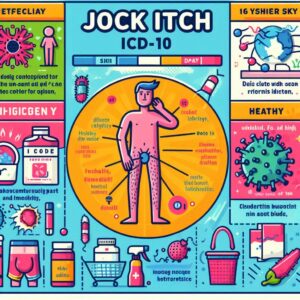
ICD-10 Code for Jock Itch
2. What Is Jock Itch?
Jock itch is a dermatophytosis, a fungal infection caused by dermatophytes, particularly Trichophyton rubrum and Epidermophyton floccosum. These fungi thrive in warm, moist environments, making the groin area an ideal breeding ground.
Key Characteristics:
-
Red, scaly rash with raised edges
-
Itching and burning sensation
-
Circular or semicircular pattern
-
More common in men and adolescents
3. Causes and Risk Factors of Jock Itch
Primary Causes:
-
Fungal overgrowth (dermatophytes)
-
Person-to-person transmission (shared towels, clothing)
-
Animal-to-human transmission (rare)
Risk Factors:
✔ Excessive sweating (hyperhidrosis)
✔ Tight clothing (traps moisture)
✔ Obesity (skin folds promote fungal growth)
✔ Diabetes (increased susceptibility to infections)
✔ Weakened immune system (HIV, chemotherapy)
✔ Athletes and gym-goers (shared locker rooms)
4. Symptoms and Clinical Presentation
Jock itch typically presents with:
-
Red or brown rash in the groin folds
-
Itching, stinging, or burning
-
Flaking, peeling, or cracking skin
-
Worsening with sweating or friction
In severe cases, blisters or pustules may form.
5. Diagnosis of Jock Itch
Diagnosis is primarily clinical, based on:
-
Visual examination (characteristic rash)
-
Skin scraping (KOH test to detect fungi)
-
Fungal culture (if resistant to treatment)
6. ICD-10 Coding for Jock Itch
Primary ICD-10 Code:
| ICD-10 Code | Description |
|---|---|
| B35.6 | Tinea cruris (Jock itch) |
Additional Related Codes:
| ICD-10 Code | Description |
|---|---|
| B35.8 | Other dermatophytoses |
| B35.9 | Dermatophytosis, unspecified |
| L30.9 | Dermatitis, unspecified (if fungal origin is unclear) |
Coding Tips:
-
Use B35.6 for confirmed tinea cruris.
-
If the infection spreads, add codes like B35.8.
-
For recurrent cases, document frequency and severity.
7. Treatment and Management of Jock Itch
First-Line Treatments:
-
Topical antifungals (Clotrimazole, Miconazole, Terbinafine)
-
Oral antifungals (Fluconazole, Itraconazole for severe cases)
-
Steroid creams (short-term use for inflammation)
Home Remedies & Prevention:
-
Keep the area dry and clean
-
Wear loose, breathable clothing
-
Avoid sharing towels or athletic gear
8. Prevention Strategies
-
Shower after sweating
-
Use antifungal powders
-
Change underwear daily
-
Avoid tight-fitting clothes
9. Complications of Untreated Jock Itch
If left untreated, jock itch can lead to:
-
Bacterial superinfection (cellulitis)
-
Chronic or recurrent infections
-
Spread to other body parts (tinea corporis)
10. When to See a Doctor
Seek medical attention if:
-
The rash does not improve in 2 weeks
-
There is pus, severe pain, or fever
-
The infection spreads rapidly
11. Differential Diagnosis
Conditions that mimic jock itch:
-
Eczema
-
Psoriasis
-
Candidal intertrigo
-
Erythrasma (bacterial infection)
12. Jock Itch in Special Populations
-
Athletes: Higher risk due to sweating and shared facilities.
-
Diabetics: Slower healing, higher infection risk.
-
Immunocompromised patients: More severe and recurrent infections.
13. Myths and Misconceptions
❌ “Only athletes get jock itch.” (False—anyone can get it.)
❌ “Jock itch is an STD.” (No, it’s a fungal infection.)
❌ “Scratching helps relieve itching.” (Scratching worsens it.)
14. Conclusion
Jock itch (tinea cruris) is a common fungal infection with the ICD-10 code B35.6. Proper hygiene, antifungal treatments, and accurate medical coding ensure effective management. If symptoms persist, consult a healthcare provider to prevent complications.
15. FAQs
Q1: Is jock itch contagious?
Yes, it can spread through direct contact or shared items like towels.
Q2: Can women get jock itch?
Yes, though less common, women can develop tinea cruris.
Q3: How long does jock itch last?
With treatment, it clears in 1-2 weeks; untreated cases may persist longer.
Q4: Can jock itch spread to the genitals?
Yes, if untreated, it can spread to nearby skin.
Q5: Does jock itch smell bad?
Typically no, but secondary bacterial infections may cause odor.