Otitis externa, commonly known as “swimmer’s ear,” is an inflammatory condition affecting the external ear canal. It can cause significant discomfort, pain, and even hearing impairment if left untreated. Accurate diagnosis and proper medical coding are essential for effective treatment, insurance claims, and healthcare documentation.
In this comprehensive guide, we will explore otitis externa in detail, focusing on the ICD-10 code for left otitis externa (H60.92). We will discuss its symptoms, causes, diagnostic approaches, treatment options, and coding nuances to ensure healthcare professionals and medical coders have a thorough understanding of this condition.
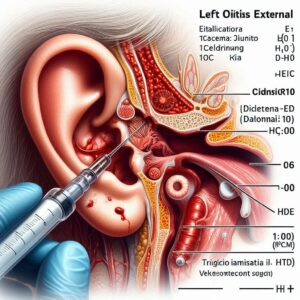
ICD-10 Code for Left Otitis Externa
Understanding Otitis Externa
Definition and Overview
Otitis externa is an infection or inflammation of the external auditory canal, which extends from the outer ear to the eardrum. It can be acute (short-term) or chronic (persistent or recurrent).
Types of Otitis Externa
-
Acute Otitis Externa – Sudden onset, often due to bacterial or fungal infection.
-
Chronic Otitis Externa – Persists for more than three months, often due to repeated irritation or underlying skin conditions.
-
Malignant (Necrotizing) Otitis Externa – A severe, life-threatening infection spreading to the skull base, commonly seen in diabetics or immunocompromised patients.
Causes and Risk Factors
-
Bacterial infections (Pseudomonas aeruginosa, Staphylococcus aureus)
-
Fungal infections (Aspergillus, Candida)
-
Excessive moisture (swimming, humid climates)
-
Trauma to the ear canal (cotton swabs, hearing aids)
-
Skin conditions (eczema, psoriasis)
Symptoms and Clinical Presentation
Patients with otitis externa may experience:
-
Ear pain (worsening with tugging on the auricle)
-
Itching in the ear canal
-
Ear discharge (purulent or clear fluid)
-
Hearing loss (due to swelling or debris)
-
Redness and swelling of the ear canal
Diagnosis of Otitis Externa
Physical Examination
-
Otoscopic examination reveals erythema, edema, and discharge.
-
Tenderness on tragus or pinna movement is a hallmark sign.
Laboratory Tests
-
Culture and sensitivity testing (if infection is resistant to treatment).
Differential Diagnosis
-
Otitis media (middle ear infection)
-
Furunculosis (localized abscess in the ear canal)
-
Dermatitis of the ear canal
ICD-10 Coding for Otitis Externa
Importance of Accurate Coding
Proper ICD-10 coding ensures:
-
Correct billing and reimbursement
-
Accurate medical records
-
Epidemiological tracking
ICD-10 Code for Left Otitis Externa (H60.92)
The ICD-10-CM code for left otitis externa is H60.92.
| ICD-10 Code | Description |
|---|---|
| H60.90 | Otitis externa, unspecified ear |
| H60.91 | Otitis externa, right ear |
| H60.92 | Otitis externa, left ear |
| H60.93 | Otitis externa, bilateral |
Related ICD-10 Codes
-
H60.3 – Malignant otitis externa
-
H60.5 – Acute otitis externa, noninfective
Treatment and Management
Medical Treatment
-
Topical antibiotics (ciprofloxacin, neomycin-polymyxin)
-
Steroid ear drops (to reduce inflammation)
-
Oral antibiotics (for severe infections)
-
Pain management (NSAIDs, acetaminophen)
Home Remedies and Prevention
-
Keep ears dry (use earplugs while swimming).
-
Avoid inserting objects into the ear canal.
-
Use acetic acid drops (for mild cases).
When to See a Doctor
-
Severe pain or fever
-
No improvement after 48 hours of treatment
-
Signs of spreading infection (facial swelling, dizziness)
Complications of Untreated Otitis Externa
-
Cellulitis (skin infection spreading to surrounding tissues)
-
Malignant otitis externa (skull base osteomyelitis)
-
Hearing loss (due to chronic inflammation)
Preventive Measures
-
Dry ears thoroughly after swimming.
-
Avoid using cotton swabs inside the ear canal.
-
Treat underlying skin conditions (eczema, psoriasis).
Case Studies and Clinical Scenarios
Case Study 1: Acute Bacterial Otitis Externa
A 35-year-old swimmer presents with left ear pain and discharge. Otoscopy reveals erythema and edema. Diagnosis: Left otitis externa (H60.92). Treatment: Ciprofloxacin-dexamethasone ear drops.
Case Study 2: Fungal Otitis Externa
A diabetic patient with chronic itching and white discharge. Diagnosis: Fungal otitis externa (H60.8). Treatment: Clotrimazole antifungal drops.
FAQs
1. What is the ICD-10 code for left otitis externa?
The ICD-10 code is H60.92.
2. How is otitis externa different from otitis media?
Otitis externa affects the ear canal, while otitis media involves the middle ear.
3. Can otitis externa go away on its own?
Mild cases may resolve, but severe infections require medical treatment.
4. Is otitis externa contagious?
No, it is not contagious.
5. What happens if otitis externa is left untreated?
It can lead to chronic infection, hearing loss, or malignant otitis externa.
Conclusion
Otitis externa is a common yet treatable ear condition requiring accurate diagnosis and coding (H60.92 for left otitis externa). Proper treatment includes antibiotics, pain management, and preventive care. Medical coders must ensure correct ICD-10 documentation for billing and patient care.