Memory is the tapestry of our existence, woven with the threads of experience, knowledge, and identity. When this tapestry begins to fray, the consequences are profound, affecting not only the individual but also their families, caregivers, and society at large. Memory loss, a symptom that can whisper its arrival or crash like a tidal wave, presents one of the most significant challenges in modern healthcare. It is a common chief complaint in clinics and emergency departments worldwide, a symptom that can point to a spectrum of conditions, from transient and benign to progressive and devastating.
In the intricate world of medical administration and healthcare data, this clinical complexity must be translated into a universal language—a language of codes. The International Classification of Diseases, Tenth Revision, Clinical Modification (ICD-10-CM) is that language. For the healthcare professional, the medical coder, the researcher, and the administrator, accurately classifying memory loss is not a mere clerical task. It is a critical function that directly influences patient care trajectories, determines appropriate reimbursement, fuels vital epidemiological research, and shapes public health policy. A misplaced decimal point or an underspecified code can paint an inaccurate picture of a patient’s health, leading to denied claims, skewed data, and potentially, fragmented care. This article serves as a definitive guide to navigating the labyrinth of ICD-10 coding for memory loss. We will move beyond simplistic look-ups and delve into the nuanced clinical reasoning required to select the most precise code, ensuring that the story of the patient’s memory loss is told with clarity, accuracy, and integrity.

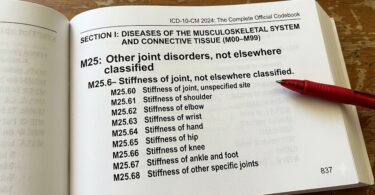
ICD-10 Code for Memory Loss
2. Understanding the Foundation: What is the ICD-10-CM?
Before we can decode memory loss, we must understand the codebook itself. The ICD-10-CM is a system published and maintained by the World Health Organization (WHO) and adapted for use in the United States by the Centers for Disease Control and Prevention (CDC) and the National Center for Health Statistics (NCHS). It is the cornerstone of morbidity classification in the U.S. healthcare system.
Its primary purposes are multifold:
-
Standardization: It provides a common vocabulary for diseases, signs, symptoms, and causes of injury. This allows for clear communication between healthcare providers, insurers, and researchers across the globe.
-
Billing and Reimbursement: In the United States, ICD-10-CM codes are used in tandem with CPT (Current Procedural Terminology) codes to justify medical necessity for services rendered to insurance payers, including Medicare and Medicaid. The correct code is essential for proper reimbursement.
-
Epidemiology and Public Health: By analyzing aggregated coded data, health organizations can track disease prevalence, identify emerging outbreaks, allocate resources effectively, and measure the impact of public health interventions.
-
Clinical Research: Researchers rely on coded data to identify patient populations for clinical trials, study disease progression, and evaluate treatment outcomes.
The structure of ICD-10-CM is alphanumeric, with codes ranging from 3 to 7 characters. The first character is always a letter, followed by two numbers that form the category of the disease. This is often followed by a decimal point and then additional characters that provide greater specificity regarding etiology, anatomical site, severity, and other clinical details. This hierarchical structure is what allows for the incredible detail required in modern medicine. For memory loss, this specificity is paramount; coding simply for “memory loss” is rarely sufficient.
3. The Complexity of Memory: More Than Just “Forgetfulness”
Clinically, memory loss is not a monolithic entity. The type, onset, and progression of memory impairment provide critical diagnostic clues that must be reflected in the ICD-10 code. Understanding these distinctions is the first step toward accurate coding.
-
Anterograde vs. Retrograde Amnesia: Anterograde amnesia is the inability to form new memories after the event that caused the amnesia. Retrograde amnesia is the loss of memories that were formed before the causative event. A patient with a traumatic brain injury may have both.
-
Short-Term vs. Long-Term Memory Loss: Short-term (or working) memory holds small amounts of information for brief periods. Its impairment is a hallmark of conditions like Alzheimer’s disease. Long-term memory loss affects the recall of events, facts, and procedures from the distant past.
-
Acute vs. Gradual Onset: Sudden memory loss points to vascular events (stroke), trauma, or acute toxic-metabolic disturbances. A slow, insidious decline is more characteristic of neurodegenerative diseases.
-
Transient Global Amnesia (TGA): A sudden, temporary episode of memory loss where the patient cannot form new memories and has variable recall of the recent past, typically resolving within 24 hours.
-
Mild Cognitive Impairment (MCI): A noticeable and measurable decline in cognitive abilities, including memory, that is greater than expected with normal aging but does not yet significantly interfere with daily life. MCI is often, but not always, a precursor to dementia.
This clinical nuance is the very reason why ICD-10 offers a range of codes. The coder must act as a detective, using the provider’s documentation to match the patient’s specific presentation with the most accurate code.
4. Navigating the Alphabetic Index: Your First Step to the Correct Code
The ICD-10-CM manual is composed of two main sections: the Alphabetic Index and the Tabular List. The proper coding process always starts with the Alphabetic Index. You would look up the main term “Loss,” and then the subterm “memory,” which would direct you to see Amnesia. Under “Amnesia,” you would find a list of subterms and potential codes.
However, the Index is only a guide. It is a critical error to select a code directly from the Index without verifying it in the Tabular List. The Tabular List contains official conventions, inclusion and exclusion notes, and instructions that can completely change the code selection. For instance, the Index might point you to a general code, but the Tabular List will show you that a more specific code is available and required.
5. A Deep Dive into Key Code Categories for Memory Loss
This section provides a detailed exploration of the primary ICD-10-CM categories relevant to memory loss, moving from symptoms to specific diagnoses.
R41.1 – R41.3: The “R-Codes” for Symptoms and Signs
The R-codes in Chapter 18 are for symptoms, signs, and abnormal clinical and laboratory findings not elsewhere classified. They are used when a definitive diagnosis has not been established.
-
R41.1 Anterograde amnesia: This code is specific for the loss of the ability to create new memories after the onset of the disorder. It is perfectly suited for a case of transient global amnesia or the acute phase of a concussion, where the primary documented issue is the failure of memory encoding.
-
R41.2 Retrograde amnesia: This code is used when the patient cannot remember events that occurred before the causative incident. This is often seen in conjunction with anterograde amnesia in trauma cases.
-
R41.3 Other amnesia: This is a catch-all code for memory loss that is not specified as anterograde or retrograde. It includes terms like “amnesia NOS” (not otherwise specified) and “memory loss NOS.” This code should be a last resort. If the documentation provides any further detail, a more specific code should be used.
-
R41.81 Age-related cognitive decline: This code is for patients experiencing mild memory impairment associated with the aging process, sometimes referred to as “benign senescent forgetfulness.” It is crucial to distinguish this from MCI or dementia. The documentation must support that the decline is part of normal aging and not a pathological process.
-
R41.84 Other specified cognitive deficit: This code can be used for documented Mild Cognitive Impairment (MCI). Many providers specifically document “MCI,” and this code is the appropriate representation.
Important Note: A fundamental rule in ICD-10 coding is that if a definitive diagnosis is known, you must code the diagnosis, not the symptom. Coding R41.3 for a patient with a confirmed diagnosis of Alzheimer’s disease is incorrect.
F01-F09: The Mental and Behavioral Disorders Block
This block covers mental disorders due to known physiological conditions, offering codes for the dementia syndromes that frequently cause memory loss.
-
F01.5- Vascular dementia: This code is used for dementia caused by cerebrovascular disease (e.g., multi-infarct dementia). The memory loss is part of a broader cognitive decline. The 5th character specifies whether there are behavioral disturbances (e.g., aggression, wandering). The underlying cerebrovascular disease (e.g., I67.9) must also be coded.
-
F02.8- Dementia in other diseases classified elsewhere: This is a critical code for many neurodegenerative disorders. It is used when a patient has a documented condition like Parkinson’s disease (G20) or Huntington’s disease (G10) and has developed dementia as a manifestation of that disease. Both the dementia code and the underlying neurological code are required.
-
F03.9- Unspecified dementia: This code is used only when the provider’s documentation states “dementia” without specifying the type (e.g., Alzheimer’s, vascular). Like the others, it has extensions for behavioral disturbances.
-
F04 Amnestic disorder due to known physiological condition: This code is for a significant memory impairment that occurs in the absence of other broad cognitive deficits (like those seen in dementia). It can be caused by conditions like thiamine deficiency (in Wernicke-Korsakoff syndrome), head trauma, or hypoxia.
-
F05 Delirium: Delirium, an acute confusional state with fluctuating consciousness and attention, often presents with memory impairment. It is crucial to distinguish delirium from dementia, as the causes and treatments are vastly different. The underlying cause of the delirium (e.g., urinary tract infection, medication toxicity) must be coded first.
G30.- & G31.-: Degenerative Diseases of the Nervous System
This is where the most common cause of progressive memory loss, Alzheimer’s disease, is coded.
-
G30.- Alzheimer’s disease: This category requires a high level of specificity.
-
G30.0 Alzheimer’s disease with early onset: This code is used when the disease begins before the age of 65.
-
G30.1 Alzheimer’s disease with late onset: This is the most common code, for onset at age 65 or older.
-
G30.8 Other Alzheimer’s disease and G30.9 Alzheimer’s disease, unspecified are also available.
-
Crucial Coding Instruction: When coding G30.-, you must also code the associated dementia: F02.8- Dementia in other diseases classified elsewhere. The Alzheimer’s code describes the etiology, while the dementia code describes the clinical manifestation.
-
-
G31.84 Mild cognitive impairment, so stated: This code was introduced as a more specific alternative to R41.84 for MCI. Check your coder guidelines and the provider’s documentation; if MCI is explicitly stated, G31.84 is often the preferred code.
S06.-: The Impact of Traumatic Brain Injury
Memory loss is a quintessential symptom of TBI. The S06 category is highly detailed.
-
S06.0X- Concussion: Concussion codes include “with loss of consciousness” of varying durations. Memory issues are a hallmark of post-concussion syndrome.
-
S06.2X- Diffuse traumatic brain injury: This refers to widespread damage across the brain, often leading to significant and persistent cognitive deficits, including memory loss.
-
The 7th character is mandatory for S06 codes to indicate the encounter (initial, subsequent, sequela). Coding the sequela (S06.0X-S) is essential for capturing the long-term memory problems that persist after the initial injury has healed.
I67.83 & I69.-: The Cerebrovascular Connection
Stroke is a leading cause of memory impairment.
-
I67.83 Vascular cognitive impairment: This is a newer code that captures cognitive decline of vascular origin that may not meet the full criteria for dementia. It is useful for earlier stages of vascular-related memory loss.
-
I69.- Sequelae of cerebrovascular disease: These codes are used to report long-term effects of a stroke that has occurred in the past. If a patient has memory loss as a residual effect of a cerebral infarction from two years ago, you would code from the I69.3- category. The memory deficit itself (e.g., R41.3) can also be coded, but the I69 code is the primary one describing the sequela.
Quick Reference Guide to Common Memory Loss Codes
| Clinical Scenario | Primary ICD-10-CM Code(s) | Important Notes & Additional Codes |
|---|---|---|
| Transient Global Amnesia (TGA) | R41.1 Anterograde amnesia | Code the symptoms; no definitive diagnosis exists for TGA. |
| Mild Cognitive Impairment (MCI) | G31.84 Mild cognitive impairment, so stated | Alternatively, R41.84 can be used if G31.84 is not specified. |
| Alzheimer’s Disease with Dementia | G30.9 (or G30.0/.1) + F02.80 or F02.81 | Both codes are mandatory. The 5th character on F02.8- indicates without (.0) or with (.1) behavioral disturbance. |
| Vascular Dementia | F01.50 or F01.51 | Also code the underlying cerebrovascular disease (e.g., I67.9). |
| Memory loss after Concussion | S06.0X- (e.g., S06.0X0A for initial encounter) | Use the 7th character to specify the encounter type (A, D, S). |
| Memory loss due to Delirium | F05 Delirium | Code first the underlying physiological condition (e.g., E87.2 Acidosis, N39.0 UTI). |
| Korsakoff’s Psychosis | F04 Amnestic disorder + E51.2 Wernicke’s encephalopathy | This reflects the amnestic syndrome due to thiamine deficiency. |
| Long-term memory loss from past stroke | I69.3- Sequelae of cerebral infarction | Use the appropriate I69.3- code with a 7th character for sequela (S). Can also add R41.2/.3. |
6. Clinical Documentation Improvement (CDI): The Bedrock of Accurate Coding
The coder can only code what the provider documents. Vague terms like “memory issues” or “senility” are the enemies of accuracy. CDI is a collaborative process where specialists work with physicians to ensure the medical record accurately reflects the patient’s condition with the necessary specificity.
Key elements providers should document:
-
Type of Memory Loss: Is it anterograde, retrograde, or mixed?
-
Etiology: What is the underlying cause? Alzheimer’s, vascular, substance-induced, etc.?
-
Severity: Is it MCI or dementia? If dementia, what is the stage (mild, moderate, severe)?
-
Temporal Factors: Acute, chronic, or progressive?
-
Associated Features: Are there behavioral disturbances, aphasia, or agnosia?
Without this level of detail, the coder is forced to use unspecified codes, which can lead to denied claims and poor-quality data.
7. Case Studies in Complexity: Applying Codes in Real-World Scenarios
Case Study 1: The Overlooked Etiology
-
Presentation: An 80-year-old female is seen for progressive memory loss over 3 years. Her physician documents “Dementia with agitation.”
-
Initial (Incorrect) Coding: F03.91 (Unspecified dementia with aggressive behavior).
-
CDI Query & Resolution: A CDI specialist queries the physician, asking for the specific type of dementia. The physician reviews the chart, noting a history of multiple small strokes on MRI and a diagnosis of “vascular dementia.”
-
Corrected Coding: F01.51 (Vascular dementia with behavioral disturbance) + I67.9 (Cerebrovascular disease, unspecified).
Case Study 2: The Post-Traumatic Sequelae
-
Presentation: A 45-year-old male presents for a follow-up 6 months after a severe car accident. He has ongoing difficulty remembering new people’s names and events from the week prior. The diagnosis is “Post-concussive syndrome with persistent anterograde amnesia.”
-
Coding: S06.0X0S (Concussion with no loss of consciousness, sequela) + R41.1 (Anterograde amnesia). The R41.1 code provides specific detail about the nature of the sequela.
Case Study 3: The Overlapping Diagnoses
-
Presentation: A 75-year-old male with a 5-year history of Parkinson’s disease now presents with significant memory loss and visual hallucinations. The neurologist documents “Dementia due to Parkinson’s disease with psychotic features.”
-
Coding: F02.81 (Dementia in other diseases classified elsewhere with behavioral disturbance) + G20 (Parkinson’s disease). The code F02.81 inherently covers the psychotic features (hallucinations).
8. The Consequences of Miscoding: Reimbursement, Research, and Patient Care
The ripple effects of inaccurate coding are far-reaching:
-
Financial Impact: Insurance payers use Diagnosis-Related Groups (DRGs) and other risk-adjusted models that rely on ICD-10 codes. Undercoding (using a less specific code) can lead to significant under-reimbursement for the hospital or practice. Overcoding (using a more severe code than documented) can be construed as fraud and lead to audits, hefty fines, and legal penalties.
-
Research and Public Health: If cases of vascular dementia are consistently miscoded as unspecified dementia, public health agencies will have an inaccurate picture of the prevalence of vascular dementia. This misallocates research funding and public health initiatives.
-
Patient Care: Inaccurate coding can create an incorrect problem list in the Electronic Health Record (EHR). This could lead to future providers making decisions based on flawed data, potentially compromising patient safety and care continuity.
9. Looking Ahead: The Transition to ICD-11
The World Health Organization has already released ICD-11, which came into effect in January 2022. The U.S. will eventually transition, though a specific timeline is not yet set. ICD-11 offers even greater granularity and a more modern, digital-friendly structure.
For memory and cognitive disorders, ICD-11 introduces codes like:
-
6D70.0 Alzheimer disease with early onset
-
6D70.1 Alzheimer disease with late onset
-
6D71.0 Dementia due to Parkinson disease
-
MB21.6 Amnesia
The fundamental principles of accurate documentation and specificity will remain, but coders will need to be prepared for a new system with a different architecture.
10. Conclusion: Mastering the Code to Illuminate the Condition
Navigating the ICD-10 coding for memory loss is a complex but essential discipline that bridges clinical care and health information management. It demands a thorough understanding of both the coding guidelines and the underlying clinical pathologies. By moving beyond vague symptom codes to precise etiological diagnoses, healthcare professionals ensure financial integrity, contribute to robust public health data, and, most importantly, support a care pathway that accurately reflects the patient’s journey. In the fight against the silent thief of memory, the precision of a code is a powerful tool.
11. Frequently Asked Questions (FAQs)
Q1: What is the most basic code for memory loss?
The most general code is R41.3 (Other amnesia). However, this should only be used when the medical documentation provides no further details about the type (anterograde/retrograde) or cause of the memory loss. It is always best to use a more specific code if available.
Q2: When should I use a symptom code (R41.-) vs. a disease code (G30.-, F01.-)?
The rule is simple: If a definitive diagnosis is known, code the diagnosis. For example, if the patient has been diagnosed with Alzheimer’s disease, you must code G30.- and F02.8-, not R41.3. Use R41.- codes only when the memory loss is a documented symptom and no underlying cause has been determined (e.g., a patient is undergoing testing for unexplained amnesia).
Q3: How do I code for “short-term memory loss”?
“Short-term memory loss” is a clinical description, not a specific ICD-10 term. You must determine the context. If it’s part of a diagnosed dementia, code the dementia. If it’s an isolated, unexplained symptom, it would typically fall under R41.3 (Other amnesia) or, if the provider specifically links it to aging, R41.81 (Age-related cognitive decline).
Q4: What is the difference between R41.81, G31.84, and F03.9-?
-
R41.81 (Age-related cognitive decline): For mild memory loss considered part of the normal aging process.
-
G31.84 (Mild cognitive impairment, so stated): For a diagnosed pathological state that is more significant than normal aging but not yet dementia.
-
F03.9- (Unspecified dementia): For a diagnosed major neurocognitive disorder that significantly interferes with daily life. The provider’s documentation is key to distinguishing between these.
Q5: Are there codes for memory loss caused by medications or alcohol?
Yes. Memory loss can be a side effect of medications (e.g., benzodiazepines) or substance use. You would use a code from the T36-T50 series for adverse effects of drugs, with a 5th or 6th character specifying the drug, plus R41.3 for the memory loss. For chronic alcohol use leading to amnesia (Korsakoff’s syndrome), you would use F04 and E51.2.
12. Additional Resources
-
Centers for Disease Control and Prevention (CDC) – ICD-10-CM: The official U.S. government site for ICD-10-CM guidelines, updates, and resources.
https://www.cdc.gov/nchs/icd/icd-10-cm.htm -
American Health Information Management Association (AHIMA): The premier association for health information management professionals, offering extensive educational resources, articles, and certification programs on coding.
https://www.ahima.org/ -
American Academy of Professional Coders (AAPC): A leading organization for medical coder certification and education, providing training, networking, and updates on coding standards.
https://www.aapc.com/ -
Alzheimer’s Association: A valuable clinical resource for understanding the different types of dementia and their diagnostic criteria, which directly informs accurate coding.
https://www.alz.org/
Date: October 12, 2025
Disclaimer: The information contained in this article is for educational and informational purposes only and is not intended as a substitute for professional medical advice, diagnosis, or treatment. Always seek the advice of your physician or other qualified health provider with any questions you may have regarding a medical condition or treatment, and before undertaking a new health care regimen. Never disregard professional medical advice or delay in seeking it because of something you have read in this article. The author and publisher are not responsible for any errors or omissions or for any consequences from the application of the information presented.