In the intricate world of modern healthcare, a wound is more than a break in the skin; it is a complex narrative of pathophysiology, patient history, and clinical intervention. For the clinicians at the bedside—the nurses, physicians, and therapists—this narrative is told through assessments, treatments, and progress notes. For the healthcare system at large, this same narrative must be translated into a universal, standardized language that can be understood by payers, researchers, and administrators. This language is the International Classification of Diseases, Tenth Revision, Clinical Modification (ICD-10-CM).
Accurate ICD-10 coding for wound care is not a mere administrative exercise. It is a critical, non-negotiable component of high-quality patient care. A precisely selected code does more than just facilitate reimbursement; it creates a data-driven snapshot of the patient’s condition that informs resource allocation, tracks epidemiological trends, and supports clinical research. Conversely, inaccurate or vague coding can lead to claim denials, financial losses for the healthcare facility, and a distorted understanding of the patient’s health status. This comprehensive guide is designed to demystify the complexities of ICD-10 coding for wound care professionals. We will journey from the fundamental principles of code structure to the advanced nuances of coding complex, multi-factorial chronic wounds, empowering you to navigate this labyrinth with confidence and precision.
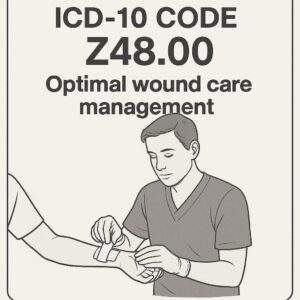
ICD-10 Code for Optimal Wound Care Management
Chapter 1: Deconstructing ICD-10-CM – A Primer for Wound Care Professionals
Before delving into specific wound codes, one must first understand the architecture of the ICD-10-CM system itself. Unlike its predecessor ICD-9-CM, ICD-10-CM is characterized by its granularity and logical organization, which allows for a highly detailed description of a patient’s condition.
The Structure of the Code: A Deeper Dive
An ICD-10-CM code can be anywhere from three to seven characters long, with each character adding a layer of specificity. The structure typically follows this pattern:
-
Category (Characters 1-3): This is the broad, general classification of the disease or injury. For example,
L89is the category for “Pressure ulcer.” -
Etiology/Anatomic Site (Characters 4-6): These characters provide essential details about the cause, severity, and specific location of the condition.
-
In
L89.213, the2indicates the “hip” as the site. -
The
1indicates the “right” side (laterality). -
The
3indicates the “stage” of the pressure injury (Stage 3).
-
-
Extension (Character 7): This is used in certain chapters, most notably for injuries (Chapter 19), to denote the encounter type:
-
A: Initial encounter (active treatment phase) -
D: Subsequent encounter (routine healing, complications) -
S: Sequela (a condition resulting from the initial injury)
-
This hierarchical structure demands precise clinical documentation to be used to its full potential.
The Official Coding Guidelines: Your North Star
The ICD-10-CM Official Guidelines for Coding and Reporting are published by the Centers for Disease Control and Prevention (CDC) and the Centers for Medicare & Medicaid Services (CMS). These guidelines are not suggestions; they are the definitive rules that must be followed for compliant coding. Key principles relevant to wound care include:
-
Code the Underlying Cause: The foundation of wound care coding is sequencing the code for the underlying etiology first. A diabetic foot ulcer is not just a wound on the foot; it is a manifestation of diabetes mellitus. Therefore, the diabetes code is sequenced first, followed by the ulcer code.
-
Code to the Highest Specificity: Never use a three-character code if a more specific one is available. If the documentation states “Stage 3 pressure ulcer of the right heel,” you must code
L89.613(Pressure ulcer of right heel, stage 3), not the unspecifiedL89.60. -
Use of Combination Codes: ICD-10-CM often uses a single code to classify two related conditions. For example, code
I83.213captures both “Varicose veins of right lower extremity with both ulcer of calf and inflammation,” eliminating the need for multiple separate codes.
Chapter 2: The Foundation of All Coding – Impeccable Clinical Documentation
The accuracy of any ICD-10 code is entirely dependent on the quality of the clinical documentation. The medical record must tell a complete and unambiguous story. A coder can only assign a code for what is documented; they cannot infer or assume.
The “Who, What, Where, When, Why, and How” of Wound Documentation
Clinicians should document wounds with the following elements, which directly map to specific components of ICD-10 codes:
-
What (Etiology): Is it a pressure injury, diabetic ulcer, venous stasis ulcer, surgical wound, laceration, or burn? The cause must be explicitly stated.
-
Where (Anatomic Site): Be precise. Not just “leg,” but “right lateral malleolus.” Not just “back,” but “sacrococcygeal region.”
-
When (Laterality): Always specify right, left, or bilateral. If bilateral, there are often specific codes (e.g.,
L89.203for bilateral buttock pressure ulcers). -
How (Severity/Stage): For pressure injuries, the stage (1-4, unstageable, deep tissue injury) is critical. For diabetic ulcers, the depth and presence of gangrene are key. For burns, the degree (first, second, third) and total body surface area (TBSA) are required.
-
Why (Associated Conditions): Document the underlying cause, such as “non-compliance with off-loading,” “severe PAD,” or “uncontrolled diabetes.”
-
Associated Complications: Is there evidence of infection, necrosis, cellulitis, or osteomyelitis? This must be clearly noted.
The Perils of “Unspecified” Codes
Codes with the term “unspecified” (e.g., L89.90, Pressure ulcer, unspecified site) are intended for use only when the information required for a more specific code is not available in the medical record. While sometimes necessary, their overuse is a major red flag for auditors and payers. It suggests either poor documentation or a lack of clinical assessment. Over-reliance on unspecified codes can lead to:
-
Claim Denials: Payers may deem the service not medically necessary if the condition is not specified.
-
Lower Reimbursement: Specific, complex codes often map to higher-paying Diagnosis-Related Groups (DRGs) and Resource Utilization Groups (RUGs).
-
Poor Data Quality: It hinders the ability to track outcomes for specific wound types.
Chapter 3: Coding Acute Wounds – From Trauma to Post-Procedural
Acute wounds are those that occur suddenly and progress through the normal, predictable stages of healing in a timely manner. Coding for these wounds focuses on the mechanism of injury and the specific anatomical site.
Lacerations, Abrasions, and Punctures (S00-T14)
Chapter 19 of ICD-10-CM covers “Injury, poisoning and certain other consequences of external causes.” Codes in this chapter require a high level of anatomic detail.
-
Code Structure:
S[Site Code]-[Type of Injury][Laterality if applicable][A/D/S] -
Examples:
-
Laceration: A patient presents to the Emergency Department after a fall with a 4cm deep laceration of the palmar surface of the right thumb, involving the nail bed.
-
Code:
S61.111A(Laceration without foreign body of right thumb with damage to nail, initial encounter).
-
-
Abrasion: A cyclist has a “road rash” on the left knee and elbow.
-
Codes:
S80.211A(Abrasion, right knee, initial encounter) andS50.311A(Abrasion, right elbow, initial encounter).
-
-
Puncture Wound: A construction worker steps on a nail, resulting in a puncture wound of the left foot without a retained foreign body.
-
Code:
S91.332A(Puncture wound without foreign body of left foot, initial encounter).
-
-
It is crucial to use the appropriate 7th character (A, D, S) to reflect the phase of care.
Burns (T20-T25)
Burn coding is a two-step process that requires two codes for each burn location:
-
The Burn Code (T20-T25): This code identifies the location, severity (degree), and extent (TBSA, though this is usually captured elsewhere).
-
T21.43= Burn of unspecified degree of abdominal wall, initial encounter. (Note: A more specific degree would be used if documented).
-
-
The External Cause Code (X00-X19): This code describes the source, place, and intent of the burn.
-
X12.xxxA= Contact with other hot fluids, initial encounter.
-
-
Example: A patient spills hot coffee on their chest, sustaining a second-degree burn.
-
Code 1:
T21.21xA(Burn of second degree of chest wall, initial encounter). -
Code 2:
X12.xxxA(Contact with other hot fluids, initial encounter).
-
Postprocedural Wounds (T81.31- T81.32-)
This category is for disruptions of wounds that occur after a surgical procedure, not for the normal healing of an intentional surgical incision.
-
Disruption of External Operation Wound:
T81.31- -
Disruption of Internal Operation Wound:
T81.32- -
Example: A patient who underwent an appendectomy presents with their surgical wound dehisced and open.
-
Code:
T81.31xA(Disruption of external operation wound, initial encounter). An additional code for the infection, if present, would also be assigned.
-
Chapter 4: Navigating the Complex World of Chronic Wounds
Chronic wounds are characterized by a failure to proceed through an orderly and timely reparative process. Their coding is inherently more complex because it almost always involves multiple codes to capture the full clinical picture: the wound itself and its underlying etiology.
Pressure Injuries (L89.-)
The L89 category is used exclusively for pressure ulcers/injuries. Coding requires specification of the anatomical site and the stage.
ICD-10-CM Pressure Injury (L89) Coding at a Glance
| Anatomical Site | Stage 1 | Stage 2 | Stage 3 | Stage 4 | Unstageable | Deep Tissue Injury (DTI) |
|---|---|---|---|---|---|---|
| Sacrum | L89.150 | L89.150 | L89.153 | L89.154 | L89.155 | L89.156 |
| Right Heel | L89.610 | L89.620 | L89.630 | L89.640 | L89.650 | L89.660 |
| Left Buttock | L89.30 | L89.30 | L89.33 | L89.34 | L89.35 | L89.36 |
| Unspecified Ankle | L89.570 | L89.570 | L89.573 | L89.574 | L89.575 | L89.576 |
-
Coding Note: You must code the site and stage. If a pressure injury progresses to a higher stage, code the current, highest stage documented during the encounter.
Diabetic Ulcers of the Lower Extremities (E08-E13 with .621, .622, .629)
Coding for diabetic ulcers is a prime example of the “code the underlying cause” principle. The diabetes code is always sequenced first.
-
Code Structure:
-
First: Code from E08-E13 to identify the type of diabetes and any complications (e.g.,
E11.9– Type 2 diabetes mellitus without complications). -
Second: Add a 5th or 6th character to the diabetes code to specify the ulcer site.
-
.621– Ulcer of right foot -
.622– Ulcer of left foot -
.629– Ulcer of unspecified foot
-
-
-
Example: A patient with Type 2 diabetes has a non-healing ulcer with necrosis on the plantar surface of the left great toe.
-
Code 1:
E11.622(Type 2 diabetes mellitus with left foot ulcer). -
Code 2:
R02(Gangrene) – to capture the necrosis. -
Documentation is Key: The clinician must document the link between the diabetes and the ulcer.
-
Venous Stasis Ulcers (I83.0-, I83.2-)
These ulcers are a direct consequence of chronic venous hypertension. The codes are found in the circulatory disease chapter.
-
I83.0- Varicose veins with ulcer
-
I83.2- Varicose veins with ulcer and inflammation
-
Laterality is required: The 5th character specifies right (
0), left (1), or bilateral (2). -
Example: A patient with chronic venous insufficiency presents with a weeping, inflamed ulcer on the medial aspect of the right ankle.
-
Code:
I83.001(Varicose veins of right lower extremity with ulcer).
-
Arterial Ulcers (I70.23-, I70.24-, I70.25-)
Arterial ulcers are caused by inadequate tissue perfusion, most commonly from atherosclerosis.
-
I70.23- Atherosclerosis of native arteries of the right leg with ulceration
-
I70.24- Atherosclerosis of native arteries of the left leg with ulceration
-
I70.25- Atherosclerosis of native arteries of other extremities with ulceration
-
Additional digits are required to specify the severity of the ulceration (e.g.,
I70.241– with ulceration of heel and midfoot).
Chapter 5: Site-Specific Coding and Laterality – The Devil in the Details
The power of ICD-10-CM lies in its specificity. General terms are no longer sufficient.
-
Ankle vs. Heel vs. Foot: A wound on the “ankle” (
S90.0-,S91.0-), “heel” (L89.60-), “plantar surface of foot” (S91.33-), and “dorsum of foot” (S91.23-) all have distinct codes. Clinicians must be anatomically precise. -
Laterality is Non-Negotiable: With few exceptions, codes for extremities and paired organs require a designation of right, left, or bilateral. Using an “unspecified” code for a condition that clearly affects one side is non-compliant if the laterality is known. For example, a diabetic ulcer on the right great toe must be coded as
E11.621, notE11.629.
Chapter 6: Complications and Comorbidities – Painting the Full Clinical Picture
A wound is rarely an isolated problem. Capturing complications and co-existing conditions is essential for justifying the medical necessity of complex treatments.
-
Infections: If a wound is infected, you must code the infection.
-
L08.9– Local infection of the skin and subcutaneous tissue, unspecified. (Often used as a default). -
A41.9– Sepsis, unspecified organism. (For systemic infection). -
Causative Organism: If known, add a code from B95-B97 (e.g.,
B95.61– Methicillin susceptible Staphylococcus aureus infection as the cause of diseases classified elsewhere).
-
-
Necrosis and Gangrene: The presence of dead tissue is a critical clinical finding.
-
R02– Gangrene, not elsewhere classified. (This is used for gangrene associated with diabetic ulcers, arterial disease, etc.).
-
-
Osteomyelitis: If bone infection is suspected or confirmed, code
M86.-(Osteomyelitis).
Chapter 7: A Practical Coding Workflow – From Chart to Claim
To ensure consistency and accuracy, follow a systematic process:
-
Review the Entire Record: Don’t code from a single note. Look at the history & physical, consults, nursing notes, and discharge summary.
-
Identify the Primary Wound Etiology: Is this a pressure injury, diabetic ulcer, traumatic laceration, etc.? This determines the chapter and category of your primary code.
-
Locate the Most Specific Code:
-
Confirm the anatomic site and laterality.
-
Determine the severity/stage.
-
Verify the encounter type (A, D, S).
-
-
Identify All Relevant Comorbidities and Complications: Code for infection, gangrene, underlying diabetes, PAD, etc.
-
Sequence the Codes Correctly:
-
Sequence the underlying cause first (e.g., Diabetes).
-
Follow with the manifestation (e.g., Foot ulcer).
-
Then, code any complications.
-
-
Verify Against Official Guidelines: Double-check your code choices and sequencing against the current year’s ICD-10-CM Official Guidelines.
Chapter 8: The Future of Coding – ICD-11 and the Role of AI in Wound Management
The World Health Organization (WHO) has already released ICD-11, which features a more modern, digital-friendly structure. While the U.S. has not yet set a timeline for adoption, its eventual implementation will bring changes. Furthermore, Artificial Intelligence (AI) is poised to revolutionize wound care coding. AI-powered tools can now analyze wound images to automatically measure size, identify tissue types (granulation, slough, eschar), and even suggest potential ICD-10 codes based on visual characteristics, reducing human error and streamlining the documentation process.
Conclusion: Precision as a Pathway to Better Patient Outcomes
Accurate ICD-10 coding is the indispensable link between expert clinical wound care and a sustainable healthcare system. It transforms a subjective clinical assessment into an objective, data-rich story. By mastering this standardized language, clinicians and coders do more than ensure proper reimbursement; they contribute to a robust data ecosystem that drives quality improvement, fuels research, and ultimately, paves the way for better patient outcomes. Precision in coding is not just about numbers and letters—it is about honoring the complexity of the healing journey.
Frequently Asked Questions (FAQs)
Q1: What is the single most common mistake in wound care coding?
A: The most common mistake is failing to code the underlying cause of the wound. For example, coding only a diabetic foot ulcer (L97.4-) without first coding the diabetes mellitus (E11.62-). This violates the coding guidelines and leads to claim denials.
Q2: How do I code a wound that has multiple etiologies (e.g., both arterial and venous insufficiency)?
A: This is a complex clinical scenario. You should code all documented etiologies. Sequence first the condition that is deemed the primary reason for the encounter or the most severe. For a mixed arterial-venous ulcer, you would code both I70.24- (Atherosclerosis with ulcer) and I83.0- (Varicose veins with ulcer), sequencing the one being primarily treated first. Detailed documentation from the physician justifying the primary etiology is crucial.
Q3: When should I use a code from Chapter 19 (Injury) vs. Chapter 12 (Diseases of the Skin)?
A: Use Chapter 19 for acute wounds resulting from a specific, external traumatic event (lacerations, abrasions, punctures, burns). Use Chapter 12 for chronic wounds that develop from an internal disease process (pressure injuries, diabetic ulcers, venous stasis ulcers).
Q4: What code do I use for a surgical wound that is healing normally?
A: A normally healing surgical wound, in the absence of any complications, does not typically require a separate diagnosis code. The reason for the encounter would be the aftercare, using a Z-code from Chapter 21, such as Z48.810 (Encounter for surgical aftercare following surgery on the circulatory system).
Q5: How often do the ICD-10-CM codes and guidelines update?
A: The ICD-10-CM code set is updated annually on October 1st. The Official Coding Guidelines are also updated each year. It is imperative for coding professionals to stay current with these changes through continuous education and resources from organizations like the American Health Information Management Association (AHIMA) and the American Academy of Professional Coders (AAPC).
Additional Resources
-
Centers for Disease Control and Prevention (CDC) – ICD-10-CM: Provides the official code set, guidelines, and educational resources.
-
American Health Information Management Association (AHIMA): Offers a wealth of coding resources, webinars, journals, and certification programs.
-
American Academy of Professional Coders (AAPC): A leading organization for coder certification, training, and networking.
-
National Pressure Injury Advisory Panel (NPIAP): The definitive source for clinical guidelines and staging definitions for pressure injuries.
-
Wound, Ostomy and Continence Nurses Society (WOCN): Provides clinical guidance and position statements relevant to wound documentation.
Disclaimer: This article is for informational and educational purposes only. It is not a substitute for professional medical coding, billing, or clinical advice. The codes and guidelines referenced are based on information available as of the article’s date and are subject to change. Medical coders must consult the most current, official ICD-10-CM coding guidelines, payer-specific policies, and clinical documentation to ensure accurate and compliant coding. The author and publisher assume no liability for any errors or omissions or for any outcomes resulting from the use of this information.
Date: November 02, 2025
Author: Dr. Evelyn Reed, DNP, CWCN, CCS