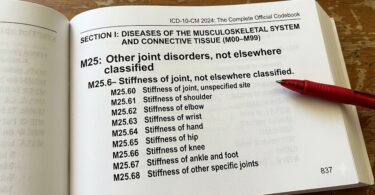
If you have ever looked at a medical bill or a doctor’s note, you have probably seen a strange combination of letters and numbers. That is the ICD-10 code. For people receiving pain management, these codes matter more than you might think.
The truth is simple. There is no single icd 10 code for pain management. Pain management is a field of treatment, not a diagnosis itself. Instead, medical coders use many different codes to describe why you need pain care.
This guide walks you through everything you need to know. We will look at the most common codes, how they apply to real-life situations, and what you should watch out for. No complex medical jargon. No fluff. Just clear, useful information.
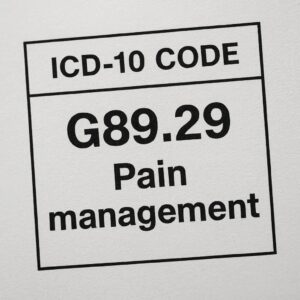
ICD 10 Code for Pain Management
Understanding the Basics of ICD-10 Codes
Before we dive into specific codes, let us cover the foundation. ICD-10 stands for International Classification of Diseases, 10th Revision. These codes are used worldwide to track diagnoses, symptoms, and procedures.
Think of them as labels. Each label tells a specific story about your health condition. When you visit a pain clinic, the doctor does not just write “pain” in your chart. They write a code that explains the location, cause, and nature of that pain.
Why Accurate Codes Matter for You
You might wonder why you should care about codes as a patient. There are three good reasons.
First, insurance companies use these codes to approve or deny treatments. If the code is wrong, your claim might be rejected. Second, accurate codes help your medical team communicate clearly. A specialist in another city will understand your history just by reading the codes. Third, your medical records follow you for life. Correct coding ensures your health story is told accurately.
Important Note: Medical coding is complex. This guide provides general information only. Always consult a certified medical coder or your physician for specific coding advice.
The Most Common ICD-10 Codes Used in Pain Management
Since there is no single code for “pain management,” let us look at the codes you will see most often. I have organized them by body area and pain type.
Chronic Pain Codes
Chronic pain is pain that lasts longer than three months. It often continues even after the original injury has healed.
| Code | Diagnosis Description | When It Is Used |
|---|---|---|
| G89.29 | Other chronic pain | Pain lasting 3+ months without a specific cause |
| G89.4 | Chronic pain syndrome | Pain with significant emotional or behavioral effects |
| M79.7 | Fibromyalgia | Widespread muscle pain and tenderness |
G89.29 is very common. It acts as a catch-all for persistent pain that does not fit neatly into other categories. G89.4 is more serious. It describes situations where pain has started to affect your daily life, sleep, and mood.
Acute Pain Codes
Acute pain comes on suddenly. It usually has a clear cause, like surgery or an injury.
| Code | Diagnosis Description | When It Is Used |
|---|---|---|
| G89.11 | Acute pain due to trauma | After a car accident, fall, or sports injury |
| G89.18 | Other acute post-procedural pain | Pain following a medical procedure |
| G89.12 | Acute post-thoracotomy pain | Pain after chest surgery |
Doctors use acute pain codes for short-term treatment plans. These codes often change over time. As acute pain becomes chronic, the code may switch to G89.29 or G89.4.
Pain by Body Location
Many pain management codes are based on where the pain is located. Here is a quick reference.
-
Head and neck: G44.1 (vascular headache), G44.2 (tension-type headache), M54.2 (neck pain)
-
Back and spine: M54.5 (low back pain), M54.6 (pain in thoracic spine), M54.9 (unspecified back pain)
-
Joints: M25.50 (pain in unspecified joint), M25.511 (pain in right shoulder), M25.512 (pain in left shoulder)
-
Muscles: M79.10 (myalgia, unspecified site), M79.18 (myalgia of other sites)
M54.5 is one of the most frequently used codes in all of medicine. Low back pain affects millions of people. If you visit a pain clinic for a sore lower back, this is likely the code on your chart.
How Pain Management Clinics Use These Codes
Pain management is not just one type of treatment. It includes medication, injections, physical therapy, nerve blocks, and sometimes surgery. Each treatment requires a specific diagnosis code.
Medication Management
When a doctor prescribes pain medication, they must list a diagnosis code. For example, if you have fibromyalgia, the code M79.7 will appear on your prescription. If you have chronic back pain, the code M54.5 will appear.
Insurance companies review these codes before paying for medications. If the code does not match the drug, they may deny coverage. For instance, a strong opioid prescribed with only a G89.29 code might raise questions. The doctor may need to add more specific codes.
Interventional Procedures
Procedures like epidural injections, nerve blocks, and radiofrequency ablation require very precise coding.
| Procedure | Common Associated ICD-10 Code |
|---|---|
| Epidural steroid injection for low back pain | M54.5 |
| Facet joint injection | M54.6 or M54.5 |
| Peripheral nerve block | G89.29 or specific nerve code |
Doctors must also document the exact location. A code for right shoulder pain (M25.511) is different from left shoulder pain (M25.512). A small mistake can lead to a denied claim.
Reader Note: If you receive a denial letter from your insurance, check the diagnosis code. It might be incorrect or too vague. Ask your provider to review it.
Special Situations in Pain Coding
Some pain situations require extra attention. Let us look at a few common scenarios.
Post-Surgical Pain
After surgery, pain is expected. But coding rules have changed in recent years. You can no longer use a general post-op pain code for everything. Instead, coders distinguish between:
-
Acute post-procedural pain (G89.18): Pain immediately after surgery, expected to resolve.
-
Chronic post-procedural pain (G89.28): Pain that continues beyond the normal healing time.
For example, someone who has knee replacement surgery will initially receive G89.18. If they still have significant pain six months later, the code changes to G89.28. This distinction matters for insurance coverage of long-term physical therapy or additional surgeries.
Cancer-Related Pain
Cancer pain has its own category. The codes are different because treatment approaches differ.
| Code | Diagnosis Description |
|---|---|
| G89.3 | Neoplasm-related pain (acute or chronic) |
| G89.0 | Central pain syndrome |
If a patient has active cancer and pain from the tumor, G89.3 is used. If the patient is in remission but still has pain from previous cancer treatments (like radiation or surgery), other codes may apply.
Pain with Psychological Factors
Pain is not always purely physical. Sometimes anxiety, depression, or stress makes pain worse. In these cases, coders may use both a pain code and a mental health code.
For example:
-
F45.41 (pain disorder exclusively related to psychological factors)
-
F45.42 (pain disorder with both psychological factors and a general medical condition)
These codes are less common but important. They help justify treatments like cognitive behavioral therapy or psychiatric consultations.
A Practical Example: Following One Patient’s Coding Journey
Let me walk you through a realistic example. This will help you see how codes change over time.
Sarah’s Story
Sarah is 45 years old. She falls while skiing and hurts her lower back.
-
Week 1: Sarah visits the emergency room. The doctor uses code M54.5 (low back pain) and G89.11 (acute pain due to trauma).
-
Week 4: Sarah’s pain is improving but not gone. Her primary care doctor continues using M54.5.
-
Month 4: Sarah still has daily back pain. She cannot sit at her desk for more than an hour. Her doctor changes the code to G89.29 (other chronic pain).
-
Month 8: Sarah feels depressed and anxious because of the pain. She has trouble sleeping. Her pain management specialist adds G89.4 (chronic pain syndrome).
-
Month 12: An MRI shows a small disc problem. The doctor adds M51.16 (lumbar disc disorder with radiculopathy).
As you can see, no single code tells the whole story. The codes evolve as Sarah’s condition evolves.
Common Mistakes in Pain Management Coding
Even experienced coders make errors. Here are the most frequent mistakes.
Using Unspecified Codes Too Often
Codes like M54.9 (unspecified back pain) or R52 (pain, unspecified) are easy to use. But insurance companies do not like them. Unspecified codes suggest a lack of proper diagnosis. They are more likely to trigger audits or denials.
Whenever possible, doctors should use specific codes. M54.5 (low back pain) is better than M54.9. M25.511 (right shoulder pain) is better than M25.50 (unspecified joint pain).
Confusing Acute and Chronic Codes
This mistake happens often. A patient with six months of pain should not receive an acute code. But busy clinics sometimes forget to update the records. The result? Insurance claims get rejected because the code does not match the expected treatment duration.
Missing the Underlying Cause
Pain is often a symptom, not the root problem. The best coding practice is to list both the pain code and the underlying condition code.
For example:
-
Diabetic neuropathy pain: Use E11.40 (diabetes with neuropathy) plus G89.29 (chronic pain)
-
Arthritis pain: Use M17.9 (osteoarthritis of knee) plus M25.561 (pain in right knee)
If only the pain code is listed, the medical record is incomplete. Insurance companies may not understand why certain treatments are necessary.
A Helpful List: Steps to Ensure Your Pain Codes Are Correct
You do not need to be a coding expert. But you can take a few simple steps to protect yourself.
-
Ask questions. At your next appointment, ask your doctor, “What diagnosis code are you using today?”
-
Review your visit summaries. Many patient portals show the codes used. Look for vague terms like “unspecified” or “other.”
-
Compare codes over time. If you have been in pain for six months, your code should reflect chronic pain, not acute pain.
-
Request corrections. If you spot an error, ask the clinic to amend your record. This is your legal right.
-
Keep your own records. Write down your main pain locations, duration, and any diagnosed conditions.
Reader Note: You are allowed to request a copy of your medical records under HIPAA. Review them at least once a year.
How Insurance Companies Use Pain Codes
Insurance is a major reason why coding accuracy matters. Let me explain how the process works from the insurer’s perspective.
When a pain management clinic submits a bill, the insurance company’s system checks three things:
-
Is the code valid? Simple check for typos or outdated codes.
-
Does the code match the procedure? For example, a nerve block code requires a diagnosis code that justifies a nerve block.
-
Is the code consistent with the patient’s history? If the patient has only acute pain codes but has been in treatment for two years, the system flags the claim.
If the claim is flagged, it may be denied or sent for manual review. This delays your treatment and creates paperwork for your doctor.
Prior Authorization and Pain Codes
Some pain treatments require prior authorization. This means your doctor must get approval from the insurance company before performing the procedure. The diagnosis code is a key part of that request.
For example, spinal cord stimulators often require strict documentation. The patient must have chronic pain (G89.29 or G89.4) that has not responded to other treatments. If the doctor uses a code for acute pain, the request will be denied immediately.
The Difference Between ICD-10 and CPT Codes
Many people confuse these two types of codes. Let me clarify.
ICD-10 codes describe the problem (diagnosis). Examples: M54.5 (low back pain), G89.29 (chronic pain).
CPT codes describe the service (procedure). Examples: 62323 (epidural injection), 97110 (therapeutic exercise).
In pain management, both types of codes are used together. The ICD-10 code answers “Why was this done?” The CPT code answers “What was done?”
If the ICD-10 code does not support the CPT code, the claim is rejected. For instance, a CPT code for a nerve block (64450) needs an ICD-10 code showing a specific nerve problem or localized pain. A general code like R52 (pain, unspecified) is usually not enough.
Resources for Keeping Up with Code Changes
ICD-10 codes are updated every year. New codes are added. Old codes are revised or deleted. Staying current is a challenge, even for professionals.
Here are reliable sources for updates:
-
CMS (Centers for Medicare & Medicaid Services): The official source for US coding changes.
-
AAPC (American Academy of Professional Coders): Offers newsletters and training.
-
WHO (World Health Organization): Manages the international version of ICD-10.
For most patients, you do not need to track yearly changes. Your clinic’s coding team should handle this. But if you are a medical coder or a clinic owner, set a calendar reminder for October each year. That is when the next year’s changes are typically announced.
Frequently Asked Questions (FAQ)
1. Is there one specific ICD-10 code for pain management?
No. Pain management is a treatment field, not a diagnosis. Multiple codes are used depending on the location, duration, and cause of pain.
2. What is the most common pain code?
M54.5 (low back pain) is extremely common. For chronic pain without a specific cause, G89.29 is frequently used.
3. Can I look up my own pain codes?
Yes. Free tools like the ICD-10 Data website allow you to search for codes. Your patient portal may also list the codes from your visits.
4. Why was my insurance claim denied for a pain procedure?
There are many possible reasons. Common coding issues include using an unspecified code, mismatching the diagnosis with the procedure, or failing to update from acute to chronic codes.
5. How do I correct a wrong code on my record?
Contact your doctor’s office. Ask them to submit a correction to your medical record and to your insurance company if a claim was affected.
6. What is the difference between G89.29 and G89.4?
G89.29 is for chronic pain without major psychological effects. G89.4 is for chronic pain syndrome, where the pain significantly impacts emotions, behavior, and daily function.
7. Do I need a specific code for acupuncture or chiropractic care?
Yes. These services require a diagnosis code that justifies the treatment. For example, M54.5 for low back pain would support chiropractic adjustment codes.
8. Can a nurse or medical assistant assign ICD-10 codes?
Typically, only certified medical coders or trained providers assign codes. However, nurses and MAs may document symptoms that lead to coding decisions.
9. Are pain codes different for children?
Pediatric pain uses the same ICD-10 code set. However, some codes are rarely used for children, and documentation requirements may differ.
10. How long do pain codes stay on my medical record?
Codes are attached to specific visits. However, your problem list (a summary of active diagnoses) may carry codes forward over time. Chronic pain codes can remain for years.
Additional Resource Link
For the most current and official ICD-10 codes, visit the CMS ICD-10 webpage:
https://www.cms.gov/medicare/coding-billing/icd-10-codes
This government site provides code lookup tools, yearly updates, and official guidelines. It is the most trustworthy source available.
Final Thoughts: You Don’t Need to Be an Expert
You have made it through a detailed guide. That is great. But here is the honest truth: you do not need to memorize any of these codes.
What you need is awareness. Know that codes exist. Know that they affect your insurance and your treatment. Know that you have the right to ask questions and request corrections.
The next time you see a strange string of characters on your medical bill, you will understand what it means. And you will know that pain management is not about one single code. It is about telling your unique story of pain, healing, and hope.
If you are a patient, focus on communicating clearly with your doctor. Describe your pain honestly. Share how it affects your life. The right words from you lead to the right codes from them.
If you are a medical coder or provider, double-check your work. Those small details matter more than we often admit. A correct code can mean the difference between a patient getting care or getting a denial letter.
Conclusion
There is no single ICD-10 code for pain management because pain management covers many different conditions. The most frequently used codes include G89.29 for chronic pain, M54.5 for low back pain, and various location-specific codes for joint, muscle, and nerve pain. Accurate coding requires matching the diagnosis to the treatment, updating codes as pain becomes chronic, and avoiding vague unspecified codes whenever possible.