If you are reading this, chances are you are staring at a medical bill, a doctor’s note, or a coding sheet, trying to make sense of a long string of numbers and letters. It might look like a secret code, but in the world of healthcare, it is the language we use to communicate precise diagnoses.
Specifically, you are looking for the ICD-10 code for right trochanteric bursitis. That code is M70.61.
But simply knowing the code is only half the story. In this guide, we will explore what this code means, why it is used, how it differentiates from other hip problems, and what you need to know whether you are a patient, a student, or a healthcare professional.
Important Note: This article is for informational purposes only and does not constitute medical advice. Always consult with a qualified healthcare professional for diagnosis and treatment.
ICD-10 Code for Right Trochanteric Bursitis
What is Trochanteric Bursitis? (A Quick Overview)
Before diving into the coding, let’s look at the condition itself. Understanding the “what” helps us understand the “why” behind the code.
Your body contains small, fluid-filled sacs called bursae (plural of bursa). Think of them as tiny pillows. Their job is to reduce friction between bones and the overlying soft tissues, like muscles and tendons.
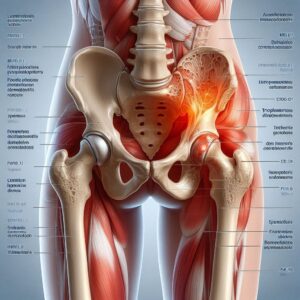
In the hip, the trochanteric bursa is located on the outside of the hip, over the bony prominence called the greater trochanter. When this bursa becomes irritated or inflamed, it results in trochanteric bursitis.
Common Symptoms
-
Pain: Aching pain on the outside of the hip that may radiate down the outside of the thigh.
-
Tenderness: The hip area is tender to the touch, especially when lying on that side.
-
Swelling: In some cases, visible swelling or warmth.
-
Pain with Activity: Discomfort when walking, climbing stairs, or getting up from a deep chair.
Who is at Risk?
Trochanteric bursitis is quite common and can affect anyone, but it is frequently seen in:
-
Runners and athletes.
-
Middle-aged and older adults.
-
People with previous hip surgery or injury.
-
Individuals with differences in leg length, which can alter gait and put stress on the hip.
Decoding M70.61: The ICD-10 Code for Right Trochanteric Bursitis
In the International Classification of Diseases, 10th Revision (ICD-10), codes are alphanumeric and highly specific. The code M70.61 is the exact code for right trochanteric bursitis.
Let’s break it down:
-
M70: This is the parent category for “Soft tissue disorders related to use, overuse and pressure.”
-
.6: This digit specifies “Trochanteric bursitis.”
-
.61: This final digit specifies the laterality—right side.
Why Laterality Matters: Right vs. Left
You might notice that the code ends with “1” for right. The code for left trochanteric bursitis is M70.62. If the bursitis is in both hips, or if the side is not documented, the code is M70.60 (Trochanteric bursitis, unspecified hip).
This level of detail is crucial for medical records and insurance billing. It tells the complete story of the patient’s condition.
| Condition | Laterality | ICD-10 Code |
|---|---|---|
| Trochanteric Bursitis | Right Hip | M70.61 |
| Trochanteric Bursitis | Left Hip | M70.62 |
| Trochanteric Bursitis | Unspecified Hip | M70.60 |
Differential Diagnosis: What Else Could It Be?
Hip pain can be tricky. The source of the pain isn’t always where you feel it. This is why a proper diagnosis is so important. When a healthcare provider assigns the code M70.61, they have usually ruled out other conditions that can mimic trochanteric bursitis.
Common Hip Conditions Compared
| Condition | Primary Location of Pain | Key Differentiator |
|---|---|---|
| Trochanteric Bursitis (M70.61) | Outer hip, over the bony point. | Pain is worst when lying on the affected side or with direct pressure. |
| Hip Osteoarthritis (M16.1) | Groin pain is classic. May also be felt in the front of the thigh or knee. | Stiffness and pain that worsens with activity and improves with rest. Pain is deep within the joint. |
| Lumbar Radiculopathy (Sciatica) | Pain shoots from the lower back down the leg, often past the knee. | Pain is nerve-related, often described as sharp, burning, or electric. It follows a specific path down the leg. |
| Gluteal Tendinopathy | Similar location to bursitis (outer hip). | Often a more degenerative issue with the tendons, rather than just inflammation of the bursa. These two conditions often co-exist. |
| Greater Trochanteric Pain Syndrome (GTPS) | Outer hip. | This is actually an “umbrella term” that includes trochanteric bursitis, gluteal tendinopathy, and other soft tissue issues in that area. M70.61 is a specific diagnosis under this broader syndrome. |
Practical Application: Using the ICD-10 Code M70.61
Understanding how this code is used in the real world can demystify the process, whether you are dealing with your own health insurance or learning medical coding.
For Patients: What This Code Means for You
When you see M70.61 on your medical records or an insurance Explanation of Benefits (EOB), it tells you:
-
Your Diagnosis: Your doctor has officially diagnosed you with trochanteric bursitis.
-
Location: The issue is specifically in your right hip bursa.
-
Insurance Justification: This code justifies to your insurance company why a specific treatment (like physical therapy or an X-ray) was performed.
If you are seeking treatment, don’t be afraid to ask your doctor, “Can you explain what this code means for my treatment plan?”
For Students and Coders: Billing and Documentation Tips
-
Specificity is Key: Always code to the highest level of specificity. If the documentation says “right trochanteric bursitis,” do not use the unspecified code (M70.60).
-
Link to the Physician’s Note: The code must be supported by the documentation in the patient’s chart.
-
External Cause Codes: If the bursitis was caused by a specific event (e.g., a fall), you may need to use an additional external cause code (Chapter XX) to describe the circumstance of the injury.
-
Check for Excludes: Be aware of “Excludes1” and “Excludes2” notes in the ICD-10 manual to ensure you are using the most accurate code. For instance, bursitis related to specific traumatic injuries may be coded elsewhere.
Treatment Overview: What Happens After the Diagnosis?
Once the ICD-10 code M70.61 is assigned, the focus shifts to treatment. Treatment is almost always conservative (non-surgical) and highly effective.
The First Line of Defense
-
Activity Modification: Avoid the activities that caused the pain, like running or climbing stairs.
-
Ice: Applying ice packs to the outer hip for 15-20 minutes several times a day to reduce inflammation.
-
Pain Relief: Over-the-counter nonsteroidal anti-inflammatory drugs (NSAIDs), such as ibuprofen or naproxen, can help manage pain and swelling. Always consult a doctor before starting new medication.
Physical Therapy and Rehabilitation
This is the cornerstone of treatment for trochanteric bursitis. A physical therapist will focus on:
-
Stretching: Tight muscles, especially the iliotibial (IT) band and hip flexors, can contribute to the problem.
-
Strengthening: Weak gluteal muscles (the muscles in your buttocks) are a primary cause. Strengthening these muscles helps stabilize the hip and takes pressure off the bursa.
-
Gait Training: Analyzing and correcting your walking pattern.
Advanced Interventions
If conservative treatments fail, a doctor might recommend:
-
Corticosteroid Injections: An injection of a powerful anti-inflammatory medication directly into the bursa can provide significant, though sometimes temporary, relief.
-
Ultrasound-Guided Procedures: Using ultrasound to ensure the injection is placed precisely in the bursa.
-
Surgery: In very rare, persistent cases, a bursectomy (surgical removal of the bursa) may be considered. The bursa can grow back, but hopefully without the inflammation.
A Note on Recovery: Patience is vital. Trochanteric bursitis can be stubborn. It might take weeks or even months of consistent physical therapy and activity modification to fully resolve the pain.
Frequently Asked Questions (FAQ)
We have compiled some of the most common questions people have about this diagnosis and its code.
Q: Is M70.61 the same as “hip bursitis”?
A: Yes, it is a specific type of hip bursitis. There are other bursae in the hip, but the trochanteric bursa is the one most commonly associated with outer hip pain. So, when people say “hip bursitis,” they are very often referring to trochanteric bursitis.
Q: What is the difference between M70.61 and M70.60?
A: The difference is laterality. M70.61 is specifically for the right hip. M70.60 is “unspecified,” meaning the medical record does not state which hip is affected, or possibly that both are affected. Using M70.61 provides more detailed information.
Q: Can I use this code if my hip pain is from running?
A: Yes, absolutely. Trochanteric bursitis is a common overuse injury in runners. The M70 category specifically includes “soft tissue disorders related to use, overuse, and pressure,” making it a perfect fit for running-related injuries.
Q: My doctor says I have GTPS. Is that the same as M70.61?
A: Not exactly. GTPS (Greater Trochanteric Pain Syndrome) is a broader, more modern term for chronic pain on the outside of the hip. It’s an umbrella that covers several conditions, including trochanteric bursitis (M70.61) and gluteal tendinopathy. Your doctor might use the GTPS diagnosis clinically, but will use M70.61 for billing if the bursa is confirmed as the primary source.
Q: How long does it take to recover from right trochanteric bursitis?
A: Recovery time varies. With proper treatment, many people feel significant improvement within 4 to 6 weeks. However, chronic cases or those linked to biomechanical issues (like muscle weakness) can take several months of consistent therapy to fully resolve.
Additional Resources
Navigating a diagnosis can be overwhelming, but you don’t have to do it alone. Here are a few reputable organizations where you can find more information on hip health and treatment options:
-
American Academy of Orthopaedic Surgeons (AAOS): [Link to AAOS Hip Pain Section]
-
American Physical Therapy Association (APTA): [Link to APTA Find a PT Tool]
-
Arthritis Foundation: [Link to Arthritis Foundation Bursitis Page]
Conclusion
In short, the ICD-10 code for right trochanteric bursitis is M70.61. This specific code is essential for accurate medical records, proper insurance billing, and effective communication between healthcare providers. Understanding this code helps patients take an active role in their care and clarifies the path from diagnosis to recovery.