A sharp, searing pain that erupts in the lower back, radiates down the buttock, and travels like a lightning bolt along the leg. A sensation of numbness, tingling, or weakness that makes standing or sitting an exercise in endurance. This is the reality for millions of individuals suffering from sciatica, a common yet often misunderstood neuropathic condition. For patients, sciatica represents a significant diminishment in quality of life. For healthcare providers, it presents a complex diagnostic and therapeutic challenge. And for medical coders, it represents a critical juncture where clinical precision must meet coding accuracy. In the intricate world of healthcare reimbursement, correctly classifying sciatica using the International Classification of Diseases, Tenth Revision, Clinical Modification (ICD-10-CM) is not merely an administrative task—it is a fundamental component of patient care, revenue cycle integrity, and regulatory compliance. This article delves beyond the surface of a simple pain code, offering a exhaustive exploration of the ICD-10 coding framework for sciatica. We will dissect the anatomy of the sciatic nerve, unravel the labyrinth of etiological codes, and provide a clear, actionable roadmap for navigating the nuances of M54.3- and its many related diagnoses. Whether you are a seasoned coder, a practicing clinician, a healthcare administrator, or a patient seeking to understand the language of your medical record, this guide aims to illuminate the path from clinical presentation to precise classification.
ICD-10 code for sciatica
2. Understanding the Sciatic Nerve: The Anatomy Behind the Agony
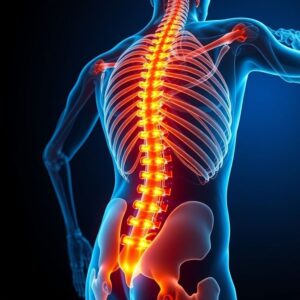
To code sciatica effectively, one must first understand what the sciatic nerve is and why its impingement or irritation causes such distinctive symptoms. The sciatic nerve is the longest and thickest nerve in the human body, approximately the width of a finger. It is not a single nerve but a complex bundle of nerve fibers originating from the L4 through S3 levels of the lumbar and sacral spine. These nerve roots converge in the pelvic region to form a large, flat band that exits the pelvis through the greater sciatic foramen, a bony opening deep within the buttocks.
From there, the sciatic nerve travels down the back of the thigh, innervating muscles and providing sensation. Just above the knee, it typically branches into two major nerves: the tibial nerve and the common peroneal (fibular) nerve, which continue down the leg to the foot and toes. This extensive pathway—from the lower spine to the tips of the toes—explains the classic radiating pattern of sciatic pain. Any compression, inflammation, or damage along this lengthy course can manifest as the symptoms collectively known as sciatica. Understanding this anatomy is paramount because the location of the compression directly influences the diagnostic workup, treatment plan, and, consequently, the medical codes assigned.
3. What is Sciatica? Defining the Symptom Complex
Clinically, “sciatica” is not a diagnosis in and of itself; rather, it is a descriptive term for a symptom complex caused by irritation of the sciatic nerve. The hallmark of sciatica is radicular pain—pain that radiates from the spine along the path of a spinal nerve root. Key characteristics include:
-
Radiation: Pain that travels from the low back, through the buttock, and down the back or side of one leg. The pain often follows a dermatomal pattern, corresponding to the specific nerve root affected.
-
Quality of Pain: Described as sharp, shooting, burning, or electric-like. It contrasts with the dull, achy pain of a simple muscle strain.
-
Associated Neurological Symptoms: Patients may experience paresthesia (pins and needles), numbness, or muscle weakness in the affected leg or foot.
-
Unilateral Nature: True sciatica typically affects one side of the body. Bilateral sciatica is less common and can indicate a more serious central spinal condition, such as a large central disc herniation or severe spinal stenosis.
-
Aggravating Factors: Symptoms are often worsened by activities that increase intraspinal pressure or stretch the nerve, such as sitting, coughing, sneezing, or bending forward.
It is crucial to distinguish sciatica from other forms of low back pain, such as localized myofascial pain or sacroiliac joint dysfunction, as the treatment and coding differ significantly.
4. The Foundation of Medical Coding: Why ICD-10 Matters
The ICD-10-CM system is the cornerstone of modern healthcare data. It is used universally for:
-
Diagnostic Reporting: Providing a standardized language for patient conditions.
-
Medical Billing and Reimbursement: Justifying the medical necessity of services rendered to insurance payers.
-
Epidemiological Research: Tracking disease prevalence, outbreaks, and public health trends.
-
Quality Measurement: Assessing patient outcomes and the effectiveness of treatments.
The transition from ICD-9 to ICD-10 in 2015 represented a quantum leap in specificity. ICD-10’s alphanumeric structure allows for over 70,000 codes, compared to roughly 14,000 in ICD-9. This enhanced granularity enables coders to capture detailed information about the location, severity, etiology, and laterality of a condition, which is precisely why coding for sciatica requires careful attention to detail.
5. The Primary Code: A Deep Dive into M54.3 (Sciatica)
The fundamental ICD-10-CM code for sciatica is found in Chapter 13: Diseases of the Musculoskeletal System and Connective Tissue. The category is M54.3- Sciatica.
5.1. The Crucial 5th and 6th Characters: Specifying Laterality
Unlike its ICD-9 predecessor, the ICD-10 code for sciatica is not a single, static number. It requires laterality specification, meaning you must indicate which side of the body is affected. This is achieved through the use of 5th and 6th characters.
-
M54.30 Sciatica, unspecified side: This code is used when the medical documentation does not specify whether the sciatica is on the right or left side.
-
M54.31 Sciatica, right side: Used for sciatica affecting the patient’s right leg.
-
M54.32 Sciatica, left side: Used for sciatica affecting the patient’s left leg.
5.2. M54.30: The Pitfall of Unspecified Laterality
While M54.30 exists for legitimate cases where laterality is unknown or undocumented, its overuse is a red flag for auditors and payers. Using an unspecified code when the information is available in the record is considered lazy coding and can lead to claim denials or down-coding. It is the coder’s responsibility to ensure the clinical documentation supports the highest level of specificity. If a provider’s note mentions “pain radiating down the right leg,” the coder must use M54.31, not M54.30.
5.3. M54.31 and M54.32: Embracing Specificity
The use of specific laterality codes (M54.31 or M54.32) is a best practice. It provides a more accurate clinical picture, supports medical necessity for unilateral procedures (like a right-sided nerve root injection), and is required for clean claim submission by most insurers.
6. Beyond the Basics: The Imperative of Etiological Coding
Here lies the most critical aspect of coding for sciatica: M54.3- is often not enough. According to the ICD-10-CM Official Guidelines for Coding and Reporting, codes from category M54.3 should not be used if the encounter is for the underlying cause of the sciatica. The guideline states: *”Code also the underlying condition, if known, such as:… intervertebral disc disorder (M51.-)… spondylosis (M47.-)… etc.”*
In simpler terms, if the provider has identified the specific reason for the sciatic nerve irritation, that underlying condition should be sequenced as the primary diagnosis, and M54.3- may be listed as a secondary diagnosis to further describe the patient’s presentation. Let’s explore the most common etiologies.
6.1. The Lumbar Herniated Disc (M51.1-)
A herniated nucleus pulposus (HNP), commonly known as a slipped or ruptured disc, is a leading cause of sciatica. When the soft, gel-like center of an intervertebral disc pushes through a tear in the tough, outer ring, it can compress the nearby nerve root. The relevant code category is M51.1- Intervertebral disc disorders with radiculopathy, lumbar region.
-
Coding Specificity: This code requires a 5th character to denote the precise spinal level.
-
M51.16 Radiculopathy, lumbar region: Used when the specific lumbar level is not documented.
-
M51.17 Radiculopathy, lumbosacral region: Used for radiculopathy at the L5-S1 junction.
-
6.2. Lumbar Spinal Stenosis (M48.06-)
Spinal stenosis is a narrowing of the spinal canal, which houses the spinal cord and nerve roots. This narrowing can put pressure on the nerves, causing pain, numbness, and weakness. The code for lumbar spinal stenosis with neurogenic claudication (pain with walking relieved by sitting) is M48.06- Spinal stenosis, lumbar region.
-
Coding Specificity: This code also requires a 5th character for laterality, even though the stenosis is a central canal issue. The laterality refers to the side of the predominant symptoms (e.g., left leg pain).
-
M48.060 Spinal stenosis, lumbar region without neurogenic claudication
-
M48.061 Spinal stenosis, lumbar region with neurogenic claudication
-
6.3. Spondylolisthesis (M43.1-)
Spondylolisthesis occurs when one vertebra slips forward over the one below it. This misalignment can narrow the neural foramen (the opening where the nerve root exits the spine) and compress the nerve. The code is M43.1- Spondylolisthesis.
-
Coding Specificity: This code requires a 5th character to specify the region.
-
M43.16 Spondylolisthesis, lumbar region
-
M43.17 Spondylolisthesis, lumbosacral region
-
6.4. Piriformis Syndrome (G57.00-G57.02)
In some cases, the sciatic nerve can be compressed not in the spine, but as it passes under or through the piriformis muscle in the buttock. This is known as piriformis syndrome. It is coded in Chapter 6: Diseases of the Nervous System, under G57.0- Lesion of sciatic nerve.
-
Coding Specificity:
-
G57.00 Lesion of sciatic nerve, unspecified lower limb
-
G57.01 Lesion of sciatic nerve, right lower limb
-
G57.02 Lesion of sciatic nerve, left lower limb
-
6.5. Other Contributing Conditions
Other conditions that can cause sciatica include:
-
Degenerative Disc Disease (M51.3-): Wear-and-tear on the discs can lead to collapse and nerve compression.
-
Spondylosis (M47.-): Spinal osteoarthritis.
-
Trauma: Fractures or dislocations.
-
Tumors: Benign or malignant growths pressing on the nerve.
-
Pregnancy: The weight and position of the fetus can sometimes pressure the sciatic nerve.
7. The Coding Sequence: Which Code Comes First?
The sequencing of codes is governed by the ICD-10 guidelines and the reason for the encounter. The general rule is: sequence the condition that is the primary reason for the encounter as the first-listed (primary) diagnosis.
-
Scenario A: Encounter for the Underlying Cause
-
Situation: A patient presents for management of a known lumbar herniated disc that is causing severe right-sided sciatica.
-
Primary Diagnosis: M51.16 (Radiculopathy, lumbar region) OR a more specific code if the level is known.
-
Secondary Diagnosis: M54.31 (Sciatica, right side). This provides additional clinical detail.
-
-
Scenario B: Encounter for the Symptom (Pain)
-
Situation: A patient presents with acute onset of left-sided radiating leg pain. The provider documents “sciatica” but defers advanced imaging and a definitive etiological diagnosis until a follow-up visit.
-
Primary Diagnosis: M54.32 (Sciatica, left side). This is appropriate because the symptom is the reason for the encounter, and the cause is not yet established.
-
-
Scenario C: Piriformis Syndrome
-
Situation: A patient is diagnosed with piriformis syndrome causing sciatica on the left.
-
Primary Diagnosis: G57.02 (Lesion of sciatic nerve, left lower limb). Since this code specifically describes the cause (a lesion of the nerve outside the spine), M54.32 would be redundant and should not be used.
-
8. Documentation is King: What Clinicians Must Provide
Accurate coding is impossible without precise clinical documentation. Coders can only assign codes based on the information provided in the patient’s medical record. To support accurate coding for sciatica, provider documentation should include:
-
Laterality: Explicitly state “right,” “left,” or “bilateral.”
-
Specific Etiology: When known, state the cause (e.g., “sciatica due to L4-L5 disc herniation,” “spinal stenosis with radiculopathy”).
-
Location of Pain/Radiation: Describe the pathway (e.g., “pain radiates from buttock down posterior thigh to lateral calf”).
-
Associated Neurological Findings: Note any motor weakness, sensory deficits, or reflex changes.
-
Diagnostic Findings: Reference imaging results (MRI, CT) or electrodiagnostic studies (EMG/NCS) that confirm the diagnosis.
A note that simply states “sciatica” forces the coder to use the least specific code, which can negatively impact reimbursement and data quality.
9. Common Coding Scenarios and Clinical Vignettes
Let’s apply the principles discussed to real-world examples.
Vignette 1: The New Onset
-
Presentation: A 45-year-old male presents with a 1-week history of sharp, shooting pain from his right buttock down the back of his thigh. He has some numbness on the sole of his right foot. Physical exam reveals positive straight leg raise on the right. The provider’s assessment is “Acute right-sided sciatica, likely due to disc herniation. MRI ordered.”
-
Coding: M54.31 (Sciatica, right side). The etiology is suspected but not confirmed, so the symptom code is primary.
Vignette 2: The Confirmed Diagnosis
-
Presentation: The same patient returns for follow-up. The MRI report shows a large right paracentral disc herniation at L5-S1 compressing the S1 nerve root. The provider’s assessment is “Lumbosacral radiculopathy due to herniated disc at L5-S1, causing right sciatica.”
-
Coding:
-
Primary: M51.17 (Radiculopathy, lumbosacral region). This is the confirmed underlying cause.
-
Secondary: M54.31 (Sciatica, right side). This adds detail about the symptom manifestation.
-
Vignette 3: Spinal Stenosis
-
Presentation: A 70-year-old female with a known history of lumbar spinal stenosis presents with worsening bilateral leg pain and heaviness after walking 100 feet, relieved by sitting. The pain is worse in the left leg. Assessment: “Neurogenic claudication secondary to lumbar spinal stenosis, with predominant left-sided symptoms.”
-
Coding: M48.061 (Spinal stenosis, lumbar region with neurogenic claudication). The laterality in this code reflects the predominant symptom side (left). An additional code for bilateral sciatica is not typically used as the claudication is the defining feature.
Quick Reference Guide for Common Sciatica-Related ICD-10 Codes
| Condition | ICD-10-CM Code | Notes |
|---|---|---|
| Sciatica, Unspecified | M54.30 | Use only if laterality is not documented. |
| Sciatica, Right Side | M54.31 | |
| Sciatica, Left Side | M54.32 | |
| Lumbar Disc Herniation w/ Radiculopathy | M51.16 | Use if specific lumbar level is unknown. |
| Lumbosacral Disc Herniation w/ Radiculopathy | M51.17 | For L5-S1 level issues. |
| Lumbar Spinal Stenosis w/ Claudication | M48.061 | Laterality refers to symptomatic side. |
| Spondylolisthesis, Lumbar | M43.16 | |
| Piriformis Syndrome, Right | G57.01 | Code from Nervous System chapter. |
| Piriformis Syndrome, Left | G57.02 | Code from Nervous System chapter. |
| Low Back Pain | M54.50 | Use if pain is localized and does not radiate. |
10. The Consequences of Inaccurate Coding: Denials, Audits, and Compliance Risks
Inaccurate coding for sciatica is not a victimless error. It carries significant financial and legal ramifications for healthcare providers.
-
Claim Denials: If a coder uses M54.3- when the record supports a more specific code like M51.16, the payer may deny the claim as “insufficient documentation” or “lack of medical necessity” for certain treatments.
-
Underpayments: Using unspecified codes can lead to reimbursement at a lower rate than what is justified by the patient’s actual condition.
-
Audit Risks: Patterns of using unspecified codes or incorrect sequencing can trigger internal or external audits from payers or government agencies like the Office of Inspector General (OIG).
-
False Claims Act Liability: Knowingly and systematically submitting inaccurate codes can lead to severe penalties under the False Claims Act.
-
Poor Data Quality: Inaccurate coding distorts population health data, making it difficult to track the true prevalence and cost of diseases like sciatica.
11. Conclusion
Navigating the ICD-10 coding landscape for sciatica requires a meticulous and knowledgeable approach. The journey begins with a clear clinical understanding of the condition as a symptom of an underlying pathology. Coders must move beyond the basic M54.3- code, diligently seeking documentation that supports a more specific etiological diagnosis, such as a herniated disc or spinal stenosis. Adherence to coding guidelines regarding sequencing and the crucial element of laterality is non-negotiable for ensuring accurate reimbursement, maintaining compliance, and contributing to high-quality patient data. In the end, precise coding is not just about numbers and letters; it is about accurately telling the patient’s story within the framework of a complex healthcare system.
12. Frequently Asked Questions (FAQs)
Q1: Can I use both a code for a herniated disc (M51.1-) and a code for sciatica (M54.3-) on the same claim?
A: Yes, in most cases. When the encounter is for the treatment of the herniated disc itself, sequence M51.1- as the primary diagnosis and M54.3- as a secondary diagnosis to provide additional clinical detail about the patient’s symptoms.
Q2: What is the difference between radiculopathy and sciatica?
A: The terms are often used interchangeably in clinical practice. Technically, “sciatica” is a specific type of radiculopathy affecting the sciatic nerve distribution (L4-S1). “Radiculopathy” is a broader term for any spinal nerve root dysfunction, which could occur in the cervical (neck) or thoracic (mid-back) regions as well. ICD-10 provides distinct codes for lumbar/lumbosacral radiculopathy (M51.16/M51.17) and the symptom of sciatica (M54.3-).
Q3: How do I code bilateral sciatica?
A: There is no single code for bilateral sciatica. You must code each side separately using M54.31 (Sciatica, right side) and M54.32 (Sciatica, left side). However, bilateral sciatica is often caused by a central condition like spinal stenosis, in which case the primary code would be M48.06- for the stenosis.
Q4: My provider’s note only says “sciatica.” What code should I use?
A: You must use M54.30 (Sciatica, unspecified side). However, this is a best practice opportunity. Engage with the provider through a query or educational session to emphasize the importance of documenting laterality and, if known, the underlying cause.
Q5: When should I use a code from the G57.0- category instead of M54.3-?
A: Use G57.0- (Lesion of sciatic nerve) when the nerve compression or injury occurs outside of the spine, such as in the case of piriformis syndrome, direct trauma to the buttock or thigh, or a complication from a surgical procedure like a hip replacement. Do not use M54.3- with G57.0-, as it would be redundant.
13. Additional Resources
For the most accurate and up-to-date coding information, always refer to these primary sources:
-
ICD-10-CM Official Guidelines for Coding and Reporting: Published annually by the Centers for Disease Control and Prevention (CDC) and the Centers for Medicare & Medicaid Services (CMS).
-
Current Year ICD-10-CM Code Set: Available through the CDC’s FTP server and within commercial coding software.
-
American Health Information Management Association (AHIMA): Offers a wealth of resources, webinars, and practice guidance for medical coders.
-
American Academy of Professional Coders (AAPC): Provides certification, ongoing education, and local chapter meetings for coding professionals.
-
American Medical Association (AMA) CPT® Manual: For the procedural codes used to report the treatments for sciatica (e.g., injections, physical therapy).
Disclaimer: This article is intended for informational and educational purposes only and does not constitute medical coding, billing, or legal advice. The codes and guidelines referenced are based on current knowledge as of the article’s date. Medical coders must always consult the most current, official ICD-10-CM coding manuals, guidelines, and payer-specific policies for accurate and compliant coding. The author and publisher are not responsible for any errors, omissions, or consequences resulting from the use of this information.
Date: October 25, 2025
Author: Jonathan A. Sterling, MPH, CPC, CCS-P