Navigating the world of medical diagnoses can often feel like learning a new language. Between complex medical terms and a seemingly random assortment of letters and numbers, it is easy to feel overwhelmed. If you or a loved one has recently been diagnosed with a plasma cell disorder, you may have encountered the term “smoldering multiple myeloma” (SMM) and its corresponding code in the International Classification of Diseases, Tenth Revision (ICD-10).
Understanding this code is more than just an exercise in medical bureaucracy. It is the key that unlocks communication between doctors, insurance companies, and researchers. It ensures that medical records are accurate, that treatment plans are properly documented, and that the journey ahead is as smooth as possible.
This guide is designed to be your friendly, reliable roadmap to understanding the specific ICD-10 code for smoldering myeloma. We will break down what the code means, how it differs from other related conditions, and why it matters for your healthcare journey.
Article at a Glance: What You Will Learn
-
The exact ICD-10 code for smoldering myeloma and how to read it.
-
A clear, simple explanation of what smoldering myeloma is.
-
Why this specific code is crucial for treatment, insurance, and research.
-
How this code differs from those for active myeloma and benign conditions (MGUS).
-
Common documentation pitfalls and best practices for coding.
-
Answers to frequently asked questions about the diagnosis and its coding.
What is Smoldering Myeloma? Setting the Stage
Before we dive into the numbers and letters of the code, it is essential to understand the condition itself. Think of this as learning the plot of a movie before trying to understand the cast list.
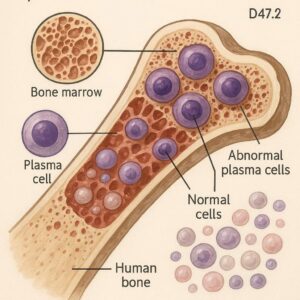
Smoldering multiple myeloma (SMM) is a precursor condition to a more serious blood cancer called multiple myeloma. It sits in a gray area between a benign condition called Monoclonal Gammopathy of Undetermined Significance (MGUS) and active, symptomatic multiple myeloma.
The Plasma Cell Progression: A Simple Analogy
Imagine a garden.
-
Healthy State: You have a few flower bushes (plasma cells) that bloom beautifully to create a colorful garden (healthy antibodies).
-
MGUS: One bush starts growing a little differently, producing a slightly different color flower (the M protein). It’s noticeable, but it doesn’t take over the garden or harm the other plants.
-
Smoldering Myeloma: That one bush is now growing more aggressively. It’s producing many more of its distinct flowers and is starting to crowd the other plants. However, the garden itself is still intact—the soil is healthy, the path is clear, and the flowers are still blooming. In medical terms, this means there is a high level of plasma cells and M protein, but no actual damage to the body. There are no symptoms.
-
Active Myeloma: The overgrown bush has now taken over. It has choked out the other flowers, its roots have cracked the garden path, and it’s draining nutrients from the soil. In medical terms, the high level of plasma cells has started to cause problems: holes in the bones (lytic lesions), low blood counts, and kidney damage.
Key Diagnostic Criteria for Smoldering Myeloma
Doctors diagnose smoldering myeloma based on specific lab results. The patient must have the following:
-
A Monoclonal Protein (M protein) in the blood: Usually at a high level (≥3 g/dL), or a significant amount of Bence Jones protein in the urine (≥500 mg per 24 hours).
-
A High Percentage of Plasma Cells in the Bone Marrow: Between 10% and 60%.
-
No “CRAB” Symptoms: This is the most important part. The patient must have no evidence of end-organ damage. The acronym CRAB stands for:
-
Calcium elevation (high blood calcium)
-
Renal insufficiency (kidney problems)
-
Anemia (low red blood cell count)
-
Bone lesions (damage to bones seen on imaging)
-
Because there is no active damage, patients with smoldering myeloma do not require treatment. Instead, they enter a phase of “active surveillance” or “watch and wait,” with regular check-ups to monitor for any progression to active myeloma.
Important Note: The diagnosis of smoldering myeloma is a serious one. It requires a close partnership with a hematologist-oncologist. While it isn’t cancer that needs immediate treatment, it is a condition that needs constant attention.
The Star of the Show: The ICD-10 Code for Smoldering Myeloma
Now, let’s get to the heart of the matter. The specific ICD-10 code for smoldering myeloma is C90.00.
To understand this code fully, it helps to break it down, just like a sentence can be broken down into subject, verb, and object.
How to Read the Code: C90.00
ICD-10 codes are designed to be very specific. Here is a breakdown of what each part of C90.00 means:
-
C90: This is the category for “Multiple myeloma and malignant plasma cell neoplasms.” All conditions related to cancerous or potentially cancerous plasma cell problems start with this root.
-
.0: The decimal and the first digit after it specify the type of plasma cell neoplasm. In this case, the “.0” points specifically to “Multiple myeloma.”
-
0: The very last digit is the “episode of care” or diagnosis status. This is the key that distinguishes smoldering myeloma from active myeloma.
-
C90.00: The final “0” indicates that the multiple myeloma is in remission, has not caused any symptoms, or, in this specific context, is the diagnosis code for smoldering myeloma. It tells the reader that the patient has the condition, but it is not currently an active problem requiring treatment.
-
C90.01: This code is for “Multiple myeloma in remission.”
-
C90.02: This code is for “Multiple myeloma in relapse.”
-
So, while the root of the code is shared with active myeloma, the final digit (the “0”) is what makes the code for smoldering myeloma unique. It signals a state of the disease that is present but inactive.
The Official Description
According to the ICD-10-CM (Clinical Modification) official guidelines, C90.00 is described as:
“Multiple myeloma not having achieved remission” or “Smoldering multiple myeloma” .
It is often listed in coding databases under the entry for “Smoldering multiple myeloma” with a direct cross-reference to C90.00.
Why Does This Specific Code Matter?
It might seem like a small detail, but using the correct code for smoldering myeloma is incredibly important for several key reasons. It is the linchpin that holds together effective communication in the healthcare system.
1. For Accurate Medical Records
Your medical chart is your health story. Using the precise code ensures that story is told correctly. If a patient has smoldering myeloma but is coded with the general code for active myeloma, their chart will inaccurately suggest they have a condition requiring chemotherapy. This can lead to confusion down the line, especially if the patient moves to a new city or sees a different doctor. C90.00 accurately tells the patient’s story: “I have a plasma cell disorder, but it is not currently active.”
2. For Insurance and Billing
This is perhaps the most practical reason. Insurance companies rely on ICD-10 codes to determine coverage and process claims.
-
Coverage for Monitoring: Using C90.00 justifies the need for regular blood tests, doctor’s visits, and bone marrow biopsies. It tells the insurance company, “This patient has a condition that requires ongoing surveillance to prevent a future health crisis.”
-
Preventing Claim Denials: If a doctor uses the code for active myeloma (C90.02 or a general code without the specific fifth digit), the insurance company might expect to see claims for chemotherapy or other active treatments. When those claims aren’t present, it could raise red flags and potentially delay payment or lead to unnecessary administrative work. Using C90.00 aligns the diagnosis with the treatment plan (monitoring), ensuring a smooth billing process.
3. For Research and Epidemiology
Public health officials and researchers use ICD-10 data to track how many people have certain diseases. Accurate coding of smoldering myeloma is crucial for understanding:
-
Prevalence: How many people are currently living with SMM?
-
Incidence: How many new cases are diagnosed each year?
-
Outcomes: How does monitoring and early intervention affect long-term survival rates?
If SMM is miscoded as active myeloma, it skews the data. It makes it look like there are more active myeloma cases and fewer precursor cases, which can impact research funding and public health strategies.
4. For Clinical Trials
Patients with smoldering myeloma are often eligible for clinical trials studying new drugs that might delay or prevent progression to active cancer. To be enrolled in a trial, a patient’s diagnosis must be confirmed and correctly coded. C90.00 is often part of the “inclusion criteria” for these studies, ensuring that the right patient population is being studied.
Smoldering Myeloma vs. The World: A Coding Comparison
One of the best ways to understand the icd 10 code for smoldering myeloma is to see how it stacks up against the codes for related conditions. This table provides a clear, at-a-glance comparison.
| Condition | ICD-10 Code | Key Features (The “Why”) | Treatment Approach |
|---|---|---|---|
| Smoldering Myeloma | C90.00 | High M protein (≥3 g/dL) and/or high bone marrow plasma cells (10-60%). No CRAB symptoms. No organ damage. | Active Surveillance: Regular monitoring, no active treatment. |
| Active Multiple Myeloma | C90.02 (Relapsed) or C90.01 (in Remission) | High M protein, high plasma cells. Presence of CRAB symptoms (high calcium, kidney issues, anemia, bone lesions). | Active Treatment: Chemotherapy, targeted therapy, stem cell transplant, etc. |
| Monoclonal Gammopathy of Undetermined Significance (MGUS) | D47.2 | Low M protein (<3 g/dL) and low bone marrow plasma cells (<10%). No CRAB symptoms. | Observation: Less frequent monitoring than SMM. Very low risk of progression. |
| Solitary Plasmacytoma | C90.30 (not specified as extramedullary) or C90.32 (in relapse) | A single tumor of plasma cells in bone or soft tissue. No or very low M protein. No widespread bone marrow involvement. | Localized Treatment: Usually radiation therapy to the tumor site. |
| Plasma Cell Leukemia | C90.10 | A very aggressive and rare form where plasma cells circulate in the peripheral blood in high numbers. | Intensive Chemotherapy: Requires immediate, aggressive treatment. |
Why This Differentiation Matters
Notice how C90.00 is nestled between the benign-sounding D47.2 (MGUS) and the aggressive C90.02 (Active Myeloma). This perfectly mirrors its place in the disease spectrum. It is more serious than MGUS but not yet active cancer. Using the wrong code could lead to:
-
Overtreatment: Coding as active myeloma could lead a new doctor to consider starting chemotherapy unnecessarily.
-
Undertreatment/Inadequate Monitoring: Coding as MGUS could lead to a less frequent monitoring schedule, potentially missing the window to detect progression early.
Common Questions About Coding and Diagnosis
To make this guide as helpful as possible, let’s address some of the most common questions people have about the coding and diagnosis process.
Is C90.00 used for both “smoldering myeloma” and “asymptomatic myeloma”?
Yes, absolutely. In medical terminology, “smoldering myeloma” and “asymptomatic myeloma” are synonyms. They both describe the same condition: a patient meets the lab criteria for myeloma (high M protein/plasma cells) but has no symptoms (no CRAB). Therefore, C90.00 is the correct code for both terms.
Can a patient have smoldering myeloma with a normal M protein level?
While the classic definition involves a high M protein (≥3 g/dL), the diagnosis is based on a combination of factors. It is possible to have “oligosecretory” smoldering myeloma, where the M protein level is lower, but the bone marrow plasma cell percentage is still in the 10-60% range. In these cases, the diagnosis hinges on the bone marrow biopsy result. The code would still be C90.00 because the condition is still present but not causing symptoms.
What happens if I am coded with C90.00 but I have bone pain?
This is a critical question. Bone pain is a symptom of organ damage. If a patient with a known history of smoldering myeloma develops bone pain, new fractures, or any other CRAB symptom, they are no longer “smoldering.” They have likely progressed to active multiple myeloma.
At that point, the diagnosis code should change. The physician will need to document this progression in your medical record, and the new, active diagnosis would be coded under C90.02 (multiple myeloma in relapse). The shift in codes is a formal way of documenting a major change in your health status and the start of a new, active treatment plan.
Why is there a separate code for SMM if it’s not treated?
This is a great question. It exists precisely because it is not treated. The entire purpose of the ICD-10 system is to be specific. Creating a separate code for C90.00 allows the healthcare system to track a unique group of patients who have a malignant condition but are on a monitoring protocol. It distinguishes them from patients who are undergoing active treatment. This specificity is invaluable for everything from predicting healthcare resource needs to conducting long-term research on the natural history of the disease.
Best Practices for Documentation and Coding
For healthcare providers, medical coders, and even patients who want to be informed advocates, here are some best practices regarding the use of C90.00.
For Physicians and Clinicians
-
Be Explicit in Your Notes: Do not just write “myeloma.” Clearly state “Smoldering (asymptomatic) multiple myeloma” in your diagnostic assessment.
-
Document the “Why”: Briefly note the supporting evidence. For example: “Patient meets criteria for smoldering myeloma with M spike of 3.2 g/dL and 20% plasma cells on biopsy. No evidence of CRAB symptoms.”
-
Update the Record Upon Progression: The moment a patient develops a CRAB symptom, your documentation must reflect the change to “Active multiple myeloma.” This is a critical step for the patient’s care and for billing.
For Medical Coders
-
Look for Specificity: When you see a diagnosis of multiple myeloma, look for modifiers like “asymptomatic,” “smoldering,” or “indolent” to ensure you use C90.00 rather than a general myeloma code.
-
Review the Full Chart: Check lab results and notes regarding CRAB symptoms. If the physician’s diagnosis says “myeloma” but all notes indicate no symptoms, it is appropriate to query the provider for clarification on whether they meant smoldering myeloma.
-
Understand the 5th Digit: Remember that the 5th digit is not optional. For smoldering myeloma, the final “0” is essential.
For Patients and Advocates
-
Know Your Code: You don’t need to memorize it, but being aware that your condition is coded as C90.00 can be empowering.
-
Review Your Explanation of Benefits (EOB): When you get blood work or a doctor’s visit, the EOB from your insurance might list the diagnosis code associated with the service. You can check to see if C90.00 appears. If you see a different code, it’s a good conversation starter at your next appointment. (“I noticed on my EOB it said C90.02, but I thought I had smoldering myeloma. Can you clarify?”)
-
Use the Correct Language: When speaking to insurance companies or new medical offices, use the full term “smoldering multiple myeloma” to ensure everyone is on the same page.
The Future of Smoldering Myeloma and Its Coding
The world of plasma cell disorders is constantly evolving. Researchers are actively studying smoldering myeloma to better understand which patients are at high risk of progressing to active cancer. There is ongoing debate in the medical community about whether certain “ultra-high-risk” patients might benefit from early treatment, before they develop CRAB symptoms.
If the diagnostic criteria for smoldering myeloma were to change—for example, if new biomarkers (like specific genetic mutations or advanced imaging findings) were added to the definition—the coding system might eventually adapt to reflect these new subclassifications.
However, for now, and for the foreseeable future, C90.00 remains the stable, reliable code that represents this specific and important diagnosis.
Conclusion: The Power of a Few Digits
In the vast and complex world of healthcare, a simple code like C90.00 carries immense weight. It is more than just a billing number; it is a concise summary of a patient’s medical status. For someone living with smoldering myeloma, this code represents a diagnosis that requires vigilance but not panic, monitoring but not immediate treatment.
By understanding that this code distinguishes their condition from both benign MGUS and active cancer, patients and their families can better navigate the healthcare system, communicate effectively with providers, and ensure that their medical story is told with precision and clarity. It is a small piece of information that plays a vital role in the journey of managing a complex health condition.
Frequently Asked Questions (FAQ)
Q1: Is smoldering myeloma a cancer?
A: It is considered a precancerous condition or a very early, asymptomatic form of the cancer multiple myeloma. It is classified as a malignant neoplasm in the ICD-10 system (C90.00) because the cells are abnormal, but it does not behave like cancer in the body (it doesn’t cause damage).
Q2: How often will I need to be monitored with this diagnosis?
A: Typically, patients with smoldering myeloma see their hematologist every 3 to 6 months. Monitoring usually involves blood tests (to check M protein and blood counts) and sometimes urine tests. A repeat bone marrow biopsy may be done periodically or if there are signs of progression.
Q3: What is the risk of smoldering myeloma turning into active myeloma?
A: The risk varies from person to person. On average, the risk of progression is about 10% per year for the first five years after diagnosis. After that, the risk decreases. Your doctor can use risk stratification models (based on your specific M protein level, type of immunoglobulin, and plasma cell percentage) to give you a more personalized risk estimate.
Q4: Can my diet or lifestyle change the ICD-10 code or my diagnosis?
A: No. Diet and lifestyle cannot change the underlying biology of the plasma cells. While a healthy lifestyle is always beneficial for overall well-being, it will not change your diagnosis code or reverse the condition. It’s crucial to follow your doctor’s monitoring plan rather than seeking unproven alternative “cures.”
Q5: My insurance explanation of benefits used a different code. What should I do?
A: First, don’t panic. It could be a simple administrative error. Bring the document to your next doctor’s appointment and ask the front desk or your doctor’s billing specialist to verify the correct diagnosis code on file. If it is incorrect, they can file a correction with the insurance company.
Additional Resource
For the most up-to-date and in-depth information on smoldering myeloma, we highly recommend visiting the International Myeloma Foundation (IMF) . They offer excellent patient guides, webinars, and support resources.
-
Link: www.myeloma.org
Meta Description:
Looking for the ICD 10 code for smoldering myeloma? It’s C90.00. Our comprehensive guide explains what this code means, why it matters for your care and insurance, and how it differs from active myeloma. A must-read for patients and families.
Disclaimer: This article is for informational purposes only and does not constitute medical advice. Always consult with a qualified healthcare professional for diagnosis and treatment decisions. The information provided here is based on general medical knowledge and standard coding practices as of the publication date.
Author: American Medical Coding Specialists
Date: FEBRUARY 28, 2026