A patient suddenly slumps in a chair, losing consciousness for a brief moment before slowly returning to awareness, confused and disoriented. This common clinical event, known as syncope, is a frequent presenting complaint in emergency departments, primary care offices, and cardiology clinics worldwide. But for the medical coder, this “simple faint” represents a complex puzzle. It is a symptom shrouded in diagnostic uncertainty, a condition that straddles the line between a benign reflex and a life-threatening cardiac event. The act of assigning the correct International Classification of Diseases, Tenth Revision, Clinical Modification (ICD-10-CM) code for this event is not a mere clerical task; it is a critical function that requires a deep understanding of pathophysiology, clinical documentation, and the intricate logic of the coding system itself.
Accurate coding for syncope is paramount. It directly impacts hospital reimbursement, influences quality metrics and risk-adjustment models, and provides the data for public health surveillance and clinical research. An incorrectly assigned code can trigger a audit, lead to claim denials, and paint an inaccurate picture of a patient’s health status or a provider’s case mix. This article is designed to be the definitive guide for medical coders, billers, students, and even clinicians who seek to master the nuances of ICD-10 coding for syncope and collapse. We will journey from the basic definitions of syncope, through the labyrinth of the ICD-10-CM manual, into the critical importance of physician documentation, and finally, to practical coding scenarios that bring the theory to life. Our goal is to transform the anxiety surrounding syncope coding into confident, accurate, and compliant practice.
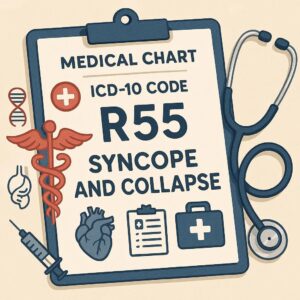
ICD-10 Code for Syncope and Collapse
2. The Clinical Landscape of Syncope: A Primer for Coders
To code syncope effectively, one must first understand what it is—and what it is not. A foundational clinical knowledge empowers the coder to ask the right questions and spot inconsistencies in documentation.
Defining Syncope and Its Pathophysiology
Syncope is formally defined as a transient loss of consciousness (TLOC) due to global cerebral hypoperfusion, characterized by a rapid onset, short duration, and spontaneous complete recovery. Let’s deconstruct this definition, as each component is crucial for differential diagnosis and, by extension, correct coding.
-
Transient Loss of Consciousness (TLOC): The patient becomes unresponsive. This is not prolonged confusion or a period of dizziness; it is a true loss of consciousness.
-
Global Cerebral Hypoperfusion: This is the key mechanistic element. The entire brain is not receiving enough blood flow, and therefore, oxygen. The brain’s neurons are exquisitely sensitive to oxygen deprivation, and even a brief interruption of 6-8 seconds can cause LOC.
-
Rapid Onset, Short Duration, and Spontaneous Recovery: The event happens quickly, typically lasts for seconds to a minute or two, and the patient recovers fully without the need for specific resuscitative measures like cardioversion.
The most common pathway to syncope is a sudden drop in systemic blood pressure, which reduces the driving force pushing blood up to the brain. This can occur through several mechanisms:
-
Vasodepressor (Vasovagal): A sudden drop in heart rate and/or blood pressure mediated by the vagus nerve, often triggered by fear, pain, or emotional distress.
-
Cardiac: The heart itself fails as an effective pump. This could be due to an arrhythmia (heart beating too fast or too slow) or structural problems (like a blocked valve).
-
Orthostatic: A failure of the body’s autonomic nervous system to compensate for the gravitational shift in blood volume when moving from sitting or lying to standing.
Differentiating Syncope from Other Forms of Altered Consciousness
The coder’s first challenge is to ensure that the documented event truly fits the definition of syncope. Many conditions cause TLOC or similar symptoms but are not syncope. Misdiagnosis by the clinician leads to miscoding by the coder.
-
Seizures (G40.-): While both cause LOC, seizures are caused by abnormal, excessive electrical discharges in the brain, not a lack of blood flow. Key differentiators include a post-ictal state (prolonged confusion and fatigue after the event), tonic-clonic movements, tongue biting, and incontinence. However, some seizures, like atonic seizures (“drop attacks”), can mimic syncope closely.
-
Psychogenic Pseudosyncope: A conversion disorder where the patient appears to have lost consciousness but has normal vital signs and no evidence of cerebral hypoperfusion.
-
Hypoglycemia (E16.2): Low blood sugar can cause LOC, but it is typically more gradual in onset and resolves with glucose administration.
-
Traumatic Brain Injury (S06.-): If a fall caused by syncope leads to a head injury, the coder must sequence codes based on the reason for the encounter, which can be complex.
-
Vertigo and Dizziness (R42): These are sensations of lightheadedness or spinning (presyncope) but do not involve a true loss of consciousness.
The clinician’s final diagnosis is the coder’s primary guide. If the documentation states “syncope,” the coder can generally proceed with the syncope codes. If it states “seizure,” neurologic codes are used. The ambiguity arises when the diagnosis is unclear, which we will address in the documentation section.
3. Navigating the ICD-10-CM Chapter of Diseases of the Circulatory System (I00-I99)
The structure of the ICD-10-CM manual is logical, and understanding this logic is half the battle in accurate coding.
The Home for Syncope: Category R55
The default, unspecified code for syncope is R55: Syncope and collapse. This code is found in Chapter 18: Symptoms, Signs, and Abnormal Clinical and Laboratory Findings, Not Elsewhere Classified (R00-R99).
The official inclusion terms for R55 are:
-
Blackout
-
Fainting
-
Vasovagal attack
The use of R55 is appropriate when the physician’s final diagnosis is simply “syncope,” “vasovagal syncope,” “fainting,” or “neurocardiogenic syncope” without a more specific underlying cause being identified or documented. It is a symptom code, indicating that the loss of consciousness is a sign of a problem, but the precise etiology (cause) remains unknown after initial evaluation.
A Critical Distinction: R55 (Syncope and Collapse) vs. I95.1 (Orthostatic Hypotension)
This is one of the most common and important distinctions in syncope coding. While both can lead to a faint, they are coded differently.
-
I95.1: Orthostatic hypotension is defined as a specific, measurable drop in blood pressure upon standing. It is classified in Chapter 9: Diseases of the Circulatory System (I00-I99), under “Other and unspecified disorders of the circulatory system (I95-I99).”
-
R55: Syncope and collapse is a broader term for the event of fainting itself.
The Coding Rule: If the physician documents that the syncopal event was due to or caused by orthostatic hypotension, you must code I95.1. The syncope is a symptom of the orthostatic hypotension, and the ICD-10-CM guidelines instruct us to code the causative condition when it is known. Orthostatic hypotension is considered a definitive diagnosis in this context.
-
Incorrect: Coding both R55 and I95.1 for the same event. This is redundant.
-
Correct: If a patient has orthostatic hypotension and faints, code only I95.1.
4. The Art of Specificity: When Syncope is a Symptom, Not a Diagnosis
The pinnacle of ICD-10 coding is specificity. When a definitive cause for the syncope is known, the coder must move beyond the generic R55 and assign a code that reflects the underlying etiology. This often requires venturing into other chapters of the ICD-10-CM manual.
Cardiac Syncope: The Realm of Chapter 9
Cardiac syncope is the most concerning type, as it can be a harbinger of sudden cardiac death. When the heart is the culprit, the syncope code is almost never used.
-
Bradycardia (R00.1) and Tachycardia (I47.-, I48.-, I49.-): If a patient’s syncope is attributed to a specific arrhythmia, you code the arrhythmia.
-
Example: A patient with a known sick sinus syndrome has a syncopal episode. An implantable loop recorder confirms a 10-second pause. Code: R00.1 (Bradycardia, unspecified). Do not code R55.
-
Example: A patient with recurrent syncope is diagnosed with paroxysmal ventricular tachycardia. Code: I47.2 (Ventricular tachycardia).
-
-
Structural Heart Disease: Conditions like severe aortic stenosis (I35.0), hypertrophic cardiomyopathy (I42.1), or atrial myxoma (D15.1) can obstruct blood flow from the heart and cause syncope, typically during exertion. Code the specific structural lesion.
Neurologic Syncope: Looking Beyond the Brain’s Blood Flow
True neurologic “syncope” is rare, as most neurologic events that cause LOC are not due to global hypoperfusion. The key is to code what the physician has diagnosed.
-
Seizures (G40.-): As discussed, this is a critical differential. If the final diagnosis is a seizure disorder or an epileptic seizure, code from category G40.
-
Strokes and TIAs (I63.-, G45.-): While a stroke in the vertebrobasilar territory can theoretically cause syncope, it is uncommon. A transient ischemic attack (TIA) is a more frequent mimic. Code the specific cerebrovascular diagnosis.
Situational and Reflex Syncope: The Role of External Triggers
These are subtypes of vasovagal syncope with very specific triggers. While they are often coded to R55, there are instances where a different code might be more appropriate, though R55 remains the standard.
-
Cough Syncope (R55): Fainting after a severe coughing paroxysm.
-
Micturition Syncope (R55): Fainting during or immediately after urination, common in older men at night.
-
Carotid Sinus Syncope (G90.01): This is a notable exception. If diagnosed, it is coded to G90.01 (Carotid sinus syndrome), as it is classified as a disorder of the autonomic nervous system.
The following table provides a quick-reference guide to common syncope diagnoses and their corresponding ICD-10-CM codes.
ICD-10-CM Code Reference for Common Syncope-Related Diagnoses
| Final Diagnosis | ICD-10-CM Code | Code Category & Notes |
|---|---|---|
| Syncope, unspecified | R55 | Symptoms (R00-R99). Default code for vasovagal, neurocardiogenic, and situational syncope unless a more specific cause is known. |
| Orthostatic Hypotension | I95.1 | Circulatory System (I00-I99). Use this code instead of R55 when syncope is due to documented orthostatic hypotension. |
| Bradycardia, unspecified | R00.1 | Symptoms (R00-R99). Use for syncope due to slow heart rate when a more specific arrhythmia code is not available. |
| Sick Sinus Syndrome | I49.5 | Circulatory System (I00-I99). A specific cause of bradycardia. |
| Ventricular Tachycardia | I47.2 | Circulatory System (I00-I99). A specific cause of tachycardia-induced syncope. |
| Atrial Fibrillation | I48.91 | Circulatory System (I00-I99). Use if syncope is directly attributed to the arrhythmia. |
| Carotid Sinus Syndrome | G90.01 | Nervous System (G00-G99). A specific diagnosis, not coded to R55. |
| Epileptic Seizure | G40.- | Nervous System (G00-G99). Used if the event is diagnosed as a seizure, not syncope. |
| Postural Tachycardia Syndrome (POTS) | I49.8 | Circulatory System (I00-I99). Code under “Other specified cardiac arrhythmias.” |
5. The Documentation Imperative: What Physicians Need to Document
The coder is bound by the documentation in the medical record. Vague or conflicting documentation is the primary source of coding errors and compliance risk.
The Power of the Final Diagnosis
The most important element in the record is the physician’s final assessment or diagnosis. This is the conclusion they have drawn after taking a history, performing a physical exam, and reviewing any test results. The coder must use this final diagnosis as the basis for code assignment.
-
Good Documentation: “Assessment: 1. Syncope, likely vasovagal in nature.” -> Code: R55
-
Better Documentation: “Assessment: 1. Syncope due to symptomatic bradycardia.” -> Code: R00.1
-
Poor Documentation: “Patient passed out. Will monitor.” -> This requires a query.
Essential Elements in a Clinical Note
A well-documented syncope work-up should include:
-
Context: What was the patient doing? Standing, coughing, exercising?
-
Prodrome: Any warning signs like nausea, sweating, or dizziness?
-
Witness Account: How long did the LOC last? Were there any movements?
-
Recovery: Was it rapid and complete, or was there confusion (suggesting a post-ictal state)?
-
Past Medical History: Known cardiac disease, epilepsy, diabetes?
-
Physical Exam Findings: Including orthostatic vital signs.
-
Final Diagnosis: A clear, unambiguous statement of the cause of the event.
Querying the Provider: A Necessary Skill
When documentation is unclear, contradictory, or incomplete, the coder must initiate a physician query. This is a formal process of seeking clarification.
-
Scenario: The emergency department note states: “Patient had a ‘blackout.’ EEG shows some sharp waves. Possible seizure vs. syncope.”
-
Action: Do not guess. Submit a query: “Dear Dr. Smith, the documentation indicates a possible seizure versus syncope. For accurate coding and clinical care, can you please provide a final diagnosis for this event?”
A well-crafted query is non-leading and presents clinical facts, allowing the physician to make a definitive diagnosis.
6. Common Coding Scenarios and Clinical Vignettes
Let’s apply the principles discussed above to realistic patient scenarios.
Vignette 1: The Vasovagal Faint in a Blood Draw Clinic
-
Presentation: A 22-year-old female has a syncopal episode while having blood drawn. She felt nauseated and lightheaded, lost consciousness for about 20 seconds, and recovered fully within a minute.
-
Final Diagnosis: Vasovagal syncope.
-
Correct Coding: R55. This is the classic presentation for unspecified syncope. The cause is known to be reflex-mediated, but the default and correct code remains R55.
Vignette 2: The Unexplained Drop with a History of Arrhythmia
-
Presentation: A 70-year-old male with a history of paroxysmal atrial fibrillation (on anticoagulation) presents after an unwitnessed fall. He was found on the floor, confused for a few minutes. He reports no prodrome.
-
Final Diagnosis: Syncope, etiology unclear. Rule out arrhythmia vs. TIA.
-
Correct Coding: R55 (Syncope and collapse) and I48.91 (Unspecified atrial fibrillation). In this case, the syncope is the reason for the encounter, and the atrial fibrillation is a comorbidity that is being evaluated as a potential cause. Both codes are relevant to the clinical picture.
Vignette 3: Syncope Following Micturition in an Elderly Male
-
Presentation: A 75-year-old male with BPH gets up at night to urinate and faints upon standing at the toilet. He has no significant cardiac history.
-
Final Diagnosis: Micturition syncope.
-
Correct Coding: R55. Situational syncope is coded to R55.
Vignette 4: Orthostatic Syncope in a Dehydrated Patient
-
Presentation: An 80-year-old female on diuretics is admitted for dehydration. On standing, her BP drops from 140/80 to 90/50, and she feels dizzy and nearly faints.
-
Final Diagnosis: Symptomatic orthostatic hypotension due to dehydration.
-
Correct Coding: I95.1 (Orthostatic hypotension) and E86.0 (Dehydration). The syncope is a symptom of the orthostatic hypotension, so I95.1 is the primary code for the circulatory event, with E86.0 explaining the cause.
Vignette 5: Syncope Versus Seizure in the Emergency Department
-
Presentation: A 45-year-old patient is brought in after a collapse with brief, witnessed shaking. The final diagnosis after EEG and neurology consult is “Generalized tonic-clonic seizure.”
-
Correct Coding: G40.909 (Epilepsy, unspecified, not intractable, without status epilepticus). Since the definitive diagnosis is a seizure, the neurologic code is used, not a syncope code.
7. The Compliance Conundrum: Avoiding Audits and Denials
Coding is not just about accuracy; it’s about compliance with payer rules and government regulations.
Medical Necessity and the Signs/Symptoms Code Rule
A fundamental rule in the ICD-10-CM Official Guidelines for Coding and Reporting states: “Codes that describe symptoms and signs, as opposed to diagnoses, are acceptable for reporting purposes when a related definitive diagnosis has not been established (confirmed) by the provider.”
This is why R55 is so valuable. It allows for accurate reporting when the work-up is incomplete or inconclusive. Using a definitive cardiac code like I47.2 (Ventricular tachycardia) without clear diagnostic evidence would be incorrect and could be considered “overcoding” or “upcoding,” which is a compliance violation.
The Dangers of Overcoding and Undercoding
-
Overcoding: Assigning a code that implies a higher level of specificity or severity than is supported by the documentation (e.g., coding acute MI for a patient with only chest pain). This can lead to audits, fines, and accusations of fraud.
-
Undercoding: Failing to report all relevant codes that are supported by documentation. This can negatively impact reimbursement and skew quality data, making a provider’s patient population appear healthier than it is.
Sticking to the physician’s final diagnosis and querying when unclear is the best defense against both pitfalls.
8. The Future of Syncope Coding: A Glimpse Beyond ICD-10
The world of medical classification is evolving towards ICD-11, which was endorsed by the World Health Organization (WHO) in 2019 and is slowly being implemented globally. ICD-11 offers even greater specificity.
In ICD-11, the code for syncope is MB21.0. However, the structure allows for more detailed etiologic grouping. The coding system is more digital-friendly and integrates better with modern electronic health records. While the US has not yet set a timeline for transitioning to ICD-11, understanding its more granular approach prepares coders for the future, where the link between clinical data and administrative coding will become even more seamless.
9. Conclusion
Accurate ICD-10 coding for syncope hinges on a collaborative understanding of clinical medicine and coding guidelines. The journey from a patient’s faint to a finalized code requires the coder to be a diligent detective, bound by documentation yet empowered by knowledge. Always default to the physician’s final diagnosis, use R55 for unspecified syncope, code to the highest specificity supported by the record, and never hesitate to query for clarity. By mastering the nuances of syncope and collapse, coders ensure financial integrity, support quality patient care, and contribute to the robust data that drives modern medicine forward.
10. Frequently Asked Questions (FAQs)
Q1: Can I code both R55 and a specific cause, like an arrhythmia?
A: Generally, no. If the syncope is attributed to a known, definitive cause like an arrhythmia (e.g., “syncope due to ventricular tachycardia”), you code only the cause (I47.2). Coding both would be redundant. However, you would code both if the encounter was for the syncope and the arrhythmia is a separate, chronic, and relevant comorbidity that is being managed but is not the stated cause of this particular event.
Q2: What is the difference between “near-syncope” or “presyncope” and actual syncope?
A: Near-syncope or presyncope is the feeling that one is about to lose consciousness but does not actually do so. This is coded differently, to R55.0 (Other and unspecified syncope) or more generally to R42 (Dizziness and giddiness). The key distinction is the absence of a documented loss of consciousness.
Q3: How do I code a patient who fell and hit their head because they fainted?
A: This requires careful sequencing. The coding guideline for “adverse effects” and “mechanical forces” applies. If the syncope caused the fall, which in turn caused the head injury, the code for the syncope (e.g., R55) is sequenced first, followed by the code for the head injury (e.g., S06.0- for concussion). An external cause code from Chapter 20 (e.g., W18.4- Fall from slipping, stumbling, or tripping) would also be required to complete the picture.
Q4: My physician always documents “syncope vs. seizure.” What should I code?
A: You should query the physician. “Versus” indicates uncertainty in the final diagnosis. Coding from this documentation would require you to make a clinical judgment, which is outside your scope as a coder. A formal query is necessary to obtain a definitive, codeable diagnosis.
11. Additional Resources
-
The Official ICD-10-CM Guidelines for Coding and Reporting: Published annually by the CDC and CMS. This is the ultimate authority.
-
American Health Information Management Association (AHIMA): Offers a wealth of resources, including practice briefs, webinars, and certification programs for coders.
-
American Academy of Professional Coders (AAPC): Another premier organization for coder education, certification, and networking.
Date: October 25, 2025
Author: Dr. Eleanor Vance, MD, CPC, CCS-P
Disclaimer: This article is intended for educational and informational purposes only and does not constitute medical or legal advice. While every effort has been made to ensure accuracy, medical coders should always consult the most current official ICD-10-CM coding guidelines and rely on the specific documentation provided by the treating clinician.