Imagine the world suddenly lurching, tilting, and spinning uncontrollably. The ground feels unstable beneath your feet, nausea rises in your throat, and the simple act of standing becomes a Herculean task. This is vertigo—a profound and often terrifying disruption of spatial perception that affects millions worldwide. For patients, it is a debilitating experience. For clinicians, it is a complex diagnostic puzzle with a broad differential. And for medical coders, it represents a critical challenge in accuracy and specificity. The simple term “vertigo” is a gateway to a intricate labyrinth of anatomical structures, pathological processes, and, consequently, a detailed and precise coding system. In the world of the International Classification of Diseases, Tenth Revision, Clinical Modification (ICD-10-CM), there is no single code for vertigo. Instead, there is a spectrum of codes that demand a deep understanding of its etiology, laterality, and clinical context. This article serves as your definitive guide through that spectrum, transforming the complex spin of vertigo into a clear, codable language that ensures clinical accuracy, facilitates appropriate reimbursement, and contributes to valuable patient data.
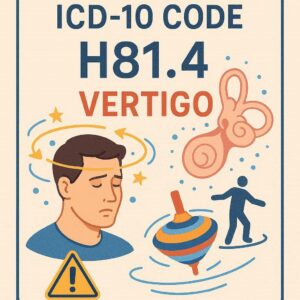
ICD-10 Code for Vertigo
2. Understanding Vertigo: A Symptom, Not a Diagnosis
The foundational principle in coding vertigo is recognizing that it is a symptom, not a definitive diagnosis. Patients often use “dizziness” and “vertigo” interchangeably, but in medical terms, they are distinct.
-
Dizziness: A broader, more nonspecific term encompassing sensations of lightheadedness, unsteadiness, or feeling faint.
-
Vertigo: A specific subtype of dizziness characterized by a false, hallucinatory sense of movement. Patients typically describe a spinning sensation (either of themselves or the environment), swaying, or tilting.
This subjective experience arises from a mismatch in the sensory information the brain receives from three primary systems: the vestibular system (inner ear and its connections), the visual system (eyes), and the somatosensory system (proprioception from joints and muscles). When these systems send conflicting signals—for example, your inner ear senses movement but your eyes see a stationary room—the result is the perception of vertigo. Accurately classifying the patient’s experience is the first step the clinician must take, and it is the first piece of information the coder must identify in the medical record.
3. The Critical Role of Precise ICD-10 Coding
Why is such precision required? The transition from ICD-9 to ICD-10 was a quantum leap in specificity, and this was by design. Precise coding directly impacts:
-
Patient Care: Accurate codes create a robust medical history. If a patient is diagnosed with recurrent right-sided BPPV, future providers can quickly understand their history, leading to more informed care.
-
Reimbursement: Insurance payers use ICD-10 codes to justify the medical necessity of procedures, tests, and treatments. A nonspecific code like R42 (Dizziness and giddiness) may be denied, while a specific code like H81.011 (Benign paroxysmal positional vertigo, right ear) clearly validates the need for a canalith repositioning maneuver.
-
Public Health and Research: Aggregated coded data helps track the prevalence of specific disorders, identify public health trends, and allocate resources for research. Vague coding muddies this data, hindering our understanding of vestibular disorders on a population level.
-
Healthcare Analytics: Health systems and providers use coded data for quality improvement, operational planning, and understanding their patient population’s needs.
4. Navigating the ICD-10-CM Chapter Structure: Where to Find Vertigo
Vertigo codes are primarily located in two chapters of the ICD-10-CM manual:
-
Chapter 6: Diseases of the Nervous System (G00-G99): This chapter houses codes for central vertigo, where the cause is rooted in the brain (particularly the brainstem or cerebellum).
-
Chapter 8: Diseases of the Ear and Mastoid Process (H60-H95): This is the home for peripheral vertigo, where the pathology lies in the vestibular apparatus of the inner ear or the vestibular nerve.
Additionally, the Chapter 18: Symptoms, Signs, and Abnormal Clinical and Laboratory Findings (R00-R99) contains the “catch-all” code R42 for when a more specific diagnosis cannot be determined.
5. Deep Dive into Code R42: Dizziness and Giddiness
ICD-10-CM Code: R42
This is the code for nonspecific dizziness, unsteadiness, or vertigo when a definitive diagnosis has not been established. It is a symptom code from Chapter 18.
-
Appropriate Use Cases:
-
In the emergency room for a patient’s first-ever acute vertigo episode, pending diagnostic workup.
-
In a primary care setting for a patient presenting with intermittent, uninvestigated dizziness.
-
When the provider’s documentation uses only vague terms like “dizzy spells” without further specification.
-
-
Inappropriate Use Cases:
-
When a definitive diagnosis like BPPV, vestibular neuronitis, or Ménière’s disease is documented.
-
When the vertigo is clearly linked to a central cause, such as a stroke or multiple sclerosis.
-
Using R42 when a more specific code is available is a common coding error that can lead to claim denials and reflects poor clinical documentation.
6. The Peripheral Vertigo Spectrum (H81.-)
The H81 category is the most frequently used for vertigo of inner ear origin. Its structure emphasizes laterality, a key feature of ICD-10.
Common ICD-10 Codes for Peripheral Vestibular Disorders
| ICD-10 Code | Code Description | Clinical Context & Documentation Requirements |
|---|---|---|
| H81.01- | Benign paroxysmal positional vertigo, right ear | Diagnosis of BPPV must be confirmed (e.g., by positive Dix-Hallpike test). Laterality (right/left/bilateral) is mandatory. |
| H81.02- | Benign paroxysmal positional vertigo, left ear | Same as above, for the left ear. |
| H81.03- | Benign paroxysmal positional vertigo, bilateral | Used when both ears are affected. |
| H81.11- | Vestibular neuronitis, right ear | Acute, sustained vertigo from vestibular nerve inflammation. Often follows a viral illness. Laterality required. |
| H81.12- | Vestibular neuronitis, left ear | Same as above, for the left ear. |
| H81.21- | Labyrinthitis, right ear | Vertigo accompanied by hearing loss and/or tinnitus, indicating cochlear involvement. Laterality required. |
| H81.22- | Labyrinthitis, left ear | Same as above, for the left ear. |
| H81.4- | Vertigo of central origin | Used for central nervous system causes not classified elsewhere. Requires careful documentation linking vertigo to a central lesion. |
| H81.8X1 | Other peripheral vertigo, right ear | A code for specified peripheral vertigo types not named elsewhere (e.g., vestibular paroxysmia). |
| H81.8X2 | Other peripheral vertigo, left ear | Same as above, for the left ear. |
| H83.01- | Labyrinthine fistula, right ear | An abnormal connection allowing pressure changes to affect the labyrinth. Often post-traumatic or post-surgical. |
| H83.02- | Labyrinthine fistula, left ear | Same as above, for the left ear. |
6.1. H81.01- / H81.02-: Benign Paroxysmal Positional Vertigo (BPPV)
BPPV is the most common cause of peripheral vertigo. It occurs when tiny calcium carbonate crystals (otoconia) become dislodged and migrate into the semicircular canals, making them sensitive to gravity and head position changes. The coding is exquisitely specific: the 5th digit indicates laterality (1-right, 2-left, 3-bilateral, 9-unspecified). The documentation must state the diagnosis of BPPV and the affected side. A provider’s note stating “positive Dix-Hallpike on the right” is sufficient to code H81.011.
6.2. H81.11- / H81.12-: Vestibular Neuronitis
This condition involves acute, unilateral vestibular nerve inflammation, typically viral in origin. It presents with sudden, severe, constant vertigo, nausea, vomiting, and imbalance lasting for days, without hearing loss. The key differentiator from labyrinthitis is the absence of auditory symptoms. Laterality is crucial for coding.
6.3. H81.21- / H81.22-: Labyrinthitis
Labyrinthitis is inflammation of the entire labyrinth, affecting both vestibular and auditory functions. The clinical presentation includes the vertigo of neuronitis plus hearing loss and/or tinnitus. This is a critical distinction. If the provider documents hearing loss alongside acute vertigo, H81.21- or H81.22- is the correct code, not H81.11-.
6.4. H81.31- / H81.32-: Vestibular Labyrinthine Syndromes
This category is less common but includes specific syndromes like secondary posterior semicircular canal BPPV.
6.5. H81.4-: Vertigo of Central Origin
This code resides in the H81 series but is used for vertigo originating from central nervous system dysfunction. It is a “central” code within a “peripheral” category, which can be confusing. It is typically used for central disorders not otherwise specified in Chapter 6. If the central cause is known (e.g., brainstem stroke G46.3-), that code takes precedence.
6.6. H81.8-: Other Peripheral Vertigo
This is a catch-all for other specified peripheral vestibular disorders not named in the other categories.
6.7. H83.0-: Labyrinthine Disorders
This separate category includes codes for specific inner ear pathologies like labyrinthine fistula (H83.01-, H83.02-), which can be a cause of vertigo triggered by pressure changes (e.g., straining, loud noises).
7. Differentiating Peripheral vs. Central Vertigo: A Clinical and Coding Imperative
The distinction between peripheral and central vertigo is arguably the most critical decision point for both the clinician and the coder, as it dictates the entire diagnostic and coding pathway.
-
Peripheral Vertigo: Origin is the inner ear or vestibular nerve.
-
Symptoms: Often intense, spinning sensation; episodic or positional; accompanied by nausea/vomiting; hearing loss or tinnitus may be present.
-
Signs: Nystagmus that is typically horizontal or rotatory, fatigable, and suppressed by visual fixation.
-
Examples: BPPV, Vestibular Neuronitis, Ménière’s Disease.
-
Coding Location: Chapter 8 (H81.-, H83.-).
-
-
Central Vertigo: Origin is the brain, particularly the brainstem or cerebellum.
-
Symptoms: Often a less intense sensation of swaying or imbalance; more constant; may be associated with severe neurological symptoms (e.g., diplopia, dysarthria, weakness, ataxia).
-
Signs: Nystagmus that can be vertical, bidirectional, or pure torsional; not fatigable; not suppressed by visual fixation.
-
Examples: Vertebrobasilar Ischemia/Stroke (I63.5-, I65.0-I65.2, I66.0-I66.3), Multiple Sclerosis (G35), Migraine-Associated Vertigo (G43.851), Acoustic Neuroma (D33.3).
-
Coding Location: Chapter 6 (G–), Chapter 9 (I–), or Chapter 2 (D–).
-
*Image: A flowchart titled “Vertigo Coding Decision Tree.” It starts with “Provider Documents Vertigo” and branches into “Peripheral Cause” (leading to H81.- codes) and “Central Cause” (leading to G–, I– codes), with key documentation clues listed for each branch.*
8. Vertigo as a Manifestation of Underlying Disease (Chapter 18 & Beyond)
Sometimes, vertigo is not the primary disease but a symptom of a broader systemic condition. The ICD-10 guidelines include a “code also” and “code first” notes for these situations.
-
Ménière’s Disease (H81.0-): This is a classic example. Ménière’s is coded with H81.0- (requiring a 5th digit for laterality). It is defined by the triad of vertigo, tinnitus, and hearing loss, and is a distinct diagnosis in itself.
-
Vertiginous Migraine (G43.851): Here, vertigo is a direct symptom of a migraine attack. The code G43.851 (Menstrual migraine, intractable, with aura) or other specific migraine codes with aura would be used. The vertigo is not coded separately.
-
Cerebrovascular Disease: If a patient has a brainstem stroke causing vertigo, the code for the stroke (e.g., I63.531 – Cerebral infarction due to unspecified occlusion or stenosis of right posterior cerebral artery) is the principal diagnosis. The vertigo is a symptom of that infarction and is not coded separately.
-
Ototoxic Medication: Vertigo can be an adverse effect of drugs like aminoglycosides. In this case, you would code the specific vertigo (e.g., R42) and the adverse effect code (T36.5X5- – Adverse effect of aminoglycosides).
9. The Importance of Laterality and Specificity
ICD-10’s core philosophy is specificity, and laterality is a cornerstone. The codes for most peripheral vestibular disorders are invalid if not taken to the 5th or 6th character specifying right, left, bilateral, or unspecified.
-
H81.01 is invalid. You must use H81.011 (right ear), H81.012 (left ear), etc.
-
Using an “unspecified” code (e.g., H81.019 for BPPV unspecified ear) should be a last resort, used only when the medical record provides no information on laterality despite the condition being, by nature, unilateral or bilateral. Continuous dialogue between coders and clinicians through the Clinical Documentation Improvement (CDI) process is essential to capture this detail.
10. Common Coding Errors and How to Avoid Them
-
Using R42 for a Specified Diagnosis: This is the most frequent error. If BPPV is diagnosed, code H81.01-, not R42.
-
Ignoring Laterality: Submitting an incomplete code leads to denials. Always code to the highest level of specificity.
-
Confusing Labyrinthitis and Neuronitis: Coding H81.11- when hearing loss is documented is incorrect. The presence of auditory symptoms mandates H81.21-.
-
Miscoding Central Vertigo: Using a peripheral code (H81.4-) when a more specific central code exists (e.g., for multiple sclerosis or stroke) is an error.
-
Incorrect Sequencing: When vertigo is a symptom of a larger condition (e.g., stroke), the underlying condition should be the principal diagnosis.
11. The Clinical Documentation Improvement (CDI) Process
Accurate coding is impossible without precise documentation. A robust CDI program involves specialists who review records concurrently and query providers for clarification. A CDI query for vertigo might look like:
-
“The patient is diagnosed with vertigo. Can you specify if this is peripheral or central in origin?”
-
“The Dix-Hallpike test was positive. Can you document which ear was affected?”
-
“The note indicates vertigo and hearing loss. Should this be coded as labyrinthitis?”
This collaborative process is vital for bridging the gap between clinical practice and administrative data integrity.
12. Case Studies: Applying Codes in Real-World Scenarios
Case Study 1: The Classic BPPV
-
Presentation: A 65-year-old female presents with brief episodes of spinning when she rolls over in bed or looks up. Symptoms last < 60 seconds.
-
Exam: Positive Dix-Hallpike maneuver on the right, with torsional nystagmus toward the lower ear.
-
Documentation: “Diagnosis: Benign Paroxysmal Positional Vertigo, right ear. Epley maneuver performed.”
-
Correct ICD-10 Code: H81.011 (Benign paroxysmal positional vertigo, right ear).
Case Study 2: The Complex Central Case
-
Presentation: A 58-year-old male with hypertension and diabetes presents to the ER with acute, severe vertigo, double vision, slurred speech, and left-sided weakness.
-
Imaging: MRI confirms an acute ischemic infarct in the right pons.
-
Documentation: “Acute ischemic stroke of the pons, presenting with vertigo, diplopia, dysarthria, and left hemiparesis.”
-
Correct ICD-10 Code: I63.531 (Cerebral infarction due to unspecified occlusion or stenosis of right posterior cerebral artery). Code R42 is not assigned, as the vertigo is a symptom integral to the stroke.
Case Study 3: The Vestibular Neuronitis
-
Presentation: A 32-year-old female develops severe, constant vertigo, nausea, and vomiting 1 week after a cold. Symptoms are persistent.
-
Exam: Spontaneous horizontal nystagmus that worsens when looking away from the affected side. Hearing is normal. Positive head impulse test on the left.
-
Documentation: “Acute vestibular neuronitis, left side.”
-
Correct ICD-10 Code: H81.12 (Vestibular neuronitis, left ear).
13. The Future of Vertigo Coding: A Look Ahead
As medicine evolves, so does medical coding. The future of vertigo coding may involve:
-
Increased Granularity: Codes may further differentiate based on the specific canal involved in BPPV (e.g., lateral vs. posterior).
-
Integration with Genomics: As genetic causes for some vestibular disorders are discovered, codes may be added to reflect this.
-
Phenotype-Specific Codes: For conditions like Ménière’s, codes might be introduced to specify the frequency of attacks or the degree of hearing loss.
-
AI-Assisted Coding: Artificial intelligence may help analyze clinical notes to suggest the most accurate codes, but human oversight will remain critical.
14. Conclusion
Navigating the ICD-10 coding for vertigo requires a systematic approach that begins with a thorough understanding of vestibular pathophysiology. The journey from a patient’s complaint of “spinning” to a precise alphanumeric code hinges on collaborative, detailed clinical documentation and a coder’s meticulous attention to etiology, laterality, and context. By mastering the distinctions between peripheral and central causes, embracing the requirement for specificity, and avoiding common pitfalls, healthcare professionals can ensure that the language of vertigo is translated accurately, supporting optimal patient care, justified reimbursement, and the integrity of our healthcare data.
15. Frequently Asked Questions (FAQs)
Q1: What is the default ICD-10 code for vertigo if the doctor doesn’t specify a type?
A1: The default code is R42 – Dizziness and giddiness. This should only be used when the medical record does not support a more specific diagnosis like BPPV, vestibular neuronitis, or a central cause.
Q2: Can I code both R42 and a more specific code like H81.011 for the same encounter?
A2: No. According to ICD-10 coding guidelines, you should not code a symptom (R42) when a definitive diagnosis that explains that symptom has been established. If BPPV is diagnosed, you code only H81.011. Coding both would be considered unbundling and is incorrect.
Q3: How do I code recurrent vertigo? Is there a different code?
A3: There is no unique code for “recurrent” vertigo. You code the specific diagnosis that is recurrent. For example, recurrent BPPV in the right ear is still coded as H81.011. The recurrent nature of the condition is captured in the patient’s medical history, not in the ICD-10 code itself.
Q4: What is the difference between H81.4- (Vertigo of central origin) and codes from Chapter 6 for central disorders?
A4: H81.4- is a less specific code used when the provider has determined the vertigo is central in origin but has not identified (or documented) a specific central nervous system disease like multiple sclerosis or a stroke. If a specific central diagnosis is documented (e.g., G35 for MS), you must code that specific condition. H81.4- serves as a bridge when the central nature is clear, but the precise etiology from Chapter 6 is not.
Q5: My provider’s note says “rule out BPPV.” What code should I use?
A5: You cannot code a “rule out” diagnosis. You must code the condition(s) that are confirmed or established at the end of the encounter. If the provider’s final assessment is “dizziness, likely BPPV but pending further evaluation,” the appropriate code is R42. Once BPPV is confirmed (e.g., by a positive test), then you can use the specific H81.01- code.
Date: October 31, 2025
Author: Dr. Anya Sharma, MD, CIC
Disclaimer: This article is intended for informational and educational purposes only and does not constitute medical or professional coding advice. While every effort has been made to ensure accuracy, coding guidelines are subject to change. Always consult the latest official ICD-10-CM coding manuals, payer-specific policies, and a certified medical coder for definitive guidance.