It begins subtly, often dismissed as a minor nuisance of the changing seasons. A faint tightness after a shower. A slight roughness to the touch. A fleeting itch that is too easily soothed by a casual scratch. For millions, this is the innocuous prelude to a condition that can escalate into a relentless, maddening torment: xerotic dermatitis. Known colloquially as “winter itch,” “asteatotic eczema,” or simply severe dry skin, xerotic dermatitis is far more than a cosmetic concern. It is a common dermatological disorder characterized by excessive skin dryness, scaling, fissuring, and inflammation, culminating in one of the most primal and distressing human sensations—pruritus, or itch.
The impact of chronic, severe xerosis extends deep beneath the surface of the skin. It disrupts sleep, impairs concentration, diminishes quality of life, and can lead to significant psychological distress, including anxiety and social embarrassment. For healthcare providers and medical coders alike, a thorough understanding of this condition is paramount, not only for effective treatment but also for the precise administrative and financial processes that underpin modern healthcare. At the heart of this administrative precision lies a seemingly simple yet critically important code: ICD-10-CM L85.3. This article embarks on a comprehensive journey into the world of xerotic dermatitis, unraveling its complex pathophysiology, detailing its clinical management, and demystifying the essential process of its accurate classification within the ICD-10 coding system. We will explore how a robust knowledge of both the medicine and the metadata is crucial for delivering and documenting high-quality patient care.
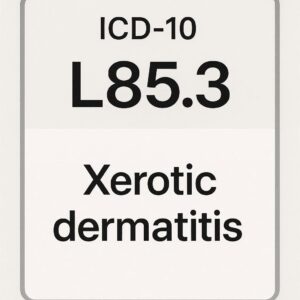
icd 10 code xerotic dermatitis
2. Decoding the Dermatosis: What is Xerotic Dermatitis?
Beyond Simple Dryness: A Clinical Definition
Xerotic dermatitis is a common, pruritic, inflammatory skin condition that arises from pathologically dry skin (xerosis cutis). While mild xerosis is a nearly universal human experience, xerotic dermatitis represents the point at which this dryness becomes symptomatic and clinically significant. The transition from simple dryness to dermatitis is marked by the onset of visible scale, erythema (redness), and inflammation, often triggered or exacerbated by the patient’s own scratching in response to intense itch.
The term “asteatotic eczema” is often used synonymously, particularly when the dryness presents with a characteristic cracked, fissured pattern resembling a dried riverbed or the glaze of fine porcelain, which is descriptively known as “eczema craquelé.” This nomenclature highlights the lack ( “a-” meaning without) of sebum (“steato-” meaning fat), though the pathophysiology is more complex than just a deficiency in skin oils. It is a condition of a compromised skin barrier, where the integrity of the stratum corneum—the outermost layer of the skin—is breached, leading to a cascade of biochemical and sensory events.
The Epidemiology of Itch: Who is Affected?
Xerotic dermatitis is a condition of extremes—extreme age and extreme environments. Its prevalence is highest among two key demographic groups: the elderly and young children. In older adults, the incidence can be as high as 75% or more in institutionalized settings. This predisposition is due to a constellation of age-related physiological changes, including a natural decline in sebaceous and sweat gland activity, reduced synthesis of natural moisturizing factors, and thinning of the epidermis. These changes collectively render the aging skin more vulnerable to environmental insults and less capable of retaining essential moisture.
Similarly, infants and young children have a skin barrier that is not yet fully mature, making them susceptible to dryness and irritation. Beyond these groups, individuals living in regions with low humidity, particularly during cold winter months when indoor heating systems further deplete moisture from the air, are commonly affected. Certain occupations that involve frequent hand washing, exposure to harsh chemicals, or prolonged contact with water (e.g., healthcare workers, hairdressers, food handlers) also carry a higher risk. Furthermore, xerotic dermatitis is a frequent comorbidity in numerous systemic conditions, such as hypothyroidism, chronic renal failure, diabetes mellitus, and malnutrition, as well as being a side effect of many medications, including diuretics and retinoids.
3. The Skin’s Barrier: A Fortress Under Siege
To understand xerotic dermatitis, one must first appreciate the elegant complexity of the skin’s barrier function. The skin is not merely a passive envelope but a dynamic, multi-layered organ whose primary role is protection.
Anatomy of the Stratum Corneum
The outermost layer of the epidermis, the stratum corneum, is the body’s first line of defense. It is often described as a “brick and mortar” structure. The “bricks” are corneocytes—flattened, dead skin cells filled with keratin. These cells are encased in a resilient cornified cell envelope, cross-linked with proteins like loricrin and involucrin, providing structural toughness. The “mortar” is the intercellular lipid matrix, a meticulously organized blend of ceramides, cholesterol, and free fatty acids. This lipid-filled space is critical for preventing the uncontrolled loss of water from the body’s interior to the external environment.
The Natural Moisturizing Factor (NMF) and Lipid Matrix
Within the corneocytes resides another crucial component: the Natural Moisturizing Factor (NMF). The NMF is a collection of highly efficient humectant molecules, including amino acids, pyrrolidone carboxylic acid, lactate, urea, and salts. These compounds have a profound ability to attract and bind water from the atmosphere and the deeper layers of the skin, thereby hydrating the corneocytes and keeping them plump and flexible. When the NMF is depleted, the corneocytes become shrunken, brittle, and less cohesive, compromising the barrier’s integrity. The lipid matrix, meanwhile, provides the waterproofing sealant. Ceramides, making up about 50% of the lipids by weight, are particularly vital for forming impermeable lamellar layers. Any disruption in the synthesis or organization of these lipids leads to gaps in the mortar, allowing precious water to escape.
4. The Pathophysiology of Pruritus and Scaling
Xerotic dermatitis is not a static state of dryness but a dynamic process of barrier failure and neurogenic inflammation.
The Vicious Cycle of Transepidermal Water Loss (TEWL)
The central event in xerotic dermatitis is an increase in Transepidermal Water Loss (TEWL). When the stratum corneum is compromised—due to aging, environmental factors, or excessive washing—the rate at which water passively evaporates through the skin increases significantly. This dehydration has several consequences. Firstly, the dehydrated corneocytes shrink and lose their flexibility, leading to the formation of microscopic cracks and fissures on the skin surface. This creates a rough, scaly texture clinically visible as xerosis.
As the barrier integrity weakens further, it not only lets water out but also allows potential irritants, allergens, and microbes to penetrate more easily. This breach triggers a low-grade inflammatory response. Keratinocytes, the primary cells of the epidermis, release a cascade of pro-inflammatory cytokines (e.g., interleukin-1, TNF-alpha) and chemokines that recruit immune cells to the site.
Inflammation and the Itch-Scratch Cycle
The inflammation and the physical cracks in the skin directly stimulate the cutaneous nerve endings, leading to the sensation of pruritus. This itch is one of the most defining and debilitating features of the condition. The patient’s natural response is to scratch. While scratching may provide momentary relief by activating pain-sensitive neurons that temporarily override the itch signals, it is profoundly damaging in the long term. Scratching physically further disrupts the fragile stratum corneum, amplifying barrier damage and TEWL. It also amplifies the inflammatory response by releasing more cytokines and activating nerve fibers, a self-perpetuating loop known as the “itch-scratch cycle.” This cycle is the engine that drives the progression from asymptomatic xerosis to inflamed, symptomatic xerotic dermatitis. With repeated scratching, the skin can become lichenified—thickened and leathery with accentuated skin markings—as a result of chronic trauma.
5. Clinical Presentation: Recognizing the Signs and Symptoms
The presentation of xerotic dermatitis can vary from mild to severe and evolves through recognizable stages.
Early Signs: From Invisible Xerosis to Rough Texture
Initially, the condition may be subclinical, manifesting only as a feeling of skin tightness, especially after bathing. The first visible sign is often a slight dullness or ashiness of the skin, particularly noticeable in individuals with darker skin tones, as the dehydrated skin loses its natural reflectivity. Upon palpation, the skin feels rough and dry, like fine sandpaper.
Progressive Disease: Cracking, Scaling, and the “Crazy Paving” Pattern
As TEWL increases and inflammation sets in, the skin becomes visibly abnormal.
-
Scaling: Fine, white, branny scales begin to detach from the skin surface.
-
Erythema: Underlying redness develops due to inflammation and increased blood flow.
-
Fissuring: The most pathognomonic sign of advanced xerotic dermatitis (asteatosis) is the appearance of superficial cracks and fissures. These can be oriented in a polygonal or reticulate pattern, creating a landscape that resembles cracked porcelain or a dried riverbed. This is the classic “eczema craquelé” or “crazy paving” appearance.
-
Pruritus: Itch can range from mild and intermittent to severe, constant, and uncontrollable.
In severe, neglected cases, the fissures can become deep and painful, sometimes bleeding and posing a risk for secondary bacterial infections, such as cellulitis.
Common Anatomical Sites and Variations
Xerotic dermatitis most commonly affects areas with a relatively low density of sebaceous glands. The lower legs, particularly the shins, are a classic site due to dependent edema and relatively poor circulation in some individuals. The arms, thighs, and flanks are also frequently involved. When it occurs on the hands, it is often related to occupational exposures and is a form of irritant contact dermatitis. In the elderly, it can be widespread, affecting large areas of the trunk.
6. The Diagnostic Pathway: From Patient History to Physical Exam
Diagnosing xerotic dermatitis is primarily clinical, based on a thorough history and physical examination.
Key Questions in the Patient History
A targeted history is crucial to confirm the diagnosis and identify underlying triggers:
-
Onset and Timing: Is it worse in the winter? Does it improve in humid climates?
-
Bathing Habits: How frequent are showers/baths? What is the water temperature? What soaps or body washes are used?
-
Skin Care Routine: What moisturizers are used, if any? How often are they applied?
-
Occupational and Hobby Exposures: Does the job involve frequent hand washing or chemical exposure?
-
Medical History: Any history of atopy (eczema, asthma, hay fever), thyroid disease, diabetes, or renal failure?
-
Medication Review: Is the patient on diuretics, retinoids, or other drugs that promote dryness?
The Physical Examination: A Methodical Approach
A full skin examination should be performed in good lighting. The clinician will palpate the skin to assess texture and look for the characteristic signs of scale, erythema, and fissuring, paying close attention to the classic distribution patterns. The examination also serves to rule out other conditions that can mimic xerotic dermatitis.
Differential Diagnosis: Ruling Out Other Conditions
Several other dermatoses can present with dryness and itch, including:
-
Atopic Dermatitis: Typically begins in childhood, involves flexural areas (elbows, knees), and is associated with a personal or family history of atopy.
-
Allergic Contact Dermatitis: Caused by a specific allergen; the distribution often corresponds to the area of contact.
-
Psoriasis: Features well-demarcated, thick, silvery scales, often on elbows, knees, scalp, and lower back.
-
Scabies: Burrows may be visible, and itch is often worst at night; it typically affects finger webs, wrists, and genitalia.
-
Ichthyosis Vulgaris: A genetic disorder causing persistent, fish-like scaling, often more prominent on the extensor surfaces.
7. The Cornerstone of Classification: ICD-10 Code L85.3
In the modern healthcare ecosystem, accurate clinical diagnosis must be seamlessly translated into a standardized administrative language for billing, epidemiology, and research. This is the role of the International Classification of Diseases, Tenth Revision, Clinical Modification (ICD-10-CM).
Understanding the ICD-10-CM System
The ICD-10-CM is a system of alphanumeric codes used by physicians, coders, and healthcare facilities to represent diagnoses, symptoms, and procedures. These codes are essential for processing insurance claims, tracking public health trends, and conducting clinical research. Using the correct code is not merely an administrative formality; it is a matter of legal and financial compliance and ensures accurate data collection for the condition.
A Deep Dive into Code L85.3: Xerosis cutis
The specific ICD-10-CM code for xerotic dermatitis is L85.3. Let’s deconstruct this code:
-
Chapter XII: The letter “L” designates Chapter XII of ICD-10-CM, which covers “Diseases of the skin and subcutaneous tissue.”
-
Category L80-L99: The code falls within the block “Other disorders of the skin and subcutaneous tissue” (L80-L99).
-
Sub-category L85: This refers to “Xerosis cutis,” which is the medical term for abnormal dryness of the skin.
-
Final Digit .3: The code L85.3 is the most specific code available for this condition. There are no further sub-classifications.
It is critical to note that the code descriptor is “Xerosis cutis.” In medical terminology, “xerosis cutis” is the pathological dry skin that underlies the inflammatory state of “xerotic dermatitis.” For coding purposes, L85.3 is the appropriate code for both the asymptomatic dry skin and the symptomatic, inflamed dermatitis that results from it. There is no separate, more specific code for “xerotic dermatitis” or “asteatotic eczema”; they are all classified under L85.3.
Documentation Requirements for Accurate Coding
The accuracy of code assignment hinges entirely on the quality of the clinician’s documentation in the patient’s medical record. The documentation should clearly support the diagnosis. Ideal documentation includes:
-
A clear statement of diagnosis: e.g., “Xerotic dermatitis,” “Severe xerosis,” or “Asteatotic eczema.”
-
Location: e.g., “Xerotic dermatitis of the bilateral lower extremities.”
-
Severity: e.g., “Severe xerosis with cracking and fissuring.”
-
Laterality: Always specify if the condition is bilateral or unilateral.
Vague terms like “dry skin” alone may not be sufficient to justify the use of L85.3 if the clinical context does not indicate it is a pathological condition requiring medical care.
Common Coding Pitfalls and How to Avoid Them
-
Confusing with Other Eczemas: A common error is to use a code from the L20-L30 block (“Dermatitis and Eczema”) when the provider has specifically documented xerotic or asteatotic eczema. Codes like L30.9 (Dermatitis, unspecified) are incorrect for this condition.
-
Under-documenting Severity: If the provider only documents “dry skin,” the coder may not have the clinical justification to assign L85.3. Clear communication between clinicians and coders is essential.
-
Not Specifying Laterality: While L85.3 does not have different codes for left/right, specifying laterality in the documentation supports medical necessity, especially if treatment is directed at a specific area.
8. The Therapeutic Ladder: A Stepwise Approach to Management
The management of xerotic dermatitis is proactive, continuous, and multi-faceted, focusing on repairing the skin barrier, reducing inflammation, and breaking the itch-scratch cycle.
Foundation: Emollients, Humectants, and Occlusives
The cornerstone of therapy is the consistent and correct use of moisturizers. Not all moisturizers are the same, and understanding their mechanisms is key to effective treatment. They are categorized based on their function:
Classification and Examples of Key Moisturizing Ingredients
| Category | Mechanism of Action | Key Ingredients | Examples of Products/Forms |
|---|---|---|---|
| Humectants | Attract water from the dermis and environment into the stratum corneum. | Glycerin, Hyaluronic Acid, Urea, Lactic Acid, Alpha-Hydroxy Acids (AHAs), Sorbitol | Often found in lotions; some prescription creams contain high concentrations of urea. |
| Emollients | Smooth and soften the skin by filling the spaces between desquamating corneocytes with lipids. | Squalene, Jojoba Oil, Caprylic/Capric Triglyceride, Diisopropyl Dimer Dilinoleate, Shea Butter | Creams, lotions, and ointments; they feel “cosmetically elegant” and spread easily. |
| Occlusives | Form an inert, hydrophobic barrier on the skin surface to physically prevent TEWL. | Petrolatum, Lanolin, Mineral Oil, Dimethicone, Beeswax | Thick ointments (e.g., plain petroleum jelly) are the most effective occlusives but can feel greasy. |
The most effective moisturizers are those that combine all three types of ingredients. For severe xerosis, thick creams and ointments are superior to lotions, which have a higher water content and evaporate more easily. The “soak and seal” method is highly effective: applying a moisturizer to damp skin within 3 minutes of bathing to trap the absorbed water.
Lifestyle and Environmental Modifications
-
Bathing: Limit showers to 5-10 minutes with lukewarm (not hot) water. Use mild, syndet (synthetic detergent) bars or non-soap cleansers with a pH close to that of skin.
-
Humidification: Using a humidifier, especially in the bedroom during winter, can significantly increase ambient humidity and reduce TEWL.
-
Irritant Avoidance: Wear soft, breathable fabrics like cotton. Avoid wool and rough textiles directly against the skin. Use fragrance-free and dye-free laundry detergents.
Pharmacological Interventions
When inflammation is significant, moisturizers alone are insufficient.
-
Topical Corticosteroids: These are the first-line anti-inflammatory agents. Low- to mid-potency steroids (e.g., Hydrocortisone 2.5%, Triamcinolone 0.1% ointment) are typically used for short courses (1-2 weeks) to quickly reduce redness and itch. Ointment bases are preferred as they are more occlusive.
-
Topical Calcineurin Inhibitors: Agents like Tacrolimus ointment and Pimecrolimus cream are non-steroidal anti-inflammatories. They are useful for sensitive areas (face, groin) or for long-term management where steroid side effects (skin thinning) are a concern.
-
Antihistamines: Oral sedating antihistamines (e.g., Hydroxyzine, Doxepin) can be helpful at night to control itch and break the itch-scratch cycle by promoting sleep.
Advanced and Emerging Therapies
For refractory cases, phototherapy (narrowband UVB) can be an effective option. It reduces inflammation and modulates immune responses in the skin. Research is also ongoing into barrier repair creams containing sophisticated mixtures of ceramides, cholesterol, and fatty acids in ratios that mimic the skin’s natural lipid composition.
9. Special Populations: Pediatrics, Geriatrics, and Comorbidities
Management must be tailored to the patient.
-
Pediatrics: Use the mildest possible interventions. Focus on bland emollients like plain petroleum jelly or thick creams. Avoid high-potency steroids and be cautious with topical antihistamines.
-
Geriatrics: The focus is on prevention and consistent maintenance therapy. Due to fragile skin, use mid-potency steroids cautiously and for limited durations. The “soak and seal” method is paramount. Addressing polypharmacy and managing underlying systemic diseases are crucial.
-
Comorbidities: In patients with hypothyroidism, adequate thyroid hormone replacement is essential. In diabetics, optimizing glycemic control can improve skin health. In patients with chronic kidney disease, managing uremia is key.
10. The Psychosocial and Economic Burden of Chronic Xerosis
The impact of chronic xerotic dermatitis should not be underestimated. The relentless itch can lead to chronic sleep deprivation, resulting in fatigue, irritability, and impaired cognitive function. The visible scaling and fissuring can cause embarrassment, social anxiety, and a decreased willingness to participate in activities. Economically, there are direct costs (prescriptions, doctor visits) and indirect costs (lost productivity, absenteeism from work). Effective management thus not only improves skin health but also restores overall well-being and quality of life.
11. Conclusion: Integrating Knowledge for Holistic Care
Xerotic dermatitis is a pervasive condition rooted in the failure of the skin’s intricate barrier system, leading to a debilitating cycle of dryness, inflammation, and pruritus. Its effective management demands a holistic strategy that combines diligent daily moisturizing with targeted anti-inflammatory treatments and intelligent lifestyle adaptations. Crucially, the accurate translation of this clinical picture into the precise ICD-10 code L85.3 is an integral part of the patient care continuum, ensuring proper documentation, reimbursement, and contribution to valuable health data. By uniting a deep clinical understanding with administrative precision, healthcare providers can offer relief to the millions suffering from the often-overlooked agony of severely dry skin.
12. Frequently Asked Questions (FAQs)
Q1: What is the difference between regular dry skin and xerotic dermatitis?
A: Regular dry skin is often mild, temporary, and may not cause significant symptoms. Xerotic dermatitis is a medical condition where the dryness is severe enough to cause visible scaling, redness (inflammation), cracking, and persistent, often intense, itching. It is the pathological and symptomatic form of dry skin.
Q2: Is xerotic dermatitis contagious?
A: No, xerotic dermatitis is not contagious. It is caused by internal and external factors affecting the skin’s ability to retain moisture and is not caused by a bacteria, virus, or fungus that can be spread to others.
Q3: Can diet affect xerotic dermatitis?
A: While no specific “dry skin diet” exists, overall nutrition is important for skin health. Staying well-hydrated by drinking water is beneficial. Essential fatty acids (found in fish, nuts, and seeds) are important components of healthy skin lipids. Severe nutritional deficiencies can certainly contribute to skin dryness.
Q4: I use lotion every day, but my skin is still very dry. What am I doing wrong?
A: This is a common issue. Many lotions are high in water and low in occlusive ingredients. You may need a thicker cream or ointment. Also, the timing of application is critical. Try the “soak and seal” method: apply your moisturizer to damp skin immediately after patting dry from a shower or bath. This traps the water in your skin much more effectively.
Q5: Why is the ICD-10 code L85.3 and not a code for eczema?
A: The ICD-10 system has a specific category for “Xerosis cutis” under L85. While xerotic dermatitis is a type of eczema, it is classified distinctly from atopic dermatitis (L20.x) or contact dermatitis (L23/L24) because its primary, underlying cause is barrier dysfunction due to dryness. Using L85.3 provides more specific and accurate data for this particular condition.
13. Additional Resources
-
American Academy of Dermatology (AAD): www.aad.org – Provides patient-friendly information on dry skin and eczema, including videos and tips.
-
National Eczema Association (NEA): nationaleczema.org – Offers resources, support communities, and research updates on all forms of eczema, including xerosis.
-
ICD-10-CM Official Guidelines for Coding and Reporting: Available from the Centers for Disease Control and Prevention (CDC) and CMS websites for the most authoritative coding rules.
-
Textbook: “Fitzpatrick’s Dermatology in General Medicine” (Ninth Edition) – A comprehensive medical textbook for in-depth scientific and clinical knowledge.
Disclaimer: This article is intended for informational purposes only and does not constitute medical advice. The information contained herein should not be used for diagnosing or treating a health problem or disease. Always seek the advice of your physician or another qualified healthcare provider with any questions you may have regarding a medical condition. The ICD-10 codes provided are for educational use; proper code assignment for billing and clinical purposes must be verified with the most current official coding guidelines and in conjunction with a patient’s full medical record.
Date: November 05, 2025