In the intricate world of medical coding, where complex human conditions are translated into a standardized alphanumeric language, few diagnoses present as much nuance and demand as much precision as epilepsy. The International Classification of Diseases, Tenth Revision, Clinical Modification (ICD-10-CM) system offers a sophisticated framework for categorizing this heterogeneous neurological disorder. However, navigating the codes within category G40 requires more than just a basic understanding of coding rules; it demands a deep appreciation for the clinical landscape of epilepsy itself. An inaccurate code is not merely a clerical error. It can misrepresent a patient’s health status, impede appropriate reimbursement for life-altering treatments, and skew the vital data that drives public health research and resource allocation. This comprehensive guide is designed to be an exhaustive resource for medical coders, health information management (HIM) professionals, and students, delving into the depths of ICD-10 epilepsy coding. We will move beyond simple code lookup and explore the “why” behind the codes, ensuring that every character selected tells the true and complete story of the patient’s condition. By mastering this complexity, coders become essential partners in the healthcare team, contributing directly to the quality and integrity of patient care.
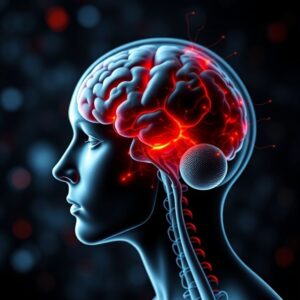
ICD-10 Codes for Epilepsy
2. Understanding the Foundation: What is Epilepsy?
Before a single code can be assigned, it is imperative to understand what is being coded. Epilepsy is not a single disease but rather a spectrum disorder characterized by an enduring predisposition to generate epileptic seizures. This definition, from the International League Against Epilepsy (ILAE), hinges on two key concepts:
-
Epileptic Seizure: A transient occurrence of signs and/or symptoms due to abnormal, excessive, or synchronous neuronal activity in the brain. Think of it as an “electrical storm” in the brain’s intricate circuitry. A single seizure does not equate to epilepsy.
-
Enduring Predisposition: The underlying cause that makes the brain more susceptible to recurrent seizures. This is the core of the epilepsy diagnosis.
A diagnosis of epilepsy is typically made after a person has experienced at least two unprovoked seizures occurring more than 24 hours apart, or one unprovoked seizure with a high probability of further seizures (e.g., based on an abnormal EEG showing epileptiform activity), or a diagnosis of an epilepsy syndrome. The clinical classification of the type of epilepsy—whether it is focal (originating in one part of one hemisphere), generalized (involving both hemispheres simultaneously), or unknown—is the primary determinant for selecting the correct ICD-10 code. This clinical detail, meticulously documented by the neurologist, is the coder’s most critical source of information.
3. Navigating the ICD-10-CM Universe: Chapter 6 – Diseases of the Nervous System
The ICD-10-CM system is organized into chapters based on body system or condition type. Codes for epilepsy are found in Chapter 6: Diseases of the Nervous System (G00-G99). Within this chapter, codes are grouped into blocks. The block relevant to epilepsy is G40-G47: Episodic and paroxysmal disorders. This block includes conditions like migraine, sleep disorders, and transient cerebral ischemic attacks, but our focus is squarely on G40: Epilepsy and recurrent seizures.
4. A Deep Dive into Category G40: Epilepsy and Recurrent Seizures
Category G40 is where the specificity of ICD-10 shines. It requires coders to identify the etiology (cause), type (focal/generalized), and often the specific location in the brain. The structure is hierarchical, with each additional character providing greater detail.
The Fundamental Distinction: Localization-Related vs. Generalized Epilepsy
The first and most critical branch in the G40 tree is the distinction between localization-related (focal) epilepsies and generalized epilepsies. This distinction is based on where the seizure activity begins.
-
Localization-Related (Focal) Epilepsies (G40.A- and G40.1-): The seizure originates within networks limited to one hemisphere of the brain. The patient’s symptoms during the seizure depend on the part of the brain where the seizure starts. For example, a focal seizure in the temporal lobe may cause a feeling of déjà vu or fear, while one in the motor cortex may cause jerking in a specific hand.
-
Generalized Epilepsies (G40.B-, G40.3-, G40.4): The seizure originates within and rapidly engages bilaterally distributed networks across both hemispheres of the brain. This often leads to impaired awareness and motor involvement affecting the whole body from the onset, such as in a classic tonic-clonic (grand mal) seizure.
G40.A-: Localization-Related (Focal) Epilepsies and Syndromes
This subcategory requires the most specificity. It is broken down by etiology and then by the specific lobe of the brain.
-
G40.A0-: Idiopathic (Benign) Epilepsy: “Idiopathic” means the epilepsy is presumed to have a genetic cause and is not associated with underlying structural brain abnormalities. A classic example is Benign Rolandic Epilepsy of childhood. The 5th character specifies the type (e.g., G40.A01, Benign childhood epilepsy with centrotemporal spikes).
-
G40.A1-: Symptomatic Epilepsy: “Symptomatic” means the epilepsy is a symptom of a known or suspected structural, metabolic, or traumatic brain lesion. Causes include stroke, brain tumor, head injury, or infection. The 5th and 6th characters are used to specify the anatomical lobe.
-
G40.A2-: Cryptogenic Epilepsy: “Cryptogenic” is an older term meaning the epilepsy is believed to be symptomatic (caused by an underlying lesion), but no specific cause has been identified. In modern terminology, this often aligns with “probably symptomatic” epilepsy. Like symptomatic epilepsy, it requires lobe specification.
The Crucial 5th and 6th Characters: Specifying the Lobe
For G40.A1- and G40.A2-, the 5th and 6th characters pinpoint the location. This is a key area for specificity.
-
G40.A11-: Symptomatic focal epilepsy, temporal lobe
-
G40.A12-: Symptomatic focal epilepsy, frontal lobe
-
G40.A13-: Symptomatic focal epilepsy, parietal lobe
-
G40.A14-: Symptomatic focal epilepsy, occipital lobe
-
G40.A19-: Symptomatic focal epilepsy, other
The 6th character adds even more detail, such as laterality (e.g., G40.A111, Symptomatic focal epilepsy, temporal lobe, with intractable epilepsy, with status epilepticus, right side). The same structure applies to cryptogenic epilepsy (G40.A2-).
G40.B-: Generalized Epilepsies and Syndromes
This subcategory covers epilepsies where seizures involve both hemispheres from the onset.
-
G40.B0-: Idiopathic Generalized Epilepsy (IGE): This group has a strong genetic basis. It includes syndromes like Childhood Absence Epilepsy (G40.B01) and Juvenile Absence Epilepsy (G40.B02).
-
G40.B1-: Juvenile Myoclonic Epilepsy (JME): This is a specific and common subtype of IGE characterized by myoclonic jerks (brief, shock-like muscle jerks), often upon waking, along with possible absence and tonic-clonic seizures. It has its own dedicated code: G40.B10.
-
G40.B3-: Epileptic Spasms: This code is used for conditions like Infantile Spasms (West syndrome), which are characterized by clusters of brief, symmetric muscle contractions.
Other Epilepsy Codes: G40.3-, G40.4, G40.5, G40.8, G40.9
This group contains important codes that don’t fit neatly into the focal/generalized dichotomy or are used for specific situations.
-
G40.3-: Generalized Idiopathic Epilepsy: This is an older, less specific code block that is still used for some forms of IGE not specified elsewhere (e.g., G40.309, Generalized idiopathic epilepsy, not intractable, without status epilepticus).
-
G40.4: Other Generalized Epilepsy: This is a catch-all for generalized epilepsies that are not idiopathic, such as Lennox-Gastaut syndrome, a severe childhood-onset epilepsy.
-
G40.5: Epileptic Seizures Related to External Factors: A critically important code. This is used for seizures that are provoked by an acute, reversible cause. Examples include seizures due to alcohol withdrawal, drug toxicity, metabolic imbalances (e.g., severe hypoglycemia), or acute head trauma. This is not used for a diagnosis of chronic epilepsy. If the patient has an underlying epilepsy diagnosis and a seizure is provoked, both codes may be needed, with the external cause code from Chapter 20 used as an additional code.
-
G40.8: Other Epilepsy: Used for specific epilepsy syndromes not covered elsewhere, like Lafora disease or other progressive myoclonic epilepsies.
-
G40.9: Epilepsy, Unspecified: This is the code to use when the medical documentation does not specify the type of epilepsy (focal, generalized, etc.). It should be a code of last resort. A physician query should be initiated whenever possible to obtain greater specificity before defaulting to G40.9.
5. The Critical Role of the 7th Character: Episode of Care
For all codes under G40 (except G40.A0-), a 7th character extension is required to describe the episode of care. This adds a temporal element to the diagnosis.
-
A: Initial Encounter: Use this when the patient is receiving active treatment for the condition. This could be the diagnosis visit, the start of a new medication, or a surgical workup. It does not necessarily mean “new diagnosis.”
-
D: Subsequent Encounter: Use this for routine care during the healing or recovery phase, or for receiving routine, scheduled care for a chronic condition. This is most common for established epilepsy patients seeing their neurologist for medication management.
-
S: Sequela: Use this for complications or conditions that arise as a direct result of the epilepsy. An example would be coding for postictal psychosis or cognitive deficits directly attributed to longstanding, poorly controlled seizures.
-
Z: This is a placeholder. It is used when no 7th character is applicable, primarily for the G40.A0- (idiopathic focal) codes.
Clinical Scenario: A patient with known intractable temporal lobe epilepsy is admitted to the hospital for a prolonged seizure cluster.
-
The code would be G40.111A (Symptomatic focal epilepsy, temporal lobe, intractable, with status epilepticus, initial encounter) for the active inpatient treatment of the status episode.
-
Several months later, the same patient sees their neurologist for a follow-up. The code would be G40.111D (subsequent encounter).
6. Differentiating Seizure Types: When to Use R56.- vs. G40.-
A common point of confusion is when to use a code from Chapter 18 (Symptoms, Signs, and Abnormal Clinical and Laboratory Findings) versus Chapter 6. The rule is straightforward:
-
Use R56.- for a single, acute seizure event where a diagnosis of epilepsy has not been established. For example, a patient presents to the Emergency Department after their first-ever seizure. The cause is unknown. The appropriate code is R56.9, Unspecified convulsions.
-
Use G40.- when the patient has a diagnosed epilepsy syndrome. If the same patient from the example above is later diagnosed by a neurologist with juvenile myoclonic epilepsy, all future encounters for seizure-related care would be coded with G40.B10.
-
Status Epilepticus (R56.1): This code is used for a single, prolonged seizure or repeated seizures without recovery in between. It can be used alone if no underlying epilepsy is known (e.g., due to meningitis), or it can be used in conjunction with a G40 code if the status epilepticus is a manifestation of the patient’s known epilepsy. Note that many G40 codes already have “with status epilepticus” embedded in them (e.g., G40.111).
7. The Art of Code Assignment: Translating Clinical Documentation into Accurate Codes
Coding is an interpretive art. The coder must sift through physician notes, diagnostic reports (EEG, MRI), and history to find the clues that lead to the most specific code.
The Importance of Physician Queries: If the documentation is unclear or conflicting (e.g., the MRI report mentions a temporal lobe lesion, but the neurologist’s note only says “epilepsy”), the coder should not guess. The gold standard is to initiate a formal physician query. This is a non-leading question posed to the treating physician to clarify the clinical intent. For example: “The EEG is suggestive of a generalized epilepsy. Can you specify if this is Juvenile Myoclonic Epilepsy or another type of idiopathic generalized epilepsy for coding purposes?”
Case Studies: From Patient Chart to Final Code
Case Study 1: New-Onset Temporal Lobe Epilepsy
-
Scenario: A 45-year-old patient is referred to a neurologist after experiencing two episodes of unresponsive staring and lip-smacking. An MRI reveals mesial temporal sclerosis on the left side. The EEG shows sharp waves over the left temporal region. The neurologist documents the diagnosis as “Symptomatic focal epilepsy, left temporal lobe.”
-
Coding Process:
-
Category: G40 (Epilepsy).
-
Type: Focal/Symptomatic -> G40.A1-.
-
Lobe: Temporal -> G40.A11-.
-
Laterality/Intractability/Status: The documentation does not mention intractability or status epilepticus at this visit. The 6th character for this combination is “9” (not intractable, without status epilepticus). So, the code is G40.A119.
-
7th Character: This is the first encounter for diagnosis and treatment planning -> “A”.
-
-
Final Code: G40.A119A (Symptomatic focal epilepsy, temporal lobe, not intractable, without status epilepticus, initial encounter).
Case Study 2: Established Patient with Juvenile Myoclonic Epilepsy
-
Scenario: A 22-year-old patient with a long-standing history of Juvenile Myoclonic Epilepsy (JME) presents for their annual follow-up. Their seizures are well-controlled on medication.
-
Coding Process:
-
Category: G40 (Epilepsy).
-
Type: Generalized/Idiopathic, specific subtype -> G40.B1- (Juvenile myoclonic epilepsy).
-
Subtype: G40.B10 is the only code for JME.
-
7th Character: This is a routine care visit for a chronic condition -> “D”.
-
-
Final Code: G40.B10D (Juvenile myoclonic epilepsy, not intractable, without status epilepticus, subsequent encounter).
Case Study 3: Post-Traumatic Seizure vs. Epilepsy
-
Scenario: A patient is admitted after a moderate head injury in a car accident. Three days later, while in the hospital, the patient has a generalized tonic-clonic seizure. The neurologist notes “seizure likely secondary to acute traumatic brain contusion.”
-
Coding Process:
-
Analysis: This is an acute, provoked seizure related to an external factor (head trauma). The patient does not have a pre-existing or new diagnosis of epilepsy.
-
Primary Code: G40.509 (Other seizures, not intractable, without status epilepticus).
-
External Cause Code: An additional code from Chapter 20 is required to indicate the cause. This would be something like V43.52XA (Car driver injured in collision with car, initial encounter) or a more specific code from the T section for the injury itself, followed by the external cause. *Note: External cause codes require careful application based on the current ICD-10 guidelines.*
-
-
Final Codes: G40.509A, S06.3XA (Traumatic cerebral edema), V43.52XA.
8. Epilepsy Coding and Healthcare Analytics: Impact on Reimbursement, Research, and Public Health
Accurate coding has far-reaching consequences beyond the individual patient record.
-
Reimbursement (DRGs): Inpatient admissions are grouped into Diagnosis-Related Groups (DRGs) for payment. The principal and secondary diagnoses determine the DRG assignment. Coding an admission for “intractable epilepsy with status epilepticus” (a more complex DRG) versus “unspecified epilepsy” (a less complex DRG) can result in significantly different reimbursement to the hospital, reflecting the true cost of care.
-
Research and Public Health: Aggregated coded data is used by researchers to study the prevalence of different epilepsy types, identify risk factors, and evaluate treatment outcomes. If a large percentage of epilepsy cases are coded as “unspecified” (G40.9), it becomes nearly impossible to conduct meaningful research on, for example, the effectiveness of a new drug for focal temporal lobe epilepsy. Public health officials use this data to allocate resources for specialist care, support groups, and public awareness campaigns.
9. Common Pitfalls and Best Practices for Medical Coders
-
Pitfall 1: Defaulting to G40.9 or R56.9. This is the most significant error. It undermines data quality and reimbursement.
-
Best Practice: Always look for specificity in the documentation. Query the physician if the type of epilepsy is not stated.
-
Pitfall 2: Ignoring the 7th character. This will result in an invalid code.
-
Best Practice: Make verifying the 7th character a mandatory final step in your coding process for every G40 code.
-
Pitfall 3: Confusing acute symptomatic seizures (G40.5) with epilepsy (G40.-).
-
Best Practice: Ask yourself, “Has the patient been diagnosed with an enduring epileptic condition, or is this a one-time event caused by an acute problem?”
10. The Future of Epilepsy Classification: A Glimpse Beyond ICD-10
The World Health Organization has already released ICD-11, which offers a more modern and detailed structure for neurological disorders. In ICD-11, epilepsy codes are found under 8A60-8A6Z. The classification is more aligned with the latest ILAE terminology, with clearer distinctions for etiology (genetic, structural, metabolic, immune, infectious, unknown). While the U.S. has not yet transitioned to ICD-11, understanding its structure highlights the ongoing evolution towards greater precision in disease classification, a trend that coders must be prepared to embrace.
11. Conclusion: Precision as a Pathway to Better Patient Care
Mastering ICD-10 coding for epilepsy is a challenging but profoundly important skill. It requires a symbiotic understanding of clinical neurology and coding guidelines. By moving beyond generic codes and diligently pursuing specificity—in seizure type, etiology, anatomical location, and episode of care—medical coders do more than just ensure accurate billing. They become guardians of data integrity, enabling advancements in research, informing public health strategy, and, most importantly, ensuring that the medical record accurately reflects the complex reality of each patient’s journey with epilepsy. In this specialized field, precision is not just a technical requirement; it is a fundamental component of high-quality healthcare.
12. Frequently Asked Questions (FAQs)
Q1: What is the difference between code G40.9 (Epilepsy, unspecified) and R56.9 (Unspecified convulsions)?
A: G40.9 is used when a physician has diagnosed the patient with the chronic condition of epilepsy but has not specified the type (focal, generalized, etc.). R56.9 is used for a single, acute seizure event where a diagnosis of epilepsy has not been made. G40.9 is for a disease diagnosis; R56.9 is for a symptom.
Q2: When should I use a code from G40.5 (Epileptic seizures related to external factors)?
A: Use G40.5 when a seizure is provoked by an acute, reversible cause such as alcohol withdrawal, drug toxicity, high fever in a child (febrile seizure), or acute metabolic disturbance. This code is not used for a diagnosis of chronic, unprovoked epilepsy. If a patient with known epilepsy has a seizure triggered by sleep deprivation, you would still code their underlying epilepsy (e.g., G40.B10) and not G40.5.
Q3: How do I know if epilepsy is “intractable”?
A: “Intractable” (or “drug-resistant”) is a clinical determination made by the physician. It is typically defined as failure of adequate trials of two tolerated, appropriately chosen antiseizure medication schedules to achieve sustained seizure freedom. The physician’s documentation must state that the epilepsy is intractable, refractory, or poorly controlled. Coders cannot make this assumption based on the number of medications a patient is taking.
Q4: What is the correct 7th character for a patient admitted to the hospital for video-EEG monitoring to characterize their seizures?
A: This would typically be an initial encounter (A). The patient is receiving active, intensive diagnostic workup and potential treatment adjustment, which constitutes active care, even if they have had epilepsy for years.
13. Additional Resources
-
Official Source: The CDC’s ICD-10-CM Official Guidelines for Coding and Reporting: https://www.cdc.gov/nchs/icd/icd-10-cm.htm
-
Clinical Guidance: International League Against Epilepsy (ILAE) Classification Guidelines: https://www.ilae.org/guidelines/definition-and-classification
-
Professional Organizations:
-
American Health Information Management Association (AHIMA): https://www.ahima.org/
-
American Academy of Professional Coders (AAPC): https://www.aapc.com/
-
-
Patient Education and Support: Epilepsy Foundation: https://www.epilepsy.com/
Disclaimer: This article is for informational and educational purposes only. It is not a substitute for professional medical coding, billing, or clinical advice. Medical coders must consult the most current, official ICD-10-CM guidelines and code sets provided by the Centers for Disease Control and Prevention (CDC) and the National Center for Health Statistics (NCHS) for accurate coding. Always rely on the clinical documentation within a patient’s health record for final code assignment.
Date: September 27, 2025