Gallstone disease, or cholelithiasis, represents a pervasive and costly health burden across the globe. Affecting an estimated 10-15% of the adult population in developed nations, these crystalline formations within the gallbladder are often a “silent” condition, discovered incidentally during imaging for unrelated issues. For millions of others, however, gallstones announce their presence with a vengeance—triggering episodes of excruciating pain, life-threatening infections, and severe inflammatory conditions like pancreatitis. The clinical management of this disease spectrum is complex, involving watchful waiting, medical dissolution therapy, or, most commonly, surgical intervention via cholecystectomy.
In the intricate ecosystem of modern healthcare, clinical care is only one part of the story. Every diagnosis, procedure, and patient encounter must be translated into a universal language that payers, researchers, and public health officials can understand. This language is the International Classification of Diseases, Tenth Revision, Clinical Modification (ICD-10-CM). For medical coders, billers, physicians, and healthcare administrators, mastering the ICD-10 codes for gallstone disease is not merely an administrative task; it is a critical competency that directly impacts revenue cycle efficiency, data integrity, and the overall understanding of this common ailment. This article serves as the definitive guide, bridging the gap between the clinical reality of gallstones and the precise digital lexicon of ICD-10-CM, empowering you to navigate this complex terrain with confidence and accuracy.
ICD-10 Codes for Gallstone Disease
2. Decoding the Basics: What Are Gallstones?
Before delving into the alphanumeric codes of ICD-10, one must first grasp the fundamental pathology of the disease itself. Accurate coding is predicated on a solid understanding of the underlying medical science.
The Anatomy and Physiology of the Biliary System
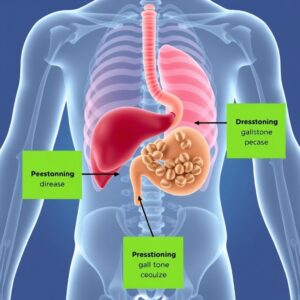
The biliary system is a sophisticated network of organs and ducts responsible for the production, storage, and delivery of bile—a vital digestive fluid. The key players include:
-
The Liver: The factory where bile is continuously produced.
-
The Hepatic Ducts: These ducts collect bile from the liver.
-
The Common Hepatic Duct: Formed by the convergence of the left and right hepatic ducts.
-
The Gallbladder: A small, pear-shaped sac nestled beneath the liver. Its primary function is to store and concentrate bile by absorbing water and electrolytes. When food, particularly fatty foods, enters the small intestine, a hormone called cholecystokinin (CCK) is released, signaling the gallbladder to contract and eject its stored bile.
-
The Cystic Duct: The conduit that connects the gallbladder to the common bile duct.
-
The Common Bile Duct (CBD): Formed by the union of the common hepatic duct and the cystic duct. It carries bile from the liver and gallbladder down into the duodenum (the first part of the small intestine).
-
The Sphincter of Oddi: A muscular valve at the end of the common bile duct that controls the flow of bile and pancreatic juices into the duodenum.
The Pathogenesis of Gallstones: How Stones Form
Gallstones form when the delicate chemical balance within bile is disrupted. Bile consists primarily of water, bile salts, cholesterol, phospholipids, and bilirubin (a waste product from the breakdown of red blood cells). Under normal conditions, these components remain in solution. However, under certain conditions, they can precipitate out of solution and form crystals, which eventually aggregate into stones. The main pathogenic mechanisms are:
-
Cholesterol Supersaturation: The liver secretes too much cholesterol for the bile salts and phospholipids to keep it dissolved. The excess cholesterol begins to crystallize.
-
Gallbladder Hypomotility: If the gallbladder does not empty completely or frequently enough (stasis), bile becomes over-concentrated, allowing time for crystals to form and grow.
-
Excess Bilirubin: Conditions that cause increased breakdown of red blood cells (e.g., cirrhosis, sickle cell anemia, certain infections) lead to high levels of bilirubin in the bile. This excess bilirubin can form calcium bilirubinate, which precipitates into pigment stones.
Types of Gallstones: Cholesterol, Pigment, and Mixed
Gallstones are categorized based on their predominant chemical composition, which has implications for their etiology and appearance.
-
Cholesterol Stones: Accounting for approximately 80% of gallstones in Western populations, these are typically radiolucent (not visible on plain X-rays) and appear yellow-green in color. They are primarily composed of crystallized cholesterol.
-
Pigment Stones: These are darker, appearing brown or black, and are composed mainly of calcium bilirubinate. Black pigment stones are often associated with hemolytic disorders (like sickle cell disease) or cirrhosis, while brown pigment stones are more often linked to bacterial infections in the biliary tract and are more common in Asian populations.
-
Mixed Stones: These are the most common type overall and contain a mixture of cholesterol, calcium bilirubinate, and other calcium salts. They often form in layers and can be radiographically visible if they contain sufficient calcium.
3. The Clinical Spectrum of Gallstone Disease: A Patient’s Journey
The presentation of gallstone disease is highly variable, ranging from a completely incidental finding to a surgical emergency. This clinical spectrum is the primary driver behind the need for specific ICD-10 codes.
Asymptomatic Gallstones (Silent Stones)
The vast majority of individuals with gallstones are entirely asymptomatic. The stones are discovered unexpectedly during an ultrasound or CT scan performed for another reason, such as abdominal pain of a different origin or routine check-ups. For these patients, the risk of developing symptoms is relatively low (about 1-2% per year). Management typically involves watchful waiting rather than immediate intervention.
Symptomatic Gallstone Disease: Biliary Colic
When a gallstone temporarily blocks the cystic duct during gallbladder contraction, it causes the classic symptom known as biliary colic. This is a misnomer, as the pain is usually constant, not colicky (intermittent). It is characterized by:
-
Location: Sudden onset of severe pain in the right upper quadrant (RUQ) or epigastric area (upper middle abdomen).
-
Radiation: The pain often radiates to the right scapula (shoulder blade) or the back.
-
Duration: The pain builds to a steady plateau and can last from 30 minutes to several hours, subsiding as the stone falls back into the gallbladder or passes through the duct.
-
Triggers: Frequently occurs after a heavy, fatty meal.
-
Associated Symptoms: Nausea and vomiting are common.
Biliary colic represents uncomplicated, symptomatic gallstone disease. It is painful but does not involve inflammation or infection of the gallbladder itself.
Complications of Gallstones: When Trouble Escalates
If the cystic duct obstruction becomes persistent or a stone migrates and causes a blockage elsewhere, serious complications can arise. These conditions require more complex clinical management and, consequently, more specific ICD-10 codes.
Acute Cholecystitis
This is the most common complication, occurring when persistent obstruction of the cystic duct leads to inflammation and infection of the gallbladder wall. The pain is similar to biliary colic but is more prolonged (lasting more than 4-6 hours), is associated with fever, and there is often tenderness in the RUQ on physical exam (Murphy’s sign). If left untreated, it can progress to gangrene or perforation of the gallbladder.
Choledocholithiasis
This term refers to the presence of gallstones within the common bile duct. This is a potentially dangerous situation as it can obstruct the flow of bile from the entire liver. Symptoms can mimic biliary colic but may also include jaundice (yellowing of the skin and eyes), dark urine, and clay-colored stools.
Gallstone Pancreatitis
If a small stone passes through the common bile duct and lodges at the Ampulla of Vater, it can obstruct the pancreatic duct, preventing pancreatic enzymes from being released. These enzymes become activated within the pancreas itself, leading to autodigestion and severe inflammation—a condition known as gallstone pancreatitis. This is a serious, life-threatening condition characterized by severe epigastric pain radiating to the back, nausea, vomiting, and elevated pancreatic enzymes in the blood.
Cholangitis
When a stone obstructs the common bile duct, the stagnant bile above the obstruction can become infected, leading to a severe infection of the biliary tree known as acute cholangitis. This is a medical emergency characterized by Charcot’s Triad: RUQ pain, jaundice, and fever/chills. A more severe form can present with Reynold’s Pentad, which adds hypotension (low blood pressure) and mental confusion, indicating septic shock.
Gallstone Ileus
A rare but serious complication in which a large gallstone erodes through the inflamed gallbladder wall into the adjacent small intestine (creating a cholecysto-enteric fistula). The stone then travels down the intestine and causes a mechanical obstruction, typically at the narrow ileocecal valve.
4. The Foundation: Understanding the ICD-10-CM Coding System
To accurately code for these varied presentations, a foundational understanding of the ICD-10 system is essential.
What is ICD-10-CM and Why Does It Matter?
The International Classification of Diseases, 10th Revision, Clinical Modification (ICD-10-CM) is a system used by healthcare providers in the United States to classify and code all diagnoses, symptoms, and procedures recorded in conjunction with hospital care. It serves several critical functions:
-
Reimbursement: It is the primary basis for determining diagnosis-related groups (DRGs) and justifying medical necessity for services billed to insurance payers.
-
Epidemiology and Research: It provides data for tracking disease incidence and prevalence, shaping public health policies and research initiatives.
-
Quality Measurement: It helps in assessing the quality of care and patient outcomes.
The Structure of an ICD-10-CM Code
An ICD-10-CM code is an alphanumeric code of 3 to 7 characters. Each character provides a layer of specificity.
-
Characters 1-3: The code category. For gallstones, this is K80 – Cholelithiasis.
-
Character 4: The etiology, anatomic site, or severity. In the K80 category, this further specifies the type of gallstone disease.
-
Character 5: Provides further detail, most commonly indicating the presence or absence of obstruction.
-
Character 6: Provides the highest level of specificity, often detailing the presence or absence of associated conditions like cholecystitis.
-
Character 7: An extension used in certain chapters (not typically in the K80 series) to indicate encounter status (e.g., initial, subsequent).
5. Navigating the K80 Code Series: The Core of Gallstone Coding
The entire universe of gallstone diagnosis codes resides within the K80 category in Chapter 11 of ICD-10-CM, “Diseases of the Digestive System.” The structure is logically organized based on the location of the stone and the presence of complications.
The ICD-10-CM K80 Category Structure
| Code Category | Description |
|---|---|
| K80.0 | Calculus of gallbladder with acute cholecystitis |
| K80.00 | … without mention of obstruction |
| K80.01 | … with obstruction |
| K80.1 | Calculus of gallbladder with other cholecystitis |
| K80.10 | … without mention of obstruction |
| K80.11 | … with obstruction |
| K80.2 | Calculus of gallbladder without cholecystitis |
| K80.20 | … without mention of obstruction |
| K80.21 | … with obstruction |
| K80.3 | Calculus of bile duct with cholangitis |
| K80.30 | … without mention of obstruction |
| K80.31 | … with obstruction |
| K80.4 | Calculus of bile duct with cholecystitis |
| K80.40 | … without mention of obstruction |
| K80.41 | … with obstruction |
| K80.5 | Calculus of bile duct without cholangitis or cholecystitis |
| K80.50 | … without mention of obstruction |
| K80.51 | … with obstruction |
| K80.6 | Calculus of gallbladder and bile duct with cholecystitis |
| K80.60 | … without mention of obstruction |
| K80.61 | … with obstruction |
| K80.7 | Calculus of gallbladder and bile duct with other cholecystitis |
| K80.70 | … without mention of obstruction |
| K80.71 | … with obstruction |
6. The Art of Specificity: Applying 5th and 6th Characters
The power of ICD-10 lies in its granularity. Simply assigning a code from the K80 series is insufficient; the 5th and 6th characters are where diagnostic precision is achieved.
The Crucial 5th Character: With or Without Obstruction?
The 5th character (the 5th digit in the code) specifies whether the condition is “with obstruction” (.x1) or “without mention of obstruction” (.x0).
-
.x0 – Without mention of obstruction: This is used when the documentation does not specify that an obstruction is present. It is the default code when the clinical picture is of simple cholelithiasis or choledocholithiasis without explicit mention of a blockage. For example, a patient with biliary colic has a stone causing transient blockage, but if the provider’s final diagnosis is simply “cholelithiasis,” K80.20 would typically be appropriate.
-
.x1 – With obstruction: This is used when the provider’s documentation explicitly states that there is an obstruction. This is a key clinical distinction, as an obstructing stone often leads to more severe complications like cholangitis, jaundice, or severe cholecystitis, and may require more urgent intervention like ERCP (Endoscopic Retrograde Cholangiopancreatography).
The Essential 6th Character: The Inflammatory State
The 6th character provides the highest level of detail regarding the inflammatory and infectious complications.
-
.0 – With acute cholecystitis: This indicates active, sudden inflammation of the gallbladder.
-
.1 – With chronic cholecystitis: This indicates long-standing, low-grade inflammation of the gallbladder, often associated with recurrent biliary colic.
-
.2 – Without cholecystitis: This is used for simple, uncomplicated gallstones (asymptomatic or with biliary colic only).
-
.3 – With cholangitis: This is specific to stones in the bile duct (choledocholithiasis) that have caused an infection.
-
.4 – With cholecystitis: This is a general code for when a bile duct stone is present along with inflammation of the gallbladder, but the documentation does not specify if it is acute or chronic.
-
.5 – Without cholangitis or cholecystitis: This is used for simple, uncomplicated stones in the common bile duct.
7. Clinical Scenarios and Coding Solutions: A Practical Walkthrough
Let’s apply this knowledge to real-world patient encounters.
Case Study 1: The Routine Biliary Colic
-
Scenario: A 45-year-old female presents to the ER with a 2-hour history of severe, constant RUQ pain that radiated to her back after a large dinner. An RUQ ultrasound shows multiple stones in the gallbladder with a normal wall thickness and no pericholecystic fluid. The patient’s pain resolves with analgesia. The discharge diagnosis is “symptomatic cholelithiasis.”
-
Coding Analysis: The stone is in the gallbladder. There is no mention of cholecystitis (the gallbladder wall is normal). The condition is symptomatic (biliary colic). There is no documentation of obstruction.
-
Correct ICD-10 Code: K80.20 – Calculus of gallbladder without cholecystitis without mention of obstruction.
Case Study 2: The Emergency of Acute Cholecystitis
-
Scenario: The same patient returns 6 months later with unrelenting RUQ pain, fever of 101.5°F, and nausea for 12 hours. Ultrasound now reveals a stone impacted in the gallbladder neck, a thickened gallbladder wall, and pericholecystic fluid. The surgeon’s diagnosis is “acute calculous cholecystitis with obstruction.”
-
Coding Analysis: The stone is in the gallbladder. The condition is acute cholecystitis. The documentation explicitly states “with obstruction.”
-
Correct ICD-10 Code: K80.01 – Calculus of gallbladder with acute cholecystitis with obstruction.
Case Study 3: The Complex Case of Choledocholithiasis
-
Scenario: A 60-year-old male is admitted with jaundice, dark urine, and RUQ pain. An MRCP (Magnetic Resonance Cholangiopancreatography) reveals a 7mm stone in the distal common bile duct causing dilation of the duct proximal to it. The gallbladder also contains stones. The diagnosis is “choledocholithiasis with obstruction and acute cholecystitis.”
-
Coding Analysis: This is a complex case with stones in both the gallbladder and the bile duct, accompanied by acute cholecystitis and obstruction.
-
Correct ICD-10 Code: K80.63 – Calculus of gallbladder and bile duct with acute cholecystitis with obstruction. (Note: K80.63 is used for acute cholecystitis; K80.73 would be for “other cholecystitis,” i.e., chronic or unspecified).
Case Study 4: The Life-Threatening Gallstone Pancreatitis
-
Scenario: A patient presents with severe epigastric pain, vomiting, and markedly elevated lipase. Ultrasound shows gallstones and a dilated common bile duct. The gastroenterologist documents “acute gallstone pancreatitis due to choledocholithiasis.”
-
Coding Analysis: Here, we have two conditions to code. First, the underlying cause: choledocholithiasis. The documentation does not mention cholangitis or cholecystitis, but it does imply obstruction (causing the pancreatitis). Second, we must code the acute pancreatitis.
-
Choledocholithiasis with obstruction: K80.51
-
Acute pancreatitis: K85.1 – Biliary acute pancreatitis
-
-
Coding Tip: According to ICD-10 guidelines, the code for the pancreatitis (K85.1) includes the concept that it is caused by gallstones. However, it is still critical to code the underlying choledocholithiasis (K85.51) to fully describe the clinical picture. The code K85.1 would be sequenced as the principal diagnosis as it is the reason for the admission.
Case Study 5: The Post-Cholecystectomy Patient
-
Scenario: A patient who had a cholecystectomy 5 years ago presents with biliary colic and jaundice. An ERCP reveals a stone in the common bile duct. The diagnosis is “post-cholecystectomy choledocholithiasis with obstruction.”
-
Coding Analysis: The gallbladder has been removed. The stone is in the bile duct. There is no mention of cholangitis.
-
Correct ICD-10 Code: K80.51 – Calculus of bile duct without cholangitis or cholecystitis with obstruction.
-
Additional Code: Z90.49 – Acquired absence of other organs (to indicate the status of the removed gallbladder). While not always required for reimbursement, this code provides valuable clinical detail.
8. Common Pitfalls and How to Avoid Them
Even experienced coders can stumble in the nuanced world of gallstone coding. Here are common errors and how to prevent them.
Confusing Cholelithiasis with Choledocholithiasis
This is the most fundamental error. Cholelithiasis (K80.2-) is strictly for stones confined to the gallbladder. Choledocholithiasis (K80.3-, K80.4-, K80.5-) is for stones in the common bile duct. Always check the imaging or procedure report to confirm the exact location of the stone. Do not assume a stone in the bile duct based on symptoms alone.
Misinterpreting “With” and “Due To” in Documentation
The ICD-10-CM Official Guidelines for Coding and Reporting provide specific direction on the use of the terms “with” and “due to.”
-
“With”: When a condition is linked by the term “with” in the medical record (e.g., “cholelithiasis with acute cholecystitis”), it is interpreted as a causal relationship. You should code both conditions as a single combination code from the K80 series.
-
“Due to”: This also indicates a causal relationship and should be coded accordingly.
If the documentation is unclear, the physician should be queried for clarification.
Overlooking the Status of the Gallbladder
Failing to determine whether the gallbladder is present, inflamed (and if so, acutely or chronically), or absent can lead to a grossly inaccurate code. Always review the entire patient record, including history and physical, imaging reports, and surgical notes.
9. The Role of Documentation: A Partnership Between Clinician and Coder
Accurate coding is impossible without precise and detailed clinical documentation. Physicians play the most critical role in the coding process through their notes. Ideal documentation for gallstone disease should include:
-
Location of Stone(s): “Gallbladder,” “common bile duct,” “both.”
-
Presence/Absence of Obstruction: “Obstructing stone in the cystic duct,” “non-obstructing gallstones,” “CBD stone causing biliary obstruction.”
-
Inflammatory Status: “Acute cholecystitis,” “chronic cholecystitis,” “no sonographic signs of cholecystitis.”
-
Associated Conditions: “Acute gallstone pancreatitis,” “acute cholangitis,” “jaundice due to choledocholithiasis.”
-
Laterality: While less critical for the gallbladder (a single, midline organ), it is important for other conditions.
A strong partnership and open communication between the clinical and health information management (HIM) departments, including the use of physician queries, are essential for achieving coding integrity.
10. The Impact of Accurate Coding: Beyond Reimbursement
While the financial incentive for accurate coding is clear—ensuring correct DRG assignment and preventing claim denials—its importance extends far beyond the revenue cycle.
-
Driving Quality Patient Care: Accurate data allows healthcare systems to identify trends in complications, track surgical outcomes, and benchmark their performance against national standards. This data-driven approach is fundamental to quality improvement initiatives.
-
Informing Public Health and Research: Public health officials rely on aggregated ICD-10 data to monitor the prevalence of diseases like gallstones, identify at-risk populations, and allocate resources effectively. Researchers use this data to study the natural history of the disease, the effectiveness of new treatments, and long-term outcomes.
-
Ensuring Regulatory Compliance: Incorrect coding can lead to allegations of fraud and abuse, resulting in significant financial penalties, legal repercussions, and damage to an institution’s reputation. Accurate coding is a cornerstone of compliance with regulations from CMS (Centers for Medicare & Medicaid Services) and other payers.
11. Conclusion: Mastering the Code for Better Healthcare
Navigating the ICD-10-CM coding for gallstone disease requires a meticulous understanding of both clinical pathology and coding conventions. The journey from a patient’s symptomatic presentation to a precise alphanumeric code hinges on specificity—locating the stone, identifying complications, and acknowledging obstructions. By mastering the structure of the K80 series and applying its characters with diligence, healthcare professionals ensure more than just proper reimbursement; they contribute to a robust data ecosystem that fuels quality improvement, advances medical research, and upholds the highest standards of patient care and regulatory compliance.
12. Frequently Asked Questions (FAQs)
Q1: What is the ICD-10 code for asymptomatic (silent) gallstones?
A: The code is K80.20 – Calculus of gallbladder without cholecystitis without mention of obstruction. Even though the patient has no symptoms, the stone is still present in the gallbladder without inflammation, making this the correct code.
Q2: How do I code for chronic cholecystitis with gallstones?
A: You would use a code from the K80.1 subcategory. For example, K80.10 – Calculus of gallbladder with chronic cholecystitis without mention of obstruction or K80.11 – … with obstruction, depending on the documentation.
Q3: A patient has gallstones and elevated liver enzymes, but no jaundice or cholangitis. What code should I use?
A: This scenario typically represents biliary colic or mild irritation from the stones. Without documentation of cholecystitis or explicit obstruction, the correct code would be K80.20 – Calculus of gallbladder without cholecystitis without mention of obstruction. The elevated enzymes are a symptom of the underlying cholelithiasis.
Q4: When a patient has gallstone pancreatitis, which code is listed first?
A: According to coding guidelines, the condition that occasioned the admission is sequenced as the principal diagnosis. In most cases of gallstone pancreatitis, the pancreatitis is the more acute, severe condition requiring the hospitalization. Therefore, K85.1 – Biliary acute pancreatitis would be the principal diagnosis. The underlying choledocholithiasis (e.g., K80.51) should be coded as an additional diagnosis.
Q5: Are there any Z-codes I should use with gallstone codes?
A: Yes, status codes can provide important context. Z90.49 – Acquired absence of other organs is used to show the patient has had a cholecystectomy. Z87.19 – Personal history of other diseases of the digestive system can be used for a history of resolved gallstone disease, though the current encounter would be coded with the active condition.
13. Additional Resources
To ensure you are always using the most current and accurate information, consistently refer to these official resources:
-
ICD-10-CM Official Guidelines for Coding and Reporting: Published annually by the CDC and CMS. This is the definitive source for coding rules and conventions.
-
AHA Coding Clinic for ICD-10-CM/PCS: The official publication from the American Hospital Association that provides authoritative advice and clarifications on specific coding scenarios.
-
The Centers for Disease Control and Prevention (CDC) ICD-10-CM Website: Provides access to the official code set and guidelines.
-
American Health Information Management Association (AHIMA): A premier professional organization for health information management professionals, offering education, tools, and resources.
-
American College of Surgeons (ACS): Provides clinical resources and statements on the management of surgical conditions like cholecystitis.
Date: October 2, 2025
Author: The Medical Coding Team
Disclaimer: The information contained in this article is for educational and informational purposes only and is not intended as a substitute for professional medical advice, diagnosis, or treatment. Always seek the advice of your physician or other qualified health provider with any questions you may have regarding a medical condition or treatment. The author is not responsible for any errors or omissions or for the results obtained from the use of this information. Medical coding is complex and subject to change; always consult the most current official ICD-10-CM coding guidelines and resources.