Imagine a patient, Mr. Johnson, awakens at 3 AM with an excruciating, searing pain in his left great toe. The joint is red, swollen, and so tender that even the weight of a bedsheet is unbearable. This classic presentation of an acute gout attack, known as podagra, is a common sight in clinics and emergency departments worldwide. For the clinician, the immediate goal is clear: diagnose and alleviate suffering. But once the pain is managed, a critical, behind-the-scenes process begins—one that translates this clinical picture into a precise alphanumeric language that drives healthcare administration, reimbursement, and population health analysis. This is the world of ICD-10 coding.
The International Classification of Diseases, Tenth Revision, Clinical Modification (ICD-10-CM) is far more than a billing tool; it is a detailed map of patient morbidity. For a condition like gout, which affects approximately 9.2 million Americans, accurate coding is not a mere administrative task—it is a clinical and financial imperative. A miscoded gout diagnosis can lead to claim denials, skewed health data, inaccurate quality metrics, and potential compliance issues. This article delves deep into the intricate landscape of ICD-10 codes for gout. We will move beyond simple code lookup and explore the pathophysiology that informs the codes, the hierarchical structure of the ICD-10-CM system, and the critical importance of specificity. We will dissect the codes for idiopathic, secondary, and chronic gout, unravel the complexities of coding associated manifestations, and provide practical case studies to bridge the gap between clinical documentation and accurate code assignment. By mastering the nuances of gout coding, healthcare professionals, from providers to coders, can ensure that the story of Mr. Johnson’s painful night is told accurately, completely, and effectively within the modern healthcare ecosystem.
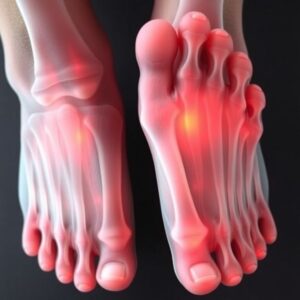
ICD-10 codes for gout
Chapter 1: Decoding the Disease – A Primer on Gout Pathophysiology and Presentation
To code gout correctly, one must first understand it clinically. Gout is not a simple “arthritis”; it is a complex form of inflammatory arthritis characterized by dysregulation of uric acid metabolism.
The Uric Acid Cascade: From Purines to Crystallization
Uric acid is the end product of purine metabolism. Purines are natural substances found in our own cells and in many foods, particularly red meat, organ meats, and certain seafood. Under normal conditions, uric acid dissolves in the blood, passes through the kidneys, and is excreted in urine. Hyperuricemia, a serum urate level greater than 6.8 mg/dL, is the primary risk factor for gout. This level represents the saturation point at which uric acid can precipitate out of the blood and form needle-like monosodium urate (MSU) crystals.
Hyperuricemia arises from three primary mechanisms:
-
Increased Production of Uric Acid: The body produces too much uric acid due to factors like diet, genetic predisposition, or conditions with high cell turnover (e.g., psoriasis, some cancers).
-
Decreased Excretion of Uric Acid: The kidneys do not remove enough uric acid. This is often linked to chronic kidney disease, certain medications (e.g., diuretics, low-dose aspirin), and genetics.
-
A Combination of Both.
It is the deposition of MSU crystals in joints, soft tissues, and organs that triggers the inflammatory response we recognize as a gout attack. The body’s immune system identifies these crystals as foreign invaders, launching a massive inflammatory cascade involving cytokines like interleukin-1β (IL-1β), which results in the cardinal signs of inflammation: pain, swelling, redness, and heat.
The Four Stages of Gout: Asymptomatic Hyperuricemia to Chronic Tophaceous Gout
Gout is a progressive disease that evolves through distinct, though not always sequential, stages. Understanding these stages is crucial for selecting the correct ICD-10 code.
-
Stage 1: Asymptomatic Hyperuricemia: The patient has elevated serum uric acid levels but has never experienced a gout attack. There are no symptoms. This stage is not coded as gout. It may be coded as R79.82, Elevated uric acid level, if documented, but it is not a disease state itself.
-
Stage 2: Acute Gouty Arthritis (Flare): This is the classic, painful attack. It often begins suddenly, frequently at night, and can reach peak intensity within hours. The joint(s) become exquisitely tender, swollen, warm, and erythematous. The first metatarsophalangeal joint (big toe) is the most common site (podagra), but ankles, knees, wrists, and elbows can also be affected. Attacks are typically self-limiting, lasting 3 to 10 days without treatment.
-
Stage 3: Intercritical Gout (Interval Gout): This is the symptom-free period between acute attacks. Although the patient is not in pain, MSU crystals continue to reside in the joints, and low-grade inflammation may persist. The disease is still active, and prophylactic treatment is often continued during this phase.
-
Stage 4: Chronic Tophaceous Gout: This is the most advanced and debilitating stage of gout, typically developing after years of uncontrolled hyperuricemia. Tophi (singular: tophus) are large, chalky, nodular deposits of MSU crystals that form in connective tissues, joints, bursae, and even the helix of the ear. They can cause chronic pain, joint deformity, erosive damage to bone (visible on X-ray), and limited range of motion. The presence of tophi is a key differentiator in ICD-10 coding.
Chapter 2: The ICD-10-CM Ecosystem – An Overview of the Coding System
Before diving into the specific codes for gout, a foundational understanding of the ICD-10-CM system is essential.
Structure and Logic: From Chapter to Code
ICD-10-CM is organized into chapters based on etiology or body system. Gout and other crystal arthropathies are found in Chapter 13: Diseases of the Musculoskeletal System and Connective Tissue (M00-M99).
An ICD-10-CM code can be anywhere from 3 to 7 characters long. The structure is hierarchical:
-
Category (3 characters): The broadest level (e.g., M10, Gout).
-
Etiology/Anatomic Site (4th, 5th, 6th characters): These characters add specificity regarding the cause, laterality, and other clinical details.
-
Extension (7th character): Used for certain categories, particularly injuries and external causes, to denote encounter type (e.g., initial, subsequent, sequela). It is less commonly used in the gout categories.
The Importance of the Official Coding Guidelines
The ICD-10-CM Official Guidelines for Coding and Reporting are the definitive rules for code assignment. They are updated annually and must be followed to ensure compliance. Key conventions relevant to gout include:
-
The “Use Additional Code” Note: Instructs the coder to report another code to provide a more complete picture (e.g., code the adverse effect of a drug causing gout).
-
The “Code Also” Note: Requires the coder to sequence two codes to fully describe a condition (e.g., code the chronic kidney disease along with gout due to renal impairment).
-
The “With” Convention: When a condition is linked to a manifestation in the Alphabetic Index, it is presumed to have a causal relationship.
Chapter 3: The Core of the Matter – Navigating the Gout Code Family (M10)
The M10 category is the home for most gout diagnoses. Its structure forces the coder to ask a critical question: What is the underlying cause of the gout?
M10.0 – Idiopathic Gout
-
Definition: This code is used when the gout is primary, meaning it is not attributed to another underlying disease, drug, or specific cause. It is often related to a combination of genetic predisposition and lifestyle factors (diet, alcohol) that lead to inherent issues with uric acid production or excretion.
-
Coding Note: M10.0 is the default code when the provider’s documentation simply states “gout” without specifying a cause or chronicity. It is a billable code that requires no additional digits.
M10.1 – Lead-Induced Gout (Saturnine Gout)
-
Definition: A specific type of secondary gout caused by chronic lead poisoning. Lead impairs renal excretion of uric acid, leading to hyperuricemia.
-
Coding Note: This code requires an additional code from category T56.0, Toxic effect of lead and its compounds, to identify the source of the toxicity.
M10.2 – Drug-Induced Gout
-
Definition: This is a highly relevant code in clinical practice. Many commonly prescribed medications can induce hyperuricemia by reducing renal excretion of uric acid. Key culprits include:
-
Diuretics (especially thiazides)
-
Low-dose aspirin
-
Niacin
-
Cyclosporine
-
Ethambutol
-
Pyrazinamide
-
-
Coding Note: The use of M10.2 requires two additional codes:
-
A code from T36-T50 to identify the specific drug, with a 5th or 6th character representing “adverse effect.”
-
A code to fully describe the manifestation (the gout itself).
-
Example: Gout due to hydrochlorothiazide.
-
M10.21, Drug induced gout, right knee (if site specified)
-
T50.1X5A, Adverse effect of thiazide diuretics, initial encounter
M10.3 – Gout Due to Impairment of Renal Function
-
Definition: This code is used when the gout is a direct consequence of chronic kidney disease (CKD). Impaired kidney function leads to reduced uric acid clearance.
-
Coding Note: This code must be used with an additional code from category N18, Chronic kidney disease (CKD), to specify the stage of renal disease.
Example: Gout due to stage 3 CKD.
-
M10.30, Gout due to renal impairment, unspecified site
-
N18.3, Chronic kidney disease, stage 3 (moderate)
M10.4 – Other Secondary Gout
-
Definition: This is a catch-all subcategory for gout caused by other underlying conditions not specified elsewhere. Common causes include:
-
M10.41 – Other secondary gout, shoulder
-
M10.42 – Other secondary gout, elbow
-
M10.43 – Other secondary gout, wrist
-
M10.44 – Other secondary gout, hand
-
M10.45 – Other secondary gout, hip
-
M10.46 – Other secondary gout, knee
-
M10.47 – Other secondary gout, ankle and foot
-
M10.49 – Other secondary gout, multiple sites
-
-
Underlying Conditions: These can include dehydration, starvation ketosis, hypothyroidism, hyperparathyroidism, psoriasis, and myeloproliferative disorders.
-
Coding Note: The coder must code first the underlying disease, followed by the M10.4- code.
Example: Gout secondary to psoriatic arthritis.
-
L40.52, Psoriatic arthritis mutilans (or other psoriatic arthritis code)
-
M10.472, Other secondary gout, left ankle and foot
M10.9 – Gout, Unspecified
-
Definition: This code should be used sparingly. It is appropriate only when the documentation is truly insufficient to determine the type or cause of the gout, and a query to the provider is not possible. In an ideal world, with proper documentation, this code would rarely be used, as M10.0 (Idiopathic) would be the default for unspecified cause.
-
Coding Note: This is a billable code.
Chapter 4: The Crucial Specificity – Incorporating Manifestations and Comorbidities
A gout code alone is often insufficient. The ICD-10-CM system emphasizes coding all relevant aspects of a patient’s condition.
The “With” and “Use Additional Code” Conventions
The Tabular List for the M10 codes contains essential instructional notes. For nearly every code under M10, you will find this instruction:
Use additional code to identify:
autonomic neuropathy in diseases classified elsewhere (G99.0)
*calculus of urinary tract in diseases classified elsewhere (N21.-, N22.0-)*
*disorders of external ear in diseases classified elsewhere (H61.1-, H62.8-)*
disorders of iris and ciliary body in diseases classified elsewhere (H22)
*gouty tophi of ear (H61.1-)*
gouty tophi of heart (I43)
*gouty tophi of kidney (N22.0-)*
*gouty tophi of other sites (M1A.-0)*
gouty tophi of skin and subcutaneous tissue (L99.0)
gouty tophi of thyroid (E35.0)
This means that if the patient has any of these manifestations, you must report a second code to describe it. For example, a patient with idiopathic gout and gouty tophi of the ear would be coded as:
-
M10.00, Idiopathic gout, unspecified site
-
H61.11-, Gouty tophi of pinna (with laterality)
Coding for Gouty Arthropathy (M1A & M10): Acute vs. Chronic
This is a critical distinction. The ICD-10-CM system provides two separate code families for gout affecting the joints:
-
M10.-: Gout. This category is generally used for acute gout attacks or gout not specified as chronic. It does not have a 5th character for laterality for most sites.
-
M1A.-: Gouty arthropathy, chronic. This category is used specifically for chronic gout with joint involvement. It is characterized by the presence of tophi and/or structural joint damage.
Tophaceous Gout (M1A.-0): Identifying and Coding Nodular Deposits
The presence of tophi moves the diagnosis from simple gout to chronic tophaceous gout. In the M1A category, the 5th character is used to specify the joint involved, and the 6th character indicates the presence of tophi.
-
M1A.-0: Gouty arthropathy without tophus (tophi)
-
M1A.-1: Gouty arthropathy with tophus (tophi)
Example: Chronic gouty arthritis of the right knee, with tophi.
-
M1A.161, Chronic gouty arthropathy of right knee with tophus (tophi)
Gouty Nephropathy: The Renal Connection
Gout can severely affect the kidneys, leading to urate nephropathy or uric acid nephrolithiasis (kidney stones). When documented, these conditions must be coded separately.
-
Gouty Nephropathy: Code first the gout (M10.- or M1A.-), then code N22.8, Calculus of kidney in diseases classified elsewhere, for stones, or N08.5* (Glomerular disorders in diseases classified elsewhere) / N14.0 (Analgesic nephropathy) / other renal manifestations as directed by the Alphabetic Index.
Chapter 5: The Chronic Distinction – Differentiating M10 from M1A
This distinction is so important it warrants its own chapter. Confusing acute gout with chronic gouty arthropathy is a common coding error.
Differentiating M10 (Gout) from M1A (Chronic Gouty Arthropathy)
| Feature | M10.- (Gout) | M1A.- (Chronic Gouty Arthropathy) |
|---|---|---|
| Primary Use | Acute flares, unspecified gout, or gout of any cause. | Specifically for chronic joint disease with structural involvement. |
| Tophi | Coded separately using the “use additional code” note (e.g., M1A.-0). | The presence of tophi is built into the code with the 6th character (M1A.-1). |
| Laterality | Generally does not have a 5th character for specific joint laterality for most codes (e.g., M10.9 is “unspecified site”). | Requires a 5th character to specify the exact joint and laterality (e.g., M1A.161 is right knee). |
| Clinical Picture | Sudden, severe, self-limiting inflammatory attack. | Persistent, low-grade pain, joint stiffness, deformity, and radiographic evidence of erosion. |
| Documentation Cues | “Acute gout attack,” “gout flare,” “podagra.” | “Chronic gout,” “tophaceous gout,” “gouty arthropathy,” “joint erosions due to gout.” |
Case Studies: Acute Flare vs. Chronic Joint Disease
-
Scenario A (Acute): A 55-year-old male presents to the ED with a 12-hour history of a hot, red, swollen, and excruciatingly painful right big toe. He has had two similar episodes in the past 5 years. Diagnosis: Acute gouty arthritis, right foot.
-
Coding: M10.071, Idiopathic gout, right ankle and foot. (Note: The history of previous episodes does not automatically make this “chronic.” This is an acute flare.)
-
-
Scenario B (Chronic): A 70-year-old male with a 15-year history of gout presents for a routine follow-up. He has persistent, dull aching in multiple joints, including both knees. Physical exam reveals firm, subcutaneous nodules over both olecranon bursae. X-rays show “punched-out” erosions in the knees and hands. Diagnosis: Chronic tophaceous gout.
-
Coding: M1A.161, Chronic gouty arthropathy of right knee with tophus; M1A.161, Chronic gouty arthropathy of left knee with tophus; (and additional codes for other affected joints).
-
Chapter 6: The Documentation Dialogue – Bridging the Gap Between Clinician and Coder
Accurate coding is impossible without precise clinical documentation. The medical record is the coder’s sole source of truth.
Essential Elements for Robust Clinical Documentation
For gout, providers should document:
-
Type/Cause: Idiopathic, drug-induced, due to renal impairment, etc.
-
Chronicity: Acute flare vs. chronic gouty arthropathy.
-
Site/Laterality: The specific joint(s) affected (e.g., “left first MTP joint,” “right knee”).
-
Manifestations: Presence or absence of tophi. If present, document the location.
-
Associated Conditions: CKD, heart failure, use of diuretics, etc.
Querying the Provider: Best Practices for Clarification
When documentation is unclear, a coder must initiate a query. Queries should be non-leading and fact-based.
-
Poor Query: “The patient has gout, can you specify if it’s chronic?” (This is leading).
-
Effective Query: “The note documents a history of gout and the current presentation of a painful, swollen right knee. Can you please clarify the diagnosis for this encounter: is this an acute gout flare or chronic gouty arthropathy? Additionally, is there any documentation of tophi?”
Chapter 7: Case Studies in Real-World Coding – From Patient Encounter to Final Code
Let’s apply everything we’ve learned to complex, real-world scenarios.
Case Study 1: The First-Time Attack
-
Presentation: A 40-year-old female presents to her PCP with a 24-hour history of severe pain and swelling in her left wrist. She has no significant past medical history. Physical exam confirms a warm, erythematous, and tender left wrist. Serum uric acid is 9.5 mg/dL. Diagnosis: Acute gout, left wrist.
-
Coding: M10.032, Idiopathic gout, left wrist.
-
Rationale: This is a first-time, acute attack with no specified cause, making it idiopathic. The site is specified.
Case Study 2: The Patient with Chronic Tophaceous Gout and Renal Issues
-
Presentation: A 68-year-old male with a long-standing history of hypertension and Stage 4 CKD is seen in rheumatology. He has chronic pain and stiffness in his hands and feet. Exam reveals multiple tophi on his fingers and both ears. Diagnosis: Chronic tophaceous gout due to chronic kidney disease, stage 4.
-
Coding:
-
N18.4, Chronic kidney disease, stage 4
-
M1A.341, Chronic gouty arthropathy of right hand with tophus
-
M1A.342, Chronic gouty arthropathy of left hand with tophus
-
H61.111, Gouty tophi of right pinna
-
H61.112, Gouty tophi of left pinna
-
-
Rationale: The CKD is the underlying cause, so it is sequenced first. The chronic gout with tophi in specific joints is coded from the M1A category. The tophi of the ears are coded separately as manifestations.
Case Study 3: Drug-Induced Acute Gout in a Heart Failure Patient
-
Presentation: A 75-year-old female with congestive heart failure (CHF) managed with furosemide presents with an acute, painful, swollen right knee. Arthrocentesis confirms MSU crystals. The physician diagnoses Acute gout of the right knee secondary to furosemide use.
-
Coding:
-
M10.261, Drug induced gout, right knee
-
T50.1X5A, Adverse effect of loop diuretics, initial encounter
-
I50.9, Heart failure, unspecified
-
-
Rationale: The gout is directly caused by the drug (furosemide), so M10.261 is used. The adverse effect of the drug is coded with the appropriate T code. The underlying condition (CHF) for which the drug was prescribed is also coded.
Chapter 8: The Financial and Compliance Impact – Why Accuracy is Non-Negotiable
Inaccurate gout coding has tangible consequences beyond mere data entry errors.
DRGs, HCCs, and Risk Adjustment: The Financial Repercussions
-
Diagnosis-Related Groups (DRGs): In the inpatient setting, codes determine the DRG assignment, which directly dictates reimbursement. A poorly documented and coded case of “unspecified gout” (M10.9) may result in a lower-paying DRG than a well-documented case of “chronic tophaceous gout with CKD” (M1A.-1 with N18.-).
-
Hierarchical Condition Categories (HCCs): Used in Medicare Advantage and other risk-adjusted payment models, HCCs assign a risk score to patients based on their diagnoses. Chronic and complex conditions like chronic tophaceous gout (M1A) and CKD (N18) are HCCs that significantly increase a patient’s risk score and, consequently, the capitated payment the health plan receives to manage that patient. Undercoding gout means leaving money on the table and misrepresenting the patient’s true health status.
Audits, Denials, and Compliance Risks
Using an unspecified code when a more specific code is available, or failing to code a documented manifestation, is a red flag for auditors. It can lead to:
-
Claim Denials: Payers may deny claims due to insufficient medical necessity if the code does not match the documented complexity of the case.
-
Take-Backs: Audits can result in the recoupment of previously paid funds.
-
False Claims Act Liability: Knowingly and repeatedly submitting inaccurate codes can lead to severe legal and financial penalties.
Chapter 9: The Future of Gout Coding and Management
As medicine evolves, so does medical coding. The future of gout management lies in personalized medicine and treat-to-target (T2T) strategies, aiming for a specific serum urate level (<6.0 mg/dL or lower for those with tophi). This shift towards precision medicine may eventually be reflected in future coding iterations, potentially incorporating treatment response or genetic markers. Furthermore, the increasing use of advanced imaging (ultrasound, DECT) to identify subclinical tophi and MSU crystal deposits is improving diagnostic accuracy, which in turn supports more precise code assignment. The collaboration between clinicians, radiologists, and coders will only become more critical to capture the full picture of this complex disease.
Conclusion: The Synergy of Clinical and Coding Excellence
Accurate ICD-10 coding for gout is a multifaceted process that demands a deep understanding of the disease’s pathophysiology, its clinical stages, and the intricate structure of the coding system. It requires a collaborative partnership between clinicians, who must provide detailed and specific documentation, and medical coders, who must interpret that documentation with a discerning and knowledgeable eye. By moving beyond generic terms and embracing the specificity offered by categories M10 and M1A, healthcare organizations can ensure proper reimbursement, maintain compliance, and, most importantly, contribute to high-quality data that drives better patient outcomes and advances in the understanding and treatment of gout.
Frequently Asked Questions (FAQs)
Q1: What is the difference between code M10.9 (Gout, unspecified) and M10.0 (Idiopathic gout)?
A1: While often used interchangeably when documentation is limited, there is a subtle distinction. M10.0 implies that the gout is “primary” and not caused by another condition, which is the most common scenario. M10.9 is a less specific code used when the type of gout is truly unknown or undocumented. Best practice is to use M10.0 as the default for “gout” unless the provider specifies a secondary cause. Always query for clarification if possible.
Q2: How do I code a patient who has both acute gout flares and chronic tophaceous gout?
A2: Code for the condition being treated during the encounter. If the patient is being seen for a new, acute flare, code from the M10 category for the acute gout. You would also code the chronic tophaceous gout from the M1A category, as it is a coexisting condition that may impact treatment. The M1A code provides crucial information about the patient’s overall disease severity and complexity.
Q3: A patient has hyperuricemia but has never had a gout attack. What is the correct code?
A3: This is coded as R79.82, Elevated uric acid level. Asymptomatic hyperuricemia is not classified as gout in ICD-10-CM. It is a laboratory finding, not a disease state.
Q4: The provider documents “gouty tophi of the elbow.” How is this coded?
A4: This depends on the context of the chronic gout diagnosis. If the patient has a diagnosis of chronic gouty arthropathy of the elbow with tophi, you would use a code from the M1A category, such as M1A.121 (Chronic gouty arthropathy of right elbow with tophus). If the tophi are simply noted as a manifestation without the joint being specified as chronically arthritic, you would use the “use additional code” note and assign L99.0, Gouty tophi of skin and subcutaneous tissue.
Q5: When coding drug-induced gout, how do I find the correct T code?
A5: You must identify the specific drug. In the ICD-10-CM Alphabetic Index, look up “Adverse effect, drug.” You will be directed to Table of Drugs and Chemicals. Find the drug (e.g., Hydrochlorothiazide), and the code under the “Adverse Effect” column is T50.1X5. The 5th character ‘A’ (for initial encounter) or ‘D’ (subsequent) is then added.
Additional Resources
-
The Official ICD-10-CM Guidelines (FY2025): Published by the CDC and CMS. The definitive source for coding rules.
-
American Health Information Management Association (AHIMA): Provides professional resources, practice briefs, and education on coding best practices.
-
American Academy of Professional Coders (AAPC): Offers certification, training, and articles on medical coding.
-
American College of Rheumatology (ACR): Provides clinical guidelines for the diagnosis and management of gout, which inform proper documentation.
-
National Institute of Arthritis and Musculoskeletal and Skin Diseases (NIAMS) – Gout: A reliable source for patient-friendly and clinical information on gout.
Date: October 1, 2025
Disclaimer: The information contained in this article is intended for educational and informational purposes only. It is not a substitute for professional medical coding, billing, or legal advice. Medical coders must consult the most current, official ICD-10-CM coding guidelines and payer-specific policies for accurate code assignment. Always rely on the physician’s documentation as the primary source for coding.