In the intricate ecosystem of modern healthcare, two parallel narratives unfold simultaneously. The first is a clinical story, written in the language of symptoms, diagnoses, and treatments, centered on the patient lying in a hospital bed, suffering from a painfully distended abdomen, nausea, and a profound absence of bowel sounds. The second is an administrative and financial story, translated into the universal language of codes, which dictates the flow of billions of dollars, shapes population health data, and drives quality metrics. At the nexus of these two worlds lies a deceptively simple term: Ileus.
For the clinician, ileus represents a common postoperative complication or a systemic response to injury or metabolic derangement. For the medical coder, it represents a specific alphanumeric code within the vast and detailed International Classification of Diseases, Tenth Revision, Clinical Modification (ICD-10-CM) system. The accurate translation of the clinical picture into this code is not a mere clerical task; it is a critical act of interpretation that requires a deep understanding of pathophysiology, meticulous attention to documentation, and a rigorous adherence to coding guidelines. An error in this translation can lead to inaccurate quality reporting, denied claims, and a distorted picture of a healthcare institution’s patient population.
This article serves as a definitive guide to the ICD-10 code for ileus. We will embark on a journey that begins deep within the neuro-muscular apparatus of the human intestine, explores the clinical scenarios that bring it to a halt, and culminates in the precise application of code K56.7. Our mission is to equip clinicians, coders, students, and healthcare administrators with the knowledge to navigate this complex terrain with confidence and precision, ensuring that every coded case of ileus accurately reflects the patient’s story and upholds the financial and ethical integrity of the healthcare system.
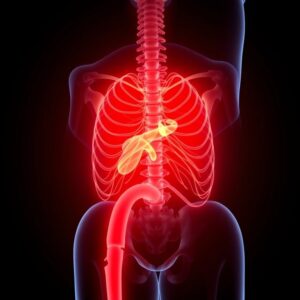
ICD-10 codes for ileus
2. Understanding the Pathophysiology: What is an Ileus?
Before a single code can be assigned, one must first grasp the clinical entity it represents. Ileus is not a disease in itself but rather a functional disorder characterized by the temporary cessation of coordinated bowel motility (peristalsis). Imagine the intricate, wave-like muscular contractions that normally propel food, fluid, and gas through your digestive system suddenly falling silent. The result is a functional obstruction: the bowel lumen is not physically blocked, but its contents cannot advance, leading to a cascade of clinical symptoms.
Defining the Paralysis: Ileus vs. Mechanical Obstruction
The most crucial distinction in the world of intestinal obstruction is between a functional ileus and a mechanical obstruction. This distinction is the bedrock of accurate ICD-10 coding.
-
Ileus (Functional Obstruction): The plumbing system is intact, but the pump has failed. There is no physical blockage. The paralysis is often due to neuromuscular dysfunction, typically involving the sympathetic nervous system’s inhibition of the intrinsic myenteric plexus.
-
Mechanical Obstruction: The pump is working, often furiously, but the pipe is kinked, blocked, or compressed. A physical barrier—such as a tumor, adhesion, or hernia—prevents the passage of intestinal contents.
Clinically, they can present similarly with abdominal distension, pain, nausea, and vomiting. However, key differences in history, physical exam, and imaging guide both treatment and coding.
The Symphony of Motility: A Brief Overview of Normal Bowel Function
To understand the failure, one must appreciate the symphony of normal function. The gastrointestinal tract is governed by an autonomous “second brain” known as the enteric nervous system (ENS). This complex network of neurons, in coordination with the central nervous system and a delicate balance of neurotransmitters and hormones, orchestrates peristalsis. After surgery, trauma, or in the face of metabolic insults, this symphony is disrupted. The sympathetic nervous system becomes overactive, releasing catecholamines that directly inhibit the ENS, bringing peristalsis to a standstill.
Etiologies and Triggers: The Many Faces of a Paralyzed Bowel
Ileus is rarely an idiopathic event; it is almost always a response to an underlying trigger. The coder’s ability to identify this trigger within the documentation is paramount. Common etiologies include:
-
Postoperative Ileus: The most common form, occurring after abdominal or non-abdominal surgery (especially involving manipulation of the bowels). It is a predictable, often self-limiting response.
-
Inflammatory/Infectious: Peritonitis, pancreatitis, appendicitis, or diverticulitis can cause a localized or generalized ileus as the body’s response to inflammation.
-
Metabolic/Electric: Severe electrolyte imbalances (notably hypokalemia, hyponatremia, and hypomagnesemia) disrupt the cellular mechanisms required for smooth muscle contraction.
-
Pharmacologic: Numerous medications are notorious for slowing gut motility, including opioids, anticholinergics, calcium channel blockers, and certain antidepressants.
-
Vascular: Mesenteric ischemia, though rare, can present initially as an ileus before progressing to bowel infarction.
-
Neurogenic: Spinal cord injuries, retroperitoneal trauma, or certain neuropathies can disrupt the neural pathways controlling the gut.
3. The World of ICD-10-CM: A System of Specificity
The transition from ICD-9-CM to ICD-10-CM in 2015 represented a quantum leap in medical classification. Where ICD-9 was often broad and nonspecific, ICD-10 is built on a foundation of granularity. This specificity is not an bureaucratic burden; it is a powerful tool for capturing the complexity of modern medicine, leading to better data for research, public health tracking, and precision in reimbursement.
Beyond ICD-9: The Philosophy of Modern Medical Classification
ICD-9-CM had a single code for ileus: 560.1. This code encompassed “paralytic ileus” without further detail. ICD-10-CM, by contrast, demands a more nuanced approach. It forces the coder and clinician to ask: What kind of ileus? What is the context? This philosophy ensures that the coded data more accurately reflects the clinical reality.
Navigating the Alphabetic Index and Tabular List
The ICD-10-CM system is navigated using two primary tools:
-
The Alphabetic Index: An alphabetical list of terms and their corresponding codes. It is the starting point for a coder.
-
The Tabular List: A structured, numerical list of codes with accompanying instructions, inclusions, exclusions, and notes. The Tabular List is always the final authority. A code found in the Index must be verified in the Tabular List to ensure accuracy and compliance with all instructional notes.
4. Deconstructing the ICD-10 Code for Ileus: K56.7
Now, we arrive at the heart of the matter. The core ICD-10-CM code for an unspecified ileus is K56.7.
A Deep Dive into the Code’s Home: Chapter 11 (K00-K95)
Code K56.7 resides within Chapter 11 of ICD-10-CM: “Diseases of the Digestive System” (K00-K95). This chapter covers all disorders of the oral cavity, esophagus, stomach, intestines, liver, pancreas, and gallbladder. Locating the code within this chapter immediately contextualizes it as a primary digestive system condition.
The Parent Code: K56 (Paralytic ileus and intestinal obstruction without hernia)
To find K56.7, one must first understand its parent category, K56. The official title of this category is “Paralytic ileus and intestinal obstruction without hernia.” This is a critical category because it groups together functional and mechanical obstructions that are not caused by hernias (which have their own separate code block, K40-K46).
The codes under K56 include:
-
K56.0 – Paralytic ileus
-
K56.1 – Intussusception
-
K56.2 – Volvulus
-
K56.3 – Gallstone ileus
-
K56.4 – Other impaction of intestine
-
K56.5 – Intestinal adhesions [bands] with obstruction
-
K56.6 – Other and unspecified intestinal obstruction
-
K56.7 – Ileus, unspecified
The Ultimate Designation: K56.7 (Ileus, unspecified)
Let’s examine the code in its official context from the Tabular List:
K56.7 Ileus, unspecified
-
Includes: Ileus NOS
-
Excludes1: Gallstone ileus (K56.3)
Ileus duodeni (K31.5)
Ileus following a procedure (K91.89)
Meconium ileus (E84.11)
Postoperative ileus (K91.89) -
Excludes2: Other and unspecified intestinal obstruction (K56.6-)
This tabular listing is a coder’s instruction manual. Let’s break it down:
-
Includes: “Ileus NOS” (Not Otherwise Specified) means that if the provider documents simply “ileus” without any further qualification, K56.7 is the default and appropriate code.
-
Excludes1: This is a critical instruction. An “Excludes1” note means that the two conditions cannot be coded together; they are considered mutually exclusive. If the patient has gallstone ileus, you must use K56.3, not K56.7. Similarly, if the ileus is explicitly documented as postoperative or following a procedure, you must use K91.89. Using K56.7 in these scenarios would be incorrect.
-
Excludes2: An “Excludes2” note means that the condition excluded is not part of the condition represented by the code, but both can be coded if the patient has both. This note tells us that “other intestinal obstruction” (K56.6-) is a different entity. If a provider uses “ileus” and “obstruction” interchangeably but the clinical picture is clearly a mechanical blockage, K56.6- would be more appropriate.
Therefore, K56.7 is a residual category. It is the code of choice when the provider documents “ileus” and the medical record does not support a more specific code from the Excludes1 list.
5. The Art of Distinction: Differentiating Ileus from Other Obstructions
The true skill in coding ileus lies not in memorizing K56.7, but in knowing when not to use it. Let’s explore the key differential codes.
The Critical Challenge: Why Specificity is Non-Negotiable
Using an incorrect code can have significant consequences. Coding a postoperative ileus as K56.7 instead of K91.89 might seem minor, but it misrepresents the case as a primary digestive disease rather than a complication of care. This can negatively impact hospital quality scores (e.g., Patient Safety Indicators) and risk-adjusted mortality models.
Mechanical Intestinal Obstruction (K56.6-): The Physical Blockade
This category is for physical blockages, most commonly from adhesions, tumors, or strictures. The fifth digit provides further specificity:
-
K56.60 – Unspecified intestinal obstruction
-
K56.69 – Other intestinal obstruction
If a CT scan shows a transition point and dilated loops of bowel proximal to a physical blockage (e.g., from an adhesion or mass), and the provider documents “small bowel obstruction,” K56.69 is the correct code, not K56.7.
Postoperative Ileus (K91.89): A Expected Complication
This is arguably the most important distinction. Code K91.89 – Other postprocedural complications and disorders of digestive system is used for ileus that occurs following a surgical or other procedure.
-
Coding Guideline: The ICD-10-CM Official Guidelines for Coding and Reporting state that if a procedure is the cause of the condition, a code from Chapter 21 (Factors Influencing Health Status) may be used as an additional code to indicate the relationship. However, for postoperative ileus, K91.89 already encapsulates that relationship.
-
Clinical Context: A postoperative ileus is so common that it is often considered an expected part of the recovery process after abdominal surgery. However, when it is prolonged or severe enough to require active medical management (e.g., NPO status, nasogastric tube placement, delayed discharge), it becomes a reportable complication.
Example: A patient undergoes a laparoscopic cholecystectomy. On postoperative day 2, they have abdominal distension, no flatus, and an X-ray shows diffusely dilated loops of bowel without a transition point. The surgeon documents “postoperative ileus.” The correct code is K91.89, not K56.7.
Gallstone Ileus (K56.3): A Unique Pathological Entity
This is a specific type of mechanical obstruction, not a functional ileus, but the name is a historical misnomer that persists. It occurs when a large gallstone erodes through the gallbladder into the small bowel (typically the duodenum), creating a fistula, and then travels down to impact in the narrower ileum, causing a blockage. It is coded distinctly as K56.3.
6. The Documentation Imperative: A Coder’s Lifeline
The coder is wholly dependent on the quality of the clinician’s documentation. Vague or inconsistent terminology is the primary source of coding errors for ileus.
Querying the Provider: When “Ileus” Alone is Not Enough
If a provider documents only “ileus,” the coder must default to K56.7. However, if the clinical picture suggests a more specific etiology, a coder or clinical documentation integrity (CDI) specialist should issue a formal query to the provider.
Scenarios warranting a query:
-
The patient is 3 days post-op from a colectomy, and the note says “ileus.” Query: “Can you clarify if this ileus is postoperative in nature?”
-
The radiology report describes a “transition point suggestive of adhesive obstruction,” but the provider’s assessment is “ileus.” Query: “The radiological findings are consistent with a mechanical small bowel obstruction. Can you confirm the diagnosis?”
-
The patient has a history of ovarian cancer and presents with nausea, vomiting, and a CT showing a pelvic mass compressing the bowel. The provider writes “malignant ileus.” Query: “Can you specify if this is a functional ileus from the cancer or a mechanical obstruction from the mass?”
Key Clinical Indicators to Look For in the Medical Record
A proficient coder reads the entire record, not just the diagnosis list. Key elements include:
-
History of Present Illness: Recent surgery? Known cancer? Medication list (especially opioids)?
-
Physical Exam: Abdominal distension, tenderness? Presence or absence of bowel sounds?
-
Imaging Reports (X-ray, CT): The most crucial differentiator. Look for phrases like “diffusely dilated loops of bowel” (suggests ileus) vs. “dilated loops with transition point and decompressed distal bowel” (suggests mechanical obstruction).
-
Progress Notes: Are they being managed with “bowel rest” or is there discussion of surgical intervention for an obstruction?
Case Studies: From Vague Documentation to Precise Code Assignment
Case 1: The Vague Admission
-
Documentation: “Patient admitted with abdominal pain, distension, and nausea. Assessment: Ileus.”
-
Initial Code: K56.7
-
CDI Action: The coder notes the patient had a hysterectomy 5 days ago. A query is sent.
-
Provider Response: “Postoperative ileus.”
-
Final Correct Code: K91.89
Case 2: The Misleading Terminology
-
Documentation: “Elderly patient with hypokalemia presents with ‘obstruction’. CT scan shows diffusely dilated small bowel without a transition point.”
-
Initial Thought: K56.60 (Unspecified intestinal obstruction)
-
CDI Action/ Coder Analysis: The imaging findings are classic for a functional ileus, likely due to the electrolyte imbalance. The provider is using “obstruction” loosely.
-
Final Correct Code: K56.7 (Ileus, unspecified), with an additional code for E87.6 (Hypokalemia) to indicate the cause.
7. Coding in Action: Practical Scenarios and Applications
Let’s solidify these concepts with detailed practical scenarios.
Scenario 1: The Post-Colon Surgery Patient
-
Presentation: A 68-year-old male is 4 days post-op from a sigmoid colectomy for diverticulitis. He has not passed flatus, has abdominal distension, and is vomiting. A KUB X-ray shows diffusely dilated loops of small and large bowel.
-
Provider Documentation: “Prolonged postoperative ileus. Will keep NPO, continue NG tube to low intermittent suction.”
-
Coding Analysis: The documentation is explicit: “postoperative ileus.” The Excludes1 note under K56.7 directs us away from that code. The correct code is K91.89. This accurately reflects that the ileus is a complication of the surgical procedure.
Scenario 2: The Elderly Patient with Electrolyte Imbalance
-
Presentation: An 82-year-old female from a nursing home presents with weakness, confusion, and abdominal distension. She is on furosemide for CHF. Labs reveal a potassium of 2.8 mEq/L. CT abdomen/pelvis shows diffuse bowel dilation without obstruction.
-
Provider Documentation: “Hypokalemia-induced ileus. Admission for electrolyte repletion and supportive care.”
-
Coding Analysis: The provider has linked the ileus directly to the hypokalemia. The ileus itself is “unspecified” in terms of the ICD-10 hierarchy, as there is no specific code for “metabolic ileus.” Therefore, the correct code for the ileus is K56.7. However, the underlying cause, hypokalemia (E87.6), must be coded as an additional diagnosis. The sequencing (which code is listed first) will depend on the reason for admission. If the ileus was the primary clinical problem driving the admission, K56.7 would be the principal diagnosis.
Scenario 3: The Patient with Advanced Parkinson’s Disease
-
Presentation: A 75-year-old male with advanced Parkinson’s disease presents with chronic, worsening constipation and abdominal fullness. He has no surgical history. A motility study confirms severely delayed colonic transit.
-
Provider Documentation: “Neurogenic ileus secondary to Parkinson’s disease.”
-
Coding Analysis: “Neurogenic ileus” is not a specific code in ICD-10-CM. The functional disorder is still an ileus, so the core code is K56.7. The underlying cause, Parkinson’s disease (G20), should be added as a secondary code. This paints a complete picture of the patient’s complex medical condition.
8. The Role of Comorbidities and Complications: Sequencing and MCC/CC Impact
In the inpatient setting, codes determine the assignment of a Diagnosis-Related Group (DRG), which fixes the payment for the hospital stay. Certain diagnoses are classified as Major Comorbidities (MCCs) or Comorbidities (CCs), which can increase the relative weight and payment of the DRG.
-
Principal Diagnosis: The condition established after study to be chiefly responsible for occasioning the admission. In many ileus cases, the ileus itself is the principal diagnosis.
-
Secondary Diagnoses: All other conditions that coexist at the time of admission or develop subsequently, which affect patient care.
While ileus (K56.7) is not typically a MCC or CC, the underlying cause might be. For example, if the principal diagnosis is ileus (K56.7) and a secondary diagnosis is severe sepsis (which is an MCC), the DRG will be weighted more heavily, reflecting the increased resource utilization.
9. Beyond the Basics: Related Codes and Clinical Concepts
Ileus rarely exists in a vacuum. The following table provides a quick reference for the key ICD-10-CM codes involved in diagnosing and differentiating intestinal motility disorders and obstructions.
ICD-10-CM Codes Related to Ileus and Intestinal Obstruction
| ICD-10-CM Code | Code Description | Clinical Context & Usage Notes |
|---|---|---|
| K56.7 | Ileus, unspecified | Default code for “ileus” when no more specific cause is documented. Use for metabolic, pharmacologic, or idiopathic ileus. |
| K91.89 | Other postprocedural complications and disorders of digestive system | Mandatory for postoperative ileus. Also used for other digestive complications following a procedure. |
| K56.0 | Paralytic ileus | Rarely used alone. Implies a known neurologic cause of paralysis. Often requires additional codes for the underlying cause (e.g., spinal cord injury). |
| K56.69 | Other intestinal obstruction | Used for mechanical obstructions not otherwise specified, such as those from adhesions, tumors, or strictures. The code of choice when a physical blockage is confirmed. |
| K56.3 | Gallstone ileus | Used for the specific condition where a gallstone causes a mechanical obstruction after eroding into the bowel. |
| K31.5 | Obstruction of duodenum | Used for blockages specifically in the duodenum (e.g., from superior mesenteric artery syndrome). |
| E87.6 | Hypokalemia | A common etiology code to be used secondarily with K56.7 when hypokalemia is the cause of the ileus. |
| F11.20 | Opioid dependence, uncomplicated | A common etiology code when chronic opioid use is the contributing factor to the ileus. |
| R10.84 | Generalized abdominal pain | A symptom code that may be used if abdominal pain is a presenting feature. |
| R14.0 | Abdominal distension (gaseous) | A symptom code commonly associated with ileus. |
The Role of CPT® and HCPCS Codes in Billing for Ileus Management
While ICD-10 codes describe the diagnosis, CPT® (Current Procedural Terminology) and HCPCS (Healthcare Common Procedure Coding System) codes describe the services and procedures performed to treat it.
-
CPT® Codes: For a patient with ileus, relevant CPT codes might include:
-
74160: Computed tomography, abdomen; with contrast material(s) – for diagnostic imaging.
-
43752: Naso- or oro-gastric tube placement, requiring physician’s skill and fluoroscopic guidance – for decompression.
-
99221-99223: Initial hospital inpatient care – for the E/M (Evaluation and Management) services.
-
-
HCPCS Codes: These might include codes for supplies, such as A4361 for a disposable nasogastric tube.
10. Conclusion: Mastering the Code for Enhanced Patient Care and Financial Integrity
The accurate assignment of the ICD-10 code for ileus transcends a simple administrative task. It is a multidisciplinary process that hinges on precise clinical documentation, a deep understanding of gastrointestinal pathophysiology, and a rigorous application of coding guidelines. The journey from a patient’s symptomatic presentation to the final code K56.7—or its more specific alternatives like K91.89—requires careful distinction between functional and mechanical processes and a proactive approach to resolving documentation ambiguities. By mastering this process, healthcare professionals ensure data integrity, support appropriate reimbursement, and ultimately contribute to a healthcare system where the coded record is a true and valuable reflection of the patient’s story.
11. Frequently Asked Questions (FAQs)
Q1: My provider always documents “post-op ileus.” Is it ever okay to use K56.7 for this?
A: No. Per the ICD-10-CM Official Coding Guidelines and the Excludes1 note under K56.7, ileus that is explicitly documented as postoperative or following a procedure must be coded with K91.89. Using K56.7 is non-compliant and misrepresents the case as a primary digestive disease rather than a procedural complication.
Q2: What is the difference between K56.0 (Paralytic ileus) and K56.7 (Ileus, unspecified)? When would I use K56.0?
A: K56.0, “Paralytic ileus,” is a very specific term that implies a complete neuromuscular paralysis of the bowel, often in the context of a known neurologic insult, such as spinal cord injury or a specific neuropathy. In everyday practice, most ileus cases are “functional” or “adynamic” and are not documented as “paralytic.” Therefore, K56.7 is the far more commonly used code. Only use K56.0 if the provider specifically uses the term “paralytic ileus” and the medical record supports a true paralytic etiology.
Q3: A patient has a small bowel obstruction from adhesions, but the surgeon’s note calls it an “adhesive ileus.” What is the correct code?
A: This is a classic example of clinical terminology conflicting with coding specificity. Despite the use of the word “ileus,” an adhesion is a physical cause of obstruction. The correct code is K56.69 (Other intestinal obstruction). The coder should follow the clinical facts (a mechanical obstruction due to adhesions) rather than the potentially misleading terminology. If uncertain, a query to the provider is warranted: “The CT shows an adhesive obstruction. Can you confirm the diagnosis as ‘adhesive small bowel obstruction’?”
Q4: How do I code a case where the patient has both a mechanical obstruction and a concomitant ileus?
A: This is a complex scenario, typically seen in cases of long-standing mechanical obstruction where the bowel becomes ischemic and dysfunctional proximal to the blockage. Coding should reflect the provider’s diagnostic statement. If the provider states the patient has both, you may code both K56.69 (for the mechanical obstruction) and K56.7 (for the associated functional ileus). However, the principal diagnosis would be the condition that occasioned the admission, which is usually the mechanical obstruction. Always follow the provider’s lead and the hierarchy of the record.
12. Additional Resources
For the most accurate and up-to-date information, always consult these primary sources:
-
ICD-10-CM Official Guidelines for Coding and Reporting: Published annually by the Centers for Medicare & Medicaid Services (CMS) and the National Center for Health Statistics (NCHS). This is the definitive rulebook for coders.
-
AHA Coding Clinic for ICD-10-CM/A: The official source for coding advice from the American Hospital Association (AHA) in cooperation with the four cooperating parties. It provides authoritative answers to specific coding scenarios.
-
The Tabular List and Alphabetic Index of ICD-10-CM: The core code sets, available from various publishers and online coding suites.
-
American Health Information Management Association (AHIMA): A professional organization that provides resources, education, and certification for medical coders and CDI specialists.
-
American College of Surgeons (ACS): Provides resources on optimal surgical documentation, which is the foundation for accurate coding.
Date: October 4, 2025
Author: Medical Coding & Documentation Specialist
Disclaimer: The information provided in this article is for educational and informational purposes only and does not constitute medical or coding advice. Medical coding is complex and constantly evolving. Always consult the most current official ICD-10-CM coding guidelines, payer-specific policies, and the patient’s complete medical record for accurate code assignment.