Kidney failure is a silent epidemic, affecting millions worldwide and placing a tremendous burden on healthcare systems. It is a condition that does not discriminate, capable of striking suddenly after a severe infection or creeping in gradually over decades in a patient with uncontrolled diabetes or hypertension. For the clinician, the focus is on diagnosis, treatment, and slowing the disease’s progression. For the patient, it is a life-altering diagnosis, often involving rigorous dietary restrictions, complex medication regimens, and the daunting prospect of dialysis or transplant.
But there is another language spoken in the corridors of healthcare—a language of alphanumeric codes that tells the story of the disease in a way that computers, insurers, and researchers can understand. This is the language of the International Classification of Diseases, Tenth Revision, Clinical Modification (ICD-10-CM). For conditions as complex and multifaceted as kidney failure, accurate coding is not merely an administrative task; it is a critical component of patient care, public health surveillance, and the financial viability of healthcare providers.
This article serves as a definitive guide to navigating the intricate world of ICD-10 codes for kidney failure. We will move beyond a simple list of codes to build a deep, conceptual understanding of why codes are structured the way they are and how to apply them correctly in even the most complex clinical scenarios. By mastering this language, you become more than a coder; you become a vital translator of clinical narrative into actionable data.
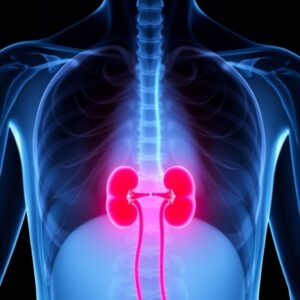
ICD-10 codes for kidney failure
Table of Contents
ToggleChapter 1: Understanding the Landscape of Kidney Failure
Before a single code can be assigned, one must first grasp the clinical realities it represents. Kidney failure is not a single, monolithic entity but a spectrum of conditions with varying causes, trajectories, and implications for care.
The Vital Role of the Kidneys
The kidneys are two bean-shaped organs, each about the size of a fist, located just below the rib cage. They are the body’s master chemists, performing several life-sustaining functions:
-
Filtration: Removing waste products and excess fluids from the blood to form urine.
-
Electrolyte Balance: Regulating the levels of key minerals like sodium, potassium, and calcium.
-
Blood Pressure Regulation: Releasing the enzyme renin, which helps control blood pressure.
-
Red Blood Cell Production: Producing the hormone erythropoietin, which stimulates the bone marrow to make red blood cells.
-
Bone Health: Converting vitamin D into its active form, which is essential for calcium absorption.
When the kidneys fail, all these systems are disrupted, leading to a cascade of potential complications.
Acute Kidney Injury (AKI): The Sudden Shutdown
Acute Kidney Injury (AKI), formerly known as acute renal failure (ARF), is characterized by a rapid decrease in kidney function, occurring over a period of hours to days. This sudden impairment leads to the accumulation of waste products like creatinine and urea, and an inability to maintain fluid and electrolyte balance.
Common Causes of AKI are often categorized as:
-
Prerenal (Before the Kidney): Reduced blood flow to the kidneys. Examples include severe dehydration, heart failure, sepsis, or significant blood loss.
-
Intrinsic (Within the Kidney): Direct damage to the kidney tissue itself. This includes conditions like glomerulonephritis, vasculitis, or damage from toxins and medications (e.g., certain antibiotics, contrast dyes used in imaging).
-
Postrenal (After the Kidney): Obstruction of the urinary outflow. Examples include kidney stones, an enlarged prostate, or tumors blocking the ureters or urethra.
AKI is often reversible if the underlying cause is identified and treated promptly. However, severe or repeated episodes can lead to permanent damage and the development of Chronic Kidney Disease.
Chronic Kidney Disease (CKD): The Insidious Progression
Chronic Kidney Disease (CKD) is defined as the gradual loss of kidney function over months or years. It is a progressive condition, often silent in its early stages, with symptoms only becoming apparent when kidney function is significantly impaired.
Staging of CKD is based on the glomerular filtration rate (GFR), which is the best measure of kidney function. The stages are:
-
Stage 1: Kidney damage with normal or high GFR (≥90 mL/min)
-
Stage 2: Mild reduction in GFR (60-89 mL/min)
-
Stage 3a: Mild to moderate reduction in GFR (45-59 mL/min)
-
Stage 3b: Moderate to severe reduction in GFR (30-44 mL/min)
-
Stage 4: Severe reduction in GFR (15-29 mL/min)
-
Stage 5: Kidney failure (GFR <15 mL/min)
The most common causes of CKD are diabetes and hypertension, which together account for about two-thirds of all cases.
End-Stage Renal Disease (ESRD): The Final Stage
End-Stage Renal Disease (ESRD) is the most advanced form of CKD, specifically Stage 5. At this point, the kidneys have lost nearly all their ability to function. Life-sustaining treatment through renal replacement therapy is required. The two primary forms of RRT are:
-
Dialysis: A procedure that artificially filters the blood to remove waste and excess fluid. This can be done via hemodialysis (using a machine) or peritoneal dialysis (using the lining of the abdomen).
-
Kidney Transplant: The surgical placement of a healthy kidney from a donor.
Understanding this clinical spectrum—from the sudden crisis of AKI to the slow progression of CKD to the life-sustaining management of ESRD—is the foundational knowledge upon which all accurate ICD-10 coding is built.
Chapter 2: Decoding the ICD-10-CM System
To effectively code for kidney failure, one must be fluent in the language of ICD-10-CM itself.
What is ICD-10-CM and Why Does it Matter?
The International Classification of Diseases, 10th Revision, Clinical Modification (ICD-10-CM) is the official system used in the United States to classify and code all diagnoses, symptoms, and procedures recorded in conjunction with hospital care. It serves several critical purposes:
-
Reimbursement: It is the primary basis for determining reimbursement from insurers, including Medicare and Medicaid, under systems like MS-DRGs (Medicare Severity-Diagnosis Related Groups).
-
Epidemiology and Public Health: It allows for the tracking of disease prevalence, outbreaks, and mortality rates, informing public health policy and research.
-
Clinical Research: It enables researchers to identify patient populations for clinical trials and to study treatment outcomes.
-
Quality Measurement: It is used to assess the quality of care provided by hospitals and physicians.
The Structure of an ICD-10-CM Code
ICD-10-CM codes are alphanumeric and can range from three to seven characters in length. Each character provides a more specific level of detail.
-
Chapter: The first character is a letter, which corresponds to a chapter based on disease type or body system. Codes for kidney failure fall under Chapter 14: Diseases of the Genitourinary System (N00-N99).
-
Category: The first three characters (e.g., N17) define the general category of the disease—in this case, “Acute kidney failure.”
-
Subcategory and Extension: Characters four through seven provide increasing specificity regarding etiology, anatomic site, severity, and other clinical details. A decimal point is placed after the third character. For example:
-
N18.6 is the code for End-stage renal disease.
-
N18.31 is the code for Chronic kidney disease, stage 3a.
-
This hierarchical structure allows for a remarkable degree of clinical detail, which is essential for accurately representing a condition as complex as kidney failure.
Chapter 3: A Deep Dive into the Code Block N17-N19
The ICD-10-CM manual organizes codes related to renal failure within the block N17-N19. This block is our primary focus and is structured to reflect the clinical distinctions we discussed in Chapter 1.
Code Block N17-N19: Renal Failure
-
N17: Acute kidney failure – This category is for the sudden loss of kidney function.
-
N18: Chronic kidney disease (CKD) – This category is for the long-term, progressive loss of kidney function and includes specific codes for each stage.
-
N19: Unspecified kidney failure – This is a nonspecific code to be used only when the documentation is insufficient to determine if the kidney failure is acute or chronic.
The very structure of this code block forces the coder to make a fundamental clinical distinction: is the condition acute, chronic, or unknown? This decision is the first and most critical step in the coding process.
Chapter 4: Acute Kidney Injury (AKI) – Coding N17
When a provider documents “Acute Kidney Injury,” “Acute Renal Failure,” or “AKI,” the coder will turn to category N17. This category requires a fourth digit to specify the pathological cause or type of the acute failure, highlighting the system’s demand for specificity.
N17.0 – Acute kidney failure with tubular necrosis
Tubular necrosis is the death of tubular cells in the kidneys, often caused by ischemia (lack of blood flow) or nephrotoxic drugs. This is one of the most common forms of intrinsic AKI. Documentation must specify “tubular necrosis” or a cause strongly associated with it (e.g., prolonged hypotension, specific toxins) to use this code.
N17.1 – Acute kidney failure with acute cortical necrosis
This is a more severe and often irreversible form of AKI where the cortex (the outer part of the kidney) undergoes necrosis. It is much rarer and is typically associated with obstetric catastrophes like placental abruption or septic shock.
N17.2 – Acute kidney failure with medullary necrosis
Also known as renal papillary necrosis, this involves damage to the medulla (the inner part of the kidney). It is frequently associated with analgesic abuse, diabetes, or sickle cell disease.
N17.8 – Other acute kidney failure
This code is a catch-all for other specified types of AKI not captured by the above codes. For example, if the provider documents “acute oliguric renal failure” (low urine output), this code would be appropriate, as the specific pathology isn’t one of the necrotic types listed.
N17.9 – Acute kidney failure, unspecified
This code is used when the provider documents AKI but does not specify the type or underlying pathology. While better than using N19, it is still less specific than the other codes in the N17 category and should be used only when the documentation does not allow for greater specificity.
Chapter 5: Chronic Kidney Disease (CKD) – Coding N18
Coding for CKD is centered on one critical piece of clinical information: the stage. The stage, based primarily on the estimated Glomerular Filtration Rate (eGFR), dictates the specific code from the N18 category.
The Critical Role of Stages in CKD Coding
Accurate coding for CKD is impossible without knowing the stage. Coders must actively look for this information in the patient’s record—typically in laboratory reports or the physician’s assessment. Using an unspecified code when the stage is known is a coding error that can impact reimbursement and data quality.
CKD Stages and Corresponding ICD-10-CM Codes
| CKD Stage | Description | eGFR (mL/min/1.73m²) | ICD-10-CM Code |
|---|---|---|---|
| Stage 1 | Kidney damage with normal/high GFR | ≥ 90 | N18.1 |
| Stage 2 | Mild reduction in GFR | 60-89 | N18.2 |
| Stage 3a | Mild to moderate reduction | 45-59 | N18.31 |
| Stage 3b | Moderate to severe reduction | 30-44 | N18.32 |
| Stage 4 | Severe reduction | 15-29 | N18.4 |
| Stage 5 | Kidney Failure | < 15 | N18.5 |
| ESRD | End-Stage Renal Disease | On dialysis/transplant | N18.6 |
| Unspecified | CKD, stage unknown | N/A | N18.9 |
N18.1 – N18.5: Chronic kidney disease, Stage 1 through Stage 5
These codes are used to report the specific stage of CKD as defined by the eGFR. It is crucial to note the expansion of Stage 3 into N18.31 (Stage 3a) and N18.32 (Stage 3b), which allows for more precise data tracking.
N18.6 – End-stage renal disease
This is one of the most significant codes in the category. N18.6 is used only for patients with Stage 5 CKD who are receiving ongoing renal replacement therapy (dialysis) or who have a kidney transplant. It is not synonymous with Stage 5 CKD alone. A patient with a new diagnosis of Stage 5 CKD who has not yet started dialysis would be coded N18.5, not N18.6. The documentation must clearly state “ESRD” or indicate the patient is on dialysis.
N18.9 – Chronic kidney disease, unspecified
This code should be a last resort. It is used only when a provider documents “Chronic Kidney Disease” but does not specify the stage and the stage cannot be inferred from the medical record. In today’s era of electronic health records and routine lab reporting, this code is becoming less justifiable.
Chapter 6: Unspecified Kidney Failure – Coding N19
The Pitfalls of N19
N19, Unspecified kidney failure, is a code to be used with extreme caution. It is reserved for situations where the provider’s documentation is so vague that it is impossible to determine if the kidney failure is acute (N17) or chronic (N18). Examples of such documentation might include “renal failure,” “kidney failure,” or “uremia” without any context of duration or acuity.
Using N19 is highly discouraged because:
-
It Hurts Reimbursement: Payers view unspecified codes as clinically inadequate, which can lead to claim denials or down-coding, resulting in lower reimbursement.
-
It Degrades Data: It provides little value for public health tracking or research, as it lumps together fundamentally different conditions.
-
It Reflects Poor Documentation: Its use often signals a need for clarification from the provider.
The coding professional’s duty is to query the provider for clarification to assign a more specific code from either N17 or N18 whenever possible.
Chapter 7: The Art of Combination Coding: Etiology and Manifestation
Kidney failure is rarely a primary diagnosis; it is most often a consequence or manifestation of another underlying disease. ICD-10-CM handles this relationship through a system of combination coding and instructional notes.
The “Use Additional Code” Note
This note instructs the coder to report another code to provide a more complete picture of the patient’s condition. For kidney failure codes, you will frequently see “use additional code” to identify the cause.
Example: A patient has CKD Stage 3 due to hypertension.
-
The CKD is the manifestation.
-
The hypertension is the etiology (cause).
-
You would code: N18.32 (Chronic kidney disease, stage 3b) and I12.9 (Hypertensive chronic kidney disease with stage 1-4 chronic kidney disease, or unspecified chronic kidney disease).
Notice that the hypertension code itself (I12.9) includes a reference to the kidney disease, demonstrating the interconnected nature of these codes.
The “Code First” Note
This note is even more directive. It tells you that the underlying condition should be sequenced before the manifestation. This is common when the manifestation is an integral part of the disease process.
Example: A patient has acute kidney failure due to sepsis.
-
The sepsis is the underlying disease.
-
The AKI is a known complication of sepsis.
-
The Tabular List for N17 includes a note: “Code first associated underlying disease.”
-
You would code: A41.9 (Sepsis, unspecified organism) followed by N17.9 (Acute kidney failure, unspecified).
Chapter 8: Navigating Comorbidities and Complications
Patients with kidney failure, particularly CKD and ESRD, often have a complex web of comorbid conditions and complications. Accurate coding requires capturing this full clinical picture.
Coding Hypertension and Kidney Disease: The Complex Relationship
The link between hypertension and kidney disease is a classic “chicken and egg” scenario. ICD-10-CM has specific codes to reflect this relationship from the hypertension side.
-
I12.- Hypertensive chronic kidney disease: Used when hypertension is the cause of the CKD. The codes in this category (I12.0, I12.9) include the presence of the CKD, so you do not also code a separate code for essential hypertension.
-
I13.- Hypertensive heart and chronic kidney disease: Used when a patient has both hypertensive heart disease and CKD.
Coding Diabetes and Kidney Disease: The Diabetic Nexus
Diabetes is the leading cause of ESRD. ICD-10-CM has specific codes for diabetic chronic kidney disease.
-
E08-E13 with .21: The codes for diabetes mellitus (categories E08-E13) each have a fourth-digit subcategory .22: “Diabetic chronic kidney disease.” This code includes diabetic nephropathy. When using a code from E08-E13 with .22, it includes the diabetes, the related CKD, and any other associated diabetic complications. You would not code a separate N18 code unless there is a non-diabetic kidney disease also present.
Example: A patient with Type 2 diabetes and CKD Stage 4 due to diabetic nephropathy.
-
Correct Code: E11.22 (Type 2 diabetes mellitus with diabetic chronic kidney disease)
-
Incorrect: E11.22 + N18.4 (This is redundant as the CKD is included in the diabetic code).
Anemia, Fluid Overload, and Other Common Complications
ESRD and advanced CKD cause numerous complications that must be coded if documented.
-
Anemia: Use D63.1 (Anemia in chronic kidney disease). This code explicitly links the anemia to the CKD.
-
Fluid Overload/Volume Overload: Use E87.70 (Fluid overload, unspecified) or E87.71 (Hypervolemia).
-
Hyperkalemia: Use E87.5 (Hyperkalemia).
-
Metabolic Acidosis: Use E87.2 (Acidosis).
-
Renal Osteodystrophy: Use M90.8- (Osteopathy in diseases classified elsewhere). A code from N18 must also be used.
Capturing these complications is essential for justifying the medical necessity of treatments and for accurately reflecting the patient’s severity of illness.
Chapter 9: Real-World Coding Scenarios and Case Studies
Let’s apply our knowledge to realistic patient encounters.
Case Study 1: The Post-Surgical Patient
Scenario: A 72-year-old male undergoes a complex cardiac bypass surgery. Post-operatively, he becomes hypotensive and his creatinine rises sharply. The physician documents “Acute tubular necrosis secondary to post-operative hypotension and contrast-induced nephropathy.”
-
Analysis: This is clearly an Acute Kidney Injury. The specified pathology is “tubular necrosis.” The etiology is hypotension and contrast.
-
Coding:
-
N17.0 (Acute kidney failure with tubular necrosis) – This is the manifestation.
-
I95.81 (Other hypotension) – This is the underlying cause (post-operative hypotension).
-
T80.89XA (Other complications following infusion, transfusion, and therapeutic injection, initial encounter) – This can be used for contrast-induced nephropathy (check payer-specific guidelines, as some may prefer a different code for contrast reactions).
-
-
Rationale: The code N17.0 provides the required specificity. The underlying causes are coded separately to complete the picture.
Case Study 2: The Long-Term Diabetic
Scenario: A 55-year-old female with a 20-year history of Type 2 diabetes presents for a routine follow-up. Her eGFR is stable at 38 mL/min. The assessment states “Type 2 Diabetes with Diabetic Chronic Kidney Disease, Stage 3b.”
-
Analysis: The CKD is a direct manifestation of her diabetes. The stage is clearly documented as 3b.
-
Coding:
-
E11.22 (Type 2 diabetes mellitus with diabetic chronic kidney disease)
-
-
Rationale: Code E11.22 includes both the diabetes and the associated CKD. It is incorrect to add N18.32. The stage, while clinically critical, is not represented in the ICD-10 code in this specific instance because the diabetic kidney disease code does not specify the stage.
Case Study 3: The Unclear Presentation
Scenario: An 80-year-old male is admitted from a nursing home with altered mental status. His labs show a creatinine of 4.5 mg/dL (baseline unknown). The admission note states “Acute on Chronic Renal Failure. Likely due to dehydration and UTI.”
-
Analysis: This is a complex but common scenario. The provider has specified that there is both an acute and a chronic component.
-
Coding:
-
N17.9 (Acute kidney failure, unspecified) – For the acute component.
-
N18.9 (Chronic kidney disease, unspecified) – For the chronic component. (A query should be sent to determine the stage of the CKD if possible).
-
E86.0 (Dehydration) – The underlying cause of the acute exacerbation.
-
N39.0 (Urinary tract infection, site not specified) – Another potential contributing cause.
-
-
Rationale: ICD-10-CM allows for coding both acute and chronic renal failure when documented. The unspecified codes are used because the specific type of AKI and stage of CKD are not documented. A best practice would be to query the provider for this information.
Chapter 10: The Impact of Accurate Coding: Beyond Reimbursement
While correct reimbursement is a tangible and important outcome, the impact of accurate kidney failure coding extends far beyond the financial.
Driving Public Health Initiatives
Accurate data on the prevalence of CKD stages (N18.1-N18.5) and ESRD (N18.6) allows health authorities to map the epidemic, allocate resources for dialysis centers and transplant programs, and target public health screening campaigns for at-risk populations (e.g., those with diabetes and hypertension).
Informing Clinical Decision-Making
Aggregated coded data can be used to identify trends and outcomes. For example, researchers can analyze data to see if patients with a specific comorbidity profile (coded with E11.22 and I12.9) have better outcomes on one type of antihypertensive medication versus another.
Ensuring Regulatory Compliance
Inaccurate coding, whether due to a lack of specificity (overusing N19) or misinterpretation of guidelines (missequencing sepsis and AKI), can lead to audits, fines, and allegations of fraud. Mastery of these codes is a key component of organizational compliance.
Conclusion: Mastering the Code, Understanding the Patient
Navigating the ICD-10 codes for kidney failure requires a bridge between clinical knowledge and administrative precision. The journey from the nonspecific N19 to the highly detailed N17.0 or N18.31 is a journey toward better patient care, more robust data, and a more sustainable healthcare system. By understanding the story behind each code—the acute crisis, the chronic struggle, the complex web of causes and complications—the medical coding professional becomes an essential architect of the patient’s digital story, ensuring it is told with accuracy, clarity, and purpose.
Frequently Asked Questions (FAQs)
1. What is the difference between N18.5 and N18.6?
-
N18.5 (Chronic kidney disease, stage 5) is used for a patient with a GFR of less than 15 mL/min who is not yet on dialysis.
-
N18.6 (End-stage renal disease) is used for a patient with stage 5 CKD who is receiving ongoing dialysis or has a kidney transplant.
2. When do I use a code from the E08-E13 series with .22 instead of an N18 code?
-
Use a diabetic code with .22 (e.g., E11.22) when the chronic kidney disease is a direct result of the diabetes (diabetic nephropathy). Do not use an additional N18 code in this case, as the kidney involvement is included in the diabetic code.
3. Can I code both acute and chronic renal failure together?
-
Yes, if the provider documents “acute on chronic renal failure,” you should code both N17.- (for the acute component) and N18.- (for the chronic component).
4. What should I do if the provider only documents “renal failure”?
-
This is an ambiguous term. The best practice is to query the provider for clarification to determine if the failure is acute or chronic. If a query is not possible, you must default to the less specific code N19, Unspecified kidney failure.
5. How do I code a kidney transplant patient?
-
The status of having a kidney transplant is coded with Z94.0 (Kidney transplant status). This code should be used in addition to other codes for the patient’s current condition. If the transplanted kidney is failing, you would also code the appropriate kidney failure code (e.g., N18.6 if it has reached ESRD).
Additional Resources
-
The Official ICD-10-CM Guidelines: Published annually by the CDC and CMS. This is the definitive source for coding rules and conventions.
-
American Health Information Management Association (AHIMA): Offers a wealth of resources, including coding clinics, webinars, and practice exercises.
-
National Kidney Foundation (NKF): Provides excellent clinical resources and patient education materials that can help coders understand the disease process.
-
Centers for Disease Control and Prevention (CDC) – Chronic Kidney Disease Initiative: A valuable source for public health data and clinical guidelines related to CKD.
-
American Association of Professional Coders (AAPC): Another leading organization offering certification, training, and networking opportunities for medical coders.
Date: October 10, 2025
Author: The Medical Coding Specialist Team
Disclaimer: The information contained in this article is for educational and informational purposes only and is not intended as a substitute for professional medical advice, diagnosis, or treatment. Always seek the advice of your physician or other qualified health provider with any questions you may have regarding a medical condition or treatment, and before undertaking a new health care regimen. Medical coding guidelines are subject to change; always refer to the most current official ICD-10-CM coding manual and payer-specific policies.