In the intricate world of modern healthcare, few procedures embody the synergy of surgical artistry and administrative precision quite like the lumbar fusion. For the surgeon, it is a complex, life-altering intervention aimed at restoring stability, alleviating debilitating pain, and returning a patient to a functional life. For the medical coder, it represents one of the most challenging and high-stakes assignments in the entire coding lexicon—a intricate puzzle where every character in a lengthy alphanumeric string carries profound implications. A single misstep in code selection can trigger a cascade of consequences: claim denials, reduced reimbursements, compliance violations, and a distorted representation of the patient’s medical story and the facility’s surgical capabilities.
This article is designed to be the definitive guide for navigating this complex landscape. We will embark on a detailed journey, dissecting not only the “what” but the “why” behind ICD-10 coding for lumbar fusions. From the foundational anatomy of the spine to the nuanced specifics of the ICD-10-PCS system, we will equip you with the knowledge to code with confidence and accuracy. Whether you are a seasoned coder, a surgeon’s billing specialist, a healthcare administrator, or a student entering the field, mastering this topic is essential. It is here, at the crossroads of clinical medicine and health information management, that patient care truly meets the bottom line.
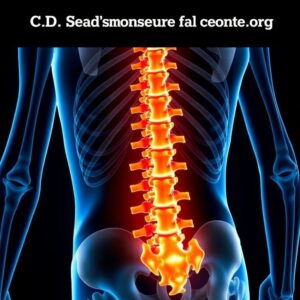
ICD-10 codes for lumbar fusion
2. Understanding the Foundation: What is a Lumbar Fusion?
Before a single code can be assigned, one must first possess a fundamental understanding of the procedure itself. A lumbar fusion, in its essence, is a surgical technique designed to create a solid bony bridge between two or more vertebrae in the lower back. The primary goal is to eliminate painful motion at a spinal segment that has become a source of pathology.
The Anatomical Landscape: A Closer Look at the Lumbar Spine
The lumbar spine consists of five large, robust vertebrae, labeled L1 through L5. These vertebrae are the workhorses of the spinal column, bearing the majority of the body’s weight. Key anatomical structures involved in fusion include:
-
Vertebral Body: The large, cylindrical anterior part of the vertebra.
-
Intervertebral Disc: The cartilaginous cushion between vertebral bodies, acting as a shock absorber.
-
Facet Joints: Paired joints at the posterior of the vertebra that guide and limit spinal motion.
-
Spinal Canal: The bony tunnel through which the spinal cord and nerve roots travel.
-
Pedicles: Bony pillars that connect the vertebral body to the posterior elements.
-
Lamina: The bony “roof” over the spinal canal, often removed in decompressive procedures like a laminectomy.
Understanding these structures is paramount because the specific location and nature of the surgical work directly dictate the codes assigned.
Indications for Surgery: Why is a Lumbar Fusion Necessary?
A fusion is not a first-line treatment. It is typically reserved for cases where conservative management (physical therapy, medication, injections) has failed. Common indications include:
-
Degenerative Disc Disease (DDD): Wear-and-tear of the intervertebral disc leading to pain and instability.
-
Spondylolisthesis: A condition where one vertebra slips forward over the one below it.
-
Spinal Stenosis: A narrowing of the spinal canal that puts pressure on the nerves.
-
Herniated Disc: A disc that has ruptured and is pressing on a nerve root.
-
Scoliosis or other Spinal Deformities: Abnormal curvatures of the spine.
-
Fracture: A broken vertebra, often from trauma or osteoporosis.
-
Tumor: Removal of a vertebral tumor may require stabilization via fusion.
-
Instability: Abnormal movement between vertebrae causing pain or neurological compromise.
-
Failed Previous Surgery (Pseudarthrosis): A fusion that did not successfully heal.
Common Surgical Approaches: The Surgeon’s Pathway to the Spine
The surgeon’s chosen path to access the lumbar spine is a critical determinant in the procedural code. The main approaches are:
-
Posterior Approach (PLF – Posterolateral Fusion): The surgeon operates through an incision in the patient’s back. The fusion is typically performed in the posterolateral gutter—the area between the transverse processes of the vertebrae. This is the most traditional approach.
-
Anterior Approach (ALIF – Anterior Lumbar Interbody Fusion): The surgeon operates through an incision in the patient’s abdomen. This allows direct access to the disc space without disturbing the back muscles or nerves. An interbody device is almost always placed.
-
Lateral Approach (LLIF/XLIF – Lateral Lumbar Interbody Fusion): The surgeon operates through the patient’s side, passing through the psoas muscle to access the spine.
-
Transforaminal Approach (TLIF): A variant of the posterior approach where the surgeon accesses the disc space from a more angled, side-on trajectory, allowing for placement of an interbody device from the back while minimizing nerve retraction.
-
Combined Anterior-Posterior (360° Fusion): A two-stage procedure involving both an anterior and a posterior approach for maximum stability.
3. Decoding the Diagnosis: Mastering the ICD-10-CM Code for the Reason for Surgery
The diagnosis code (from the ICD-10-CM manual) tells the “why” story. It justifies the medical necessity of the complex fusion procedure. Accuracy here is non-negotiable.
The Predominant Code: M51.26 – Other Intervertebral Disc Displacement, Lumbar Region
This code is frequently used for a lumbar herniated disc (herniated nucleus pulposus) that is the primary reason for surgery. The 5th digit specifies the level.
-
M51.26: Other intervertebral disc displacement, lumbar region.
Degenerative Conditions: The M48.0- and M51.3- Series
For degenerative disc disease without a frank herniation, the codes shift.
-
M51.36: Other intervertebral disc degeneration, lumbar region.
-
M48.06: Spinal stenosis, lumbar region.
Spondolisthesis: Coding the Slipped Vertebra (M43.1-)
This is a common indication for fusion. The codes require a 5th character to denote the level and a 6th character to specify the type (e.g., spondylolysis).
-
M43.16: Spondylolisthesis, lumbar region.
Postlaminectomy Syndrome: The Failed Back Surgery (M96.1)
This diagnosis is used when a fusion is being performed to address pain or instability following a previous spinal surgery (e.g., a laminectomy) that did not resolve the issue.
-
M96.1: Postlaminectomy syndrome, not elsewhere classified.
Trauma and Fractures: The S32.0- Series
For fractures requiring fusion, codes from the injury chapter are used. These require a 7th character to indicate the encounter (e.g., A for initial, D for subsequent).
-
S32.009A: Unspecified fracture of first lumbar vertebra, initial encounter.
Acquired Deformities: The M43.8- and M40.3- Series
-
M40.36: Flatback syndrome, lumbar region.
-
M43.87: Other specified deforming dorsopathies, lumbosacral region.
The Crucial Role of Laterality and Specificity
ICD-10-CM demands specificity. While many spinal codes are for the “lumbar region” as a whole, coders must always check for the most specific code available. Documentation should clearly state the level (e.g., L4-L5) to support code selection.
4. The Procedural Blueprint: A Deep Dive into ICD-10-PCS for Lumbar Fusion
This is where the complexity multiplies. ICD-10-PCS (Procedure Coding System) uses a multi-axial, 7-character alphanumeric code to describe the procedure with immense detail.
PCS Fundamentals: Understanding the Multi-Axial System
Each character in a PCS code has a specific meaning:
-
Section: The broadest category (e.g., Medical and Surgical).
-
Body System: The general anatomical system (e.g., Central Nervous System).
-
Root Operation: The objective of the procedure (e.g., Fusion).
-
Body Part: The specific anatomical site.
-
Approach: How the surgeon accessed the site.
-
Device: What, if anything, was left in the body.
-
Qualifier: Additional information about the procedure.
The Medical and Surgical Section (0)
All lumbar fusions will begin with the character 0, denoting the Medical and Surgical section.
The Body System: Central Nervous System and Cranial Nerves (0) vs. Lower Joints (S)?
This is a critical decision point. The official guidelines direct coders to the Central Nervous System body system (character value 0) for spinal procedures, except for procedures on vertebral joints that are rendered for the treatment of a fracture or dislocation. For those, the “Lower Joints” body system (character value S) is used. For the vast majority of elective fusions for degenerative conditions, the Central Nervous System is correct.
The Root Operation: The Heart of the Procedure – Fusion (1G)
The root operation for fusion is 1G. The PCS definition of Fusion is: “Joining together portions of an articular body part rendering the articular body part immobile.” The goal is to eliminate motion.
Deconstructing the Approach: Open, Percutaneous, and Percutaneous Endoscopic
-
Open (0): The surgeon cuts through skin and tissues to expose the site fully. (e.g., traditional PLF).
-
Percutaneous (3): The surgeon enters through the skin via a small puncture, often using X-ray guidance. (e.g., percutaneous screw placement).
-
Percutaneous Endoscopic (4): A type of percutaneous approach that uses an endoscope for visualization. (e.g., some minimally invasive TLIFs).
The Device Character: The Hardware of Stabilization
This character specifies what is used to stabilize the spine during the healing process. It is crucial to note that the bone graft itself is not coded as a device; it is considered part of the fusion procedure.
-
Interbody Fusion Device (J): A cage or spacer placed between the vertebral bodies.
-
Synthetic Substitute (K): A synthetic bone graft material.
-
Nonautologous Tissue Substitute (M): Donor bone (allograft).
-
Autologous Tissue Substitute (N): The patient’s own bone (autograft).
-
Internal Fixation Device (7): Rods, plates, and pedicle screws that provide internal stabilization.
The Qualifier: The “What” of the Fusion – Vertebral Joint vs. Vertebral Body
This is arguably the most important character for distinguishing fusion types.
-
Vertebral Joint (0): This qualifier is used for a fusion of the posterior elements, typically a facet joint fusion. It is rarely used alone in modern fusion surgery.
-
Vertebral Body (1): This qualifier is used for an interbody fusion, where the fusion is between the vertebral bodies, typically using a device placed in the disc space.
-
Multiple Spinal Levels (2): Used when a single interbody fusion device spans multiple vertebral joints (e.g., a corpectomy cage).
Common ICD-10-PCS Code Components for Lumbar Fusion
| PCS Character | Category | Common Options & Their Meanings |
|---|---|---|
| 1 (Section) | Section | 0 – Medical and Surgical |
| 2 (Body System) | Body System | 0 – Central Nervous System & Cranial Nerves |
| 3 (Root Operation) | Root Operation | 1G – Fusion |
| 4 (Body Part) | Body Part | G – Lumbar Vertebra (for L1-L2, L2-L3, etc.) |
H – Lumbosacral Joint (for L5-S1) |
||
| 5 (Approach) | Approach | 0 – Open |
3 – Percutaneous |
||
4 – Percutaneous Endoscopic |
||
| 6 (Device) | Device | J – Interbody Fusion Device |
7 – Internal Fixation Device |
||
| Multiple devices can be coded (e.g., J and 7) | ||
| 7 (Qualifier) | Qualifier | 0 – Vertebral Joint (Posterior) |
1 – Vertebral Body (Interbody) |
||
2 – Multiple Spinal Levels |
5. A Practical Coding Walkthrough: Real-World Scenarios and Solutions
Let’s apply this knowledge to realistic operative reports.
Scenario 1: Single-Level TLIF for Spondylolisthesis
-
Op Report: “The patient was taken to the OR for a planned L4-L5 TLIF for grade 1 spondylolisthesis. A posterior midline incision was made. Pedicle screws were placed at L4 and L5. A right-sided facetectomy was performed, the L4-L5 disc was removed, and the endplates were prepared. A PEEK interbody cage filled with autologous bone graft and BMP was placed into the disc space. Rods were secured into the screw heads.”
-
ICD-10-CM Diagnosis:
M43.16(Spondylolisthesis, lumbar region) -
ICD-10-PCS Procedure(s):
-
Fusion of L4-L5 with Interbody Cage:
0SG101J– Fusion of Lumbar Vertebral Joint, Open, Interbody Fusion Device, Vertebral Body.-
*Breakdown: 0(MedSurg), S(Lower Joints? Wait, let’s check. For a fusion for spondylolisthesis (not fracture/dislocation), we use the Central Nervous system. So we must correct this. The correct Body System is
0for CNS. The body part for L4-L5 isG(Lumbar Vertebra). So the corrected code is0RG101J)* -
Correction:
0RG101J– Fusion, Central Nervous System, Lumbar Vertebra, Open, Interbody Fusion Device, Vertebral Body.
-
-
Insertion of Posterior Fixation:
0RH037J– Insertion, Central Nervous System, Lumbar Vertebra, Percutaneous, Internal Fixation Device.-
Note: The insertion of the rods and screws is a separate root operation (Insertion) and is coded separately.
-
-
Scenario 2: Multi-Level ALIF for Degenerative Disc Disease
-
Op Report: “An anterior retroperitoneal approach was used to access the L4-S1 disc spaces. Discectomies were performed at L4-L5 and L5-S1. Two separate titanium interbody cages filled with allograft were impacted into place.”
-
ICD-10-CM Diagnosis:
M51.36(Other intervertebral disc degeneration, lumbar region) -
ICD-10-PCS Procedure(s):
-
Fusion L4-L5:
0RG101J– Fusion, CNS, Lumbar Vertebra, Open, Interbody Fusion Device, Vertebral Body. -
Fusion L5-S1:
0SH101J– Fusion, CNS, Lumbosacral Joint, Open, Interbody Fusion Device, Vertebral Body.-
Note: Two separate fusion codes are required for two distinct body parts.
-
-
6. Navigating Common Pitfalls and Compliance Challenges
-
Distinguishing Between Excision, Resection, and Fusion: A discectomy (excision of disc material) is often part of a fusion. If the primary procedure is the fusion, the discectomy is not coded separately as it is considered the approach to the fusion site.
-
Coding Interbody Devices vs. Disc Space Preparation: The placement of the interbody device is included in the fusion code (via the Device character). The preparation of the disc space (curettage, etc.) is also not coded separately.
-
The “Two-Procedure” Rule: If a fusion is performed at the same session as a definitive decompression procedure (e.g., a laminectomy for stenosis), both procedures are coded. The fusion does not include the decompression.
-
Documenting Medical Necessity: The link between the diagnosis code and the procedure code must be clear and defensible in the medical record. “Low back pain” is not a sufficient diagnosis for a fusion; the underlying cause (e.g., spondylolisthesis) must be documented.
7. Beyond the Codes: The Financial and Operational Impact of Accurate Coding
Accurate coding is not an academic exercise; it is a financial imperative. Lumbar fusions are assigned to specific Medicare Severity-Diagnosis Related Groups (MS-DRGs). The assigned DRG determines a fixed payment to the hospital. Miscoding a single-level fusion as a multi-level one, or failing to capture a major comorbidity, can result in a difference of tens of thousands of dollars per case. Furthermore, accurate data is vital for quality reporting, surgeon scorecards, and strategic planning. In an era of increased audits (RAC, MAC), robust and accurate coding is the first line of defense against costly denials and take-backs.
8. The Future of Spinal Coding: Innovations and Emerging Trends
The field of spine surgery is dynamic, and coding must evolve alongside it.
-
Minimally Invasive Surgery (MIS): The proliferation of MIS techniques (e.g., percutaneous endoscopic fusions) is testing the limits of the current PCS approach definitions. Coders must be vigilant in understanding the technical nuances of these procedures to assign the correct “Percutaneous” or “Percutaneous Endoscopic” approach.
-
Navigational and Robotic Assistance: While currently not separately coded (they are considered part of the surgical method), their widespread use may eventually lead to new qualifiers or codes to capture this technology and its associated costs.
-
Artificial Intelligence in Coding: AI-powered coding assistants are on the horizon. They promise to increase efficiency but will never replace the need for a skilled human coder who understands anatomy, physiology, and surgical intent. The coder’s role will shift from simple code assignment to complex auditing, validation, and clinical documentation improvement (CDI).
9. Conclusion: Synthesizing the Art and Science of Spinal Fusion Coding
Mastering ICD-10 coding for lumbar fusion requires a synthesis of anatomical knowledge, surgical understanding, and meticulous attention to coding guidelines. It is a discipline where precision directly impacts patient care records, facility reimbursement, and regulatory compliance. By building a foundation on the “why” (ICD-10-CM) and meticulously deconstructing the “how” (ICD-10-PCS), medical coding professionals can navigate this complexity with confidence, ensuring that the story of a patient’s journey to spinal stability is accurately and completely told.
10. Frequently Asked Questions (FAQs)
Q1: How many ICD-10-PCS codes do I need for a single-level TLIF with instrumentation?
A: Typically, you will need at least two codes: one for the interbody fusion itself (e.g., 0RG101J) and one for the insertion of the posterior fixation device (e.g., 0RH037J).
Q2: When do I use the “Lower Joints” body system (S) instead of “Central Nervous System” (0) for a fusion?
A: Per the ICD-10-PCS guidelines, use the “Lower Joints” body system only when the fusion is performed to treat an acute fracture or dislocation. For all other indications (degenerative disease, spondylolisthesis, stenosis, etc.), use the “Central Nervous System” body system.
Q3: How do I code a bone graft? Is it a separate procedure?
A: No. The bone graft (whether autograft, allograft, or synthetic) is not coded separately. It is considered an integral part of the fusion procedure and is represented by the Device character (K, M, N) if it is a substitute, but the act of placing it is not a separate root operation.
Q4: What is the difference between the Qualifier “Vertebral Body” (1) and “Vertebral Joint” (0)?
A: “Vertebral Body” (1) is used for an interbody fusion, where the fusion is between the vertebral bodies, almost always involving a device placed in the disc space. “Vertebral Joint” (0) is used for a posterior fusion, such as a facet fusion, without an interbody component.
Q5: A surgeon performed a laminectomy at the same level as the fusion. Do I code both?
A: Yes. A laminectomy (root operation: Excision) for decompression is a separately definable procedure and should be coded in addition to the fusion, provided the documentation supports that a definitive decompression was performed.
11. Additional Resources
-
The Official ICD-10-CM and ICD-10-PCS Guidelines: The definitive source for rules and conventions. Published by the Centers for Medicare & Medicaid Services (CMS) and the National Center for Health Statistics (NCHS).
-
American Health Information Management Association (AHIMA): Offers a wealth of resources, including practice briefs, webinars, and forums specifically for inpatient coding.
-
American Academy of Professional Coders (AAPC): Provides certification, training, and networking opportunities for coders in all specialties.
-
AANS/CNS Joint Section on Disorders of the Spine and Peripheral Nerves: While clinical, their publications can provide valuable insight into surgical techniques and terminology.
-
Your Facility’s Clinical Documentation Improvement (CDI) Specialist: Your in-house expert for bridging the gap between clinical language and coding requirements.
Date: October 10, 2025
Author: The Medical Coding Specialist Team
Disclaimer: The information contained in this article is for educational and informational purposes only and is not intended as a substitute for professional medical coding advice, diagnosis, or treatment. Always seek the advice of your facility’s certified coder, compliance officer, or the current official ICD-10-CM and PCS coding guidelines with any questions you may have regarding a medical condition or code assignment. Never disregard professional advice or delay in seeking it because of something you have read in this article.