A patient presents to their primary care physician with a simple, yet profoundly complex, complaint: “I feel weak.” This single statement can send a clinician down a diagnostic pathway with dozens of potential destinations. Is it a transient feeling of fatigue after a viral illness? The first sign of a devastating neurological disease like Amyotrophic Lateral Sclerosis (ALS)? Or a subtle manifestation of a systemic metabolic disorder? For the physician, “weakness” is a puzzle to be solved. For the medical coder, it is a challenge of precision, context, and adherence to a complex set of rules that translate clinical narrative into actionable data.
In the world of ICD-10-CM, muscle weakness is not merely a symptom to be listed; it is a concept that demands meticulous understanding. The code assigned for weakness can influence reimbursement, impact quality metrics, and contribute to public health data tracking the prevalence of neuromuscular diseases. Using an incorrect or nonspecific code is more than a clerical error—it can obscure the true picture of a patient’s health and the resources required for their care.
This article is designed to be the definitive guide for medical coders, health information management (HIM) professionals, billers, and even clinicians seeking to understand the intricacies of documenting and coding muscle weakness. We will move beyond the basic Alphabetic Index lookup and embark on a deep dive into the anatomy, physiology, and pathology of weakness. We will dissect the ICD-10-CM chapter structure, master the M62.8- code family, and learn to navigate the critical decision-making process of when to code weakness as a primary diagnosis versus a secondary symptom. Through detailed case studies, we will transform abstract guidelines into practical, real-world application. Our journey is to master the code behind the complaint, ensuring that every instance of documented weakness is captured with the accuracy and specificity that modern healthcare demands.
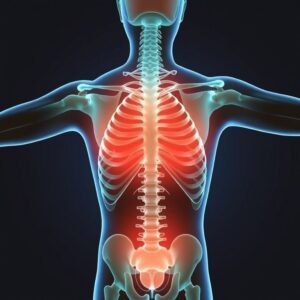
ICD-10 codes for muscle weakness
Chapter 1: Deconstructing Muscle Weakness – A Clinical Primer for the Coder
To code muscle weakness effectively, one must first understand what it is—and what it is not. A foundational knowledge of the clinical concepts allows a coder to ask better questions, interpret documentation more accurately, and avoid common pitfalls.
What is Muscle Weakness? Beyond the Layman’s Term
Clinically, true muscle weakness (or paresis) refers to a reduction in the maximum power a muscle can generate, despite a full voluntary effort from the patient. It is an objective finding, often quantified by a clinician using a standardized scale like the Medical Research Council (MRC) Scale for Muscle Strength, which grades power from 0 (no contraction) to 5 (full power against resistance).
-
0: No muscle contraction
-
1: Flicker or trace of contraction
-
2: Active movement, with gravity eliminated
-
3: Active movement against gravity
-
4: Active movement against gravity and some resistance
-
5: Active movement against full resistance without fatigue (normal power)
This is distinct from fatigue (a subjective feeling of tiredness or exhaustion that improves with rest) or lethargy (a state of drowsiness or lack of energy). A patient with fatigue might say, “I don’t have the energy to walk,” but can still generate normal force when tested. A patient with true weakness will be physically unable to generate that force. Documentation that specifies “4/5 strength in the right quadriceps” is describing true, objective weakness.
The Neuromuscular Junction: Where Nerve Meets Muscle
Muscle contraction is the end result of a sophisticated chain of command:
-
The Brain: Sends a signal.
-
The Spinal Cord and Nerve: Transmits the signal as an electrical impulse.
-
The Neuromuscular Junction (NMJ): The synapse where the nerve ending communicates with the muscle fiber, using chemicals (neurotransmitters like acetylcholine) to relay the signal.
-
The Muscle Fiber: Receives the signal and contracts.
Weakness can arise from a problem at any point in this pathway:
-
Central (Brain/Spinal Cord): Stroke, Multiple Sclerosis, Spinal Cord Injury.
-
Peripheral Nerve (Neuropathy): Diabetic neuropathy, Guillain-Barré syndrome.
-
Neuromuscular Junction (NMJ): Myasthenia Gravis, Lambert-Eaton syndrome.
-
Muscle (Myopathy): Muscular dystrophies, inflammatory myopathies (e.g., Polymyositis).
Key Differentiators: Weakness vs. Fatigue, Atrophy vs. Hypertrophy
-
Asthenia vs. Paresis: The term “asthenia” is often used interchangeably with fatigue and generalized weakness. In coding, it is typically captured under the same family of codes as muscle weakness (R53.1 for generalized weakness). True paresis is more localized and objective.
-
Atrophy: This is the wasting away or loss of muscle tissue, which often accompanies chronic weakness (e.g., in M62.84, Muscle wasting and atrophy). It is a sign of disuse or denervation.
-
Hypertrophy: An increase in muscle size, which can be physiological (from exercise) or pathological (as in some muscular dystrophies where scar tissue replaces muscle, creating a falsely enlarged appearance).
Chapter 2: The Architecture of ICD-10-CM and the M62.8- Code Family
The International Classification of Diseases, 10th Revision, Clinical Modification (ICD-10-CM) is a highly structured system. Understanding this structure is key to finding the correct code for muscle weakness.
The Logic of ICD-10: From Chapter to Code
ICD-10-CM is divided into 22 chapters, based primarily on etiology or body system. When coding muscle weakness, you will most frequently navigate two chapters:
-
Chapter 13: Diseases of the Musculoskeletal System and Connective Tissue (M00-M99): This is where you will find codes for weakness that is classified as a disorder of the muscle itself.
-
Chapter 18: Symptoms, Signs, and Abnormal Clinical and Laboratory Findings, Not Elsewhere Classified (R00-R99): This chapter is for symptoms, like generalized weakness, when a definitive diagnosis has not been established.
The code structure is alphanumeric, with the first character always a letter. The letter indicates the chapter (e.g., ‘M’ for Musculoskeletal, ‘G’ for Nervous System, ‘R’ for Symptoms).
A Deep Dive into M62.8-: Other Specified Disorders of Muscle
This is the primary code family for documented muscle weakness that is not otherwise specified as being part of a broader disease. The parent code is M62.8-, which requires additional characters for specificity.
Let’s break it down:
-
M62: Other disorders of muscle (this excludes myopathies in other diseases, which are coded elsewhere).
-
M62.8: Other specified disorders of muscle.
-
5th Character: Specifies the type of disorder.
-
M62.81: Muscle weakness (generalized)
-
M62.82: Rhabdomyolysis (a serious condition of muscle breakdown, often not a primary weakness code)
-
M62.83: Muscle spasm
-
M62.84: Muscle wasting and atrophy, not elsewhere classified
-
M62.89: Other specified disorders of muscle
-
-
6th Character: Specifies laterality.
-
0: Unspecified side
-
1: Right side
-
2: Left side
-
9: Unspecified side (used for conditions like generalized weakness that are not lateralized)
-
Therefore, the complete code for “generalized muscle weakness” is M62.819. For “weakness of the right quadriceps,” the code would be M62.811.
The Symptom Code: R53.1
When a provider documents “weakness” but does not specify it as a muscular disorder, or when it is a generalized symptom without a confirmed musculoskeletal etiology, the appropriate code is often R53.1 Weakness. This is a symptom code from Chapter 18. It is used for debility, generalized weakness, and asthenia NOS (not otherwise specified). The coding guidelines instruct us to avoid using codes from Chapter 18 if a more definitive diagnosis is known.
Chapter 3: The Primary Code vs. The Symptom Code: A Foundational Dichotomy
This is the single most important decision a coder makes when faced with documented weakness. The sequencing of codes is governed by the ICD-10-CM Official Guidelines for Coding and Reporting.
When Weakness Is the Diagnosis: A Guide to Sequencing
There are scenarios where muscle weakness is the reason for the encounter and the primary focus of care. This is most common when:
-
The weakness is a new finding being evaluated.
-
The weakness is a residual effect of a past disease that is no longer being treated.
-
The patient is receiving therapeutic care (e.g., physical therapy) specifically for the weakness, and the underlying cause is either resolved or stable.
Example: A patient is discharged from the hospital after a prolonged stay for pneumonia and now requires inpatient rehabilitation to regain strength. The reason for the rehab admission is the generalized muscle weakness (disuse atrophy) caused by the hospitalization. In this case, M62.81 (Muscle weakness) would be the principal diagnosis. The pneumonia has been treated and is no longer active.
The Rule of Causality: Coding the Underlying Disease First
The fundamental rule in ICD-10 coding is to code the etiology (the cause) before the manifestation (the symptom). In the vast majority of cases, muscle weakness is a manifestation of an underlying condition.
ICD-10-CM Official Guidelines, Section I.B.4: “Codes for symptoms, signs, and ill-defined conditions from Chapter 18 should not be used when a related definitive diagnosis has been established.”
Example 1: A patient with a confirmed diagnosis of Multiple Sclerosis (G35) presents with worsening weakness in the left leg. The MS is the cause of the weakness.
-
Correct Coding: G35 (Multiple sclerosis) is sequenced first, followed by M62.812 (Muscle weakness, left side) if the provider specifically documents it as a muscular disorder, or R53.1 if documented as a general symptom.
Example 2: A patient is admitted with a acute Ischemic Stroke (I63.9) causing right-sided hemiparesis (weakness).
-
Correct Coding: I63.9 (Cerebral infarction) is the principal diagnosis. The hemiparesis is a direct result of the stroke and is inherent to the condition. While you may add a code for the weakness (e.g., G81.90 for Hemiplegia), the stroke code takes precedence.
The following table provides a clear decision-making framework:
Primary vs. Secondary Code Decision Matrix for Muscle Weakness
| Clinical Scenario | Provider Documentation | Underlying Cause Active/Treated? | Principal Diagnosis | Secondary Diagnosis(s) |
|---|---|---|---|---|
| Rehab for deconditioning | “Admitted for physical therapy due to generalized muscle weakness following prolonged hospitalization.” | No (e.g., pneumonia is resolved) | M62.819 (Muscle weakness) | Codes for personal history of the resolved condition. |
| Routine follow-up for chronic disease | “Patient with Parkinson’s disease here for follow-up. Reports stable tremor but progressive weakness.” | Yes (Parkinson’s is a chronic, active condition) | G20 (Parkinson’s disease) | M62.819 or R53.1 (Weakness) |
| Acute neurological event | “Patient presents with acute onset of left-sided weakness. MRI confirms right MCA stroke.” | Yes (Stroke is the acute reason for encounter) | I63.911 (Cerebral infarction due to embolism) | R41.81 (Frontal lobe and executive function deficit) / G81.94 (Hemiplegia) |
| Unspecified complaint | “Patient complains of feeling weak and tired for 2 weeks. No specific diagnosis reached.” | No definitive cause identified | R53.1 (Weakness) | Other symptom codes as documented (e.g., R53.83 for fatigue). |
Chapter 4: Navigating the Differential: A Coder’s Guide to Common Etiologies
A proficient coder must be a medical detective. When you see “weakness,” your mind should run through a differential of common causes and their corresponding ICD-10 codes.
Neurological Culprits: Strokes, Myasthenia Gravis, and ALS (G-Codes)
The nervous system is a frequent source of weakness.
-
Cerebrovascular Disease (Stroke/TIA): I63.- (Cerebral infarction), I61.- (Intracerebral hemorrhage), G81.- (Hemiplegia). Weakness is a classic, often unilateral, manifestation.
-
Multiple Sclerosis (MS): G35. Weakness results from demyelination in the brain and spinal cord.
-
Amyotrophic Lateral Sclerosis (ALS): G12.21. A progressive degeneration of motor neurons, leading to severe, generalized weakness, atrophy, and spasticity.
-
Myasthenia Gravis (MG): G70.00-G70.01. An autoimmune disorder of the NMJ causing fatigable weakness, often affecting the eyes (ptosis, diplopia), face, and swallowing.
-
Guillain-Barré Syndrome: G61.0. An acute inflammatory neuropathy causing rapidly ascending weakness, often leading to paralysis.
-
Parkinson’s Disease: G20. While known for tremor, bradykinesia (slowness of movement) and rigidity can manifest as a type of weakness.
Musculoskeletal and Systemic Causes: Myopathies, Inflammatory Conditions (M-Codes)
When the problem lies within the muscle itself.
-
Inflammatory Myopathies: M33.- (Dermatomyositis, Polymyositis). These cause progressive, often symmetric, proximal muscle weakness (shoulders, hips).
-
Muscular Dystrophies: G71.0. A group of genetic diseases characterized by progressive weakness and degeneration of muscle fibers.
-
Metabolic Myopathies: Coded to the specific disorder, often in Chapter 4. These are disorders of energy metabolism within the muscle.
-
Disuse Atrophy: M62.84. Muscle wasting due to immobility, as seen in casting, paralysis, or prolonged bed rest.
Metabolic and Endocrine Origins: Thyroid Disorders, Electrolyte Imbalances (E-Codes)
Systemic illnesses can profoundly affect muscle function.
-
Electrolyte Imbalances: E87.- series. Hypokalemia (E87.6), hypercalcemia (E83.52), and hypophosphatemia can all cause significant muscle weakness.
-
Thyroid Disorders: Both Hypothyroidism (E03.9) and Hyperthyroidism (E05.90) can cause proximal muscle weakness and fatigue.
-
Adrenal Insufficiency (Addison’s Disease): E27.1. Weakness and fatigue are cardinal symptoms.
-
Diabetes Mellitus: E11.- with E11.41 for diabetic polyneuropathy, which can cause distal weakness and sensory loss.
Chapter 5: The Documentation Imperative: Partnering with Providers for Precision
The coder’s world is built on the foundation of clinical documentation. Vague or incomplete notes lead to unspecified codes, which can impact reimbursement and data quality.
Querying for Clarity: From “Weakness” to a Codable Concept
A coder cannot assume. If the documentation is unclear, a physician query is a necessary and professional tool.
-
Vague Documentation: “Patient has weakness.”
-
Effective Query: “Can you please specify the nature of the weakness? Is it generalized (R53.1) or a specified muscular disorder (M62.81-)? If localized, can you specify the muscle group(s) and laterality?”
-
Vague Documentation: “Weakness, likely from CVA.”
-
Effective Query: “You document weakness likely from the patient’s history of CVA. Can you clarify if the current weakness is a residual deficit from the old CVA, and if so, can you specify the side and character (e.g., flaccid vs. spastic)?”
Essential Elements in a Provider’s Note
For optimal coding of muscle weakness, documentation should include:
-
Location: Generalized, focal, proximal, distal. Specify the muscle group (e.g., quadriceps, deltoid).
-
Laterality: Right, left, bilateral.
-
Severity: MRC scale (e.g., 4/5) or descriptive terms (mild, moderate, severe).
-
Etiology: The underlying cause, if known (e.g., “due to ALS,” “post-stroke,” “disuse atrophy”).
-
Temporal Course: Acute, chronic, progressive, fluctuating.
The Perils of Vague Documentation and How to Avoid Them
Using unspecified codes (like M62.819 for a localized weakness) because of poor documentation can lead to:
-
Denial of Claims: Payers may see the code as not justifying the level of service provided.
-
Inaccurate Quality Reporting: Hospital and physician profile data becomes skewed.
-
Poor Patient Care Tracking: It’s impossible to track the progression of a specific neuromuscular issue over time.
Chapter 6: Advanced Coding Scenarios and Clinical Cases
Let’s apply our knowledge to complex, real-world scenarios.
Case Study 1: The Post-Operative Patient with Generalized Weakness
-
Scenario: A 75-year-old female is transferred from an acute care hospital to an inpatient rehabilitation facility. She was hospitalized for 3 weeks for sepsis (A41.9) and post-operative complications from a hip fracture (S72.009A). The sepsis is resolved, and the hip is healing. The transfer note states: “Patient has significant generalized muscle weakness and deconditioning from prolonged critical illness and immobility. Admit for intensive PT/OT.”
-
Coding Analysis: The reason for the rehab admission is not the resolved sepsis or the healing hip fracture, but the direct consequence of them: the weakness and deconditioning. This is a case where the weakness is the primary focus of treatment.
-
Correct Codes:
-
Principal Diagnosis: M62.819 (Muscle weakness, generalized)
-
Secondary Diagnoses: Z86.19 (Personal history of other infectious and parasitic diseases – for the resolved sepsis), S72.009D (Unspecified fracture of neck of unspecified femur, subsequent encounter for closed fracture with routine healing).
-
Case Study 2: The Elderly Patient with a Fall and “Weak Legs”
-
Scenario: An 82-year-old male presents to the ER after a fall. Triage note says “fell due to weak legs.” The ER physician’s note states: “Patient states his ‘legs gave out.’ No head strike. Neurological exam non-focal, but demonstrates diffuse lower extremity weakness, 4/5 bilaterally. No acute stroke on CT. Has history of lumbar spinal stenosis.”
-
Coding Analysis: The “weak legs” are the symptom that caused the fall. The provider has linked it to a known, chronic neurological condition of the spine (lumbar stenosis) which is causing nerve compression and weakness. The underlying condition must be sequenced first. The fall is the mechanism of injury.
-
Correct Codes:
-
Principal Diagnosis: M48.062 (Spinal stenosis, lumbar region)
-
Secondary Diagnoses: W19.XXXA (Unspecified fall, initial encounter), M62.829 (Muscle weakness, unspecified site – or a more specific code if a site was documented, e.g., M62.839 for lower leg).
-
Case Study 3: The Middle-Aged Patient with Progressive Difficulty Climbing Stairs
-
Scenario: A 50-year-old female sees a neurologist for evaluation. She reports a 6-month history of progressive difficulty rising from a chair and climbing stairs. The neurologist’s assessment is “Suspected inflammatory myopathy, likely polymyositis. EMG scheduled.” The final diagnosis is “Polymyositis.”
-
Coding Analysis: The weakness is the manifestation of the definitive diagnosis of polymyositis. The code for polymyositis includes the clinical presentation of weakness.
-
Correct Codes:
-
Principal Diagnosis: M33.20 (Polymyositis, organ involvement unspecified). No additional code for weakness is necessary, as it is integral to the disease.
-
Case Study 4: Critical Illness Myopathy and Polyneuropathy (CIM/CIP)
-
Scenario: A patient in the ICU for severe COVID-19 (U07.1) is difficult to wean from the ventilator. A neurology consult is obtained, and electrophysiological studies confirm “Critical Illness Myopathy and Polyneuropathy (CIM/CIP).”
-
Coding Analysis: CIM/CIP is a direct complication of the critical illness and its treatment. The coding guidelines for COVID-19 instruct to code the manifestation as well.
-
Correct Codes:
-
Principal Diagnosis: U07.1 (COVID-19)
-
Secondary Diagnoses: G72.81 (Critical illness myopathy) and G62.81 (Critical illness polyneuropathy). The muscle weakness is inherent to these diagnoses.
-
Chapter 7: The Pitfalls and Perils: Common ICD-10 Coding Errors to Avoid
-
Misindexing and Assumption Errors: Looking up “Weakness” in the Index and blindly choosing the first code (R53.1) without verifying in the Tabular List or considering the clinical context.
-
Overlooking Laterality and Specificity: Consistently using M62.819 when the documentation clearly states “right arm weakness.” This leaves reimbursement and data on the table.
-
Confusing Muscle Weakness with Other R-Codes:
-
R53.1 (Weakness) vs. R53.81 (Other malaise) vs. R53.83 (Fatigue): These are distinct. Malaise is a general feeling of discomfort or illness; fatigue is tiredness; weakness is a lack of strength.
-
R29.8- (Neurological neglect) is different from weakness. A patient with neglect is not aware of one side of their body, but their strength may be intact.
-
-
Ignoring the “Code Also” and “Use Additional Code” Notes: The Tabular List provides essential instructions. For example, for a code like M62.84 (Muscle wasting), there may be an instruction to “Code also any causal condition,” such as a spinal cord injury.
Chapter 8: Beyond ICD-10: The Interplay with Other Code Sets
Coding a patient’s encounter is a multi-layered process involving more than just the diagnosis.
-
CPT® Codes for Procedures: The evaluation and management of weakness will be coded with E/M codes (99202-99215, 99221-99233, etc.). Associated tests include:
-
95905: Motor nerve conduction study
-
95885: Needle electromyography (EMG)
-
95831: Muscle testing, manual
-
87070: Culture, bacterial; any other source except urine, blood or stool (if infection is suspected)
-
-
HCPCS Codes for Devices: If weakness necessitates durable medical equipment (DME), HCPCS codes are used (e.g., E0100 for cane, K0001 for standard wheelchair).
Chapter 9: The Future of Coding Weakness: ICD-11 and AI on the Horizon
The World Health Organization’s ICD-11 has been released and offers a more modern, digital-friendly structure. In ICD-11, the concept of muscle weakness is found in multiple locations, but a primary code is MB48.0 Muscle weakness. The structure allows for easier clustering with etiological codes.
Furthermore, Artificial Intelligence (AI) and Natural Language Processing (NLP) are beginning to assist coders. These tools can scan clinical documentation, identify key terms like “proximal muscle weakness,” and suggest potential codes like M33.12 (Polymyositis with myopathy) or M62.81-, dramatically improving efficiency and accuracy. However, the human coder’s clinical knowledge and critical thinking remain irreplaceable for context and final validation.
Conclusion: Mastering the Code – A Synthesis of Clinical Knowledge and Coding Acumen
Effectively coding muscle weakness in ICD-10-CM requires a sophisticated blend of technical skill and clinical understanding. It demands a careful analysis of provider documentation to distinguish between a primary muscular disorder and a symptomatic manifestation of a broader disease. By adhering to the foundational rule of coding the etiology first, utilizing the specific M62.8- code family when appropriate, and engaging in proactive physician querying, coding professionals can ensure the accurate translation of a patient’s weakness from a clinical narrative into precise, actionable data that drives quality care and appropriate reimbursement.
Frequently Asked Questions (FAQs)
Q1: What is the difference between R53.1 and M62.81-?
A: R53.1 (Weakness) is a symptom code from Chapter 18, used for generalized debility or asthenia when a more specific muscular diagnosis cannot be made. M62.81- (Muscle weakness) is a diagnosis code from Chapter 13 for a specified disorder of the muscle, characterized by weakness. Use M62.81- when the provider explicitly documents “muscle weakness” as a condition. When in doubt, or if the documentation is vague, R53.1 is the default.
Q2: When should I not code muscle weakness at all?
A: You should not assign an additional code for muscle weakness when it is an integral, inherent part of a larger disease process that is already coded. For example, do not add M62.81- for a patient with a code for G12.21 (ALS) or G81.90 (Hemiplegia). The weakness is explicitly included in the definition of those conditions.
Q3: How do I code “deconditioning”?
A: “Deconditioning” is a state of generalized functional decline, of which muscle weakness is a key component. It is coded to R53.81 (Other malaise and fatigue). However, if the provider documents the resulting “muscle weakness” or “disuse atrophy” specifically, then M62.819 or M62.84 would be more appropriate.
Q4: The provider documented “myopathy.” Do I always code weakness with it?
A: Not necessarily. “Myopathy” (G72.9) is a general term for muscle disease. Weakness is the primary symptom of most myopathies. If the myopathy code is unspecified (G72.9), you generally do not add a separate weakness code, as it is assumed. However, if the provider documents a specific type of myopathy that includes weakness (e.g., Polymyositis M33.20), again, no additional code is needed. A separate weakness code might only be considered if the provider is emphasizing a specific, severe, or atypical aspect of the weakness that is not fully captured by the myopathy code itself—but this is rare, and a query is recommended.
Q5: A patient has weakness from a old, resolved stroke. What is the correct code?
A: If the stroke is completely resolved and the patient no longer has deficits, you would use a personal history code (Z86.73). If the patient has residual, fixed weakness from the old stroke, you would code the residual condition. The old stroke itself is not coded as an active diagnosis. The residual weakness could be G81.90 (Hemiplegia) if it’s complete paralysis, or M62.81- for specified muscle weakness, sequenced as the primary diagnosis if it is the reason for the encounter (e.g., physical therapy).
Additional Resources
-
CDC ICD-10-CM Official Guidelines: https://www.cdc.gov/nchs/icd/icd-10-cm.htm – The definitive source for coding rules and updates.
-
American Health Information Management Association (AHIMA): https://www.ahima.org/ – Provides webinars, articles, and standards on clinical documentation integrity and coding best practices.
-
American Academy of Neurology (AAN): https://www.aan.com/ – Offers clinical practice parameters and resources that can help coders understand the neurological conditions behind weakness.
-
National Institute of Neurological Disorders and Stroke (NINDS): https://www.ninds.nih.gov/ – A valuable resource for understanding the pathophysiology of neurological diseases causing weakness.
-
ICD-11 Reference Guide: https://icd.who.int/ – To familiarize yourself with the future of disease classification.
Date: October 12, 2025
Author: The Health Informatics Team
Disclaimer: This article is intended for informational and educational purposes only. It is not a substitute for professional medical coding advice, clinical guidance, or the current, complete ICD-10-CM code set. Medical coders must always consult the most recent official coding guidelines and provider documentation to ensure accurate and compliant coding. The author and publisher assume no responsibility for errors or omissions or for any outcomes related to the use of this information.