Let’s be honest: medical coding can sometimes feel like learning a foreign language. And when you’re working in the fast-paced world of Obstetrics and Gynecology, accuracy isn’t just about getting paid—it’s about painting a clear, precise picture of a patient’s health story. One wrong digit can mean the difference between a routine screening and a suspected malignancy, or a normal pregnancy and a high-risk one.
This guide is designed to be your friendly, reliable roadmap through the labyrinth of ICD-10 codes for OBGYN. Whether you are a seasoned coder, a physician brushing up on documentation, or a student just starting out, our goal is to break down the complexities into simple, clear, and actionable information. We will walk through the most commonly used categories, from routine obstetric care to complex gynecological pathologies, ensuring you have the knowledge to code with confidence and precision.
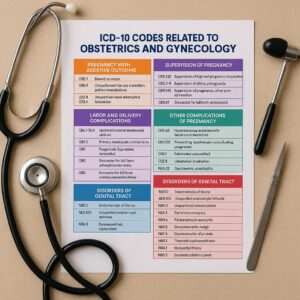
ICD-10 Codes for OBGYN
Understanding the Structure of OBGYN ICD-10 Codes
Before we dive into specific codes, it helps to understand the “why” behind the numbers. ICD-10-CM (International Classification of Diseases, 10th Revision, Clinical Modification) is organized in a very specific way. For obstetrics and gynecology, this structure is crucial for specificity.
The main characters in our OBGYN coding story are the O (Obstetrics) and N (Gynecology) chapters, but we also frequently visit C (Neoplasms), D (Benign Neoplasms), and Z (Factors Influencing Health Status).
-
Chapter 15: Pregnancy, Childbirth, and the Puerperium (O00-O9A): This is your go-to for everything related to pregnancy, from the first prenatal visit to postpartum care. A key rule here is that these codes take priority over codes from other chapters. If a patient has a pregnancy-related condition, you use an O-code.
-
Chapter 14: Diseases of the Genitourinary System (N00-N99): This chapter covers non-pregnancy related conditions of the female genital tract. Think menstrual disorders, pelvic inflammatory disease, endometriosis, and prolapse.
-
Chapter 2: Neoplasms (C00-D49): Used for both benign and malignant tumors of the female reproductive system, such as ovarian cysts, uterine fibroids, and cervical cancer.
-
Chapter 21: Factors Influencing Health Status and Contact with Health Services (Z00-Z99): These are the “Z-codes,” used for encounters that are not for a current illness or injury. This includes routine gynecological exams, contraceptive management, and screening for malignancies.
Section 1: Obstetrics (O-Codes) – From Conception to Postpartum
Obstetric coding is unique because one “main” code (the O-code for the current condition) often tells only part of the story. To get the full picture, we need to understand the trimester and the outcome of delivery.
The Trimester Rule: Why Timing Matters
ICD-10 requires you to specify the trimester in which a condition occurs. This is vital because the management and risks associated with a condition like gestational diabetes or hypertension change drastically depending on how far along the pregnancy is.
-
1st Trimester: Less than 14 weeks 0 days.
-
2nd Trimester: 14 weeks 0 days to less than 28 weeks 0 days.
-
3rd Trimester: 28 weeks 0 days until delivery.
Many O-codes have a 5th character that specifies the trimester. For example:
-
O26.2: Pregnancy care for recurrent pregnancy loss.
-
O26.21 – 1st trimester
-
O26.22 – 2nd trimester
-
O26.23 – 3rd trimester
-
Important Note: If a patient is seen for a condition that began in a previous trimester but is still being managed, you code for the current trimester.
Routine Prenatal Encounters: Not Just a Check-up
A patient coming in for a routine prenatal visit is not “sick,” but she is under active medical care. This is where Z-codes and O-codes work together.
-
Encounter for Supervision of Normal Pregnancy: The primary code for the visit is from the Z34 series.
-
Z34.00: Encounter for supervision of normal first pregnancy, unspecified trimester.
-
Z34.01: … first trimester.
-
Z34.02: … second trimester.
-
Z34.03: … third trimester.
-
(Similar codes exist for Z34.8 for other normal pregnancies and Z34.9 for unspecified)
-
-
Encounter for High-Risk Pregnancy: If the pregnancy is being supervised due to a high-risk factor, you use the O09 series. This tells the story of why this pregnancy requires extra attention.
-
O09.30: Supervision of pregnancy with history of insufficient prenatal care, unspecified trimester.
-
O09.511: Supervision of pregnancy with history of ectopic pregnancy, first trimester.
-
O09.812: Supervision of pregnancy with history of in utero procedure during previous pregnancy, second trimester.
-
Common Complications of Pregnancy
This is where specificity is paramount. Let’s look at some of the most frequently coded conditions.
1. Gestational Diabetes Mellitus (O24.4-)
Gone are the days of simply coding for “diabetes in pregnancy.” ICD-10 requires us to specify how the diabetes is being managed.
-
O24.410: Gestational diabetes mellitus, diet controlled.
-
O24.414: Gestational diabetes mellitus, insulin controlled.
-
O24.419: Gestational diabetes mellitus, unspecified control.
2. Hypertension in Pregnancy
This category is complex and requires careful documentation from the provider to distinguish between chronic hypertension, gestational hypertension, and pre-eclampsia.
-
O10.0-: Pre-existing essential hypertension complicating pregnancy, childbirth, and the puerperium.
-
O13.5: Gestational hypertension without significant proteinuria, third trimester.
-
O14.00: Mild to moderate pre-eclampsia, unspecified trimester.
-
O14.12: Severe pre-eclampsia, second trimester.
3. Hemorrhage in Early Pregnancy
First-trimester bleeding is a common presenting complaint, with a range of potential causes.
-
O20.0: Threatened abortion. (Used when there is bleeding in early pregnancy but the cervix is closed and the pregnancy is expected to continue).
-
O03.9: Missed abortion. (Used when the fetus has died but has not been expelled).
-
O02.1: Missed abortion. (Historically used, but O03.9 is now more common for spontaneous abortion).
-
O00.9: Ectopic pregnancy, unspecified. (A life-threatening condition requiring immediate coding attention).
Encounter for Delivery
This is one of the most critical coding scenarios in all of medicine. The official “Delivery Diagnosis” coding guideline requires a specific sequence:
-
Primary Code: The reason for the encounter (e.g., obstructed labor, C-section).
-
Secondary Code: A code from Z37, Outcome of delivery, which must be used on the mother’s record for every delivery encounter. This code tells the story of the birth’s result.
Let’s break down a delivery scenario:
A patient is admitted for a scheduled repeat low transverse Cesarean section. She delivers a single liveborn infant.
-
Primary Dx: O34.212 (Maternal care for low transverse scar from previous C-section, delivered).
-
Outcome of Delivery: Z37.0 (Single live birth).
Common Delivery Codes
-
O80: Encounter for full-term uncomplicated delivery. Use this code sparingly. It is only for completely normal, spontaneous vaginal deliveries with no antepartum, intrapartum, or postpartum complications.
-
O75.7: Vaginal delivery following previous C-section.
-
O32.1: Maternal care for breech presentation.
-
O64.0xx: Obstructed labor due to incomplete rotation of fetal head.
-
O70.0: First degree perineal laceration during delivery.
| Type of Delivery | Typical Primary Diagnosis Code(s) | Outcome of Delivery Code (Z37) |
|---|---|---|
| Spontaneous Vaginal Delivery | O80 (if truly uncomplicated) or O75.7 (VBAC) | Z37.0 (Single live birth) |
| Cesarean Delivery | O34.212 (Previous C-section scar) or O32.- (Malposition) | Z37.0 (Single live birth) |
| Delivery with Forceps | O81.0 (Low forceps) | Z37.0 (Single live birth) |
A Friendly Reminder: Always, always ensure the 7th character on delivery codes is correct. The 7th character for obstetric codes is typically “0” for a single delivery, but it can get more complex for multiple gestations. Your coding software and official guidelines are your best friends here.
Section 2: Gynecology (N-Codes & Beyond) – Non-Obstetric Conditions
When a patient is not pregnant, we shift our focus to Chapter 14 and its related chapters. Gynecology coding is all about documenting the specific nature, site, and laterality of a condition.
Menstrual Disorders (N80-N98)
Menstrual irregularities are among the most common reasons for a gynecological visit. The key is to be specific about the nature of the bleeding.
-
Absent, Scant, or Rare Menstruation:
-
N91.0: Primary amenorrhea (menstruation has never started by age 15).
-
N91.1: Secondary amenorrhea (menstruation has started and then stopped for 3-6 months).
-
N91.2: Amenorrhea, unspecified.
-
N91.3: Primary oligomenorrhea (infrequent bleeding).
-
N91.4: Secondary oligomenorrhea.
-
-
Excessive, Frequent, or Irregular Menstruation:
-
N92.0: Excessive and frequent menstruation with regular cycle (Menorrhagia).
-
N92.1: Excessive and frequent menstruation with irregular cycle (Metrorrhagia).
-
N92.4: Excessive bleeding in the premenopausal period.
-
N93.8: Other specified abnormal uterine and vaginal bleeding.
-
-
Pain and Other Specified Conditions:
-
N94.3: Premenstrual tension syndrome (PMS).
-
N94.4: Primary dysmenorrhea.
-
N94.5: Secondary dysmenorrhea.
-
N94.6: Dysmenorrhea, unspecified.
-
Pelvic Pain and Inflammatory Diseases
Pelvic pain can be acute or chronic, and the source is often a mystery that requires careful coding.
-
N70.01: Chronic salpingitis. (Inflammation of the fallopian tubes).
-
N70.11: Chronic oophoritis. (Inflammation of the ovaries).
-
N70.91: Salpingitis and oophoritis, unspecified.
-
N73.6: Female pelvic peritoneal adhesions (postinfective).
-
R10.2: Pelvic and perineal pain. (Use this for generalized pain not attributed to a specific organ).
Endometriosis (N80)
Endometriosis is a complex condition, and its coding reflects that complexity. The codes are site-specific, ranging from the uterus to the pelvic peritoneum.
-
N80.0: Endometriosis of uterus (Adenomyosis). Note: This is a specific type where the endometrial tissue grows into the muscular wall of the uterus.
-
N80.1: Endometriosis of ovary (Chocolate cyst).
-
N80.2: Endometriosis of fallopian tube.
-
N80.3: Endometriosis of pelvic peritoneum.
-
N80.9: Endometriosis, unspecified.
Uterine and Ovarian Conditions
-
Uterine Leiomyoma (Fibroids): These benign tumors are extremely common. Codes are based on their location.
-
D25.0: Submucous leiomyoma of uterus.
-
D25.1: Intramural leiomyoma of uterus.
-
D25.2: Subserosal leiomyoma of uterus.
-
D25.9: Leiomyoma of uterus, unspecified.
-
-
Ovarian Cysts: These are classified based on whether they are functional or non-functional.
-
E28.8: Other ovarian dysfunction (e.g., follicular cyst of ovary, corpus luteum cyst). This is the correct spot for functional cysts.
-
N83.0: Follicular cyst of ovary.
-
N83.1: Corpus luteum cyst.
-
N83.2: Other and unspecified ovarian cysts (e.g., retention cyst of ovary).
-
Genital Prolapse (N81)
Pelvic organ prolapse is coded according to the specific wall or organ involved.
-
N81.10: Cystocele, unspecified. (Bladder bulging into vagina).
-
N81.2: Uterovaginal prolapse, incomplete.
-
N81.3: Complete uterovaginal prolapse.
-
N81.6: Rectocele. (Rectum bulging into vagina).
-
N81.84: Prolapse of vaginal vault after hysterectomy.
Section 3: Gynecological Oncology (C & D Codes)
When dealing with neoplasms, the primary distinction is between a primary malignancy (where the cancer started) and a secondary malignancy (where it has spread). For coding, we also need to distinguish between a current malignancy, a history of a malignancy, and a benign growth.
Malignant Neoplasms (C51-C58, C79)
These codes are for active, current malignancies.
-
C53.9: Malignant neoplasm of cervix uteri, unspecified.
-
C54.1: Malignant neoplasm of endometrium of uterus. (Endometrial cancer).
-
C56.9: Malignant neoplasm of ovary, unspecified.
-
C50.911: Malignant neoplasm of right female breast, unspecified site. (Breast health often falls under OBGYN care).
Benign Neoplasms (D25-D28)
-
D26.0: Other benign neoplasm of cervix uteri.
-
D26.1: Other benign neoplasm of corpus uteri.
-
D27.9: Benign neoplasm of ovary, unspecified. (For non-functional, benign ovarian tumors).
-
D28.0: Benign neoplasm of vulva.
Personal History and Screening (Z-Codes)
These codes are vital for preventive care and follow-up.
-
Z12.4: Encounter for screening for malignant neoplasm of cervix. (For routine Pap smear).
-
Z12.31: Encounter for screening mammogram for malignant neoplasm of breast.
-
Z85.41: Personal history of malignant neoplasm of cervix uteri.
-
Z85.42: Personal history of malignant neoplasm of ovary.
-
Z85.43: Personal history of malignant neoplasm of endometrium.
-
Z90.71: Acquired absence of uterus (Status post-hysterectomy).
| Condition Type | Example Diagnosis | Example Code |
|---|---|---|
| Current Malignancy | Patient with newly diagnosed ovarian cancer | C56.9 |
| Personal History | Patient with a history of cervical cancer, now in remission | Z85.41 |
| Screening | Patient here for a routine annual Pap smear | Z12.4 |
| Benign Neoplasm | Patient with a large, symptomatic intramural fibroid | D25.1 |
Section 4: Contraceptive and Reproductive Management (Z-Codes)
A huge part of OBGYN practice involves helping patients manage their reproductive health and family planning. These encounters are perfectly captured with Z-codes.
Encounter for Contraceptive Management
-
Z30.011: Encounter for initial prescription of oral contraceptives.
-
Z30.40: Encounter for surveillance of contraceptives, unspecified.
-
Z30.430: Encounter for insertion of intrauterine contraceptive device.
-
Z30.432: Encounter for removal of intrauterine contraceptive device.
-
Z30.49: Encounter for other routine checking of contraception (e.g., checking implant).
Encounter for Procreative Management
-
Z31.41: Encounter for fertility testing.
-
Z31.61: Procreative counseling for vasectomy.
-
Z31.83: Encounter for genetic testing of female for procreative management.
Common Infections and Inflammatory Conditions (A & N Codes)
Sexually transmitted infections and other vaginal inflammations are a daily reality in this specialty.
Sexually Transmitted Infections
-
A54.9: Gonococcal infection, unspecified.
-
A56.19: Chlamydial infection of other genitourinary site.
-
A60.09: Herpesviral infection of other genital sites.
-
A63.0: Anogenital (venereal) warts.
Vaginitis and Vulvitis
-
B37.3: Candidiasis of vulva and vagina (Yeast infection).
-
N76.0: Acute vaginitis.
-
N76.1: Subacute and chronic vaginitis.
-
N76.2: Acute vulvitis.
-
N76.4: Bartholin’s gland abscess.
Tips for Accurate and Ethical OBGYN Coding
Mastering the code list is only half the battle. The other half is mastering the application.
-
Code to the Highest Specificity: If the provider documents “fibroid,” don’t just stop at D25.9. Look for details in the note. Is it submucosal? Intramural? If it’s not documented, it’s your job to query the provider. This isn’t just about getting paid; it’s about creating a precise medical record.
-
Query, Don’t Assume: Never assume a diagnosis based on a lab result or a patient’s complaint. If a Pap smear comes back abnormal, but the provider hasn’t documented a diagnosis of dysplasia, you cannot code for dysplasia. You code the abnormal finding (R87.61) or the screening (Z12.4) until a definitive diagnosis is made.
-
Understand the “With” Rule: In ICD-10, the word “with” in the code description means “associated with” or “due to.” You can link two conditions if the provider’s documentation supports the relationship. For example, if the note says “diabetic cataracts,” you can code E11.36 (Type 2 diabetes with diabetic cataract) because the “with” in the code allows you to link them.
-
Laterality is Key: For conditions affecting paired organs (ovaries, fallopian tubes) or specific sides (breast), always check if the code requires a 6th character for laterality (e.g., N83.01 for right follicular cyst, N83.02 for left).
Crucial Advice: This guide is for educational purposes. Medical coding guidelines are updated annually, and payer policies can vary. Always rely on the most current official ICD-10-CM code set, your coding manuals, and your organization’s compliance policies.
Frequently Asked Questions (FAQ)
1. What is the difference between O-codes and N-codes?
O-codes (Chapter 15) are reserved exclusively for conditions related to or complicating pregnancy, childbirth, and the postpartum period. N-codes (Chapter 14) are for non-pregnancy-related diseases of the genitourinary system. If a woman is pregnant and has a condition, you almost always use an O-code.
2. When do I use a Z-code instead of an O-code?
Z-codes are for encounters that are not due to a current illness or injury. Use them for routine exams (Z01.411), supervision of normal pregnancy (Z34.-), contraceptive management (Z30.-), and personal history (Z85.-). For example, you use a Z-code for a routine prenatal check-up, but if she develops gestational diabetes during that visit, you switch to an O-code (O24.4-).
3. What is the “outcome of delivery” code (Z37) and why is it important?
The Z37 code indicates the result of the delivery (e.g., single live birth, stillbirth). It is a secondary code that must be used on the mother’s record for any encounter involving delivery. It provides a crucial summary of the birth’s outcome.
4. How do I code for a patient with a history of cancer who is now cancer-free?
You would code the reason for the current visit (e.g., Z12.4 for a screening Pap smear) and also assign a code from the Z85 series to indicate the personal history of the malignancy. For example, Z85.41 for personal history of cervical cancer. This tells the payer the patient is at higher risk, justifying the screening.
5. Can I code from a lab report alone?
Generally, no. You need a provider’s documentation linking the lab finding to a diagnosis. For example, a positive chlamydia test alone isn’t a code. You need the provider to document “Chlamydial infection” (A56.19) in the note.
Additional Resources
To ensure you are always using the most up-to-date and accurate information, bookmark these essential resources:
-
The Centers for Medicare & Medicaid Services (CMS): www.cms.gov – The official source for ICD-10-CM updates and guidelines.
-
The American College of Obstetricians and Gynecologists (ACOG): www.acog.org – Offers specialty-specific guidance and practice bulletins that inform coding.
-
The American Health Information Management Association (AHIMA): www.ahima.org – A leading authority on health information and coding best practices.
Conclusion
Navigating the world of ICD-10 codes for OBGYN is a journey of continuous learning. By understanding the foundational structure—the pregnancy-focused O-codes, the gynecological N-codes, and the supporting cast of Z and C codes—you equip yourself with the tools to tell a patient’s complete and accurate clinical story. Mastery comes from practice, attention to detail, and a commitment to using the most specific code available.
Disclaimer: This article is for informational purposes only and does not constitute legal or professional medical coding advice. Codes and guidelines are subject to change. Always refer to the official ICD-10-CM manual and your specific payer policies for definitive guidance.