In the intricate world of medical coding, a series of alphanumeric characters is never just a label. It is a story—a condensed narrative of a patient’s condition, the physician’s diagnosis, and the planned course of care. For the healthcare professional navigating the labyrinth of the International Classification of Diseases, Tenth Revision (ICD-10), few areas illustrate this narrative complexity better than the coding for ovarian cysts. A simple, almost ubiquitous finding in women of reproductive age, an ovarian cyst can represent a benign, self-resolving physiological event or a harbinger of a complex endocrine or neoplastic disorder. The difference lies in the details, and in ICD-10, the details are everything. This article is not merely a reference guide; it is a deep exploration into the clinical reasoning and coding precision required to accurately capture the diagnosis of an ovarian cyst. We will journey from the basic physiology of the ovary, through the meticulous structure of the ICD-10 coding system, and into the high-stakes real-world scenarios where the correct code impacts patient care, provider reimbursement, and the very data that drives medical research. Prepare to move beyond a superficial understanding and master the art and science of coding for ovarian cysts.
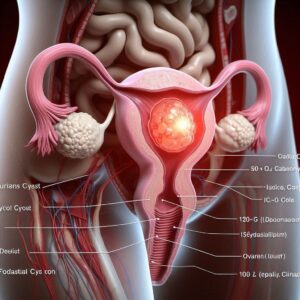
ICD-10 Codes for Ovarian Cysts
Understanding the Ovary and the Cyst: A Clinical Primer {#clinical-primer}
To code a condition accurately, one must first understand it clinically. The ovaries are dynamic, complex organs central to the female reproductive endocrine system. Each month, in a pre-menopausal woman, a cohort of follicles begins to develop in response to hormonal signals. Typically, one follicle becomes “dominant,” maturing fully and releasing an egg during ovulation—this is the essence of the menstrual cycle.
An ovarian cyst is simply a fluid-filled sac within or on the surface of an ovary. The vast majority are functional cysts, meaning they are a natural part of the menstrual cycle. The two most common types are:
-
Follicular Cysts: If the dominant follicle does not rupture and release its egg, or if a non-dominant follicle doesn’t dissolve, it can continue to grow into a follicular cyst.
-
Corpus Luteum Cysts: After the follicle releases its egg, it transforms into a structure called the corpus luteum, which produces progesterone. If the sac doesn’t shrink as intended and instead reseals itself, fluid can accumulate inside, forming a corpus luteum cyst.
Other types of cysts are not related to the normal menstrual cycle and can be more clinically significant:
-
Dermoid Cysts (Teratomas): These are benign tumors that can contain tissue such as hair, skin, or teeth.
-
Cystadenomas: These develop on the outer surface of the ovary and can be filled with a watery or mucous material, potentially growing very large.
-
Endometriomas: These form as a result of endometriosis, when uterine-like tissue attaches to the ovary and bleeds, forming a “chocolate cyst” filled with old blood.
Symptoms of an ovarian cyst can range from nonexistent to severe. They may include pelvic pain or a dull ache, bloating, fullness, or pain during intercourse. A critical event is torsion, where the cyst causes the ovary to twist on its ligament, cutting off its blood supply—a surgical emergency. Another is rupture, which can cause significant internal bleeding and pain.
This clinical background is the foundation upon which all accurate ICD-10 coding is built. The coder must be able to interpret the physician’s documentation to distinguish between a harmless functional cyst and a potentially problematic pathological one.
The Architecture of ICD-10: Why Specificity is King {#icd-10-architecture}
The transition from ICD-9 to ICD-10 represented a quantum leap in coding specificity. Where ICD-9 offered a limited number of codes for ovarian cysts, ICD-10 provides a detailed taxonomy that demands precise clinical information. The primary chapter for non-inflammatory ovarian cysts is found in Chapter XIV (Diseases of the Genitourinary System), under the block N80-N98 (Noninflammatory disorders of female genital tract). The specific category is N83: Noninflammatory disorders of ovary, fallopian tube and broad ligament.
The power of ICD-10 lies in its laterality and detail. Codes often specify:
-
Laterality: Is the cyst on the right ovary (N83.0-1), the left ovary (N83.0-2), or both (N83.0-3)? Unspecified side is also an option (N83.0-0).
-
Type: Is it a follicular cyst, a corpus luteum cyst, or another type?
-
Complication: Has the cyst caused a torsion? Is there an associated hematoma?
This level of detail is not bureaucratic red tape; it is crucial for creating accurate patient records, ensuring appropriate reimbursement that reflects the complexity of care, and generating high-quality data for population health studies and clinical research.
Deconstructing the Codes: A Deep Dive into N83.0-N83.9 {#deconstructing-codes}
Let’s dissect the core codes within the N83 category. Understanding the clinical meaning behind each code is the key to accurate application.
N83.0 – Follicular Cyst of the Ovary {#n830}
This code is used for the most common type of functional cyst. It arises from a follicle that has failed to ovulate. These cysts are typically thin-walled, filled with clear fluid, and usually resolve spontaneously within one to three menstrual cycles.
-
N83.01: Follicular cyst of right ovary
-
N83.02: Follicular cyst of left ovary
-
N83.03: Follicular cyst of bilateral ovaries
-
N83.00: Follicular cyst of unspecified ovary
N83.1 – Corpus Luteum Cyst {#n831}
This code describes a functional cyst that forms after ovulation from the corpus luteum. They can be more complex in appearance on ultrasound, sometimes containing internal echoes from bleeding (a hemorrhagic corpus luteum cyst). They are also common and typically resolve on their own.
-
N83.11: Corpus luteum cyst of right ovary
-
N83.12: Corpus luteum cyst of left ovary
-
N83.13: Corpus luteum cyst of bilateral ovaries
-
N83.10: Corpus luteum cyst of unspecified ovary
N83.2 – Other and Unspecified Non-inflammatory Ovarian Cysts {#n832}
This is a critical category for coders, as it acts as a catch-all for cysts that are non-functional but also not inflammatory or neoplastic. This is where you would code:
-
Simple Cysts: When the physician documents a “simple cyst” but does not specify follicular or corpus luteum.
-
Retention Cysts: Simple cysts that are not related to the menstrual cycle.
-
Unspecified Cysts: When the provider’s documentation simply states “ovarian cyst” without any further qualification. Coding Tip: It is always best practice to query the provider for more specificity before defaulting to an unspecified code.
-
N83.20: Unspecified non-inflammatory ovarian cyst
-
N83.29: Other non-inflammatory ovarian cysts (e.g., a simple cyst specified as non-functional).
N83.5 – Torsion of Ovary, Ovarian Pedicle, and Fallopian Tube {#n835}
This code is for a serious complication, not the cyst itself. However, a cyst (especially a large one) is a common risk factor for ovarian torsion. This is a medical emergency. The code requires a 5th digit to specify involvement of the fallopian tube, the ovary, or both.
-
N83.51: Torsion of ovary and ovarian pedicle
-
N83.52: Torsion of fallopian tube
-
N83.53: Torsion of ovary, ovarian pedicle and fallopian tube
The remaining codes in the N83 category (N83.3, N83.4, N83.6, N83.7, N83.8) are less commonly used in direct relation to cysts but are important for coding other non-inflammatory disorders of the adnexa.
Summary of Primary ICD-10 Codes for Ovarian Cysts {#table1}
| ICD-10 Code | Code Description | Clinical Scenario | Laterality Required? |
|---|---|---|---|
| N83.01- | Follicular Cyst of Ovary | A cyst developing from an unruptured Graafian follicle. Typically asymptomatic and resolves in 1-3 cycles. | Yes (Right, Left, Bilateral, Unspecified) |
| N83.11- | Corpus Luteum Cyst of Ovary | A cyst forming from the corpus luteum after ovulation. May be complex on ultrasound due to hemorrhage. | Yes (Right, Left, Bilateral, Unspecified) |
| N83.20 | Unspecified Non-inflammatory Ovarian Cyst | Provider documents “ovarian cyst” or “simple cyst” without specifying type. (Query for specificity is recommended). | No |
| N83.29 | Other Non-inflammatory Ovarian Cysts | For specified non-functional, non-neoplastic cysts not covered elsewhere (e.g., “simple retention cyst”). | No |
| N83.51- | Torsion of Ovary and Ovarian Pedicle | A cyst has caused the ovary to twist, a surgical emergency. The cyst itself would also be coded separately. | No (but specifies structure) |
Beyond the Non-Inflammatory: When the Cyst is Part of a Larger Syndrome {#beyond-non-inflammatory}
The N83 category is exclusively for non-inflammatory and non-neoplastic disorders. Many significant ovarian cysts fall outside this category, and using an N83 code for them would be incorrect. Recognizing these scenarios is a hallmark of an expert coder.
Endometriomas (N80.1) {#endometriomas}
An endometrioma is not coded in the N83 series. It is a manifestation of endometriosis, which has its own category: N80: Endometriosis. An endometrioma of the ovary is specifically coded as N80.1. The clinical documentation will often describe a “chocolate cyst.”
Polycystic Ovarian Syndrome (E28.2) {#pcos}
PCOS is a complex endocrine disorder characterized by multiple small follicular cysts on the ovaries (hence the name), anovulation, and hyperandrogenism. The cysts themselves are a symptom, not the primary diagnosis. The correct code is E28.2, found in Chapter IV (Endocrine, Nutritional and Metabolic Diseases). It is a common error to code the individual cysts with N83.0; this is incorrect and misrepresents the patient’s chronic condition.
Benign and Malignant Neoplastic Cysts {#neoplastic}
If a cyst is a benign tumor (e.g., a cystadenoma or a benign teratoma) or a malignant tumor, it is coded from Chapter II (Neoplasms). The code depends on the histological type and behavior (benign, in-situ, malignant, uncertain) and the precise location.
-
Example: A benign serous cystadenoma of the right ovary would be coded to D27 (Benign neoplasm of ovary), not N83.29.
Complications of Cysts {#complications}
When a cyst causes an acute complication, multiple codes may be needed.
-
Ruptured Cyst: If a simple functional cyst ruptures, code the cyst itself (e.g., N83.01) and may also require a code for hemoperitoneum (K66.1) or acute pelvic pain (R10.2), depending on the clinical picture.
-
Torsion: As discussed, code the torsion (N83.51) and the cyst (e.g., N83.01) separately.
-
Hemorrhage: A hemorrhagic cyst is not a separate ICD-10 code. If it’s a hemorrhagic corpus luteum, you would code N83.1-. The hemorrhage is an inherent part of the diagnosis.
The Coder’s Workflow: From Patient Chart to Accurate Code {#coders-workflow}
The journey to an accurate code is a systematic process. Here is a recommended workflow:
-
Review the Encounter: Start with the patient’s chief complaint and history.
-
Analyze the Physical Exam and Studies: Pay close attention to the pelvic exam findings and, most importantly, the Radiology Report (Ultrasound, CT, or MRI). The radiology report is often the most objective source for details like size, complexity, and laterality.
-
Scrutinize the Provider’s Diagnosis/Assessment: This is the physician’s final diagnostic statement. Look for keywords: “follicular cyst,” “corpus luteum,” “simple cyst,” “endometrioma,” “PCOS,” “torsion,” “ruptured.”
-
Ask Key Questions:
-
What is the specific TYPE of cyst?
-
Is it RIGHT, LEFT, or BILATERAL?
-
Is it part of a larger syndrome (PCOS, Endometriosis)?
-
Is it a benign or malignant neoplasm?
-
Are there any complications (torsion, rupture)?
-
-
Navigate the ICD-10 Index and Tabular: Use the Alphabetic Index (e.g., look up “Cyst > ovary > follicular”) and then always verify the code in the Tabular List to ensure you have the most specific code and to check for any instructional notes.
-
Query if Necessary: If the documentation is ambiguous (e.g., “complex cyst,” “cyst, cause unknown”), initiate a formal query to the provider to obtain clarification. Do not assume.
Case Studies: Applying Knowledge in Real-World Scenarios {#case-studies}
Case Study 1: The Routine Finding
*A 32-year-old female presents for her annual well-woman exam. She is asymptomatic. A pelvic ultrasound reveals a 3 cm, simple, unilocular cyst on the right ovary. The radiologist’s impression is “simple follicular cyst, likely functional.” The gynecologist’s final diagnosis is “Follicular cyst of the right ovary.”*
-
Coding: N83.011 (Follicular cyst, right ovary). The documentation is specific, allowing for a highly precise code.
Case Study 2: The Painful Complication
*A 28-year-old female presents to the ER with sudden onset of severe right lower quadrant pain. An ultrasound shows a 6 cm right ovarian cyst and the ovary appears torsed. She is taken to surgery for a laparoscopic detorsion. The surgeon’s diagnosis is “Torsion of right ovary secondary to a corpus luteum cyst.”*
-
Coding: This requires two codes. First, N83.511 (Torsion of ovary and ovarian pedicle) to represent the acute emergency. Second, N83.111 (Corpus luteum cyst, right ovary) to represent the underlying cause. The sequencing would typically place the torsion first as it is the reason for the acute admission.
Case Study 3: The Misleading “Cysts”
*A 25-year-old female presents with a history of irregular periods and hirsutism. An ultrasound shows bilaterally enlarged ovaries with multiple (over 12) small follicles in each. The endocrinologist makes a diagnosis of “Polycystic Ovarian Syndrome.”*
-
Coding: E28.2 (Polycystic ovarian syndrome). It would be incorrect to code N83.013 and N83.023 for the bilateral “cysts,” as they are a feature of the systemic endocrine disorder coded more specifically by E28.2.
The Importance of Precision: Clinical, Financial, and Research Implications {#importance-of-precision}
Accurate ICD-10 coding is not a mere administrative task; it is a critical function with far-reaching consequences.
-
Clinical Care: Precise codes create an accurate patient history. If a patient has a history of recurrent endometriomas (N80.1), it informs future clinicians about a chronic condition, unlike a history of unspecified ovarian cysts (N83.20). This can impact treatment decisions for fertility or pain management.
-
Financial Reimbursement: Payers use ICD-10 codes to justify medical necessity. A code for a simple follicular cyst (N83.01-) may be bundled with a routine exam, while a code for a complex cyst with torsion (N83.51-) justifies a significant surgical procedure and a higher level of reimbursement. Incorrect coding can lead to claim denials and audits.
-
Research and Public Health: The data aggregated from ICD-10 codes is used to track disease prevalence, identify risk factors, and allocate public health resources. If all ovarian cysts are incorrectly coded as N83.20, it becomes impossible to study the epidemiology of specific conditions like PCOS or endometriosis. High-quality data relies on high-quality coding.
FAQs: Frequently Asked Questions About Ovarian Cysts and ICD-10 Coding {#faqs}
1. What is the default ICD-10 code for an ovarian cyst if the type is not specified?
The default code is N83.20 (Unspecified non-inflammatory ovarian cyst). However, this should be a last resort. Best practice is to review the radiology report or query the provider for more specific information.
2. How do I code a hemorrhagic ovarian cyst?
A hemorrhagic cyst is not a unique ICD-10 entity. It is typically a type of corpus luteum cyst. Therefore, you would code it to the appropriate N83.1- (Corpus luteum cyst) code based on laterality.
3. When should I use a code from the Neoplasm chapter (C00-D49) instead of N83?
You should use a neoplasm code when the physician’s documentation specifies that the cyst is a tumor. This includes terms like “cystadenoma,” “teratoma,” “dermoid cyst” (a type of teratoma), “benign neoplasm of the ovary” (D27), or any mention of a malignant cystic tumor.
4. A patient with PCOS has “cysts” on her ovaries. Why can’t I use N83.0?
The cysts in PCOS are a symptom of the underlying endocrine disorder. The correct code is E28.2 (Polycystic ovarian syndrome). Coding the individual follicles as N83.0 would be clinically inaccurate and would misrepresent the patient’s chronic, systemic condition.
5. How do I code a ruptured ovarian cyst?
You code the type of cyst that ruptured (e.g., N83.011 for a ruptured follicular cyst). There is no additional code for “rupture” itself. However, you may need to add a code for any resulting condition, such as hemoperitoneum (K66.1) or acute pelvic pain (R10.2), if it is not implicit in the primary diagnosis.
Conclusion {#conclusion}
Mastering ICD-10 coding for ovarian cysts requires a bridge between clinical knowledge and administrative precision. The system’s power lies in its specificity, transforming a generic “ovarian cyst” into a detailed clinical story of type, location, and complication. By understanding the physiology behind the codes, adhering to a disciplined workflow, and recognizing the conditions that fall outside the N83 category, healthcare professionals can ensure accuracy that supports optimal patient care, appropriate reimbursement, and the integrity of vital health data. In the world of medical coding, the right code is the final, crucial link in the chain of patient understanding.
Date: October 19, 2025
Author: Dr. Eleanor Vance, MD, MPH, CPC
Disclaimer: The information contained in this article is intended for educational and informational purposes only. It is not a substitute for professional medical advice, diagnosis, or treatment. Always seek the advice of your physician or other qualified health provider with any questions you may have regarding a medical condition or treatment, and before undertaking a new health care regimen. Never disregard professional medical advice or delay in seeking it because of something you have read in this article. The author and publisher are not responsible for any errors or omissions or for any consequences from the application of this information.