Imagine a painter, unable to lift her arm to complete a masterpiece. A construction worker, wincing with every hammer strike. A weekend tennis player, their serve now a source of agony rather than victory. For millions, this is the daily reality of shoulder impingement syndrome, a silent thief of mobility and function. In the world of medical coding, this complex, multifaceted condition is distilled into a single, powerful alphanumeric string: M75.4. But to see this code as merely a billing tool is to miss the entire story. It is a clinical summary, a data point for public health, a key that unlocks appropriate treatment pathways, and the legal footprint of a patient’s journey through the healthcare system.
This article serves as the definitive guide to the ICD-10 codes for shoulder impingement syndrome. We will journey far beyond a simple code definition, delving into the intricate anatomy of the shoulder, the pathomechanics of the disease, and the critical thinking required for precise medical coding. For healthcare providers, medical coders, students, and practice administrators, mastering the application of M75.4 is not just about compliance—it’s about accurately telling the story of the patient’s condition, ensuring they receive the correct care, and safeguarding the financial health of the medical practice. Prepare to explore the depths of one of the most common shoulder pathologies and the precise language used to define it.
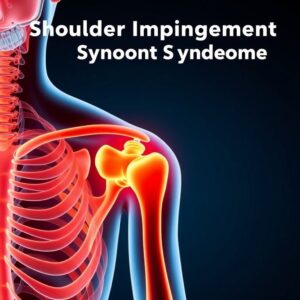
ICD-10 codes for shoulder impingement syndrome
2. Understanding the Enemy: A Deep Dive into Shoulder Impingement Syndrome
To code a condition correctly, one must first understand it profoundly. Shoulder impingement syndrome is not a single disease but rather a clinical diagnosis describing a mechanical conflict within the subacromial space.
The Anatomy of a Miracle: The Rotator Cuff and Subacromial Space
The shoulder is the body’s most mobile joint, a blessing that comes with the curse of instability. The glenohumeral joint is a ball-and-socket joint where the humeral head (the ball) articulates with the glenoid fossa of the scapula (the socket). This socket is shallow, much like a golf ball on a tee, allowing for immense range of motion.
The rotator cuff is a group of four muscles and their tendons—the supraspinatus, infraspinatus, teres minor, and subscapularis (forming the acronym SITS)—that encapsulate the joint. Their primary roles are to stabilize the humeral head within the glenoid fossa and to facilitate rotation and elevation of the arm.
The subacromial space is the critical compartment beneath the acromion (the bony prominence at the top of the shoulder blade). This space houses the:
-
Rotator cuff tendons (primarily the supraspinatus)
-
Subacromial bursa: A fluid-filled sac that acts as a cushion to reduce friction between the tendons and the acromion.
The Mechanics of Pain: How Impingement Occurs
Impingement occurs when the tendons of the rotator cuff and the subacromial bursa become compressed or “impinged” between the humeral head and the acromion during arm elevation. This repeated mechanical compression leads to inflammation, swelling, micro-tears, and pain. Think of it like a piece of rope being repeatedly rubbed against a sharp rock; eventually, it will fray.
This can happen due to two primary mechanisms:
-
Structural (Outlet) Impingement: This is the most common form, caused by a physical narrowing of the subacromial space. Causes include:
-
Bone spurs on the underside of the acromion.
-
A hooked or curved acromion shape (Bigliani classification Type III).
-
Thickening of the coracoacromial ligament.
-
Osteoarthritis of the acromioclavicular (AC) joint.
-
-
Functional (Non-Outlet) Impingement: Here, the space is anatomically normal, but the dynamic stability is compromised. This is often due to:
-
Rotator cuff weakness or muscle imbalance.
-
Scapular dyskinesis (poor control and positioning of the shoulder blade).
-
Glenohumeral instability (looseness of the joint).
-
Overuse from repetitive overhead activities (swimming, throwing, painting).
-
Stages of Impingement: From Inflammation to Irreparable Damage
Dr. Charles Neer classified impingement into three progressive stages:
-
Stage I: Edema and Hemorrhage (Typically < 25 years old): Characterized by reversible inflammation and swelling of the bursa and tendons due to overuse. Responds well to conservative treatment.
-
Stage II: Fibrosis and Tendinitis (Typically 25-40 years old): Chronic inflammation leads to thickening and scarring of the bursa and tendons. This is a progressive, irreversible stage.
-
Stage III: Bone Spurs and Tendon Rupture (Typically > 40 years old): Development of bone spurs and full-thickness rotator cuff tears due to long-standing mechanical wear.
3. The ICD-10-CM Coding System: A Language for Modern Medicine
The International Classification of Diseases, 10th Revision, Clinical Modification (ICD-10-CM) is the standardized system used in the United States to classify and code all diagnoses, symptoms, and procedures. It replaced ICD-9-CM in 2015, offering a dramatic increase in specificity and detail.
Beyond Billing: The Critical Importance of Accurate Coding
While reimbursement is a primary function, accurate ICD-10 coding serves several vital purposes:
-
Patient Care: Accurate codes help track patient history, justify medical necessity for treatments and tests, and facilitate care coordination.
-
Public Health and Research: Aggregated code data is used to track disease outbreaks, allocate resources, and conduct epidemiological research.
-
Quality Metrics: Codes are used to measure the quality of care, patient outcomes, and hospital performance.
-
Legal and Compliance: The medical record, supported by codes, is a legal document. Inaccurate coding can lead to audits, fines, and allegations of fraud.
4. Decoding the Code: A Comprehensive Guide to M75.4
At the heart of this article lies the code itself. Let’s dissect it completely.
M75.4: Impingement Syndrome of Shoulder – The Core Diagnosis
The official ICD-10-CM code for impingement syndrome of the shoulder is M75.4.
-
Chapter: Chapter 13: Diseases of the Musculoskeletal System and Connective Tissue (M00-M99)
-
Block: Other soft tissue disorders (M70-M79)
-
Category: M75 – Shoulder lesions
This code is specific and inclusive of several synonymous terms used clinically, which is crucial for documentation. According to the ICD-10-CM index and tabular list, M75.4 includes:
-
Impingement syndrome of the shoulder
-
Rotator cuff syndrome (complete) NOS (Not Otherwise Specified)
-
Supraspinatus syndrome
It is critical to understand that “Rotator cuff syndrome NOS” and “Supraspinatus syndrome” are mapped to M75.4. If a provider uses these terms, M75.4 is the appropriate code, unless a more specific tear is documented.
The 7th Character Requirement: The Episode of Care
ICD-10-CM requires a 7th character for code M75.4 to specify the encounter type. This adds a temporal element to the diagnosis.
-
M75.40 – … unspecified arm: This is rarely used as laterality should almost always be known.
-
M75.41 – … right shoulder
-
M75.42 – … left shoulder
-
M75.49 – … unspecified shoulder
The 7th character extension is as follows:
-
A – Initial encounter: Used for the first time the patient is receiving active treatment for the condition (e.g., initial diagnosis, ER visit, first round of physical therapy).
-
D – Subsequent encounter: Used for routine follow-up care during the healing or recovery phase (e.g., follow-up office visits to monitor progress, medication adjustments, continued physical therapy).
-
S – Sequela: Used for complications or conditions that arise as a direct result of the initial impingement syndrome. This is rare for impingement but could be used if, for example, chronic impingement led to a frozen shoulder (adhesive capsulitis) that is now the primary focus of treatment.
Examples:
-
A new patient presents with right shoulder pain, diagnosed as impingement syndrome: M75.411A
-
The same patient returns for a 4-week follow-up: M75.411D
-
A patient presents with chronic left shoulder impingement and now has developed adhesive capsulitis as a sequela. You would code the adhesive capsulitis (M75.01) as the primary diagnosis and could consider M75.412S as a secondary code, though the current problem (frozen shoulder) takes precedence.
Code Also: Documenting the Underlying Cause
The ICD-10-CM tabular list instructs: “Code also any associated rotator cuff tear (M75.1-).” This is a crucial instruction.
-
If the documentation states “impingement syndrome” without mention of a tear, you code only M75.4-.
-
If the documentation states “impingement syndrome with a partial/full-thickness rotator cuff tear,” you must code both:
-
The rotator cuff tear (M75.11- or M75.12-)
-
The impingement syndrome (M75.4-)
-
The rotator cuff tear code is typically sequenced first, as it is often the more severe and definitive diagnosis.
5. Navigating the Nuances: Differential Diagnoses and Exclusion Codes
A significant part of coding expertise is knowing what code not to use. Several related shoulder conditions have their own distinct codes.
Why Not M75.1? Rotator Cuff Tears vs. Impingement
This is the most common point of confusion.
-
M75.4 – Impingement Syndrome: A clinical syndrome of mechanical compression. A tear may or may not be present.
-
M75.1- – Rotator Cuff Tear (Rupture): A structural diagnosis of a torn tendon. This is often the result of long-standing impingement (Stage III).
Coding Rule: If a tear is documented, you must code it. Impingement is the cause; the tear is the effect.
Other Shoulder Pain Codes: Adhesive Capsulitis, Bursitis, and Tendinitis
-
M75.0 – Adhesive Capsulitis (Frozen Shoulder): A condition of idiopathic stiffness and pain. It can be a sequela of impingement but is a distinct diagnosis.
-
M75.5 – Bursitis of Shoulder: While the subacromial bursa is always inflamed in impingement syndrome, if the provider documents only “bursitis” as the primary diagnosis, M75.5 is used. If they document “impingement syndrome,” M75.4 is used, as the bursitis is implied in the syndrome.
-
M75.8 – Other shoulder lesions: This is a catch-all category.
Official ICD-10-CM Exclusion Notes
The tabular list provides explicit guidance to prevent double-coding or coding errors. For category M75, it states:
-
Excludes1: shoulder-hand syndrome (M89.0-) – This is a different condition (a type of complex regional pain syndrome).
-
Excludes2:
-
current injury – see injury of shoulder and upper arm (S40-S49)
-
enthesopathies (M76-M77) – e.g., lateral epicondylitis, which is elbow pain.
-
This means you cannot code M75.4 for a brand new acute injury like a fall. You would use an injury code from S40-S49.
6. The Clinical Documentation Improvement (CDI) Connection: A Partnership for Precision
Accurate coding is impossible without precise documentation. The collaboration between providers and coders is essential.
What Coders Need from Providers: Key Documentation Elements
For a coder to correctly assign M75.4, the provider’s note must clearly include:
-
The Specific Diagnosis: The term “Impingement Syndrome” should be explicitly stated in the assessment/plan.
-
Laterality: Right, Left, or Bilateral. If bilateral, both M75.411- and M75.421- are coded.
-
Acuity/Chronicity: Is this a new or chronic issue?
-
Associated Conditions: Is there a documented tear? Bursitis? Tendinosis?
-
Etiology: Is it related to overuse, arthritis, or an anatomic variant? (This may be inferred from the history).
Common Documentation Pitfalls and How to Avoid Them
-
Pitfall: Documenting only “shoulder pain.”
-
Coder’s Action: Must code R25.8 (Other abnormal involuntary movements) or a similar unspecified pain code, which is non-specific and may not support medical necessity for advanced treatment.
-
Solution: Providers should always give a definitive diagnosis in the assessment.
-
-
Pitfall: Documenting “rotator cuff tear” without specifying partial vs. full-thickness.
-
Coder’s Action: Must default to the less specific code (often M75.10- for unspecified tear), which may impact reimbursement.
-
Solution: Providers should specify the type and size of the tear based on imaging.
-
-
Pitfall: Using ambiguous terms like “rotator cuff tendinopathy” without linking it to impingement.
-
Coder’s Action: This would be coded as M75.8- (other shoulder lesions).
-
Solution: Be specific. If it’s impingement, call it impingement.
-
7. A Step-by-Step Coding Workflow: From Patient Encounter to Final Code
Here is a logical process for assigning the correct code(s).
-
Review the Patient Record: Start with the Final Assessment/Diagnosis.
-
Identify the Primary Diagnosis: What is the main reason for the encounter? (e.g., Shoulder Impingement Syndrome).
-
Consult the ICD-10-CM Index: Look up “Impingement, shoulder.” It will direct you to M75.4.
-
Verify in the Tabular List: Go to M75.4 in the tabular list. Read all notes, inclusions, excludes1, excludes2, and “code also” instructions.
-
Determine Laterality: Right (M75.41), Left (M75.42), etc.
-
Assign the 7th Character: Based on encounter type (A, D, S).
-
Check for Comorbidities/Associated Conditions: Is a rotator cuff tear documented? If yes, code M75.1- first, then M75.4-.
-
Confirm Medical Necessity: Does the final code support the procedures performed (e.g., physical therapy, injection, surgery)?
8. Case Studies: Applying M75.4 in Real-World Scenarios
Case Study 1: The Overhead Athlete (Initial Encounter)
-
Presentation: A 28-year-old competitive swimmer presents with a 2-month history of right shoulder pain during the recovery phase of his stroke. Positive Neer and Hawkins impingement signs. MRI shows tendinosis of the supraspinatus but no tear.
-
Assessment: Right-sided shoulder impingement syndrome.
-
Correct Coding: M75.411A
-
Rationale: Clear diagnosis of impingement, right side, initial encounter. No tear is documented, so M75.1- is not used.
Case Study 2: The Chronic Pain Patient (Subsequent Encounter)
-
Presentation: A 55-year-old secretary returns for her 3rd visit for ongoing left shoulder impingement syndrome. She is undergoing physical therapy and received a corticosteroid injection 6 weeks prior. Her pain is improving.
-
Assessment: Status post injection for left shoulder impingement syndrome, improving.
-
Correct Coding: M75.412D
-
Rationale: The condition is still impingement syndrome, left side, and this is a follow-up visit for ongoing management (subsequent encounter).
Case Study 3: Post-Mastectomy Impingement with Bursitis
-
Presentation: A 62-year-old female with a history of right-sided mastectomy and lymph node dissection 1 year ago presents with shoulder pain and stiffness. Exam and ultrasound confirm impingement syndrome with significant subacromial bursitis.
-
Assessment: Impingement syndrome and bursitis of the right shoulder, likely related to post-mastectomy postural changes.
-
Correct Coding: M75.411A
-
Rationale: The term “impingement syndrome” is the overarching diagnosis, which includes the bursitis. Only M75.4 is needed. The post-mastectomy status (Z90.11) can be added as a secondary code to provide context but is not the primary diagnosis for this encounter.
9. The Future of Coding: ICD-11 and Beyond
The World Health Organization has already released ICD-11, which will eventually be adopted in the US as ICD-11-CM. It offers even greater granularity. In ICD-11, shoulder impingement syndrome is found under FB43.2. The coding structure allows for more detailed specification of etiology and associated conditions, promising even more precise data capture in the future.
Summary of Key ICD-10-CM Codes for Shoulder Conditions
| ICD-10 Code | Code Description | Clinical Scenario | Notes |
|---|---|---|---|
| M75.41- / M75.42- | Impingement Syndrome, Right/Left Shoulder | Pain with overhead activities, positive impingement signs, no documented tear. | Includes “rotator cuff syndrome NOS” and “supraspinatus syndrome.” |
| M75.11- / M75.12- | Rotator Cuff Tear/Rupture, Right/Left | MRI or surgical confirmation of a partial or full-thickness tear. | Must be coded with M75.4 if impingement is also documented. Sequence first. |
| M75.01- / M75.02- | Adhesive Capsulitis, Right/Left | Global loss of active and passive range of motion (“frozen shoulder”). | A distinct condition, but can be a sequela of impingement. |
| M75.51- / M75.52- | Bursitis of Shoulder, Right/Left | Isolated inflammation of the subacromial bursa. | Use only if this is the sole/provider-specified diagnosis, not if “impingement” is documented. |
| M75.81- / M75.82- | Other specified shoulder lesions | Diagnoses like “rotator cuff tendinopathy” or “bicipital tendinitis” without impingement. | A catch-all for specific shoulder issues not classified elsewhere. |
| S43.429- | Sprain of rotator cuff capsule | Acute injury from a specific traumatic event (e.g., a fall). |
10. Conclusion
The ICD-10 code M75.4 for shoulder impingement syndrome is a precise tool that encapsulates a complex clinical reality. Mastery of its application—understanding its clinical meaning, required specificity, and interaction with related codes—is fundamental for accurate reimbursement, robust data analytics, and optimal patient care. The journey from a patient’s pain to the final code is a collaborative effort, reliant on impeccable clinical documentation and meticulous coding practice. By viewing M75.4 not as a mere number but as a detailed clinical story, healthcare professionals can ensure they are accurately representing the patient’s condition in the language of modern medicine.
11. Frequently Asked Questions (FAQs)
Q1: What is the difference between ICD-10 code M75.4 and M75.1?
A: M75.4 is for “Impingement Syndrome,” a clinical condition of mechanical compression. M75.1 is for a confirmed “Rotator Cuff Tear.” If a tear is present with impingement, you must code both, with the tear (M75.1) sequenced first.
Q2: Can I use M75.4 if the provider only documents “shoulder bursitis” or “rotator cuff tendinitis”?
A: No. If the provider’s definitive diagnosis is “bursitis,” you would use M75.5. If it’s “tendinitis,” you would use M75.8- (other shoulder lesions). M75.4 should only be used when “Impingement Syndrome” is the documented diagnosis.
Q3: How do I code impingement syndrome if it is bilateral?
A: You must assign two codes: one for the right shoulder (M75.411-) and one for the left shoulder (M75.421-). The 7th character (A, D, S) will be the same for both.
Q4: What is the 7th character ‘S’ (Sequela) used for in M75.4?
A: It is used when the patient is being treated for a condition that is a direct consequence of the resolved impingement syndrome. For example, if the impingement has healed but it resulted in a frozen shoulder that is now the focus of treatment. This is a rare usage.
Q5: Where can I find the official coding guidelines?
A: The official ICD-10-CM Coding Guidelines are published by the Centers for Disease Control and Prevention (CDC) and the Centers for Medicare & Medicaid Services (CMS). They are updated annually and are available for free on the CMS website.
12. Additional Resources
-
Centers for Disease Control and Prevention (CDC) – ICD-10-CM: Provides the official guidelines and index.
-
American Medical Association (AMA): Publisher of the CPT codebook, essential for understanding procedure coding in conjunction with ICD-10 diagnoses.
-
American Academy of Professional Coders (AAPC): Offers certifications, training, and resources for medical coders.
-
American Health Information Management Association (AHIMA): Another leading authority on health information and coding, providing credentials and educational materials.
-
Orthopaedic Section of the American Physical Therapy Association: Provides clinical practice guidelines for conditions like shoulder impingement, which can inform documentation.
Date: October 7, 2025
Disclaimer: The information contained in this article is for educational and informational purposes only and is not intended as a substitute for professional medical advice, diagnosis, or treatment. Always seek the advice of your physician or other qualified health provider with any questions you may have regarding a medical condition or coding practice. Medical coding is complex and subject to change; always consult the most current, official ICD-10-CM coding guidelines and resources.