In the vast and intricate lexicon of medical coding, where every diagnosis, symptom, and procedure is translated into a precise alphanumeric language, some codes carry more weight than others. They represent not just a current ailment, but a past battle, a journey of resilience, and an ongoing narrative of survivorship. The ICD-10 code for a history of colon cancer is one such code. It is far more than a mere administrative token; it is a critical data point that tells a powerful story about a patient’s health journey.
For healthcare providers, this code is a flag, a reminder of the need for vigilant, lifelong surveillance and a understanding of potential long-term consequences of both the disease and its treatment. For medical coders, it is a test of precision, requiring a nuanced understanding of guidelines to ensure it is applied correctly amidst a sea of similar-sounding codes. For healthcare systems and researchers, it is a vital piece of the puzzle in tracking cancer survivorship, outcomes, and the effectiveness of treatments on a population level.
This comprehensive guide delves deep into the world of ICD-10 coding for a history of colon cancer. We will move beyond the basic code itself to explore its correct application, its relationship with other codes, the common pitfalls that ensnare even experienced coders, and its profound impact on patient care and the healthcare ecosystem. Whether you are a seasoned medical coder, a healthcare administrator, a clinician, or a patient seeking to understand your medical record, this article aims to provide clarity and mastery over this essential element of modern healthcare documentation.
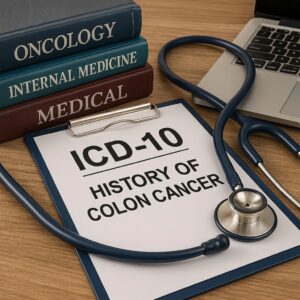
ICD-10 for History of Colon Cancer
2. Understanding the “Z” Codes: The World of Factors Influencing Health Status
The ICD-10-CM code set is organized into chapters based on etiology and body system. The codes for personal history of diseases are found in Chapter 21: Factors Influencing Health Status and Contact with Health Services (Z00-Z99). This chapter is distinct because it does not typically represent a current illness or injury. Instead, it captures circumstances that influence a patient’s health status, such as:
-
Reasons for encounter (e.g., routine health check-up, encounter for immunization)
-
Screening for diseases
-
Personal and family history of diseases
-
Problems related to lifestyle and life management
-
encounters for specific procedures and aftercare
The codes in this chapter, colloquially known as “Z codes,” are crucial for providing context. They explain why a patient is receiving care, even if that reason is not an active disease process. Using a Z code for a history of colon cancer accurately communicates to anyone reading the chart: “This patient is here today because of their past cancer. While the cancer itself may be in remission, it remains a significant factor in their ongoing health management.”
3. The Primary Code: A Deep Dive into Z86.010 – Personal History of Malignant Neoplasm of Colon
The cornerstone code for our discussion is Z86.010.
Let’s break down its components:
-
Z86: Personal history of certain other diseases
-
.01: Personal history of malignant neoplasm of gastrointestinal tract
-
0: Personal history of malignant neoplasm of colon
This code is assigned when a patient has a previous diagnosis of colon cancer that has been successfully treated and is currently in a state of remission, surveillance, or is considered “cured.” The patient is not currently receiving active treatment for the cancer (e.g., chemotherapy, radiation).
Clinical Description and Intent
The clinical intent behind this code is to indicate that the patient’s past medical history of colon cancer is the reason for the encounter or a factor contributing to their current care. This is most commonly used for:
-
Surveillance colonoscopies: The single most common reason for using this code. The patient is presenting for a scheduled scope to monitor for recurrence or new polyps.
-
Follow-up visits with an oncologist or gastroenterologist: Routine appointments to discuss surveillance schedules, manage long-term side effects of treatment, and assess overall health.
-
Encounters where the history is relevant: Even if the visit is for a different reason (e.g., a sprained ankle), if the history of cancer influences decision-making (e.g., caution with prescribing certain anti-inflammatory drugs), this code may be used as a secondary diagnosis.
The Critical Importance of Specificity: Colon vs. Rectum
ICD-10-CM is a system built on specificity. While “colorectal cancer” is a common umbrella term in layman’s language, the coding system makes a clear anatomical distinction.
-
Z86.010 is used exclusively for a history of cancer that originated in the colon (cecum, ascending colon, transverse colon, descending colon, sigmoid colon).
-
Z86.011 is used for a history of cancer that originated in the rectum.
This distinction is not arbitrary. It has clinical implications for surveillance strategies (e.g., proctoscopy vs. colonoscopy) and surgical outcomes. The coder must rely on the provider’s documentation. If the documentation states “history of colorectal cancer,” the coder may need to query the provider for clarification on the specific primary site. Never assume the location based on the term “colorectal.”
4. The Art of Sequencing: Primary, Secondary, and Contributory Codes
Knowing the correct code is only half the battle. Understanding its proper placement in the sequence of diagnosis codes is equally critical, as this order directly impacts reimbursement and tells the story of the encounter.
Scenario 1: Routine Follow-up Visit
A patient presents to a gastroenterology clinic for a scheduled annual check-up following their treatment for stage II colon cancer three years prior. The sole purpose of the visit is to discuss the surveillance plan and order a colonoscopy.
-
Primary Diagnosis (First-listed): Z86.010 (Personal history of malignant neoplasm of colon). This is the reason for the encounter.
-
CPT Code: 99213 (Office outpatient visit) – supported by the history and medical decision-making.
Scenario 2: Hospital Admission for an Unrelated Condition (e.g., Pneumonia)
A patient with a remote history of colon cancer (in remission) is admitted to the hospital for community-acquired pneumonia. The history of cancer is noted but does not directly alter the treatment for pneumonia.
-
Primary Diagnosis: J18.9 (Pneumonia, unspecified organism). This is the reason for the admission.
-
Secondary Diagnosis: Z86.010 (Personal history of malignant neoplasm of colon). This is an important piece of historical information but is not the reason for this encounter.
Scenario 3: Encounter for a Related Complication
A patient with a history of colon cancer, status-post resection with colostomy, presents to the emergency department due to dehydration and a blockage of their stoma.
-
Primary Diagnosis: K94.03 (Colostomy complication, unspecified). This is the acute reason for the visit.
-
Secondary Diagnosis: Z86.010 (Personal history of malignant neoplasm of colon). This provides the essential context for why the patient has a colostomy.
-
Additional Code: Z93.3 (Colostomy status). This indicates the presence of the colostomy itself.
This sequencing accurately tells the story: the patient is here for a problem with their colostomy (which exists because of their history of cancer).
5. Beyond the Primary Code: The Essential Role of Status Codes
Often, a history of colon cancer is accompanied by sequelae or ongoing statuses that require their own codes. The most common are codes from category Z93.- (Artificial opening status) and Z98.- (Other postprocedural states).
-
Z93.3 – Colostomy status: Used when a patient has a colostomy, regardless of the reason. If the colostomy was created as part of their cancer treatment, this code would be used alongside Z86.010.
-
Z90.49 – Acquired absence of other part of digestive tract: This can be used to indicate the surgical removal of a portion of the colon.
These status codes provide a more complete picture of the patient’s anatomical and functional state, which is crucial for care planning and risk assessment.
Z85.0- vs. Z86.01-: Knowing the Difference
This is a potential area of confusion. Category Z85.- (Personal history of malignant neoplasms) is also for history of cancer. So, what’s the difference?
-
Z85.0- (Personal history of malignant neoplasm of digestive organs): This category is a broader category that includes codes for history of colon (Z85.00), rectum (Z85.01), and other GI cancers.
-
Z86.01- (Personal history of malignant neoplasm of gastrointestinal tract): This is a more specific subcategory.
According to the ICD-10-CM Official Guidelines for Coding and Reporting, the Alphabetic Index directs you from “History of, colon, cancer” to Z86.010. Therefore, Z86.010 is the correct and most specific code for a personal history of colon cancer. The codes under Z85.0 are effectively non-specific and should not be used if a more specific code is available.
The Critical “Excludes1” Note
The tabular list for Z86.- contains an important “Excludes1” note: “Excludes1: personal history of malignant neoplasm (Z85.-)“. An Excludes1 note means that the two codes should not be used together; they are mutually exclusive. This note reinforces that you must choose either the specific code in Z86.01- or the less specific code in Z85.0-, but not both. The guideline and index direct you to Z86.01-.
6. Common Pitfalls and Coding Errors to Avoid
Misapplication of these codes can lead to claim denials, audits, and inaccurate data.
-
Confusing History of with Family History (Z80.0): This is a fundamental error. Z86.010 is for the patient’s own history. Z80.0 (Family history of malignant neoplasm of digestive organs) is used when a patient’s parent, sibling, or child has had cancer. This is often a reason for screening, not follow-up.
-
Misapplying Codes for Current Cancer: If the patient has a current, active colon cancer, or is receiving active treatment (chemotherapy, radiation), you must use a code from category C18.- (Malignant neoplasm of colon) as the primary diagnosis. Using a history code (Z86.010) for active cancer is a serious error.
-
Overlooking the Need for Additional Codes: Failing to add status codes like Z93.3 (for a colostomy) or complication codes provides an incomplete clinical picture and can affect reimbursement for related care.
7. The Impact of Accurate Coding: Clinical, Financial, and Epidemiological Significance
Precise coding is not a mere administrative exercise; it is a critical function that supports the entire healthcare system.
Driving Patient Care and Clinical Decision-Making
Accurate codes embedded in the Electronic Health Record (EHR) trigger alerts and reminders. A code for history of colon cancer can prompt a system to alert a primary care physician that the patient is due for a surveillance colonoscopy, ensuring they remain on the recommended follow-up pathway. It informs emergency room staff of potential complications or vulnerabilities.
Ensuring Appropriate Reimbursement and Avoiding Denials
Medical necessity is the cornerstone of reimbursement. Using Z86.010 as the primary diagnosis for a surveillance colonoscopy (CPT 45378) perfectly justifies the medical necessity of that procedure. Using an incorrect or unspecified code can lead to a claim denial, as the payer will not understand why a screening-type procedure was performed. Similarly, adding status codes like Z93.3 can justify the medical necessity for supplies like ostomy bags.
Contributing to Vital Population Health Data and Research
When aggregated, these codes become powerful data. Public health officials and researchers use this data to:
-
Track long-term survival rates for colon cancer.
-
Study the long-term side effects of different cancer treatments.
-
Identify disparities in follow-up care among different demographic groups.
-
Allocate resources for cancer survivorship programs.
-
An inaccurate code corrupts this data, leading to flawed conclusions and ineffective public health policies.
8. A Practical Coding Table: Quick-Reference Scenarios
The following table summarizes common clinical scenarios and the appropriate application of ICD-10 codes.
| Clinical Scenario | Provider Documentation | Primary Diagnosis Code | Secondary/Additional Diagnosis Codes | Rationale |
|---|---|---|---|---|
| Routine Surveillance Colonoscopy | “Surveillance colonoscopy due to history of sigmoid colon cancer, status post resection 4 years ago.” | Z86.010 (Personal history of malignant neoplasm of colon) | (None typically needed for this encounter) | The history is the reason for the procedure. |
| Office Follow-up Visit | “Patient here for annual follow-up of history of colon cancer. Currently in remission. Discussed surveillance schedule.” | Z86.010 (Personal history of malignant neoplasm of colon) | (None typically needed) | The history is the reason for the encounter. |
| Admission for Pneumonia | “Patient admitted with pneumonia. PMH significant for colon cancer in remission.” | J18.9 (Pneumonia, unspecified organism) | Z86.010 (Personal history of malignant neoplasm of colon) | The active, acute illness is the reason for admission. History is secondary. |
| Encounter for Ostomy Care | “Patient presents for evaluation of peristomal skin irritation. Has a permanent colostomy from past colon cancer treatment.” | L99.9 (Disorder of skin and subcutaneous tissue, unspecified) or K94.03 (Colostomy complication) | Z93.3 (Colostomy status) Z86.010 (Personal history of malignant neoplasm of colon) |
The skin problem/complication is the primary issue. The status and history provide crucial context. |
| Active Cancer Treatment | “Patient here for cycle 3 of adjuvant chemotherapy for Stage III colon cancer.” | C18.7 (Malignant neoplasm of sigmoid colon) or other specific C18.- code | Z51.11 (Encounter for antineoplastic chemotherapy) | The active cancer is the diagnosis being treated. The Z51.11 code explains the type of treatment. |
9. The Future of Coding: ICD-11 and the Evolution of Cancer History Documentation
The World Health Organization (WHO) has already released ICD-11, which will eventually be adopted (as ICD-11-CM) in the United States after a significant implementation period. ICD-11 offers a more structured and detailed approach to coding.
The code for personal history of colon cancer in ICD-11 is ME10.6. The significant evolution is the ability to combine multiple concepts into a single “cluster” code using post-coordination. For example, a history of colon cancer with a resulting colostomy could be represented more seamlessly within the code structure itself, potentially reducing the need for multiple separate codes and enhancing the richness of the data captured.
10. Conclusion: Precision as a Pillar of Patient Care
The ICD-10 code Z86.010, “Personal history of malignant neoplasm of colon,” is a small but mighty component of modern healthcare. Its accurate application transcends administrative function, serving as a critical linchpin in ensuring continuous, appropriate patient care, justifying medical necessity for reimbursement, and building the reliable data infrastructure that drives cancer research and public health innovation. For medical coders, mastering this code and its contextual use is a professional imperative. For the healthcare system at large, it represents a commitment to precision—a commitment that ultimately supports every individual on their journey through cancer survivorship.
11. Frequently Asked Questions (FAQs)
Q1: What is the exact ICD-10 code for a history of colon cancer?
A: The specific code is Z86.010 (Personal history of malignant neoplasm of colon). It is crucial to ensure the documentation specifies the colon and not the rectum, which has a different code (Z86.011).
Q2: When should this code not be used?
A: This code should not be used if the patient has a current, active colon cancer (use a code from C18.-) or if the patient is undergoing active treatment like chemotherapy (the cancer code is still primary). It also should not be used for a family history of cancer (use Z80.0).
Q3: Can Z86.010 be used as a primary diagnosis?
A: Yes, absolutely. When the encounter is specifically for surveillance or follow-up of the history of cancer itself (e.g., a follow-up doctor’s appointment, a surveillance colonoscopy), Z86.010 is the correct first-listed (primary) diagnosis code.
Q4: What other codes might I need to use with Z86.010?
A: Always consider status codes if applicable. The most common is Z93.3 (Colostomy status) if the patient has an ostomy. You may also need codes for complications related to the history or its treatment.
Q5: My patient’s document says “history of colorectal cancer.” What code do I use?
A: The term “colorectal” is ambiguous for coding purposes. You must query the provider to clarify the original primary site: was it specifically in the colon or the rectum? Do not assume. This clarification is essential for assigning the correct code (Z86.010 vs. Z86.011).
12. Additional Resources
For the most authoritative and up-to-date information, always consult these primary sources:
-
CMS ICD-10-CM Official Guidelines for Coding and Reporting: https://www.cms.gov/medicare/icd-10/2024-icd-10-cm (Check for the most current year)
-
CDC ICD-10-CM Browser Tool: https://www.cdc.gov/nchs/icd/icd10cm.htm – An excellent tool for searching and verifying codes.
-
American Health Information Management Association (AHIMA): https://www.ahima.org/ – A premier professional organization for medical coders that provides education, best practices, and updates on coding guidelines.
-
American Cancer Society (ACS): https://www.cancer.org/ – Provides detailed information on cancer types, treatment, and survivorship care guidelines, which can help coders understand the clinical context behind the codes.
-
National Cancer Institute (NCI): https://www.cancer.gov/ – A key resource for terminology and cancer research data.
Date: September 17, 2025
Author: The Medical Coding Specialist
Disclaimer: *This article is intended for informational and educational purposes only. It is not a substitute for professional medical coding advice, consulting, or training. Medical coding guidelines are complex and subject to change. Always consult the most current official ICD-10-CM coding guidelines, payer-specific policies, and clinical documentation before assigning codes. The author and publisher assume no responsibility for errors or omissions or for any damages resulting from the use of the information contained herein.*