Navigating the world of medical coding can feel like learning a new language. For healthcare professionals, medical billers, and students, understanding these codes is not just about paperwork—it’s about ensuring accurate patient records, proper billing, and clear communication across the healthcare system. Even though we’ve moved on to a newer system, the ICD-9 code for anemia remains a crucial piece of medical history and is still relevant for deciphering older records. This comprehensive guide will walk you through everything you need to know about ICD-9 code 285.9, its structure, its purpose, and its proper place in today’s healthcare landscape.
Our goal is to transform a seemingly dry topic into a clear, actionable resource. We’ll break down the “why” behind the codes, not just the “what,” helping you build a foundational understanding that goes beyond a simple Google search. Whether you’re reviewing a chart from 2014 or studying the evolution of medical classification, this article will serve as your essential reference.
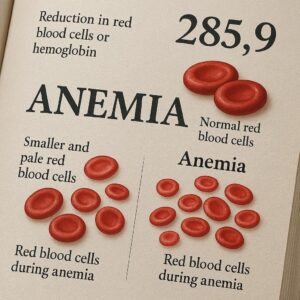
ICD-9 Code for Anemia
What is ICD-9 and Why Was It Retired?
Before we dive into the specific code for anemia, let’s set the stage. The International Classification of Diseases, Ninth Revision, Clinical Modification (ICD-9-CM) was the standard system used in the United States to classify and code all diagnoses, symptoms, and procedures. Think of it as a massive, standardized dictionary that every doctor, hospital, and insurance company used to speak the same clinical language.
ICD-9 served the healthcare industry well for decades. However, as medicine advanced, its limitations became glaringly apparent.
“The transition from ICD-9 to ICD-10 was a necessary evolution, driven by the need for greater specificity in an increasingly complex medical world. It was like upgrading from a detailed street map to a real-time GPS with satellite imagery.” – Healthcare Informatics Specialist
The system simply ran out of space for new codes, and its structure couldn’t capture the detail required for modern patient care, billing, and health data analysis. This lack of specificity led to broader, less descriptive codes.
Key Limitations of ICD-9:
-
Limited Space: The coding structure was running out of numbers for new diseases and procedures.
-
Lack of Specificity: Codes often grouped very different conditions together, losing critical clinical detail.
-
Incompatible with Modern Medicine: It couldn’t adequately describe new technologies, surgical techniques, or molecular diagnoses.
This ultimately led to the mandatory transition to ICD-10-CM on October 1, 2015, in the U.S. ICD-10 offers a dramatically larger and more precise code set.
Decoding the ICD-9 Code for Anemia: 285.9
In the ICD-9-CM system, the code for a general, unspecified diagnosis of anemia is 285.9. This code is found in the “Diseases of the Blood and Blood-Forming Organs” chapter.
Let’s parse this code to understand its meaning:
-
285: This is the parent category for “Nutritional anemias and other anemias.” It covers a range of anemia types, from iron deficiency to chronic disease.
-
.9: The decimal and following digit indicate a further subdivision. In medical coding, the digit “.9” almost universally signifies “Unspecified” or “Other.”
Therefore, ICD-9 285.9 literally translates to “Anemia, unspecified” or “Other unspecified anemias.”
When Was 285.9 Used?
This was a classic “unspecified” code. Physicians and coders would use 285.9 when:
-
The specific type of anemia was not yet determined after initial testing.
-
The medical documentation in the record was not detailed enough to assign a more precise code (e.g., “anemia” was listed without mention of cause).
-
For historical context in broad statistical reporting where specificity was not the goal.
Important Note for Readers: While you must know 285.9 for historical purposes, it is not acceptable for use on medical claims for services provided on or after October 1, 2015. Using an ICD-9 code on a current claim will result in an immediate rejection. This information is primarily vital for retrospective chart review, research on older data, and understanding coding evolution.
The Specificity Problem: Why “Unspecified” Codes Were Problematic
The reliance on codes like 285.9 highlights a core flaw in the old system. “Anemia” is not a single disease; it’s a sign of an underlying issue. Using one code for all anemias obscured critical information for care, payment, and public health.
Consider two patients:
-
Patient A: Has mild anemia (285.9) due to a chronic kidney disease.
-
Patient B: Has severe anemia (285.9) due to a hereditary blood disorder like thalassemia.
Under ICD-9, they could have the same billing code. This lack of detail makes it hard to track outcomes, allocate resources, or conduct meaningful research on specific anemia types. It also created challenges for insurance companies determining medical necessity, as the reason for the anemia was not clear from the code.
ICD-9 Anemia Codes: A Comparative Table
While 285.9 was the “catch-all,” ICD-9 did have codes for some specific, common anemias. The table below shows how broader categories were represented, contrasting with the immense detail available in ICD-10.
| Type of Anemia | ICD-9-CM Code | Code Description | Equivalent ICD-10-CM Chapter/Example | Note on Specificity |
|---|---|---|---|---|
| Unspecified Anemia | 285.9 | Anemia, unspecified | D64.9 (Anemia, unspecified) | Both are “unspecified,” but ICD-10 has 100+ other anemia codes to choose from first. |
| Iron Deficiency Anemia | 280.9 | Iron deficiency anemia, unspecified | D50.9 (Iron deficiency anemia, unspecified) but also D50.0 (Iron deficiency anemia secondary to blood loss), D50.8 (Other iron deficiency anemias) | ICD-9 had few sub-codes. ICD-10 specifies cause (e.g., chronic blood loss vs. dietary). |
| Anemia of Chronic Disease | 285.2* | Anemia in chronic illness | D63.8 (Anemia in other chronic diseases classified elsewhere) | In ICD-9, this was a somewhat broad category. ICD-10 requires pairing with the specific chronic disease code (e.g., D63.8 linked to C18.9 for Colon Cancer). |
| Pernicious Anemia | 281.0 | Pernicious anemia | D51.0 (Vitamin B12 deficiency anemia due to intrinsic factor deficiency) | Terminology is more clinically precise in ICD-10. |
| Sickle-Cell Anemia | 282.6 | Sickle-cell anemia | D57.1 (Sickle-cell disease without crisis), D57.2 (Sickle-cell disease with crisis) and many more. | ICD-9 did not distinguish between crisis and non-crisis states. ICD-10 has separate codes for various types and complications. |
| Aplastic Anemia | 284.9 | Aplastic anemia, unspecified | D61.9 (Aplastic anemia, unspecified) but also D61.01 (Constitutional aplastic anemia), D61.09 (Other aplastic anemias) | ICD-10 allows for more etiological detail. |
*Note: 285.2 was often used, but coding for anemia of chronic disease in ICD-9 could be complex and sometimes required multiple codes.*
The Modern Equivalent: Navigating Anemia Codes in ICD-10-CM
Today, if a patient presents with anemia, a coder must use ICD-10-CM. The difference in detail is night and day. There is no single “ICD-10 code for anemia.” Instead, there is a chapter (D50-D89) with hundreds of possible codes.
The coder’s job is now to ask and document precise clinical questions to find the correct code:
-
What is the underlying cause? (Iron deficiency? Chronic kidney disease? Chemotherapy?)
-
What is the specific type? (Sickle-cell? Thalassemia? Autoimmune hemolytic?)
-
Are there specifics about the cause? For iron deficiency: Is it due to inadequate dietary intake (D50.8) or chronic blood loss (D50.0)?
-
What is the disease status? For sickle-cell: Is the patient in crisis? What type of crisis?
Example Pathway from Symptom to Code:
-
Documentation: “Patient with rheumatoid arthritis presents with fatigue and pallor. Lab work confirms anemia consistent with chronic disease.”
-
ICD-9 (Old Way): Likely 285.2 (Anemia in chronic illness).
-
ICD-10 (New Way):
-
Step 1: Find the anemia code. This is D63.8 (Anemia in other chronic diseases classified elsewhere).
-
Step 2: ICD-10 has a crucial rule: Code also the underlying disease. You must also code the rheumatoid arthritis (e.g., M06.9).
-
Final Codes: D63.8, M06.9
-
This linkage provides a complete and accurate clinical picture for anyone reading the record.
Why Knowing ICD-9 Codes Still Matters in 2026
You might wonder why we’re discussing a retired system. The relevance is enduring for several key groups:
-
Medical Researchers & Historians: Studies involving long-term patient outcomes or epidemiological trends often span the 2015 transition. Accurately interpreting data from before 2015 requires knowledge of ICD-9.
-
Legal & Forensic Professionals: Malpractice cases, disability claims, or other legal reviews frequently involve medical records from the ICD-9 era. Understanding the codes is essential for accurate testimony and record analysis.
-
Healthcare Professionals Reviewing Old Charts: A patient’s lifelong medical history is contained in records that pre-date 2015. Understanding a diagnosis of “285.9” in context is important for ongoing care.
-
Students of Health Informatics: To truly appreciate the advances and logic of ICD-10, one must understand the limitations of the system it replaced.
Practical Guide: How to Approach an Old Record with ICD-9 Anemia Codes
If you encounter ICD-9 code 285.9 or another anemia code in an old record, follow this analytical process:
-
Do Not Assume Specificity: Recognize that “285.9” tells you very little. It only confirms that anemia was diagnosed.
-
Look Beyond the Code: Turn to the clinician’s notes, lab results, and problem list. The real story is in the narrative, not the numeric code.
-
Seek Context: Was the patient pregnant? Did they have a history of ulcers or cancer? Were they undergoing chemotherapy? This context likely pointed to a more specific cause that wasn’t captured by the code itself.
-
For Historical Analysis: If you are aggregating data, clearly footnote that “anemia” data pre-2015 is non-specific and represents a broad, heterogeneous group.
Common Pitfalls and Misconceptions
-
Myth: “ICD-9 code 285.9 means iron deficiency anemia.”
-
Truth: It means unspecified anemia. Iron deficiency had its own code range (280.x).
-
-
Myth: “I can use ICD-9 codes if I’m just writing a note for myself.”
-
Truth: For any official, legal, or billing-related documentation for current care, you must use ICD-10-CM. Using ICD-9 could be seen as a sign of outdated knowledge.
-
-
Myth: “The transition only changed the numbers, not the process.”
-
Truth: The transition fundamentally changed the thought process from “what is the diagnosis?” to “what is the specific diagnosis, its cause, its laterality, and its status?”
-
The Future: ICD-11 and Beyond
The World Health Organization (WHO) has already released ICD-11, which represents a further leap towards digital integration and conceptual clarity. The U.S. will eventually begin the transition to ICD-11-CM, a process that will take years of preparation. The lesson from the ICD-9 to ICD-10 transition is clear: medical coding is moving inexorably towards greater specificity, clinical utility, and integration with electronic health records and data analytics.
Understanding the journey from a simple code like 285.9 to the detailed hierarchy of ICD-10 prepares us for this future, emphasizing that accurate documentation is the true foundation of any coding system.
Conclusion
The ICD-9 code for anemia, 285.9, stands as a relic of a less specific era in medical classification. While it answers the direct question of “what was the code?”, its true value lies in teaching us the importance of precision in healthcare documentation. The transition to ICD-10-CM was not merely a clerical update but a necessary advancement for patient care, accurate billing, and meaningful health data analysis. For professionals dealing with historical records, understanding 285.9 is crucial, but for current practice, mastering the detailed and logical structure of ICD-10 is non-negotiable. This evolution underscores a central theme in modern medicine: clarity and specificity are paramount.
FAQ: ICD-9 Code for Anemia
Q: What is the exact ICD-9 code for anemia?
A: The general, unspecified code is 285.9 (“Anemia, unspecified”). More specific types had different codes, like 280.9 for iron deficiency anemia.
Q: Can I use ICD-9 code 285.9 on a medical claim today?
A: No. For all services provided on or after October 1, 2015, you must use ICD-10-CM codes. Using an ICD-9 code will result in claim denial.
Q: I saw 285.9 on an old medical record. What does that tell me?
A: It tells you the patient was diagnosed with anemia, but the specific type was not coded. You must review the accompanying doctor’s notes and lab reports to understand the likely cause and severity.
Q: What is the ICD-10 code for anemia?
A: There is no single code. ICD-10 has hundreds of anemia codes for precise classification. The unspecified code is D64.9, but coders are expected to use a more specific code if the information is available (e.g., D50.9 for iron deficiency, D63.1 for anemia in chronic kidney disease).
Q: Why is ICD-10 better for anemia coding?
A: ICD-10 specifies the cause, type, and sometimes the severity of the anemia. This leads to better patient care tracking, more accurate reimbursement based on complexity, and higher-quality data for public health research.
Additional Resources
For those looking to delve deeper into medical coding and classification, we recommend these authoritative sources:
-
Centers for Disease Control and Prevention (CDC) – ICD-10-CM: The official U.S. government site for ICD-10 materials, including guidelines and updates.
-
World Health Organization (WHO) – ICD-11: Explore the future of global disease classification.
-
American Health Information Management Association (AHIMA): A premier association for health information professionals, offering resources on coding best practices, compliance, and education.
-
National Center for Health Statistics (NCHS): Provides history and data related to the use of ICD classifications in the United States.
Disclaimer: This article is for educational and informational purposes only. It is not a substitute for professional medical coding advice, official coding guidelines, or clinical consultation. Always refer to the current, official ICD-10-CM code set and guidelines for all diagnostic coding and billing activities.