If you’re researching medical codes, you might be looking for the ICD-9 code for blocked nose. It’s a common query from patients reviewing old bills, medical coders handling historical records, or students learning about healthcare documentation. While the ICD-9 code set is no longer in active use, understanding it provides valuable insight into how medical conditions are classified.
In this comprehensive guide, we’ll not only reveal the specific ICD-9 code but also explore its modern equivalents, explain the importance of precise coding, and help you navigate the world of medical diagnosis terminology. Our goal is to transform a simple code search into a deeper understanding of your health records.
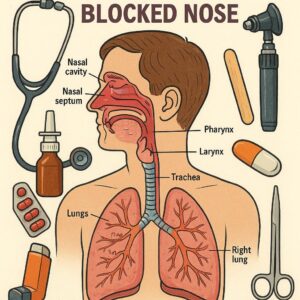
ICD-9 Code for Blocked Nose
Understanding Medical Coding: ICD-9 vs. ICD-10
Before we dive into the specific code, let’s set the stage. Medical coding is the language of healthcare. It translates a doctor’s notes about a patient’s condition into universal alphanumeric codes. These codes are used for billing, insurance claims, public health tracking, and medical research.
For decades, the International Classification of Diseases, 9th Revision (ICD-9) was the standard system in the United States. However, it was replaced on October 1, 2015, by the ICD-10 system. The shift was monumental—ICD-9 had about 13,000 codes, while ICD-10 has over 68,000, allowing for far greater detail and specificity.
Why the Change Matters: “The transition from ICD-9 to ICD-10 was not just an update; it was a necessary leap into modern medicine,” explains a healthcare administration expert. “ICD-9 codes lacked the detail needed for today’s complex care, precise billing, and valuable health data analytics. A code for a ‘blocked nose’ in ICD-9 might be one generic number, but in ICD-10, it can specify the cause, laterality, and even whether it’s recurrent.”
So, if you’re dealing with a current medical bill or diagnosis, you will almost certainly be dealing with an ICD-10 code. However, references to ICD-9 codes still appear in older records, which is why knowing them remains relevant.
The Specific ICD-9 Code for Blocked Nose
After that necessary context, let’s answer the core question. In the ICD-9-CM (Clinical Modification) system, the code used for a blocked or stuffy nose—medically referred to as nasal congestion—is:
ICD-9-CM 478.19 – Other disease of nasal cavity and sinuses
This code falls under a broader category:
-
Category 478: Other diseases of the upper respiratory tract.
-
Subcategory 478.1: Other diseases of nasal cavity and sinuses.
Important Note: Code 478.19 was a “catch-all” code for various nasal issues not specified elsewhere. This included:
-
Nasal congestion (blocked/stuffy nose)
-
Rhinorrhea (runny nose)
-
Other specified disorders of the nasal cavity
This lack of specificity was a key limitation of the ICD-9 system. A blocked nose due to allergies, a common cold, or a structural deviation would all receive the same 478.19 code, which didn’t paint a clear picture for treatment or research.
Comparative Table: ICD-9 vs. ICD-10 for Nasal Congestion
| Feature | ICD-9-CM | ICD-10-CM |
|---|---|---|
| Primary Code | 478.19 – Other disease of nasal cavity and sinuses | J34.89 – Other specified disorders of nose and nasal sinuses |
| Specificity | Low. One code for multiple general symptoms. | High. Requires additional characters to specify the exact condition. |
| Example of Specific Coding | Not possible. All “blocked nose” cases got 478.19. | R09.81 – Nasal congestion J34.89 – Use for other specified disorders (e.g., nasal stenosis) J30.9 – Allergic rhinitis, unspecified J00 – Acute nasopharyngitis (common cold) |
| Laterality | Did not specify left, right, or bilateral. | Can specify right (1), left (2), or bilateral (3) for relevant conditions. |
| Detail Level | General symptom-based. | Cause-and-effect based (etiology). |
The Modern Equivalent: ICD-10 Codes for a Blocked Nose
Today, a clinician or coder must choose a much more precise code. The term “blocked nose” is a symptom, not a final diagnosis. The ICD-10 code depends on the underlying cause identified by the healthcare provider.
Here are the most common ICD-10 codes that represent a blocked nose:
-
R09.81 – Nasal Congestion: This is the most direct equivalent. It’s a “symptom code” from Chapter 18 (Symptoms, Signs, and Abnormal Clinical Findings). It is used when nasal congestion is the primary reason for the visit and a more specific diagnosis isn’t confirmed.
-
J00 – Acute Nasopharyngitis [Common Cold]: If the blocked nose is due to a cold.
-
J30.9 – Allergic Rhinitis, Unspecified: If the congestion is due to allergies (hay fever).
-
J34.89 – Other Specified Disorders of Nose and Nasal Sinuses: This is the closest direct descendant of ICD-9’s 478.19. It might be used for conditions like nasal stenosis (narrowing) or other structural causes of blockage.
-
J32.9 – Chronic Sinusitis, Unspecified: If the congestion is linked to a sinus infection.
This increased precision helps create a more accurate patient history, ensures appropriate treatment pathways, and allows for better tracking of disease outbreaks, like the flu or seasonal allergies.
Why Accurate Medical Coding Matters to You
You might wonder, “Why does this code matter to me as a patient?” The answer is that these small alphanumeric strings have a big impact on your healthcare journey.
-
Accurate Billing and Insurance Claims: The correct code ensures your insurance company is billed for the correct diagnosis. An incorrect code can lead to claim denials or delays, leaving you with unexpected bills.
-
Comprehensive Medical History: Your diagnosis codes form a timeline of your health. An accurate record helps any new doctor understand your past issues quickly and completely.
-
Driving Public Health Initiatives: Aggregated, anonymous coding data helps health authorities spot epidemics, allocate resources for research (like allergy or sinusitis studies), and shape public health policy.
-
Supporting Medical Research: Researchers use diagnosis codes to identify patient populations for clinical studies, track the effectiveness of treatments, and understand disease patterns.
A Coder’s Perspective: “When I see an old ICD-9 code like 478.19, I immediately know I need to look deeper into the patient’s chart to understand what was really going on,” shares a professional medical coder. “With ICD-10, the story is right there in the code itself. It makes continuity of care and data analysis so much more powerful.”
Helpful List: What to Do If You See an Old ICD-9 Code
-
Don’t Panic: If it’s on an old bill or record from before October 2015, it’s simply a relic of the old system.
-
Ask for Translation: If you need to understand the condition for current care, ask your current doctor’s office or the medical records department to clarify what the diagnosis meant in plain language.
-
Verify Current Codes: For any new treatment or diagnosis, ensure your healthcare provider is using the specific ICD-10 code. You have a right to understand what is being submitted to your insurance.
Beyond the Code: Common Causes of a Blocked Nose
Since a blocked nose is a symptom, let’s briefly explore what might be behind it. Understanding the cause is what determines the modern, accurate ICD-10 code.
-
Infections: Viral (common cold, flu) or bacterial (sinusitis) infections cause inflammation and mucus.
-
Allergic Rhinitis: An immune system response to allergens like pollen, dust, or pet dander.
-
Non-Allergic Rhinitis: Congestion triggered by irritants like smoke, strong odors, weather changes, or certain medications.
-
Anatomical Issues: A deviated septum, enlarged turbinates, or nasal polyps can physically obstruct the airway.
-
Chronic Conditions: Such as sinusitis or, rarely, tumors.
Important Note for Readers: This article provides educational information about medical coding. It is not a substitute for professional medical advice. If you have persistent nasal congestion, please consult a healthcare provider for an accurate diagnosis and appropriate treatment plan. Self-diagnosing based on a medical code can be dangerous.
Conclusion
The search for the ICD-9 code for blocked nose leads us to 478.19, a non-specific code retired in 2015. Its legacy highlights the evolution of medical coding toward the precise, detailed ICD-10 system, where your symptoms are carefully categorized to support better care, accurate records, and advanced health research. Understanding this process empowers you to be an informed participant in your own healthcare journey.
Frequently Asked Questions (FAQ)
Q: I have a medical bill from 2014 with code 478.19. What does that mean?
A: It means you were diagnosed with a nasal condition, most commonly nasal congestion or a runny nose, that didn’t fit a more specific category in the old ICD-9 system. The provider treated you for a blocked/stuffy nose.
Q: Can doctors still use ICD-9 codes today?
A: No. As of October 1, 2015, all healthcare providers covered by the Health Insurance Portability and Accountability Act (HIPAA) in the U.S. are required to use ICD-10-CM codes for diagnosis coding. Using ICD-9 would result in rejected claims.
Q: Why are there so many different ICD-10 codes for a simple stuffy nose?
A: Because medicine now recognizes that effective treatment depends on the cause. Treating allergy-related congestion is different from treating congestion from a cold or a structural problem. The specific code helps guide proper care and ensures accurate data collection.
Q: Where can I find a reliable source for current ICD-10 codes?
A: The most authoritative source is the Centers for Disease Control and Prevention (CDC) website, which maintains the official ICD-10-CM code set. You can also find searchable tools on many reputable medical and billing websites.
Additional Resources
-
Official ICD-10-CM Browser: For the most accurate and up-to-date codes, visit the CDC’s ICD-10-CM page at https://www.cdc.gov/nchs/icd/icd10cm.htm. This is the primary source used by healthcare professionals.
Disclaimer: The information contained in this article is for educational and informational purposes only. Medical coding is a complex field that requires professional certification. Code descriptions are summaries; always refer to the official ICD-10-CM guidelines for complete coding instructions. This article reflects knowledge as of the date of publication (January 11, 2026).