Understanding medical codes can feel like deciphering a secret language. If you’re looking at an old medical bill, a historical record, or researching for personal knowledge, you might be searching for the ICD-9 code for endometriosis. While this coding system has been replaced, it remains a vital part of countless medical histories.
This guide will provide you with a clear, thorough, and reliable explanation of the ICD-9 codes related to endometriosis. We’ll explore what the codes mean, how they were used, and why the healthcare system has moved on to a new standard. Our goal is to empower you with accurate information, transforming complex coding into understandable knowledge.
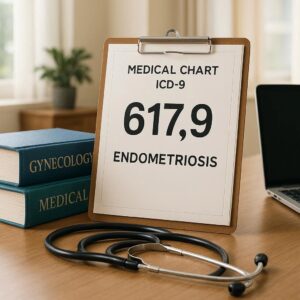
ICD-9 Code for Endometriosis
What Was ICD-9 and Why Is It Important?
First, let’s set the stage. ICD-9-CM stands for the International Classification of Diseases, 9th Revision, Clinical Modification. It was the standard system used in the United States from 1979 to classify all diseases, symptoms, abnormal findings, and procedures for billing, statistics, and records.
“Medical coding is the backbone of healthcare data. It translates a patient’s condition into a universal alphanumeric language that drives everything from insurance reimbursement to public health research,” explains a veteran medical coder with over 20 years of experience.
While ICD-9 was officially retired on October 1, 2015, and replaced by ICD-10-CM, millions of patient records created before that date are still archived using these codes. You might encounter them when:
-
Reviewing your own medical history from before 2015.
-
Working with historical health data for research.
-
Understanding older medical literature or studies.
The Specific ICD-9 Code for Endometriosis
The core ICD-9 code for endometriosis is 617.x. This is not a single code but a series of codes that specify the location of the endometrial tissue. The “x” is a placeholder for a fourth digit that provides crucial detail.
Endometriosis is defined as the presence of endometrial-like tissue outside the uterine cavity. The ICD-9 system meticulously categorized where this tissue was found.
Breakdown of the ICD-9 617.x Series
The following table outlines the primary ICD-9 codes for endometriosis and what each one signified.
| ICD-9 Code | Description | What It Means |
|---|---|---|
| 617.0 | Endometriosis of uterus | Tissue found within the uterine muscle wall (also known as adenomyosis). |
| 617.1 | Endometriosis of ovary | Tissue present on one or both ovaries, often forming “chocolate cysts” (endometriomas). |
| 617.2 | Endometriosis of fallopian tube | Tissue affecting the tubes, which can impact fertility. |
| 617.3 | Endometriosis of pelvic peritoneum | Tissue on the lining of the pelvic cavity, a very common site. |
| 617.4 | Endometriosis of rectovaginal septum and vagina | Tissue between the rectum and vagina or on the vaginal wall. |
| 617.5 | Endometriosis of intestine | Tissue involving the bowel, which can cause digestive symptoms. |
| 617.6 | Endometriosis in cutaneous scar | Tissue found in surgical scars (e.g., from a C-section or laparoscopy). |
| 617.8 | Endometriosis of other specified sites | Tissue in other locations like the bladder, cervix, or vulva. |
| 617.9 | Endometriosis, site unspecified | Used when the condition was diagnosed but the precise location was not documented. |
Important Note for Readers: If you are looking at a current medical document (from late 2015 onward), it should use an ICD-10-CM code, not ICD-9. The transition was mandatory for all U.S. healthcare providers. An ICD-9 code on a recent bill or record is a red flag for an administrative error.
How These Codes Were Used in Practice
A diagnosis of endometriosis was rarely just a single code. Medical coding paints a full clinical picture. Here’s how a patient encounter might have been coded using ICD-9:
-
Symptoms: A patient presents with chronic pelvic pain (625.9) and painful periods (625.3).
-
Diagnostic Procedures: A transvaginal ultrasound (76830) is performed. While suggestive, definitive diagnosis often required a laparoscopy (563.1 – Diagnostic laparoscopy).
-
Confirmed Diagnosis: During laparoscopy, endometriosis is visualized on the pelvic peritoneum and left ovary. The coder would assign:
-
617.3 (Endometriosis of pelvic peritoneum)
-
617.1 (Endometriosis of ovary)
-
-
Treatment: The surgeon performs laparoscopic excision of the lesions. A procedure code (CPT code like 58662) would be used alongside the diagnosis codes to justify the medical necessity of the surgery.
Associated Symptoms and Conditions (Common ICD-9 Comorbidities)
Endometriosis rarely exists in isolation. Coders would also often use these related ICD-9 codes:
-
625.3: Dysmenorrhea (Painful menstruation)
-
625.9: Unspecified symptom associated with female genital organs (often used for chronic pelvic pain)
-
626.0: Absence of menstruation (Amenorrhea)
-
626.8: Other disorders of menstruation (e.g., heavy bleeding)
-
628.9: Infertility, female, of unspecified origin
-
788.4x: Dysuria (Painful urination) – if bladder involved
-
787.6x: Incontinence of feces or other bowel problems – if bowel involved
The Transition from ICD-9 to ICD-10-CM: A Significant Shift
The move to ICD-10-CM on October 1, 2015, was a monumental change in U.S. healthcare documentation. The system expanded from about 14,000 ICD-9 codes to over 68,000 ICD-10 codes. This allowed for vastly greater detail.
Why ICD-9 Was Replaced
-
Lack of Specificity: ICD-9 codes like 617.1 (ovary) didn’t specify which ovary or the severity.
-
Outdated Terminology: It couldn’t keep pace with modern medical advances.
-
Poor Data for Public Health: Less detailed codes meant less useful data for tracking disease trends and outcomes.
ICD-9 vs. ICD-10 for Endometriosis: A Comparative Table
| Feature | ICD-9-CM (Old System) | ICD-10-CM (Current System) |
|---|---|---|
| Code Structure | 3-5 digits, mostly numeric | 3-7 characters, alphanumeric |
| Primary Code Series | 617.x | N80.x |
| Specificity of Location | Moderate (e.g., 617.1 = ovary) | High (e.g., N80.1 = endometriosis of right ovary) |
| Laterality | Not specified. 617.1 applied to one or both ovaries. | Specified. N80.1 (right), N80.2 (left), N80.3 (both). |
| Depth of Invasion | Not captured. | Sometimes specified (e.g., N80.3 for deep infiltrating endometriosis). |
| Infertility Link | Required separate code (628.x). | Can be indicated with a 6th character for association with infertility. |
| Number of Codes | ~10 codes for endometriosis. | Over 30 specific codes for endometriosis. |
The Current Equivalent: ICD-10-CM Codes for Endometriosis
For current context, the ICD-10-CM codes fall under category N80, Endometriosis. Here are a few key examples:
-
N80.0: Endometriosis of uterus (adenomyosis)
-
N80.1: Endometriosis of right ovary
-
N80.2: Endometriosis of left ovary
-
N80.3: Endometriosis of pelvic peritoneum
-
N80.5: Endometriosis of intestine
-
N80.6: Endometriosis in cutaneous scar
-
N80.9: Endometriosis, unspecified
Why Accurate Coding Matters for Endometriosis Patients
This isn’t just about bureaucracy. Accurate coding has a direct impact on patient care:
-
Insurance Reimbursement: Correct codes ensure your doctor’s office or hospital is paid for the complex care they provide, reducing the risk of denied claims that can fall back on you.
-
Treatment Justification: Codes document the medical necessity for surgeries, imaging, and specialized treatments.
-
Research and Epidemiology: Aggregated, accurate code data helps researchers understand the prevalence, patterns, and long-term outcomes of endometriosis, driving future research and funding.
-
Personal Medical History: A precisely coded record creates a clear story of your health journey, which is invaluable for future care.
A Helpful List for Your Records:
If you are reviewing an old document with an ICD-9 code for endometriosis, you should:
-
Note the full code (e.g., 617.1, not just 617).
-
Understand its meaning using this guide.
-
Cross-reference with your memory of your diagnosis and treatment.
-
If updating records, ask your current healthcare provider to ensure your diagnosis is correctly reflected in your modern chart using an ICD-10-CM code.
Conclusion
The search for the ICD-9 code for endometriosis leads to the 617.x series, a set of codes that played a crucial role in documenting this complex condition for decades. While now part of medical history, understanding these codes provides insight into past diagnoses and underscores the importance of precise medical documentation. The evolution to ICD-10-CM reflects medicine’s ongoing pursuit of greater detail and personalization in patient care, ensuring that every patient’s experience with endometriosis is recorded with the specificity it deserves.
Frequently Asked Questions (FAQ)
Q: I just got a bill with an ICD-9 code. Is that an error?
A: Yes, most likely. Since October 1, 2015, all HIPAA-covered entities in the U.S. must use ICD-10-CM for diagnosis coding. A bill or claim with an ICD-9 code for a recent service date is incorrect. Contact the billing department to have it amended.
Q: What is the ICD-9 code for endometriosis with infertility?
A: There wasn’t a single combined code. A coder would use 617.x for the endometriosis location AND a separate code from the 628.x series (e.g., 628.9 for infertility of unspecified origin) to paint the full picture.
Q: Can I use the ICD-9 code to search for medical studies?
A: Absolutely. For research published before 2016, using the ICD-9 codes (617.*) in databases like PubMed is essential to find relevant historical studies and clinical data.
Q: What was the V code for a history of endometriosis in ICD-9?
A: V13.29 was used for “Personal history of other genital system and obstetric disorders,” which could include a past history of surgically treated endometriosis.
Additional Resources
For more information on current endometriosis diagnosis, treatment, and support, we recommend visiting the official website of the American College of Obstetricians and Gynecologists (ACOG): https://www.acog.org/womens-health/faqs/endometriosis
Disclaimer: This article is for informational and educational purposes only. It is not a substitute for professional medical advice, diagnosis, or treatment. Always seek the advice of your physician or other qualified health provider with any questions you may have regarding a medical condition or the interpretation of your medical records. Medical coding is a complex field subject to change and specific payer guidelines.
Date: January 17, 2026
Author: The Editorial Team at HealthCode Insights