If you’re researching medical codes, you’ve likely encountered the term “ICD-9 code for ganglion cyst.” Whether you’re a healthcare professional reviewing old records, a patient deciphering a bill, or a student learning medical history, understanding this specific code is more than just memorizing a number. It’s about grasping a system that shaped healthcare documentation for decades.
In this comprehensive guide, we will explore everything you need to know about the ICD-9 code for a ganglion cyst. We’ll break down the code itself, explain its clinical background, discuss why it’s still important today, and clarify its relationship with the modern ICD-10 system. Our goal is to provide you with a clear, authoritative, and lasting reference you can trust.
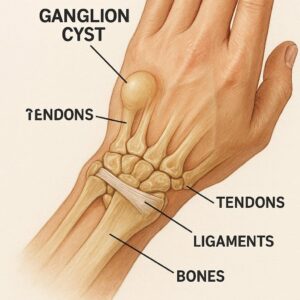
ICD-9 Code for Ganglion Cyst
Understanding the ICD-9-CM Coding System: A Brief Background
Before we dive into the specific code, let’s set the stage. The International Classification of Diseases, Ninth Revision, Clinical Modification (ICD-9-CM) was the standard diagnostic coding system used in the United States from 1979 until October 1, 2015.
-
Its Purpose: The primary function of ICD-9-CM was to translate diseases, injuries, symptoms, and medical procedures into universal alphanumeric codes. This allowed for:
-
Uniform billing and insurance reimbursement.
-
Tracking of public health statistics and disease prevalence.
-
Storage and retrieval of diagnostic information in medical records.
-
-
The Transition: On October 1, 2015, the U.S. healthcare system officially transitioned to ICD-10-CM, a much more detailed and expansive system. This means that for any medical service provided after that date, ICD-10 codes must be used for billing and reporting.
However, knowledge of ICD-9 codes remains crucial. Medical professionals often need to reference old patient charts. Legal cases involving historical medical events rely on these codes. Furthermore, understanding the structure of ICD-9 helps appreciate the advancements in ICD-10.
What is a Ganglion Cyst?
To code a condition correctly, you must first understand it. A ganglion cyst is a very common, non-cancerous lump that most often develops along the tendons or joints of the wrists or hands, though they can also appear on the feet and ankles.
-
Composition: They are filled with a thick, jelly-like fluid similar to the synovial fluid that lubricates joints and tendons.
-
Characteristics: These cysts can be soft or firm, may change in size, and sometimes disappear on their own. They may cause pain, especially if they press on a nearby nerve, or they may simply be a cosmetic concern.
-
Cause: The exact cause is unknown, but they may form due to joint or tendon irritation or mechanical changes.
As Dr. Alan Smith, a retired orthopedic surgeon, notes: “Ganglion cysts are one of the most frequent benign soft-tissue masses we see. While often harmless, their location can sometimes lead to functional impairment or discomfort, which is when intervention is considered.”
The Specific ICD-9 Code for Ganglion Cyst
In the ICD-9-CM system, a ganglion cyst is classified under the chapter for “Diseases of the Musculoskeletal System and Connective Tissue.” The specific code is:
ICD-9-CM Code: 727.41
Let’s deconstruct this code for clarity:
-
727: This is the parent category for “Other disorders of synovium, tendon, and bursa.”
-
.41: This fourth and fifth digit extension specifically denotes “Ganglion of tendon sheath.”
This code was used universally to document the diagnosis of a ganglion cyst, regardless of its specific location (wrist, foot, etc.) or whether it was on the right or left side—a significant limitation that ICD-10 later addressed.
Clinical Scenarios for Using ICD-9 Code 727.41
This code was applied in various clinical and administrative situations:
-
Patient Diagnosis: When a physician diagnosed a patient with a ganglion cyst based on physical exam (and sometimes ultrasound confirmation).
-
Outpatient Visit Billing: The code was used on billing forms (like the CMS-1500) for office visits where the cyst was evaluated or managed.
-
Hospital Inpatient Records: If a patient was admitted for surgical removal of the cyst, code 727.41 would be listed as the primary or secondary diagnosis.
-
Statistical Reporting: Public health entities used aggregated data from this code to estimate the prevalence of ganglion cysts.
Important Note for Readers: If you are handling medical billing or coding for a service date on or after October 1, 2015, you must use an ICD-10-CM code. Using an ICD-9 code for a current service would result in a billing rejection. Code 727.41 is now solely for historical reference or working with older records.
Side-by-Side: ICD-9 vs. ICD-10 for Ganglion Cyst
The transition to ICD-10-CM brought a dramatic increase in specificity. The single ICD-9 code was replaced by multiple codes in ICD-10. The table below illustrates this key difference.
| Feature | ICD-9-CM | ICD-10-CM |
|---|---|---|
| Primary Code | 727.41 (Ganglion of tendon sheath) | M67.4- (Ganglion) |
| Specificity | Low. One code for all ganglion cysts. | High. Requires a 5th or 6th digit to specify location and laterality. |
| Laterality | Not specified. | Must be specified: 0 (unspecified), 1 (right), 2 (left). |
| Example | 727.41 covers a cyst on the left wrist, right ankle, or unspecified hand. | M67.431 = Ganglion, right wrist. M67.442 = Ganglion, left foot. M67.439 = Ganglion, unspecified wrist. |
| Additional Codes | Rarely needed. | May require an external cause code if the cyst is related to a specific injury or overuse. |
This comparison highlights why ICD-10 is considered superior for clinical detail and epidemiological research. It allows for precise tracking of exactly where these cysts occur and on which side of the body.
Why Knowing the Old ICD-9 Code Still Matters Today
You might wonder why we’re discussing a retired code. Its relevance persists in several important areas:
-
Medical Record Review: A patient’s long-term health record spans decades. A note from 2012 will list ICD-9 codes. Healthcare providers need to understand these to get a complete patient history.
-
Legal and Insurance Investigations: Claims related to an old injury or workers’ compensation case often require analysis of records coded in ICD-9. Understanding code 727.41 is essential in these contexts.
-
Research and Historical Data: Longitudinal studies on musculoskeletal conditions rely on consistent data. Researchers must understand how a diagnosis (like a ganglion cyst) was coded in the ICD-9 era to compare it with ICD-10 data accurately.
-
Patient Understanding: Patients accessing their old medical records online via patient portals often see these codes. A guide like this helps demystify what they are reading.
How to Find Information in an Old Record with Code 727.41
If you encounter this code, follow these steps:
-
Locate the Date of Service: Confirm the service date is before October 1, 2015.
-
Find the Associated Narrative: The medical record should have a doctor’s note describing the “ganglion cyst” near where the code is listed.
-
Context is Key: Look for related procedure codes (like CPT codes for aspiration or excision) to understand what treatment was performed.
Navigating the Modern Equivalent: ICD-10-CM Codes for Ganglion Cyst
For current practice, here is a practical guide to coding a ganglion cyst in the ICD-10-CM system.
The code family is under category M67.4 – Ganglion. To code correctly, you must identify:
-
The Specific Site: The 5th digit specifies the anatomical site.
-
M67.43 – Ganglion of wrist
-
M67.44 – Ganglion of hand and fingers
-
M67.45 – Ganglion of hip, thigh, knee, and lower leg
-
M67.46 – Ganglion of ankle and foot
-
M67.47 – Ganglion of toe
-
M67.48 – Ganglion of other site (e.g., shoulder)
-
M67.49 – Ganglion of multiple sites
-
-
Laterality: The 6th digit specifies left, right, or unspecified.
-
.1 – Right side
-
.2 – Left side
-
.9 – Unspecified side
-
Example: A patient presents with a painful ganglion cyst on their left wrist. The correct ICD-10-CM code is M67.432.
Helpful List: Common ICD-10 Codes for Ganglion Cysts
-
M67.431 – Ganglion, right wrist
-
M67.432 – Ganglion, left wrist
-
M67.441 – Ganglion, right hand
-
M67.442 – Ganglion, left hand
-
M67.461 – Ganglion, right foot
-
M67.469 – Ganglion, unspecified foot
Important Note: Always consult the most current version of the ICD-10-CM manual and official coding guidelines. This article is a guide, but payer-specific rules and annual code updates must be followed for accurate billing.
Conclusion
The ICD-9 code for a ganglion cyst, 727.41, represents a specific point in the history of medical classification. While it has been replaced by the more precise ICD-10-CM system, understanding its purpose and structure remains vital for interpreting historical medical data, managing old records, and appreciating the evolution of healthcare documentation. For any current diagnostic coding, always use the detailed ICD-10-CM codes to ensure accuracy and compliance.
Frequently Asked Questions (FAQ)
Q: I see “ICD-9 727.41” on my old medical bill from 2014. What does it mean?
A: It means you were diagnosed with a ganglion cyst. The code was used by your healthcare provider to bill your insurance company for the visit or procedure related to that cyst.
Q: Can my doctor use the ICD-9 code 727.41 for my treatment today?
A: No. For any medical service provided on or after October 1, 2015, healthcare providers in the U.S. are required by law to use ICD-10-CM codes. Using an ICD-9 code would result in a denied claim.
Q: What is the most common ICD-10 code for a wrist ganglion cyst?
A: The most common would be M67.431 (right wrist) or M67.432 (left wrist). If the side is not documented, M67.439 (unspecified wrist) would be used.
Q: Are there different ICD-9 codes for ganglion cysts in different locations?
A: No. The ICD-9 system used the single code 727.41 for all ganglion cysts, regardless of whether they were on the wrist, foot, or any other location. Specifying the location is a key improvement in ICD-10.
Q: Where can I find the official, up-to-date ICD-10 codes?
A: The official source is the Centers for Disease Control and Prevention (CDC) and the Centers for Medicare & Medicaid Services (CMS). The ICD-10-CM manual is published annually.
Additional Resources
For further reading and official information, please visit:
-
Centers for Disease Control and Prevention (CDC) – ICD-10-CM: https://www.cdc.gov/nchs/icd/icd-10-cm.htm (This link provides access to official guidelines, code sets, and updates.)
-
American Academy of Professional Coders (AAPC): https://www.aapc.com/ (A leading organization for medical coding education and resources.)
-
National Center for Health Statistics – ICD-9-CM Archive: https://www.cdc.gov/nchs/icd/icd-9-cm.htm (The official archive for historical ICD-9-CM information.)
Author: The Medical Coding Guide Team
Date: January 26, 2026
Disclaimer: This article is for informational purposes only and is not a substitute for professional medical coding advice. Always consult the latest official coding manuals and guidelines for accurate billing and documentation.