Navigating the world of medical billing and diagnostic codes can feel like deciphering a secret language. If you or a loved one has been labeled a “glaucoma suspect,” you might have encountered the term “ICD-9 code” on paperwork or bills. This article is your comprehensive, one-stop resource to understand exactly what the ICD-9 code for glaucoma suspect means, its historical context, and what you need to know in today’s healthcare system.
We will break down the technical details into simple, clear language, providing you with the knowledge to better understand your medical journey. Our goal is to empower you with information, turning confusion into clarity.
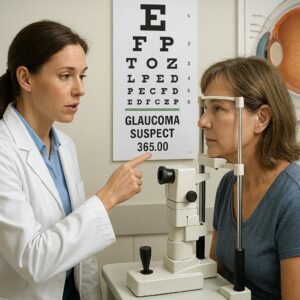
ICD-9 Code for Glaucoma Suspect
What is an ICD-9 Code? A Brief History
Before we dive into the specific code for glaucoma suspect, let’s understand what ICD-9 codes are and why they matter.
ICD stands for the International Classification of Diseases. It’s a globally used system, maintained by the World Health Organization (WHO), that assigns unique alphanumeric codes to every known disease, disorder, injury, and health condition. These codes are the universal language of diagnosis.
-
Purpose: ICD codes are used for a multitude of critical functions:
-
Billing and Insurance: They are essential for healthcare providers to get reimbursed by insurance companies.
-
Epidemiology and Research: They help track the prevalence and spread of diseases across populations.
-
Clinical Documentation: They provide a standardized way to record a patient’s condition in their medical record.
-
The 9th Revision, Clinical Modification (ICD-9-CM) was the standard code set used in the United States from 1979 until October 1, 2015. On that date, the U.S. healthcare system officially transitioned to ICD-10-CM, a much more detailed and modern system.
Key Note: While ICD-9 is now historical for most current medical transactions, understanding it remains important. You may still encounter these codes on older medical records, or when researching historical health data. Furthermore, understanding the ICD-9 structure helps clarify the logic behind the newer ICD-10 codes.
The Specifics: ICD-9 Code 365.00 for Glaucoma Suspect
Within the ICD-9-CM system, the precise code for a patient identified as a glaucoma suspect is 365.00.
Let’s decode this number:
-
365: This is the parent category for “Glaucoma.” All conditions related to glaucoma fall under this three-digit code.
-
.0: This fourth digit specifies “Preglaucoma.” This term encompasses conditions that indicate a high risk of developing overt glaucoma, but where definitive damage to the optic nerve or visual field has not yet been confirmed.
-
.0: This fifth digit provides further specificity. In this case, 365.00 stands for “Glaucoma suspect, unspecified.”
This “unspecified” designation was a limitation of the ICD-9 system. It didn’t provide detail on why the person was a suspect. Were they a suspect due to high eye pressure (ocular hypertension), a suspicious optic nerve appearance, a narrow angle, or a strong family history? The code 365.00 grouped all these scenarios together.
Clinical Context: What Does “Glaucoma Suspect” Really Mean?
Being a “glaucoma suspect” is a crucial preventive diagnosis. It is not a diagnosis of glaucoma disease itself. Instead, it is a warning flag that you have one or more risk factors that make you more likely than the average person to develop glaucoma in the future.
Your ophthalmologist may designate you as a glaucoma suspect if you have:
-
Elevated Intraocular Pressure (IOP): Consistently higher-than-normal eye pressure (often above 21 mmHg) is the most common risk factor.
-
Suspicious Optic Nerve Appearance: The doctor sees cupping, thinning, or an unusual shape of the optic nerve head during a dilated eye exam.
-
Narrow Angles: The drainage angle in your eye where fluid exits is anatomically narrow, increasing the risk for angle-closure glaucoma.
-
Family History: Having a first-degree relative (parent or sibling) with glaucoma significantly increases your risk.
-
Other Factors: Certain medical conditions like diabetes, severe nearsightedness, or a history of eye injury can also contribute.
What Happens Next? If you are a glaucoma suspect, the primary action is enhanced monitoring. You will typically need more frequent comprehensive eye exams—perhaps every 6 to 12 months instead of every 1 to 2 years. These exams will include checks of your eye pressure, detailed imaging of your optic nerve, and visual field tests to establish a baseline and watch for the earliest signs of damage.
The Modern Equivalent: From ICD-9 to ICD-10
As mentioned, the U.S. transitioned to ICD-10-CM on October 1, 2015. This newer system provides vastly greater detail and specificity. For a glaucoma suspect, the single ICD-9 code (365.00) is replaced by a more descriptive set of codes in ICD-10.
The ICD-10-CM codes for glaucoma suspect fall under category H40.0-.
Here is a comparative table to show the evolution and increased specificity:
| Aspect | ICD-9-CM (Historical) | ICD-10-CM (Current Standard) |
|---|---|---|
| Primary Code | 365.00 | H40.0- |
| Code Title | Glaucoma suspect, unspecified | Glaucoma suspect |
| Specificity | Low. One code for all suspects. | High. Requires a 5th or 6th digit to specify the reason. |
| Example Codes | 365.00 (only one option) | H40.01: Open angle glaucoma suspect H40.02: Primary angle closure suspect H40.03: Glaucoma suspect with findings of high risk H40.031: … with findings of high risk, right eye H40.032: … left eye H40.033: … bilateral |
| Laterality | Not specified. | Must specify right eye, left eye, or bilateral. |
This shift from ICD-9 to ICD-10 reflects a move towards more precise, data-rich medical records that can improve patient care and research accuracy.
Why This Transition Matters to You
You might wonder why this coding evolution is relevant to you as a patient.
-
Accuracy in Your Medical Record: Your diagnosis is now documented with greater precision. Instead of a generic “glaucoma suspect,” your record specifies the type (e.g., open-angle suspect) and which eye(s) are involved.
-
Informed Care: This specificity helps ensure that your monitoring and any preventive care are tailored to your specific risk profile.
-
Insurance Clarity: Precise codes lead to fewer billing errors and disputes with insurance companies, as the reason for your visits and tests is clearly documented.
Helpful Lists for Glaucoma Suspects
If you’ve recently been told you are a glaucoma suspect, here are your next steps and key facts to remember.
Your Action Plan as a Glaucoma Suspect:
-
Don’t Panic. Being a suspect means you are under careful watch to prevent the disease.
-
Understand Your Risk Factors. Ask your doctor: “Why am I considered a suspect? Is it my pressure, my optic nerve, or something else?”
-
Adhere to Follow-up Schedules. The most important thing you can do is keep all your scheduled monitoring appointments.
-
Maintain a Healthy Lifestyle. Regular exercise, a balanced diet rich in leafy greens, and avoiding head-down positions that spike eye pressure (if you have narrow angles) can be beneficial.
-
Educate Your Family. Inform your siblings and children about your status, as glaucoma has a hereditary component.
Common Tests You May Encounter During Monitoring:
-
Tonometry: Measures intraocular pressure.
-
Ophthalmoscopy: Dilated exam to assess the optic nerve.
-
Perimetry: Visual field test to map your side vision.
-
Pachymetry: Measures corneal thickness, which influences pressure readings.
-
Gonioscopy: Examines the drainage angle of the eye.
-
Optic Nerve Imaging: Technologies like OCT (Optical Coherence Tomography) or HRT (Heidelberg Retinal Tomography) provide detailed 3D scans of the nerve.
Important Note for Readers: “While medical codes like ICD-9 365.00 are vital for administration, they are just labels. Your personal health journey is defined by the partnership with your eye care professional. Always discuss your concerns, test results, and the reasoning behind your care plan directly with your doctor. Never use diagnostic codes as a substitute for professional medical advice.”
Conclusion
The historical ICD-9 code for glaucoma suspect, 365.00, represented an important but non-specific classification for individuals at risk of glaucoma. Today, the modern ICD-10 system offers detailed codes (like H40.01) that better capture the specific nature of the suspicion. Understanding these codes demystifies your medical records and highlights the proactive, preventive approach essential in managing glaucoma risk. The key takeaway is that a “suspect” designation is a call for vigilant monitoring, not a diagnosis of disease, empowering you to take an active role in preserving your vision for the long term.
Frequently Asked Questions (FAQ)
Q: I saw “ICD-9 code 365.00” on an old medical bill. Do I still use this code?
A: No. For any medical services after October 1, 2015, healthcare providers in the U.S. must use ICD-10 codes. The old ICD-9 code 365.00 is obsolete for current billing and record-keeping.
Q: What is the exact ICD-10 code if I’m a glaucoma suspect due to high eye pressure?
A: The most common code would be H40.01 – Open angle glaucoma suspect. However, your doctor will determine the exact code based on a comprehensive exam. “Ocular hypertension” (high pressure without other signs) has its own distinct code range (H40.05-).
Q: Does being a glaucoma suspect mean I will definitely get glaucoma?
A: Absolutely not. Many glaucoma suspects never develop the actual disease. The designation means you are at a higher statistical risk and will be monitored closely to detect the very earliest signs if they do appear, allowing for timely intervention.
Q: Can I look up these codes myself?
A: Yes, listings of ICD-10 codes are publicly available. However, interpreting and applying them correctly requires medical training. Always rely on your healthcare provider to assign the correct diagnostic code.
Additional Resources
For more authoritative information on glaucoma, its risk factors, and treatment, we recommend visiting the website of the Glaucoma Research Foundation: https://www.glaucoma.org. They offer a wealth of patient-friendly guides, the latest research updates, and supportive community information.
Disclaimer: This article is for informational and educational purposes only. It is not intended to be a substitute for professional medical advice, diagnosis, or treatment. Always seek the advice of your ophthalmologist or other qualified health provider with any questions you may have regarding a medical condition. The author and publisher are not responsible for any errors or omissions or for any consequences from application of the information presented.
Author: The Web Health Writer Team
Date: January 26, 2026