If you’re navigating medical billing, coding, or simply trying to understand an old medical record, you might be searching for the ICD-9 code for heel pain. While the healthcare world has moved to a newer coding system, understanding ICD-9 codes remains crucial for dealing with historical records or specific legacy systems.
This guide will provide you with a comprehensive, reliable, and clear explanation of the correct ICD-9 code for heel pain. We’ll cover the exact code, how to use it properly, common pitfalls, and what you need to know about the modern coding system that replaced it. Our goal is to make this technical topic accessible and useful for everyone, from patients to seasoned medical billers.
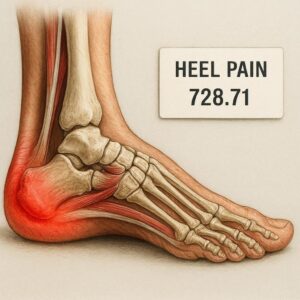
ICD-9 Code for Heel Pain
Understanding the ICD-9 Coding System
First, let’s set the stage. ICD-9 stands for the International Classification of Diseases, 9th Revision. For decades, it was the standard system used in the United States to code diagnoses, symptoms, and procedures. These codes are essential for medical billing, insurance claims, tracking health statistics, and maintaining patient records.
The system was replaced by ICD-10 on October 1, 2015. This was a significant update, offering much more detail and specificity. However, you still encounter ICD-9 codes in older patient charts, historical data analyses, or certain administrative contexts. Knowing how to interpret them is a valuable skill.
Important Note: As of today, all HIPAA-covered entities (like hospitals, doctors’ offices, and insurance companies) must use ICD-10-CM for diagnosis coding. Using ICD-9 for current billing will result in claim denials. This article serves educational and historical reference purposes.
The Specific ICD-9 Code for Heel Pain
The core answer to your search is straightforward. The primary ICD-9 code used for generalized heel pain is:
ICD-9 Code: 729.5 – Pain in limb
You might be thinking, “That seems vague.” You’re right. The ICD-9 system was often less specific than its successor. Code 729.5 resides within a larger category:
-
Category 729: Other disorders of soft tissues
-
Subcategory 729.5: Pain in limb
This code was a general “catch-all” for pain in an arm or leg that wasn’t attributed to a more specific diagnosis like arthritis, injury, or neuropathy. Heel pain, as a symptom, typically fell under this umbrella when a more precise cause wasn’t immediately documented.
When Was This Code Used?
A physician or coder would use 729.5 for heel pain in scenarios such as:
-
The initial patient visit where the cause of the heel pain is still under investigation (e.g., “heel pain, unspecified”).
-
Pain that is clearly musculoskeletal but doesn’t yet have a confirmed specific diagnosis like plantar fasciitis.
-
As a temporary code while awaiting test results.
Common Misconceptions and Important Distinctions
It’s easy to assume there was a unique code for every ailment in ICD-9, but that wasn’t the case. Here are key distinctions:
-
Heel Pain vs. Plantar Fasciitis: This is the most important distinction. While 729.5 covered generalized heel pain, a confirmed diagnosis of plantar fasciitis had its own, more specific code: 728.71 (Plantar fasciitis). Using 728.71 was always preferred when the documentation supported it.
-
Heel Spur: A heel spur alone, without pain or other conditions, had a different code: 726.73 (Calcaneal spur). If the spur was associated with plantar fasciitis, 728.71 would typically be used.
-
Pain from Injury: If the heel pain was due to a recent injury (like a contusion or fracture), an injury code from the 800-959 range would be primary, not 729.5.
The table below clarifies these common scenarios:
| Patient Symptom/Diagnosis | Preferred ICD-9 Code | Notes |
|---|---|---|
| Generalized heel pain, cause unknown | 729.5 (Pain in limb) | Used for initial encounters or unspecified pain. |
| Confirmed inflammation of the plantar fascia | 728.71 (Plantar fasciitis) | A more specific, and therefore better, code when documented. |
| Heel spur noted on X-ray | 726.73 (Calcaneal spur) | Used for the anatomical finding; pain may be coded separately. |
| Heel pain from a bruise | 924.20 (Contusion of foot) | Injury codes take precedence for traumatic pain. |
| Heel pain from a stress fracture | 733.95 (Stress fracture, other site) | Requires specific documentation of the fracture. |
Documentation is Key: Linking the Code to the Patient’s Chart
For a coder to correctly assign 729.5 (or any code), the physician’s documentation had to support it. Vague notes led to coding errors and billing issues. Good documentation for heel pain included:
-
Location: “Pain in the left heel.”
-
Quality: “Sharp, stabbing pain.”
-
Timing: “Worst with the first steps in the morning.”
-
Associated Findings: “Tenderness to palpation along the medial plantar heel.”
A note simply saying “heel pain” would support 729.5, but a note stating “plantar fasciitis” or “pain consistent with plantar fasciitis” would mandate the use of 728.71 instead.
The Modern Context: From ICD-9 to ICD-10-CM
Today, ICD-10-CM offers profound specificity. There is no direct, single equivalent to ICD-9’s 729.5 in ICD-10. Instead, heel pain must be coded much more precisely. The general “pain in limb” category was essentially dismantled.
For heel pain in ICD-10-CM, the correct code depends entirely on the laterality (which foot) and sometimes the specific part of the heel.
The primary ICD-10-CM codes for heel pain are:
-
M79.671 – Pain in right foot
-
M79.672 – Pain in left foot
-
M79.673 – Pain in unspecified foot
However, as with ICD-9, a specific diagnosis is always preferred. For plantar fasciitis in ICD-10:
-
M72.2 – Plantar fascial fibromatosis (this is the code for plantar fasciitis in ICD-10).
Why the Transition Mattered
The move from ICD-9 to ICD-10 wasn’t just administrative. It provided major benefits:
-
Greater Detail: Codes now specify right, left, or bilateral, and identify initial vs. subsequent encounters for injuries.
-
Improved Patient Care: More precise data helps in public health tracking and research.
-
Accurate Reimbursement: Allows for clearer justification of medical necessity to insurers.
Practical Advice for Medical Coders and Billers
If you are handling records that still require ICD-9 coding (e.g., for a worker’s compensation case that occurred pre-2015 or for historical data), follow this checklist:
-
Read the Entire Note: Don’t just skim for “heel pain.”
-
Look for a Specific Diagnosis: Terms like “plantar fasciitis,” “Achilles tendinitis,” or “calcaneal bursitis” have their own codes.
-
Identify Cause: Rule out trauma. An old sprain or fracture has a different code set.
-
Use 729.5 Appropriately: Reserve it for truly unspecified limb or heel pain where no more detailed information is available in the record.
-
Consult Coding Guidelines: When in doubt, refer to the official ICD-9-CM coding guidelines that were in effect at the time of service.
Quotation from a veteran medical coder: “ICD-9 code 729.5 was our friendly ‘unknown soldier’ for limb pain. But our golden rule was always: specificity trumps generality. If the doctor gave us a clearer diagnosis, we had to use it. That discipline made the transition to ICD-10’s extreme specificity less painful.”
A Helpful List: Common Conditions That Cause Heel Pain and Their Historic ICD-9 Codes
For a more complete picture, here were the ICD-9 codes for common heel-related diagnoses:
-
Plantar Fasciitis: 728.71
-
Achilles Tendinitis: 726.71
-
Calcaneal Spur (without fasciitis): 726.73
-
Retrocalcaneal Bursitis: 726.79
-
Contusion of Heel: 924.20
-
Neuropathy (causing heel pain): 355.8 or 357.2 (depending on cause)
-
Tarsal Tunnel Syndrome: 355.5
Conclusion
The ICD-9 code for generalized heel pain is 729.5 – Pain in limb. It served as a useful but nonspecific tool for an era of less detailed medical coding. Always remember that more specific diagnoses like plantar fasciitis (728.71) took precedence. While the healthcare industry now operates under the detailed ICD-10 system, understanding ICD-9 remains vital for accurate historical analysis and dealing with older medical records.
Frequently Asked Questions (FAQ)
Q: Can I still use ICD-9 code 729.5 for billing today?
A: No. As of October 1, 2015, all HIPAA-covered entities in the U.S. must use ICD-10-CM for diagnosis coding on claims. Using ICD-9 will result in automatic rejection.
Q: What is the ICD-10 code for heel pain?
A: In ICD-10, you must specify which foot: M79.671 (right foot), M79.672 (left foot), or M79.673 (unspecified foot). However, a code for a specific diagnosis (like M72.2 for plantar fasciitis) is always more accurate.
Q: Why wasn’t there a more specific ICD-9 code just for heel pain?
A: The ICD-9 system was designed decades ago with broader categories. Specificity for anatomical sites like the heel was a major driving force behind the creation of the much more granular ICD-10 system.
Q: I’m a patient looking at an old bill with code 729.5. What does it mean?
A: It means your provider billed for an encounter related to pain in your limb (which included your heel). To understand the exact reason for your visit, you should refer to the doctor’s notes from that date, not just the billing code.
Q: Where can I find official, historical ICD-9 coding guidelines?
A: The Centers for Medicare & Medicaid Services (CMS) and the National Center for Health Statistics (NCHS) published these guidelines. Archived copies can often be found through medical coding association websites or legal document archives.
Additional Resources
-
Centers for Disease Control and Prevention (CDC) – ICD-10 Transition Page: https://www.cdc.gov/nchs/icd/icd10cm.htm (Provides current information and resources on the active coding system).
-
American Academy of Professional Coders (AAPC): https://www.aapc.com/ (A leading organization for medical coders, offering training, resources, and forums for both ICD-9 and ICD-10).
Disclaimer: This article is for informational and educational purposes only. It is not a substitute for professional medical coding advice. Always consult the official ICD-9-CM and ICD-10-CM code sets and guidelines, current payer policies, and a qualified medical coding professional for definitive coding and billing guidance.
Author: The Web Writer Team
Date: January 29, 2026