Navigating the world of medical diagnosis codes can feel like deciphering a secret language. If you’ve encountered a reference to an “ICD-9 code for hormonal imbalance” on an old medical bill, in historical records, or in a discussion about past treatments, you’re likely looking for clarity. While the ICD-9 system is no longer in active use, understanding its codes remains important for historical context, certain insurance claims, and grasping the evolution of medical classification.
This guide will provide you with a complete, human-written explanation of the relevant ICD-9 code, its modern counterparts, and everything you need to understand what a “hormonal imbalance” diagnosis entails from a coding perspective.
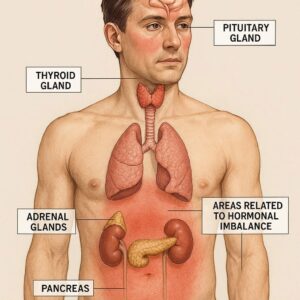
ICD-9 Code for Hormonal Imbalance
What is the ICD-9-CM Code for Hormonal Imbalance?
In the International Classification of Diseases, Ninth Revision, Clinical Modification (ICD-9-CM), the unspecified code for hormonal imbalance was:
ICD-9-CM Code 259.9: Unspecified endocrine disorder
This code fell under the broader category of “Other endocrine disorders” (codes 259.0-259.9). It was used as a general catch-all when a provider diagnosed a hormonal or endocrine system issue that didn’t fit a more specific code or before further testing could pinpoint the exact cause.
Important Note: “The use of ICD-9-CM codes for reporting diagnoses ended on September 30, 2015, in the United States. They were replaced by ICD-10-CM. References to ICD-9 are now primarily for historical or archival purposes, or in specific research contexts involving older data.” – National Center for Health Statistics
Why “Unspecified”? Understanding the Limitation of ICD-9 259.9
The term “unspecified” is crucial. “Hormonal imbalance” is a common symptom or umbrella term patients use, but from a medical and coding standpoint, it is not a precise diagnosis. The endocrine system is complex, involving glands like the thyroid, pituitary, adrenal, pancreas, and gonads (ovaries/testes). An imbalance could refer to hundreds of distinct conditions.
Code 259.9 was inherently non-specific. It did not tell the story of which hormones were imbalanced or why. Because of this lack of detail, its use was often a temporary placeholder or a reflection of incomplete information.
Common Conditions Previously Grouped Under “Hormonal Imbalance”
Before a specific diagnosis was confirmed, various patient experiences might have been broadly labeled with this code:
-
Unexplained fatigue and weight changes
-
Irregular menstrual cycles without a confirmed cause like PCOS
-
Mood swings and sleep disturbances potentially linked to hormones
-
Libido changes related to endocrine function
-
General metabolic complaints under investigation
The Transition to ICD-10-CM: A New Era of Specificity
On October 1, 2015, the U.S. healthcare system officially transitioned to ICD-10-CM. This system is vastly more detailed, with over 70,000 codes compared to ICD-9’s approximately 14,000. The goal was to improve specificity, which enhances patient care, treatment tracking, and epidemiological research.
There is no direct, single equivalent to ICD-9’s 259.9 in ICD-10-CM. Instead, the vague “unspecified endocrine disorder” has been replaced by numerous specific codes. This forces—and allows for—greater diagnostic precision.
Mapping ICD-9 259.9 to Modern ICD-10-CM Codes
To find the correct modern code, a healthcare provider must identify the specific gland involved and the nature of the disorder. Below is a comparative table showing how general “imbalance” concepts translate into specific ICD-10-CM codes.
From General “Imbalance” to Specific ICD-10-CM Diagnosis
| General Symptom / Area | Possible Specific Diagnosis | Example ICD-10-CM Code | Code Description |
|---|---|---|---|
| Thyroid Issues | Hypothyroidism | E03.9 | Hypothyroidism, unspecified |
| Hyperthyroidism | E05.90 | Thyrotoxicosis, unspecified | |
| Adrenal Issues | Adrenal insufficiency | E27.40 | Unspecified adrenocortical insufficiency |
| Pituitary Issues | Pituitary dysfunction | E23.7 | Disorder of pituitary gland, unspecified |
| Ovarian/Testicular | Polycystic Ovary Syndrome (PCOS) | E28.2 | Polycystic ovarian syndrome |
| Testicular dysfunction | E29.9 | Testicular dysfunction, unspecified | |
| Pancreatic (Sugar Metabolism) | Diabetes Mellitus Type 2 | E11.9 | Type 2 diabetes mellitus without complications |
| Multiple Glands / Systemic | Other specified endocrine disorders | E34.9 | Endocrine disorder, unspecified |
As you can see, what was once a single code (259.9) now requires a targeted medical evaluation to assign the correct, detailed code from a range of possibilities.
Why Accurate Coding Matters: More Than Just a Number
You might wonder, “Why does the specific code matter so much?” The code is far more than an administrative tag. It is a critical piece of the healthcare puzzle.
-
For Patient Care: A specific code creates a precise medical history. It helps new providers quickly understand your health background and guides treatment pathways.
-
For Insurance & Billing: Insurance companies require specific codes to justify and approve payment for tests, treatments, and medications. A vague code like 259.9 could lead to claim denials or delays under modern systems.
-
For Public Health & Research: Accurate coding allows researchers to track the prevalence of specific diseases (like a surge in thyroid disorders in a region), which informs public health initiatives and funding.
Navigating a Diagnosis: A Step-by-Step Guide for Patients
If you suspect a hormonal imbalance, here’s how the process should work in the modern coding era:
-
Document Your Symptoms: Keep a detailed log of your symptoms, their frequency, and severity (e.g., fatigue, weight change, mood swings, menstrual cycle dates, skin changes).
-
Consult Your Healthcare Provider: Share your symptom log. They will conduct a physical exam and review your personal and family medical history.
-
Undergo Targeted Testing: Based on your symptoms, your provider will order specific tests (e.g., TSH for thyroid, cortisol for adrenal, FSH/LH for gonadal, HbA1c for diabetes).
-
Receive a Specific Diagnosis: With test results, your provider can diagnose a specific condition (e.g., “Hashimoto’s thyroiditis” or “Premature ovarian insufficiency”).
-
Get the Correct ICD-10-CM Code: The provider’s office will assign the precise ICD-10-CM code that matches your confirmed diagnosis for all medical records and billing.
Helpful List: Common Signs of Endocrine Disorders
If you are experiencing a combination of these symptoms, it may be time to discuss endocrine health with your doctor:
-
Unexplained weight gain or loss
-
Persistent fatigue or weakness
-
Excessive sweating or intolerance to temperature
-
Changes in heart rate (too fast or too slow)
-
Significant changes in mood, anxiety, or depression
-
Hair loss or thinning
-
Dry skin or new skin tags
-
Irregular periods, infertility, or reduced libido
-
Increased thirst and frequent urination
FAQ: Frequently Asked Questions
Q: I have an old medical bill with code 259.9. What does it mean?
A: It means you were diagnosed with or investigated for an unspecified endocrine or hormonal disorder at that time. For current care, ask your current provider for an updated, specific diagnosis and ICD-10-CM code.
Q: Can I still use the ICD-9 code 259.9?
A: No. For all current medical, billing, and insurance purposes in the U.S., you must use ICD-10-CM codes. ICD-9 is obsolete for active healthcare.
Q: My doctor says I have a “hormonal imbalance” but my bill shows a specific code like E03.9. Is this correct?
A: Yes, absolutely. This is progress. “Hormonal imbalance” is the layman’s term your doctor used to help you understand; E03.9 (Hypothyroidism, unspecified) is the precise medical code required for your records and insurance. It indicates the imbalance is specifically in your thyroid gland.
Q: How can I find out my specific diagnostic code?
A: You can find it on the explanation of benefits (EOB) from your insurance company, on detailed billing statements from your provider, or by directly asking your doctor’s office for a copy of your problem list or visit summary.
Conclusion
The journey from the vague ICD-9 code 259.9 for “unspecified endocrine disorder” to the detailed landscape of ICD-10-CM reflects a significant advancement in personalized healthcare. While the old code served a historical purpose, today’s system emphasizes precision, leading to better-targeted treatments, clearer communication, and more effective health management. Understanding this evolution empowers you to be an active, informed participant in your own healthcare journey.
Additional Resource
For the official, complete, and current list of all ICD-10-CM codes, visit the Centers for Disease Control and Prevention (CDC) ICD-10-CM Browser: https://www.cdc.gov/nchs/icd/icd10cm.htm
Author: The Health Coding Guide Team
Date: January 31, 2026
Disclaimer: This article is for informational purposes only and is not a substitute for professional medical advice, diagnosis, or coding guidance. Always consult with a qualified healthcare provider or medical coder for personal health issues or official coding requirements.