If you’ve ever tried to look up the official medical code for jet lag, you might have found yourself in a confusing maze of numbers and outdated information. Perhaps you’re a traveler dealing with a corporate HR department, a medical coder handling an old record, or just someone curious about how medicine classifies this common ailment. The search often leads to one specific identifier: the ICD-9 code for jet lag.
This article is your definitive guide. We will demystify the historical ICD-9 code, place it in the context of modern medical classification, and provide you with practical, actionable information that goes far beyond a simple number. Our goal is to create a lasting reference that clarifies this niche topic with accuracy and depth.
Let’s begin by addressing the core question directly.
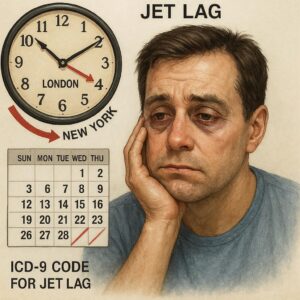
ICD-9 Code for Jet Lag
Table of Contents
ToggleWhat Was the ICD-9 Code for Jet Lag?
In the International Classification of Diseases, Ninth Revision (ICD-9), which was used in the United States for medical coding until October 1, 2015, jet lag had a specific and unique code.
The official ICD-9 code for jet lag was 327.35.
This code resided within a larger hierarchy of the ICD-9 system:
-
Chapter 5: Mental, Behavioral and Neurodevelopmental Disorders (290-319)
-
Category 327: Organic Sleep Disorders
-
Subcategory 327.35: Circadian Rhythm Sleep Disorder, Jet Lag Type
It’s crucial to understand that this code is now historical. The U.S. healthcare system transitioned to ICD-10 on October 1, 2015. Using ICD-9 for current diagnoses or billing is non-compliant with federal requirements. However, understanding 327.35 remains important for dealing with older medical records, historical data analysis, or academic research.
Why was Jet Lag Classified as an “Organic Sleep Disorder”?
The placement within “Organic Sleep Disorders” is insightful. It signified that jet lag was viewed not as a psychological condition but as a physiologically based disruption. The root cause is external (rapid travel across time zones), but the manifestation is a tangible dysfunction of the body’s innate circadian rhythm—the internal biological clock that regulates sleep, hormone release, and body temperature.
“Jet lag is the quintessential example of an environmental challenge to our endogenous circadian timing system. The code 327.35 formally recognized the very real biological conflict between our internal clock and the external light-dark cycle of a new destination.”
The Modern Classification: Jet Lag in the ICD-10 System
The transition to ICD-10-CM (Clinical Modification) brought a more detailed and logical coding structure. The code for jet lag changed, reflecting this evolution.
The current ICD-10-CM code for jet lag is G47.25.
Here is a comparison to illustrate the transition:
| Feature | ICD-9 (Historical, pre-2015) | ICD-10-CM (Current, post-2015) |
|---|---|---|
| Full Code | 327.35 | G47.25 |
| Code Title | Circadian Rhythm Sleep Disorder, Jet Lag Type | Circadian rhythm sleep disorder, jet lag type |
| Code Location | Chapter 5: Mental Disorders | Chapter 6: Diseases of the Nervous System |
| Parent Category | 327: Organic Sleep Disorders | G47: Sleep disorders |
| Specificity | Limited to the code itself. | Allows for laterality and additional detail via extensions (though not typically used for jet lag). |
| Modern Use | For historical records only. | Mandatory for all current diagnosis coding and billing in the U.S. healthcare system. |
The move from Chapter 5 to Chapter 6 (Diseases of the Nervous System) in ICD-10 further emphasizes the neurological and physiological basis of circadian rhythm disorders, aligning with contemporary medical understanding.
How to Use the ICD-10 Code G47.25 Correctly
For medical coders and healthcare providers, accuracy is paramount.
-
Primary Diagnosis: Code G47.25 is used when jet lag is the primary reason for the encounter. This is rare in general practice but may occur in travel medicine clinics or occupational health settings.
-
Documentation is Key: The patient’s medical record must clearly link symptoms (insomnia, daytime fatigue, impaired function) to recent travel across two or more time zones.
-
No Additional 7th Character: Unlike many ICD-10 codes, G47.25 does not require a 7th character extension.
Beyond the Code: A Real-World Guide to Jet Lag
While the ICD code provides a formal label, the real value lies in understanding and managing the condition. Let’s shift from classification to practical solutions.
Recognizing the Symptoms of Jet Lag
Jet lag is more than just tiredness. It’s a collection of symptoms resulting from your internal clock being out of sync with your local environment. Common signs include:
-
Sleep Disturbances: Insomnia at night, excessive sleepiness during the day, fragmented sleep.
-
Daytime Impairment: Fatigue, difficulty concentrating, irritability, general malaise.
-
Physical Symptoms: Mild gastrointestinal issues (constipation or diarrhea), headaches, a general feeling of being “unwell.”
-
Impaired Performance: Reduced cognitive or physical performance, which is a critical concern for business travelers and athletes.
Who is Most at Risk? Factors That Worsen Jet Lag
-
Number of Time Zones Crossed: Generally, symptoms worsen after crossing 2-3 time zones.
-
Direction of Travel: Traveling eastward (which advances your sleep-wake cycle) is often harder to adapt to than traveling westward (which delays it).
-
Age: Older adults may find it more difficult to adjust.
-
Individual Chronotype: “Night owls” may adapt better to westward travel.
-
Cabin Conditions: Low humidity and pressure in airplane cabins can contribute to dehydration and fatigue.
Proven Strategies for Prevention and Management
Managing jet lag is a proactive endeavor. Here is a helpful, actionable list.
Before You Travel (Preparation)
-
Gradually Shift Your Schedule: 3-4 days before departure, begin adjusting your sleep and meal times by 60-90 minutes per day toward your destination’s schedule.
-
Strategic Light Exposure: Use light as your primary tool. Seek morning light if traveling east, and seek evening light if traveling west, in the days leading up to travel.
-
Hydrate and Eat Lightly: Start hydrating well before your flight and opt for easily digestible meals.
During Your Flight
-
Set Your Watch: Immediately switch your watch to your destination’s time to start thinking in the new time zone.
-
Hydrate, Hydrate, Hydrate: Avoid alcohol and caffeine, as they dehydrate you and disrupt sleep. Drink plenty of water.
-
Move and Stretch: Periodically walk the aisle and do seated stretches to promote circulation.
-
Sleep Strategically: Use a neck pillow, eye mask, and earplugs. Only sleep if it is nighttime at your destination. Force yourself to stay awake if it’s daytime there.
Upon Arrival (Adaptation)
-
Embrace Natural Light: Get outdoors during daylight hours, especially in the morning after eastward travel. Light is the most powerful reset button for your circadian clock.
-
Eat on Local Time: Even if you’re not hungry, have a meal at the appropriate local time to help reset peripheral body clocks.
-
Consider Short-Term Aids: For short stays (1-2 days), powering through on local time is best. For longer stays, a very low dose of melatonin (0.5mg-3mg) taken at local bedtime may help. Always consult a doctor before using any supplement or sleep aid.
-
Be Patient: Allow yourself roughly one day of recovery for each time zone crossed when traveling east.
“The goal isn’t to avoid jet lag completely, but to minimize its impact and accelerate your adaptation. Think of yourself as an athlete preparing for and recovering from a performance—the performance being optimal alertness in a new time zone.”
Important Notes for Medical Professionals and Coders
-
ICD-9 is Obsolete: As of October 1, 2015, the ICD-10-CM code set is mandatory for all reporting. Using 327.35 for a current patient encounter is incorrect.
-
Distinguish from Fatigue: Code R53.83 (Other fatigue) is for general, unspecified fatigue. Jet lag (G47.25) should be used when the causal link to rapid time zone travel is documented.
-
Occupational Health Context: Jet lag may be a relevant factor in occupational health, especially for pilots and flight attendants, though it is typically managed proactively rather than as a frequent diagnosis.
-
Billing Realities: A simple diagnosis of jet lag is rarely the sole reason for a high-level medical visit. Counseling and advice for jet lag management are often bundled into a general evaluation and management (E/M) service.
Conclusion
The historical ICD-9 code for jet lag was 327.35, a specific identifier now replaced by ICD-10 code G47.25. Understanding this coding evolution is essential for accurate medical records. More importantly, effectively managing jet lag requires a proactive strategy centered on light exposure, strategic sleep, and hydration, moving beyond the code to practical, real-world solutions for healthier travel.
Frequently Asked Questions (FAQ)
Q: Can I still use the ICD-9 code 327.35?
A: No. For any current diagnosis, treatment, or medical billing in the United States, you must use the ICD-10-CM code G47.25. ICD-9 is only for referencing historical records created before October 2015.
Q: Is jet lag considered a legitimate medical diagnosis?
A: Yes, absolutely. While often mild, it is a recognized circadian rhythm sleep disorder in both the ICD (G47.25) and the Diagnostic and Statistical Manual of Mental Disorders (DSM-5). It can significantly impact cognitive function and well-being.
Q: My doctor has never given me a formal “jet lag” code. Is that normal?
A: Very normal. Most travelers self-manage jet lag. A formal diagnosis is typically only recorded in specific contexts, like a visit to a travel medicine clinic for severe symptoms or in occupational health settings for crew members.
Q: Are there any prescription medications for jet lag?
A: There are no medications specifically approved to “treat” jet lag. Doctors may sometimes prescribe short-term sleep aids (hypnotics) to induce sleep at the new destination’s bedtime, but these do not reset the circadian clock and come with risks like next-day drowsiness. They are not a first-line recommendation.
Q: How is jet lag different from general travel fatigue?
A: Travel fatigue is caused by the stresses of travel itself (long periods sitting, dry air, noise) and improves with a good night’s sleep. Jet lag is specifically caused by crossing time zones and involves a persistent mismatch between your internal body clock and the external day/night cycle, often taking days to resolve.
Additional Resources
For the most authoritative and up-to-date information on medical coding, always refer to the official source:
-
The Centers for Medicare & Medicaid Services (CMS) ICD-10-CM Official Guidelines: https://www.cms.gov/medicare/coding-billing/icd-10-codes
Disclaimer: This article is for informational purposes only and does not constitute medical or coding advice. Always consult with a qualified healthcare professional for medical concerns and a certified medical coder or official coding guidelines for accurate diagnostic coding.
Author: The Editorial Team at TravelHealth Insights
Date: FEBRUARY 07, 2026