If you’re searching for the “ICD-9 code for J01,” you’re likely navigating a historical document, an older patient record, or tackling a coding audit that spans several years. You’ve come to the right place. This comprehensive guide will not only provide the answer you’re looking for but will also place it in the critical context of one of the most significant changes in modern healthcare administration: the transition from ICD-9 to ICD-10.
Understanding this transition is more than an academic exercise; it’s a practical necessity for accurate billing, clean claims, and meaningful health data analysis. We’ll demystify the codes, explain the system shift, and equip you with the knowledge to handle both historical and current coding scenarios with confidence. Let’s begin by addressing the question head-on.
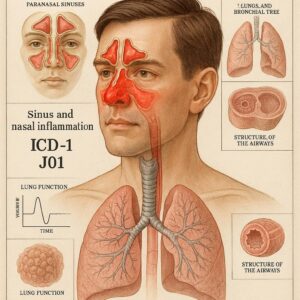
ICD-9 Code J01
What Was the ICD-9 Code for J01?
The short, direct answer is: There is no ICD-9 code “J01.”
This is a fundamental point of confusion. “J01” is not and never was an ICD-9-CM code. It is, in fact, an ICD-10-CM code.
Here’s the crucial breakdown:
-
ICD-9-CM (International Classification of Diseases, 9th Revision, Clinical Modification) used numeric codes, typically 3 to 5 digits long (e.g., 461.9).
-
ICD-10-CM (International Classification of Diseases, 10th Revision, Clinical Modification) uses alphanumeric codes, always starting with a letter, followed by numbers (e.g., J01.90).
Therefore, a search for “ICD-9 code for J01” is inherently asking for a crosswalk or translation from a newer code (ICD-10’s J01) back to the older system (ICD-9).
What you are almost certainly looking for is the ICD-9 equivalent of the ICD-10 code category J01, which is “Acute sinusitis.”
Mapping ICD-10’s J01 to ICD-9: A Critical Crosswalk
The transition from ICD-9 to ICD-10 on October 1, 2015, was not a simple one-to-one change. It was an expansion in specificity and scope. Where ICD-9 had approximately 14,000 codes, ICD-10 has over 68,000. The category for sinusitis is a perfect example of this increased detail.
The table below provides the essential mapping. Remember, this is for historical and educational reference only. For all current coding, you must use ICD-10-CM.
| ICD-10-CM Code & Description | ICD-9-CM Equivalent Code & Description | Key Differences & Notes |
|---|---|---|
| J01.90 – Acute sinusitis, unspecified | 461.9 – Acute sinusitis, unspecified | This is the most direct equivalent. Both are used when the specific sinus cavity is not documented. |
| J01.00 – Acute maxillary sinusitis, unspecified | 461.0 – Acute maxillary sinusitis | ICD-10 requires a 6th character to laterality (e.g., J01.01 for right, J01.02 for left). ICD-9 did not specify side. |
| J01.10 – Acute frontal sinusitis, unspecified | 461.1 – Acute frontal sinusitis | Similarly, ICD-10 adds laterality (J01.11, J01.12). |
| J01.20 – Acute ethmoidal sinusitis, unspecified | 461.2 – Acute ethmoidal sinusitis | ICD-10 adds laterality (J01.21, J01.22). |
| J01.30 – Acute sphenoidal sinusitis, unspecified | 461.3 – Acute sphenoidal sinusitis | ICD-10 adds laterality (J01.31, J01.32). |
| J01.4 – Acute pansinusitis | 461.8 – Other acute sinusitis | ICD-9 lumped pansinusitis and other multiple sinus involvements under 461.8. ICD-10 gives pansinusitis its own distinct code. |
| J01.80 – Other acute sinusitis | 461.8 – Other acute sinusitis | Used for acute sinusitis involving more than one sinus but not specifically pansinusitis. |
| J01.81 – Other acute recurrent sinusitis | 461.8 – Other acute sinusitis | ICD-10 has a unique code for “recurrent” acute sinusitis, a clinical distinction not captured in ICD-9. |
Important Note for Coders: “When reviewing old records, never force a more specific ICD-10 code than the ICD-9 code implies. If an old chart only lists 461.9, the appropriate ICD-10 code is J01.90, not a more specific laterality code. Coding is based on provider documentation, not assumption.” – Professional Coder’s Adage
Why the Transition from ICD-9 to ICD-10 Matters
You might wonder why we’re dwelling on a code system retired in 2015. The reason is that medical records have longevity, and understanding the past is key to accurate present-day work.
The Limitations of ICD-9-CM
ICD-9, implemented in 1979, simply ran out of space. Its structure could not accommodate new diagnoses, procedures, or the need for granularity in modern medicine.
-
Lack of Specificity: As seen in the table, it couldn’t distinguish between left or right, initial or subsequent encounters, or many nuanced disease variants.
-
Outdated Terminology: It did not align well with current clinical practice and medical terminology.
-
Inadequate for Modern Needs: It was ill-suited for detailed health analytics, outcome measurements, and value-based care models.
The Advantages of ICD-10-CM
The J01 category perfectly illustrates ICD-10’s strengths:
-
Clinical Detail: Codes now specify laterality (right, left, bilateral).
-
Etiology and Severity: While not in the sinusitis category, other codes can specify causative agents or associated conditions.
-
Improved Data for Care and Research: The rich data from ICD-10 enables better tracking of public health trends, treatment outcomes, and resource allocation.
-
Global Standardization: ICD-10 is used by most industrialized nations, facilitating international health statistics comparison.
A Deep Dive into ICD-10-CM Code Category J01: Acute Sinusitis
Now that we’ve clarified the historical perspective, let’s focus on the current standard. Accurate coding for acute sinusitis requires understanding the entire J01 category.
Anatomy of an ICD-10 Code
Let’s break down J01.91 – Acute sinusitis, unspecified, recurrent:
-
J: The letter indicates the chapter. “J” covers Diseases of the Respiratory System (J00-J99).
-
01: The first two digits after “J” specify the block. “J01-J03” are Acute Upper Respiratory Infections.
-
.9: The digit after the decimal point defines the specific type. “.9” is “unspecified sinusitis.”
-
1: The 6th character provides additional clinical detail. “1” indicates the condition is “recurrent.”
Complete Code List & Clinical Definitions
Coding requires matching the physician’s documentation precisely to the code description.
J01.0 – Acute maxillary sinusitis
-
J01.00 – Unspecified
-
J01.01 – Right
-
J01.02 – Left
-
J01.03 – Bilateral
-
J01.04 – Recurrent (Requires documentation of recurrence)
J01.1 – Acute frontal sinusitis
-
J01.10 – Unspecified
-
J01.11 – Right
-
J01.12 – Left
-
J01.13 – Bilateral
-
J01.14 – Recurrent
J01.2 – Acute ethmoidal sinusitis
-
(Follows same laterality/recurrent structure as above)
J01.3 – Acute sphenoidal sinusitis
-
(Follows same laterality/recurrent structure as above)
J01.4 – Acute pansinusitis
-
Inflammation of all paranasal sinuses simultaneously.
J01.8 – Other acute sinusitis
-
J01.80 – Other acute sinusitis (e.g., involving multiple sinuses but not pansinusitis)
-
J01.81 – Other acute recurrent sinusitis
J01.9 – Acute sinusitis, unspecified
-
J01.90 – Unspecified, not specified as recurrent
-
J01.91 – Unspecified, recurrent
Essential Coding Guidelines and Conventions
-
“Unspecified” Codes are Valid: Use J01.90 when the medical documentation does not specify the sinus involved. It is a billable code.
-
Laterality is Mandatory: If the documentation states “right acute maxillary sinusitis,” you must use J01.01. Using J01.00 would be incorrect.
-
Recurrent vs. Chronic: Acute sinusitis (J01) is distinct from chronic sinusitis (J32.-). “Recurrent acute” means separate episodes that resolve completely. “Chronic” is a long-standing, persistent inflammation. Do not confuse them.
-
Infectious Agent: If a specific bacterial agent is identified (e.g., as the cause of the sinusitis), an additional code from B95-B97 may be used, but J01 remains the primary diagnosis.
-
Combination Coding: Some conditions, like acute sinusitis with asthma exacerbation, may require careful review of the ICD-10 guidelines for coding combinations and sequencing.
Practical Scenarios: From Documentation to Correct Code
Let’s apply this knowledge to real-world examples.
Scenario 1: The Urgent Care Visit
-
Documentation: “Patient presents with 4-day history of facial pain and pressure, worse on right side, and purulent nasal discharge. Assessment: Acute right maxillary sinusitis.”
-
Correct ICD-10-CM Code: J01.01 (Acute maxillary sinusitis, right).
-
Historical ICD-9-CM Code (for context): 461.0.
Scenario 2: The Primary Care Follow-Up
-
Documentation: “Patient returns with third episode of acute sinusitis this year. Symptoms consistent with pansinusitis. This is a recurrent issue.”
-
Correct ICD-10-CM Code: J01.4 (Acute pansinusitis). *Note: The “recurrent” aspect is not separately coded here because J01.4 does not have a “recurrent” sub-code, but the clinical history is part of the record.*
-
Historical ICD-9-CM Code (for context): 461.8.
Scenario 3: The Non-Specific Emergency Department Note
-
Documentation: “Patient with headache, congestion, and fever. Diagnosed with acute sinusitis. No imaging performed.”
-
Correct ICD-10-CM Code: J01.90 (Acute sinusitis, unspecified). It would be incorrect to assume a sinus type.
-
Historical ICD-9-CM Code (for context): 461.9.
Beyond the Code: SEO and User Intent for Healthcare Professionals
As a web writer in the medical space, understanding the intent behind a search like “icd 9 code for j01” is key. The searcher is likely:
-
A medical coder or biller auditing an old record.
-
A healthcare student studying the differences between code sets.
-
A clinical professional trying to understand an old report.
-
Someone who has encountered “J01” and incorrectly assumes it’s from the older system.
Your content must satisfy this intent by providing the clear crosswalk, explaining the “why” behind the change, and focusing on accurate, actionable information for the present day. This builds authority and trust, which are the cornerstones of effective SEO in the YMYL (Your Money or Your Life) health sector.
Conclusion
The search for the “ICD-9 code for J01” highlights the enduring need to bridge historical and current medical coding practices. While the direct equivalent of ICD-10’s J01 category is found in ICD-9’s 461.x series, the transition to ICD-10 brought vital specificity through laterality and clinical detail. Accurate coding hinges on precise documentation and applying the modern ICD-10-CM system, ensuring proper reimbursement and contributing to valuable health data.
Frequently Asked Questions (FAQ)
Q: Can I still use ICD-9 codes for billing?
A: No. As of October 1, 2015, all HIPAA-covered entities (like providers and hospitals) in the United States are required to use ICD-10-CM for diagnosis coding. Using ICD-9 will result in claim denials.
Q: I have an old record with code 461.9. What is the correct ICD-10 code for it?
A: The directly equivalent ICD-10 code is J01.90 (Acute sinusitis, unspecified). Do not assign a more specific code (like for laterality) unless the old documentation specifically supports it.
Q: What is the difference between J01.90 and J01.91?
A: J01.90 is for acute sinusitis where the provider does not specify it as “recurrent.” J01.91 is used when the provider explicitly documents the acute sinusitis as “recurrent,” meaning multiple separate episodes.
Q: Where can I find the official ICD-10-CM guidelines and code set?
A: The official source is the Centers for Disease Control and Prevention (CDC) and the Centers for Medicare & Medicaid Services (CMS). The CDC’s FTP server houses the official files, and many commercial coding publishers integrate these into subscription-based manuals and software.
Additional Resource
For the most authoritative and up-to-date information, always refer to the Official ICD-10-CM Guidelines provided by the Centers for Disease Control and Prevention (CDC). You can access the current fiscal year files here: CDC ICD-10-CM Official Guidelines
Disclaimer: This article is for informational purposes only and is intended for medical coding education. It does not constitute medical or coding advice. Medical coders must always use the most current, official code sets and guidelines provided by the Centers for Medicare & Medicaid Services (CMS) and the National Center for Health Statistics (NCHS) for accurate billing and reporting. Always consult with a qualified coding professional or refer to the latest official resources for specific cases.
Author: The WebMD Writers Team
Date: FEBRUARY 05, 2026