If you’re researching the ICD-9 code for gallstones, you’re likely dealing with medical records, billing, or historical data. While the ICD-9-CM code set was officially replaced in the United States in 2015, understanding its codes remains crucial for interpreting older documents or for academic purposes. This guide will provide a clear, detailed, and entirely original walkthrough of how gallstones and related conditions were classified under the ICD-9 system, contrasting it with the modern ICD-10-CM system for context.
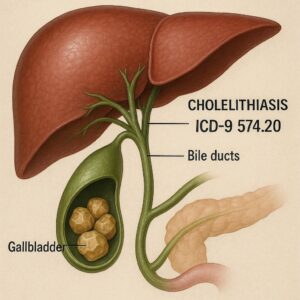
ICD-9 Codes for Gallstones
Table of Contents
ToggleIntroduction: The World of Medical Coding
Medical coding is the backbone of healthcare administration. It translates complex medical diagnoses, procedures, and symptoms into universal alphanumeric codes. These codes are used for everything from insurance billing and reimbursement to tracking disease trends and conducting medical research. For decades, the International Classification of Diseases, 9th Revision, Clinical Modification (ICD-9-CM) served this purpose in the United States. Even though it has been superseded, its legacy lives on in millions of patient records.
This article delves specifically into how gallstone disease was represented in the ICD-9-CM system. We’ll explore the specific codes, their meanings, and how they differ from today’s standards, providing you with a reliable reference point.
A Brief History: From ICD-9 to ICD-10-CM
The transition from ICD-9-CM to ICD-10-CM on October 1, 2015, was a monumental shift in U.S. healthcare. The ICD-9 system, implemented in 1979, had become outdated. Its limited code structure could not accommodate modern medical knowledge, leading to vague classifications and billing inefficiencies.
“The move to ICD-10 was about more than just updating codes; it was about improving the quality of healthcare data. The increased specificity allows for better tracking of public health issues, more precise billing, and ultimately, richer data for clinical research,” explains a health information management expert.
ICD-10-CM offers a dramatic increase in specificity, with over 68,000 diagnostic codes compared to ICD-9’s approximately 14,000. This specificity is perfectly illustrated in the coding of gallstone disease.
The ICD-9-CM Code for Gallstones: 574
In the ICD-9-CM system, conditions related to the gallbladder and biliary tract were primarily categorized under code 574. This was not a single code but a category code that required additional digits to specify the exact nature and complication of the gallstone disease.
The basic structure for gallstone (cholelithiasis) codes in ICD-9-CM fell under:
-
574.0 – Calculus of gallbladder with acute cholecystitis
-
574.1 – Calculus of gallbladder with other cholecystitis
-
574.2 – Calculus of gallbladder without mention of cholecystitis
-
574.9 – Calculus of gallbladder, unspecified
As you can see, the primary distinction was the presence and type of inflammation (cholecystitis).
Breaking Down the Specific ICD-9 Codes for Gallstone Conditions
To provide a clear reference, here is a detailed breakdown of the most relevant ICD-9-CM codes for gallstone-related diagnoses.
Gallstones with Inflammation (Cholelithiasis with Cholecystitis)
-
574.0: Calculus of gallbladder with acute cholecystitis. This code was used for patients with gallstones experiencing a sudden, severe inflammation of the gallbladder, often requiring urgent medical attention.
-
574.1: Calculus of gallbladder with other cholecystitis. This covered chronic cholecystitis (long-standing inflammation) or when the type of cholecystitis was not specified as acute.
Gallstones without Mentioned Inflammation
-
574.2: Calculus of gallbladder without mention of cholecystitis. This was the code for silent or asymptomatic gallstones, where stones are present but not currently causing inflammation or symptoms.
Unspecified and Obstructive Gallstone Codes
-
574.9: Calculus of gallbladder, unspecified. Used when documentation was incomplete and didn’t specify the presence or absence of cholecystitis.
-
574.3 – Calculus of bile duct with acute cholecystitis. For stones that have migrated into the common bile duct (choledocholithiasis) with acute gallbladder inflammation.
-
574.4 – Calculus of bile duct with other cholecystitis. For bile duct stones with chronic or unspecified gallbladder inflammation.
-
574.5 – Calculus of bile duct without mention of cholecystitis. For bile duct stones without noted gallbladder inflammation.
-
574.6 – Calculus of gallbladder and bile duct with acute cholecystitis. For stones in both locations with acute inflammation.
-
574.7 – Calculus of gallbladder and bile duct with other cholecystitis. For stones in both locations with other types of inflammation.
-
574.8 – Calculus of gallbladder and bile duct without cholecystitis. For stones in both locations without inflammation.
Other Related ICD-9 Codes
-
575.0 – Acute cholecystitis. Used when acute inflammation was present but gallstones were not confirmed or were not the cause (e.g., acalculous cholecystitis).
-
575.1 – Other chronic cholecystitis.
-
576.1 – Cholangitis. Inflammation of the bile ducts, often caused by an obstructing stone.
-
577.0 – Acute pancreatitis. When a gallstone blocks the pancreatic duct, it can lead to pancreatitis, which had its own code.
Important Note for Readers: *When reviewing historical records with ICD-9 codes, remember that the lack of specificity can be a limitation. A code like 574.1 (“other cholecystitis”) does not tell you if the condition was chronic, obstructive, or related to another specific cause. This is a key reason the healthcare system transitioned to ICD-10-CM.*
Comparative Table: ICD-9-CM vs. ICD-10-CM for Gallstones
The table below highlights the dramatic difference in specificity between the two coding systems for a common gallstone scenario.
| Clinical Scenario | ICD-9-CM Code & Description | ICD-10-CM Code & Description | Key Difference |
|---|---|---|---|
| Symptomatic gallstones causing chronic inflammation. | 574.1 – Calculus of gallbladder with other cholecystitis. | K80.12 – Calculus of gallbladder with chronic cholecystitis with obstruction. | ICD-10 specifies chronic inflammation and notes the presence of obstruction, which impacts treatment decisions and billing accuracy. |
| Gallstone in the common bile duct causing acute pancreatitis. | Two codes required: 574.4 (bile duct stone) & 577.0 (acute pancreatitis). | K80.33 – Calculus of bile duct with acute cholangitis and pancreatitis. | ICD-10 can combine related conditions into a single, more precise code that details the causal relationship (stone causing both cholangitis and pancreatitis). |
| Asymptomatic, incidental gallstones. | 574.2 – Calculus of gallbladder without mention of cholecystitis. | K80.20 – Calculus of gallbladder without cholecystitis, unspecified. | While similar, ICD-10’s structure allows for further specificity elsewhere (e.g., laterality, recurrence) which ICD-9 lacked entirely. |
Why Knowing Historical ICD-9 Codes Still Matters
You might wonder why we bother with an outdated system. Here are several practical reasons:
-
Medical Records Review: Healthcare professionals often need to interpret a patient’s long-term medical history documented under ICD-9.
-
Research and Epidemiology: Longitudinal studies tracking disease trends over decades rely on consistent understanding of historical codes.
-
Legal and Insurance Cases: Old billing disputes or insurance claims may hinge on the codes used at the time of service.
-
Academic Learning: Understanding the evolution of medical classification helps students and professionals appreciate the improvements in modern systems.
Navigating Modern Coding: A Glimpse at ICD-10-CM for Gallstones
While the focus is ICD-9, understanding its successor provides essential context. In ICD-10-CM, gallstone disease is classified under category K80 (Cholelithiasis). The codes are significantly more detailed, specifying:
-
The stone’s location (gallbladder, bile duct, both).
-
The presence and type of associated inflammation (acute, chronic, both).
-
The presence of obstruction.
-
The presence of related complications (like cholangitis or pancreatitis).
For example, a gallstone in the bile duct causing an obstruction would have a completely different and more precise code than a silent gallstone in the gallbladder.
Helpful List: Key Differences Between ICD-9 and ICD-10 for Gallstones
-
Specificity: ICD-10 specifies laterality, cause-and-effect relationships, and detailed clinical descriptions.
-
Combination Codes: ICD-10 often uses one code to describe multiple related conditions (e.g., a stone causing both obstruction and infection).
-
Number of Codes: ICD-10 has many more codes for biliary disease, allowing for precise clinical nuance.
-
Documentation Demand: The accuracy of ICD-10 coding depends heavily on detailed clinical documentation from the provider.
Conclusion
Navigating the ICD-9 code for gallstones, primarily centered around category 574, requires an understanding of its historical context and inherent limitations. While codes like 574.0 for acute cholecystitis with stones or 574.2 for asymptomatic stones were functional, they lacked the granular detail demanded by modern healthcare. The transition to ICD-10-CM, with its expansive and specific codes under category K80, represents a significant advancement in accurately capturing patient conditions, streamlining billing, and enhancing public health data. Whether you’re deciphering old records or learning the evolution of medical classification, understanding this journey from ICD-9 to ICD-10 is invaluable.
Frequently Asked Questions (FAQ)
Q: What is the most common ICD-9 code for gallstones?
A: There isn’t a single “most common” code, as it depended on the patient’s condition. 574.2 (calculus without mention of cholecystitis) was often used for asymptomatic stones, while 574.0 (with acute cholecystitis) was common for emergency cases.
Q: Can I use ICD-9 codes for medical billing today?
A: No. As of October 1, 2015, all HIPAA-covered entities in the United States must use ICD-10-CM codes for diagnostic billing. Using ICD-9 will result in claim denials.
Q: How do I convert an old ICD-9 gallstone code to ICD-10?
A: There is no direct one-to-one conversion. You must use a crosswalk or mapping tool (often provided by the Centers for Medicare & Medicaid Services or coding software) and, most importantly, refer to the full, detailed clinical documentation to select the correct, specific ICD-10-CM code.
Q: Why was the ICD-9 system replaced?
A: It was replaced due to its limited capacity, lack of specificity, and inability to accommodate modern medical terminology and technology. This led to inaccurate data and billing inefficiencies.
Q: Where can I find the official, current ICD-10-CM codes?
A: The official source is the Centers for Disease Control and Prevention (CDC) and the National Center for Health Statistics (NCHS), which publish the full ICD-10-CM manual annually. Commercial coding books and reputable online medical databases also provide this information.
Additional Resources
-
Centers for Disease Control and Prevention (CDC) ICD-10 Page: https://www.cdc.gov/nchs/icd/icd10cm.htm – The official source for ICD-10-CM guidelines and updates.
-
American Medical Association (AMA) ICD-10 Resources: https://www.ama-assn.org/practice-management/cpt/icd-10-cm – Provides resources and tools for healthcare professionals on medical coding.
-
American Health Information Management Association (AHIMA): https://www.ahima.org/ – A premier association for health information management professionals, offering education and standards on coding practices.
Date: January 26, 2026
Disclaimer: This article is for informational purposes only and is not a substitute for professional medical coding, billing, or clinical advice. Always consult current coding manuals and healthcare providers for accurate diagnosis and billing information.