
If you have ever sat in the dental chair and heard the hygienist mention a “perio” procedure, or if you have looked at your insurance Explanation of Benefits (EOB) and spotted the code “D4910,” you might have wondered what sets this treatment apart from a standard cleaning.
It is easy to assume that a cleaning is just a cleaning. However, for the millions of people who suffer from periodontal disease (gum disease), the routine “scrape and polish” is not enough to keep their mouths healthy. This is where Periodontal Maintenance comes into play.
In the world of dentistry, precision matters—not just in the clinical work, but in the language used to describe it. The periodontal maintenance dental code (D4910) is more than just a number for billing; it is a specific treatment protocol designed to manage a chronic condition.
In this guide, we will break down everything you need to know about this code. We will explore what the procedure entails, why it is necessary, how it impacts your wallet, and why your dentist insists on that three-month or four-month recall schedule.
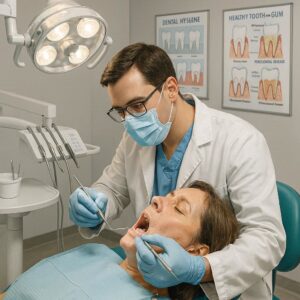
Periodontal Maintenance Dental Code
What is Periodontal Maintenance?
To understand the code, you must first understand the disease it treats. Periodontal disease is a chronic inflammatory condition affecting the gums and the supporting bone structure of your teeth. Think of it like diabetes or high blood pressure—it is a long-term condition that cannot be “cured” in the traditional sense, but it can be managed.
Periodontal maintenance is the ongoing, prophylactic treatment performed to manage the disease. It is a rigorous cleaning procedure aimed at keeping the bacterial levels under control in patients who have already undergone active treatment for gum disease (such as scaling and root planing).
The Official Definition (D4910)
According to the American Dental Association (ADA) CDT (Current Dental Terminology) manual, the code D4910 is defined as follows:
“Periodontal maintenance is a procedure for patients who have previously been diagnosed with periodontal disease. It includes removal of the bacterial plaque and calculus from above and below the gum line, site-specific scaling and root planing where indicated, and polishing of the teeth. If new or recurring periodontal disease is detected, additional diagnostic and treatment procedures may be required.”
The key phrase here is “previously diagnosed.” You cannot simply walk into a dentist’s office for the first time and receive periodontal maintenance. It is a step reserved for those with a documented history of periodontitis.
D4910 vs. Prophylaxis (The “Regular Cleaning”)
The most common point of confusion for patients is the difference between a “regular cleaning” and periodontal maintenance. They both involve instruments, scraping, and polishing, but the objectives and the techniques are worlds apart.
To make this clear, let’s look at a comparative table.
| Feature | Prophylaxis (D1110) | Periodontal Maintenance (D4910) |
|---|---|---|
| Patient Health | Patients with healthy gums and no bone loss. Gingivitis may be present (reversible gum inflammation). | Patients with a history of periodontitis (irreversible bone loss). |
| Objective | Prevent gum disease from starting. Maintain oral health. | Manage existing chronic disease. Prevent further bone loss. |
| Focus Area | Primarily above the gum line (supragingival). | Above and below the gum line (supra and subgingival). Focus on deep pockets. |
| Anesthesia | Rarely needed. | Often required to ensure comfort during deep scaling. |
| Frequency | Typically every 6 months. | Typically every 3-4 months (based on disease severity). |
| Insurance Coverage | Usually covered at 80%-100% twice a year. | Often covered at 50%-80%, sometimes with a frequency limit (e.g., once every 3 or 6 months). |
Important Note: If you have periodontitis and receive a standard prophylaxis (D1110), you are being undertreated. It is like washing a dirty window with a dry cloth—it moves the dirt around but doesn’t remove the bacteria hiding deep in the pockets. This can allow the disease to progress silently.
The Periodontal Journey: How Patients Get to D4910
You cannot start with periodontal maintenance. There is a specific clinical pathway that leads to this code. Understanding this journey helps justify why the code exists.
1. The Diagnosis (Comprehensive Exam – D0150)
It begins with a comprehensive examination. The dentist or hygienist uses a probe to measure the “pockets” around your teeth. Healthy pockets are usually 1-3mm deep. If pockets are 4mm or deeper with bleeding, it is a sign of periodontal disease.
2. Active Therapy (Scaling and Root Planing – D4341/D4342)
If active gum disease is found, the first phase of treatment is Scaling and Root Planing (SRP) , often referred to as a “deep cleaning.” This is a therapeutic procedure to remove the calculus (tartar) and endotoxins from the root surfaces. This procedure helps the gums shrink and reattach to the tooth, reducing pocket depth.
3. Re-evaluation
About 4-6 weeks after SRP, the dentist re-evaluates the gums. They check if the pockets have shrunk and if inflammation has subsided.
4. The Maintenance Phase (D4910)
Once the disease is under control (the “active” phase is over), the patient enters the “maintenance” phase. This is where D4910 comes in. The patient now requires professional oversight every few months to ensure the disease does not flare up again.
What Happens During a Periodontal Maintenance Appointment?
A periodontal maintenance appointment is far more comprehensive than a standard cleaning. It is a strategic assault on bacteria. Here is what you can typically expect:
-
Review of Medical History: Systemic conditions like diabetes or heart disease can directly impact gum health. The hygienist needs to know if anything has changed since your last visit.
-
Periodontal Charting (“Probing”): The hygienist will measure your pocket depths again. They are comparing current readings to previous ones to see if any areas are getting worse.
-
Radiographs (X-rays): Not every visit, but annually, x-rays are taken to monitor the level of bone supporting your teeth.
-
Supragingival Plaque and Calculus Removal: Removal of tartar visible above the gum line.
-
Subgingival Plaque and Calculus Removal: This is the most critical part. Using ultrasonic scalers and fine hand instruments (curettes), the hygienist cleans deep below the gum line in the areas where the bacteria hide.
-
Site-Specific Scaling and Root Planing: If the hygienist finds a specific area with heavy buildup, they may perform localized “mini” scaling and root planing on that specific tooth.
-
Polishing: Removal of surface stains and smoothing of the tooth surfaces.
-
Fluoride or Antimicrobial Therapy: Often, the hygienist will place an antimicrobial gel (like Arestin) directly into the deep pockets to kill residual bacteria, or apply fluoride to strengthen the teeth.
-
Oral Hygiene Instruction: Reviewing your home care routine. Are you flossing correctly? Do you need an interdental brush for wider spaces?
Why is the Frequency Different? (The 3-Month Factor)
If you have a D4910 code on your treatment plan, you have likely been told you need to come back in 3 or 4 months instead of 6. This is not a money-making scheme; it is biological.
Think of bacterial growth in the mouth like a lawn. After you mow it (your cleaning), it starts growing back immediately. In a healthy mouth, it takes about 6 months for the bacterial biofilm to mature to a point where it can cause significant damage.
However, in a patient with periodontal disease—who has deep pockets where anaerobic bacteria thrive—the biofilm matures much faster. Research shows that the bacteria recolonize deep pockets to disease-contributing levels in approximately 60 to 90 days.
By scheduling maintenance every 3 months, we “mow the lawn” before the weeds (disease-causing bacteria) have a chance to take over and destroy the roots.
The Insurance Perspective: Navigating Coverage
Dental insurance is designed for prevention, not for managing chronic disease. This is why the periodontal maintenance code often confuses insurance companies and patients alike.
Frequency Limitations
Most dental plans follow the “two cleanings a year” model. However, the D4910 code often falls outside of this simple model. Some plans will cover D4910 twice a year (aligning it with the prophylaxis schedule), while others recognize the need for more frequent care and will cover it 3 or even 4 times a year.
The “Frequency” or “Alternating” Battle
A common issue arises when a patient has both a prophylaxis (regular cleaning) and a periodontal maintenance appointment in the same year. For example, a patient might receive D4910 in January and then the insurance company denies a claim for D1110 in July, stating it is “not a covered benefit” or “too soon.”
This is because the insurance company sees both as “cleanings.” You must check your specific plan’s “frequency limitations.”
Why is my copay higher?
You will likely notice that your out-of-pocket cost for D4910 is higher than it used to be for your old cleanings. There are two reasons for this:
-
Time: Periodontal maintenance takes longer and requires more skill (and more chair time) than a prophylaxis.
-
Benefit Level: Many insurance plans cover preventive care (like D1110) at 100%, but cover “periodontal” services (like D4910) under a “basic” restorative category, often at 80% or 50%.
Common Questions Patients Ask About D4910
“I brush and floss every day. Do I really need this?”
Yes. No matter how diligent you are with a toothbrush and floss, you cannot effectively clean 5mm or 6mm pockets at home. The bacteria in these depths calcify into tartar that can only be removed with professional instruments. Skipping maintenance allows this buildup to accumulate, leading to more bone loss and eventually tooth loss.
“Can I go back to a regular cleaning?”
Generally, no. Once the architecture of the mouth has changed due to bone loss and deep pocket formation, the standard of care requires periodontal maintenance. If your periodontitis is well controlled for many years (e.g., pocket depths reduce to 3mm or less across the board), some dentists may discuss a transition, but this is rare. The diagnosis of periodontitis is permanent.
“Does it hurt?”
It can be more uncomfortable than a standard cleaning because the hygienist is working deeper in the tissue. However, most dentists and hygienists will offer local anesthesia (numbing) to ensure your comfort. If you feel pain, you must raise your hand and ask for more numbing.
The Link Between Periodontal Health and Overall Health
Maintaining the D4910 schedule is not just about saving your teeth. The mouth is the gateway to the body. The bacteria and inflammatory proteins associated with periodontal disease can enter the bloodstream and have been linked to systemic health issues.
-
Diabetes: Periodontal disease makes it harder to control blood sugar, and uncontrolled diabetes makes periodontal disease worse. It is a two-way street.
-
Heart Disease: Studies suggest a link between gum inflammation and cardiovascular disease.
-
Pregnancy: Gum disease has been associated with preterm birth and low birth weight.
By adhering to your periodontal maintenance schedule, you are actively contributing to the management of your overall health, not just your dental health.
Tips for Maximizing the Benefits of D4910
To get the most out of your investment in periodontal maintenance, consider these tips:
-
Stick to the Schedule: Treat your 3-month or 4-month recall as a non-negotiable medical appointment.
-
Perfect Your Home Care: Ask your hygienist to watch you brush and floss. They can offer specific tips for tricky areas.
-
Consider Tools: An electric toothbrush, water flosser (like Waterpik), and interdental brushes are often more effective than manual tools for perio patients.
-
Disclose Your Health History: Always update your dentist on changes in medications or systemic health.
Additional Resource
For the most technical and official descriptions of dental codes, you can refer to the American Dental Association’s (ADA) CDT (Current Dental Terminology) code set. While the full book must be purchased, they provide useful resources for patients:
Visit the ADA Website for Oral Health Topics
Frequently Asked Questions (FAQ)
Q1: What is the difference between D4341 (Scaling and Root Planing) and D4910?
A: D4341 is the active treatment for gum disease (the “deep cleaning” to get the disease under control). D4910 is the maintenance treatment that follows to keep the disease from coming back.
Q2: Will my insurance cover periodontal maintenance every 3 months?
A: It depends on your specific plan. Some plans cover it 3 or 4 times a year, while others only cover it twice a year and consider additional visits a patient expense. Always check your benefits or ask your dental office to verify for you.
Q3: Can I have periodontal maintenance if I have dental implants?
A: Yes. While implants can’t get cavities, they can get a disease called “peri-implantitis” (similar to gum disease). Maintenance around implants is crucial and often billed under D4910 or a specific implant maintenance code.
Q4: Why did my dentist “downgrade” my claim from D4910 to D1110 for insurance?
A: Some dental offices do this as a courtesy to help patients utilize their insurance benefits if the insurance plan refuses to pay for D4910. However, ethically and clinically, this is controversial because it may not represent the actual treatment provided.
Q5: Is periodontal maintenance covered by medical insurance?
A: Rarely. Dental treatment is almost always covered under dental insurance. However, if you have specific medical conditions (like organ transplant or certain heart conditions), there are rare cases where medical insurance may overlap, but this requires pre-authorization.
Conclusion
The periodontal maintenance dental code (D4910) represents a shift from simple prevention to the active management of a chronic condition. It is a specialized procedure designed to keep gum disease in check, preserve your natural teeth, and protect your overall health. Understanding that this is not merely a “deep cleaning” but a vital medical intervention helps patients appreciate the need for frequent visits and the associated costs. By embracing this maintenance phase, you are investing in a future with a healthy, functional smile.
Disclaimer: This article is for informational purposes only and does not constitute medical advice. Dental codes and insurance policies vary by provider and region. Always consult with your licensed dental professional for diagnosis and treatment, and with your insurance provider for coverage details.
Author: Professional Web Content Team
Date: March 14, 2026


