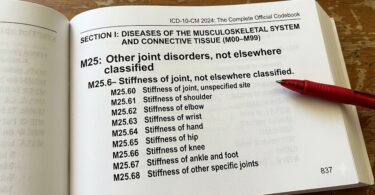
Let’s be honest. Medical coding is not usually the first thing that comes to mind when you think of “fun.” But every professional coder knows a secret: hidden deep inside the ICD-10-CM manual, there is a goldmine of absolutely bizarre, hilarious, and surprisingly specific diagnoses.
Have you ever been curious about what happens when a spaceship crashes into a person? Or what code you use when a chicken attacks a golfer? Believe it or not, the World Health Organization and CMS have thought about this.
In this guide, we are going to walk through the weirdest ICD 10 codes that actually exist. We will explain why they exist, how to use them correctly, and why “strange” codes are often more important than they seem.
Grab a coffee. You are about to see a side of healthcare you never expected.

Why Do “Weird” Medical Codes Even Exist?
Before we dive into the fun stuff, let us answer the big question: Why does the medical system need a code for “sucked into jet engine” (V97.33XD)?
The answer is surprisingly simple: Specificity saves lives and money.
When a hospital bills an insurance company, they need to tell a complete story. If a patient comes in with a broken arm, the insurance company wants to know how it broke. Was it a fall from a ladder (work-related)? Was it a car accident (auto insurance should pay)? Was it a parrot attack (homeowner’s insurance)?
The “weird” codes exist for three main reasons:
- Accident prevention: If we track how people get hurt, we can make safety rules.
- Legal clarity: Insurance companies need to know who is responsible for the bill.
- Data tracking: Public health officials need to know if a specific injury (like a vending machine tipping over) is becoming a trend.
So, while a code might make you laugh, remember: someone actually needed that code last year.
The “Top 10” Weirdest ICD 10 Codes (The Hall of Fame)
Let us start with the fan favorites. These are the codes that go viral on medical forums for a reason. They are specific, visual, and completely real.
1. W61.62XA – Struck by a parrot, initial encounter
Yes, you read that correctly. If a parrot (presumably angry) flies down and strikes a person hard enough to warrant a doctor’s visit, this is the code.
Why is this weird? Parrots are not typically known as physical attackers. They bite. They scream. But “struck by” implies the parrot used its body like a projectile.
Real-world use: Mostly used for zookeepers, exotic bird owners, or pirates (just kidding about the pirates).
2. V97.33XD – Sucked into jet engine, subsequent encounter
This is perhaps the most famous “weird” code in the book. The fact that there is a “subsequent encounter” (the D in the code means subsequent) implies that the patient survived the first visit and needs follow-up care.
Note: Survival is incredibly rare. This code exists for military and aviation accident reporting.
3. Y93.D – V91.07XD – Burn due to water-skis on fire
Let us break this down. You are water-skiing. You are in a body of water. And your skis are on fire. How does that happen? Fuel spill? Lightning? The code doesn’t ask why. It just wants you to know that it is billable.
4. R46.1 – Bizarre personal appearance
This is a strange one. This code is used when a patient’s appearance is so unusual that it is considered part of their mental or behavioral health diagnosis. Think unkempt, disheveled, or eccentric to the point of being a clinical sign.
Controversy: Many modern psychiatrists dislike this code because “bizarre” is subjective. But it remains in the manual.
5. W22.02XD – Walked into a lamppost, subsequent encounter
We have all done it. We are looking at our phone, and bam – a lamppost appears out of nowhere. This code covers that specific shame. The “subsequent encounter” means you went back to the doctor for a follow-up, presumably still embarrassed.
6. Z62.0 – Inadequate parental supervision
This is less funny and more sad. This code is used by social workers and pediatricians when a child is injured or presents with issues because parents were not watching them appropriately.
7. W55.41XA – Bitten by a pig, initial encounter
Pigs are usually friendly. But they have teeth. If you are a farmer or someone who tried to hug a pig at a county fair, this code is for you. There is also a separate code for being struck by a pig (W55.42).
8. V91.07XA – Burn due to water-skis on fire (Wait, this is different?)
Actually, this is a classic example of how specific ICD-10 gets. There is a code for the skis being on fire (Y93.D) and a code for you being burned by the burning skis (V91.07). Yes. Two different codes.
9. W61.33XA – Pecked by a chicken, initial encounter
Chickens are mean. Anyone who has raised hens knows they peck. But this code exists for the truly aggressive peck that breaks skin or damages an eye.
10. X52 – Prolonged stay in weightless environment
This is for astronauts. If an astronaut stays in space (zero gravity) too long and suffers bone density loss or muscle atrophy, this is the code. It is one of the few codes that very few people on Earth will ever use.
Comparative Table: Animal Attacks (The Menagerie of Mayhem)
The ICD-10 manual has an entire section dedicated to animals. But not all animals are treated equally. Here is a quick look at how the codes differentiate between types of attacks.
| Animal | Struck by | Bitten by | Pecked by | Crushed by |
|---|---|---|---|---|
| Parrot | W61.62 | W61.61 | N/A | N/A |
| Chicken | W61.32 | W61.31 | W61.33 | N/A |
| Pig | W55.42 | W55.41 | N/A | W55.43 |
| Sea Lion | W56.32 | W56.31 | N/A | N/A |
| Cow | W55.12 | N/A | N/A | W55.13 |
Key takeaway: Sea lions have their own category (W56). So do orcas (W56.21). If you are ever bitten by a sea lion, the code is ready for you.
The “How Did You Manage That?” Category (Accidents)
Some codes are weird because they describe accidents that seem almost impossible. But they happen just often enough to warrant a specific number.
Falling Out of a Toilet (W18.11)
This is different from falling off a toilet. Falling out implies you were inside the toilet bowl. Are you a toddler? A very small adult? We do not know. But the code exists.
Struck by a Turtle (W59.22)
Turtles are slow. To be struck by a turtle, you must be standing incredibly still. Or the turtle fell from a height (a shelf, a child’s hands). Again, it is specific.
Spacecraft Collision (V95.43)
If you are in a spacecraft (not a plane, a spacecraft) and you collide with another object in space, this code covers the initial encounter. SpaceX and NASA use codes like this for mission logs.
Activity: Golf (Y93.23)
This is not an injury code itself, but an “activity code.” You use it to explain what the patient was doing when they got hurt. So, if you are struck by lightning while golfing, you combine the lightning code (T75.0) with Y93.23.
Fun fact: There is also a code for being struck by a golf club (W21.19) and being struck by a golf ball (W21.11).
The Psychological Side: Codes for the Mind
The weirdest ICD 10 codes are not always about physical injuries. Sometimes, the mind does strange things that need a code.
F64.1 – Gender identity disorder in adolescence and adulthood
*Note: This terminology is outdated and controversial. The ICD-11 has updated this. However, in ICD-10-CM (US version), it still appears.*
F68.1 – Factitious disorder (Munchausen’s syndrome)
This is when a patient fakes illness for attention. The “weird” part is that coders have to be very careful not to accuse the patient. You only use this if the doctor has concrete proof.
Z76.5 – Malingerer
This is different from factitious disorder. A malingerer fakes illness for a specific external reward (like money, drugs, or avoiding jail time). It is a “Z code” (factors influencing health status) rather than a mental illness.
A Helpful List: Top 5 Codes You Hope You Never Use
Let us be real. Some of these codes are darkly funny because they describe worst-case scenarios.
- V95.04XS – Spacecraft crash injuring occupant, sequela (The long-term effects of a spaceship crash).
- Y35.291 – Legal intervention involving gas, perpetrator injured (A criminal hurt by police tear gas).
- W16.011 – Fall into swimming pool striking bottom causing drowning (A specific chain of events in a pool).
- X83.8 – Intentional self-harm by other specified means (A catch-all for creative self-injury).
- V97.33XD – Sucked into jet engine, subsequent encounter (We had to list it twice. It is that weird).
Quote from a real medical coder (Reddit, r/MedicalCoding):
*”I once had to code ‘Bitten by a dolphin while water-skiing.’ I spent 20 minutes laughing, then 10 minutes finding the correct combination of W56 and V91. The patient was fine. The dolphin was not charged.”*
Why New Coders Love These Codes
If you are studying for your CPC (Certified Professional Coder) exam, you know that memorizing guidelines is boring. But the “weird” codes are actually excellent memory anchors.
- They teach specificity. If you remember “parrot attack,” you will never forget to look for the 7th character (A, D, or S for initial, subsequent, or sequela).
- They teach external cause codes. Many students forget that you need a secondary code for how the injury happened. The weird codes make you remember.
- They reduce audit risk. If you use a generic code like “fall” (W19), you might get denied. If you use “fall from toilet” (W18.11), the insurance company knows exactly what happened.
The “Don’t Use These” Warning (Official Advice)
While these codes exist, the official ICD-10-CM guidelines ask you to avoid them if a more specific code exists. For example:
- R46.1 (Bizarre personal appearance) – Try to use a specific behavioral code instead.
- X59 (Exposure to unspecified factor) – This is a last resort. Never use this if you know it was a chicken attack.
Important Note for Readers: Do not use these codes to commit fraud. Billing an insurance company for “spaceship crash” when you fell off a ladder is illegal and stupid. The weirdness is for accuracy, not creativity.
Complete List of the Weirdest ICD 10 Codes (By Category)
To make this article a true reference, here is a categorized list of the strangest, most specific codes you will ever see.
Transportation Mishaps
- V97.0 – Occupant of aircraft injured by other specified objects
- V97.33 – Sucked into jet engine
- V91.07 – Burn due to water-skis on fire
- V90.29 – Drowning due to being thrown overboard by collision of passenger ship
Animal & Plant Related
- W61.42 – Struck by turkey
- W56.21 – Bitten by orca (killer whale)
- W59.22 – Struck by turtle
- W61.52 – Struck by goose
- X20 – Contact with venomous snakes and lizards (Very common, but still scary)
Falls & Strikes
- W18.11 – Fall from or off toilet
- W18.12 – Fall from or off bed (Extremely common for elderly)
- W22.02 – Walked into lamppost
- W22.03 – Walked into wall (Yes, separate from lamppost)
Environmental & Legal
- X52 – Prolonged stay in weightless environment
- X33 – Victim of lightning
- Y35.29 – Legal intervention involving gas
- Y92.146 – Bathroom of a restaurant as the place of occurrence
How to Search for These Codes Yourself
You do not need to buy a $100 manual. You can use free online tools to browse the ICD-10-CM index.
Recommended free resources:
- CMS.gov official files (Very dry, but accurate)
- ICD10Data.com (User-friendly search)
- AAPC (American Academy of Professional Coders) Forums (Real coders discuss real weird cases)
Pro tip: Search for the word “burn” or “struck” in the alphabetical index. You will be amazed at how many weird combinations appear.
The Ethics of Weird Coding
Let us get serious for one minute. Some people think medical coding is a joke because of these codes. That is a mistake.
When a doctor uses Z62.0 (Inadequate parental supervision), they are often filing a report with child protective services. It is not a funny code. It is a cry for help for a child.
When a hospital uses Y92.146 (Bathroom of a restaurant) combined with a fall code, they are helping the health department identify unsafe restaurant designs.
The weirdness is a feature, not a bug. It means the system is working. It means we are tracking reality, no matter how strange that reality is.
A Day in the Life of a Coder (Fictional but realistic scenario)
8:00 AM: Car accident. Normal.
10:00 AM: Toddler swallowed a coin. Normal.
11:30 AM: Patient bitten by a parrot while eating a cracker. (W61.61XA) – Weird, but billable.
1:00 PM: Elderly woman fell out of her toilet. (W18.11) – Sad, but weird.
3:00 PM: Man struck by a turtle that fell from a balcony. (W59.22) – The coder takes a coffee break to stop laughing.
5:00 PM: Astronaut with bone density loss. (X52) – The coder closes the laptop and goes home.
This happens. Every day. Somewhere.
Additional Resources for Coders and Curious Readers
If you want to dive deeper into the world of medical coding and bizarre diagnoses, here is a trusted external link:
🔗 CMS ICD-10 Official Guidelines
Visit the Centers for Medicare & Medicaid Services official page for the latest updates, coding conventions, and the complete tabular list.
*Link: Search “CMS 2026 ICD-10 CM” on your browser.*
Frequently Asked Questions (FAQ)
Q1: Are these “weird” codes actually used in real hospitals?
Yes. Most large hospitals use them every week. While “sucked into jet engine” is rare, “fall from toilet” and “struck by chicken” happen more often than you think, especially in rural emergency rooms.
Q2: Can I get in trouble for using the wrong weird code?
Yes. Insurance companies audit charts. If you use “struck by orca” (W56.21) but the patient was actually bitten by a sea lion (W56.31), the claim could be denied for inaccuracy. Specificity is mandatory.
Q3: Why does ICD-10 have a code for “spacecraft crash” if nobody uses it?
The ICD system is global and forward-looking. It prepares for future scenarios. Also, military and space agencies (NASA, ESA, Roscosmos) actually use these codes for research and insurance purposes.
Q4: Is there a code for “attack by a zombie”?
No. Zombies are not a recognized external cause. However, a person believing they are attacked by a zombie would be coded under a mental health diagnosis (F22 – Delusional disorder).
Q5: What is the difference between “initial” (A) and “subsequent” (D) encounter?
- A (Initial): The patient is receiving active treatment for the first time (surgery, ER visit).
- D (Subsequent): The patient is in routine healing or follow-up care.
- S (Sequela): There is a permanent effect (scar, chronic pain) from the injury.
Q6: Are these codes the same worldwide?
ICD-10 is international, but the United States uses a “Clinical Modification” (ICD-10-CM) which adds more detail. Some weird codes are US-specific.
Q7: I fell off my bike. Should I look up the code myself?
No. Leave coding to professionals. If you are injured, see a doctor. Do not attempt to self-diagnose or self-code. You will likely get it wrong and delay treatment.
Conclusion (Three Lines)
Medical coding is not just bureaucracy; it is a detailed map of human accidents, including the truly bizarre ones like parrot strikes and flaming water-skis. These weirdest ICD 10 codes prove that reality is often stranger than fiction, but they serve a vital purpose in safety tracking and insurance accuracy. Remember to laugh at the absurdity, but respect the system that helps doctors and hospitals get paid correctly.
Disclaimer: This article is for informational and educational purposes only. It is not a substitute for professional medical advice, diagnosis, or coding certification. Always refer to the latest official ICD-10-CM guidelines.
Author: Technical Writing Team
Date: APRIL 13, 2026