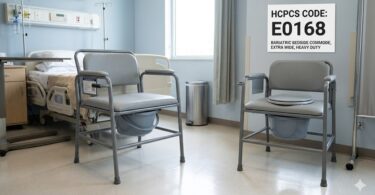
Healthcare billing is a complex system that relies on standardized codes to ensure accurate claims processing, reimbursement, and compliance. Among the most critical coding systems are HCPCS (Healthcare Common Procedure Coding System) codes, which are used to describe medical procedures, supplies, and services not covered by CPT (Current Procedural Terminology) codes.
HCPCS codes are divided into two levels:
-
Level I: CPT codes (maintained by the American Medical Association).
-
Level II: National codes for non-physician services, including medical supplies, durable equipment, and ambulance services.
This guide provides an in-depth exploration of HCPCS Codes in Medical Billing, their structure, usage in medical billing, common challenges, and best practices for accurate coding.

HCPCS Codes in Medical Billing
What Are HCPCS Codes?
History and Development
HCPCS was established in the 1970s by the Centers for Medicare & Medicaid Services (CMS) to standardize billing for Medicare and Medicaid services. Over time, private insurers adopted these codes for uniformity in claims processing.
Importance in Medical Billing
HCPCS codes ensure:
-
Uniformity in billing across providers and insurers.
-
Accurate reimbursement for services and supplies.
-
Compliance with federal and private insurance requirements.
Levels of HCPCS Codes
Level I (CPT Codes)
Managed by the AMA, CPT codes describe medical procedures performed by physicians.
Level II (National Codes)
These cover non-physician services, including:
-
Durable Medical Equipment (DME) (e.g., wheelchairs – E0130)
-
Ambulance Services (e.g., A0428 for advanced life support)
-
Drugs and Injectables (e.g., J3420 for vitamin B12 injections)
Level III (Obsolete Local Codes)
Previously used for regional billing, these were discontinued in 2003 in favor of national standardization.
Structure and Format of HCPCS Codes
HCPCS Level II codes follow an alphanumeric structure:
-
First character: A letter (A-V) indicating the category.
-
Next four digits: Numbers specifying the service or item.
Example:
-
A0425 – Ambulance service, basic life support
-
E0601 – Continuous positive airway pressure (CPAP) device
Key Differences Between HCPCS Level I and Level II Codes
| Feature | HCPCS Level I (CPT) | HCPCS Level II |
|---|---|---|
| Managed by | AMA | CMS |
| Coverage | Physician services | Medical supplies, DME, drugs |
| Format | 5-digit numeric | 1 letter + 4 digits |
Commonly Used HCPCS Level II Codes
Durable Medical Equipment (DME)
| Code | Description |
|---|---|
| E0130 | Wheelchair, standard |
| E0601 | CPAP device |
Ambulance Services
| Code | Description |
|---|---|
| A0428 | ALS emergency transport |
| A0425 | BLS non-emergency transport |
How HCPCS Codes Are Used in Medical Billing
-
Claims Submission: Providers submit claims with HCPCS codes to insurers.
-
Reimbursement Process: Insurers verify codes for payment approval.
-
Denials and Appeals: Incorrect coding leads to claim rejections.
Updates and Revisions to HCPCS Codes
CMS updates HCPCS codes annually, with changes effective January 1. Providers must stay updated to avoid claim denials.
Challenges in HCPCS Coding
-
Incorrect Code Selection → Claim denials.
-
Lack of Specificity → Reimbursement delays.
-
Compliance Risks → Audits and penalties.
Best Practices for Accurate HCPCS Coding
-
Use the latest codebooks.
-
Verify codes with CMS updates.
-
Train staff regularly.
HCPCS Codes vs. ICD-10 and CPT Codes
| System | Purpose | Example |
|---|---|---|
| ICD-10 | Diagnoses | E11.65 (Diabetes) |
| CPT | Medical procedures | 99213 (Office visit) |
| HCPCS | Supplies, drugs, non-MD services | J3420 (B12 injection) |
The Future of HCPCS Coding
-
AI-driven coding assistance.
-
Increased specificity in code descriptions.
-
Global standardization efforts.
Conclusion
HCPCS codes are essential for accurate medical billing, ensuring proper reimbursement for supplies, drugs, and non-physician services. Staying updated with annual changes, avoiding common errors, and following best practices can streamline claims processing and reduce denials.
FAQs
1. What is the difference between HCPCS Level I and Level II?
-
Level I = CPT codes (physician services).
-
Level II = Supplies, DME, drugs.
2. How often are HCPCS codes updated?
-
Annually by CMS.
3. What happens if I use an incorrect HCPCS code?
-
Claim denials, delayed payments, or compliance audits.