Pregnancy is not a illness; it is a profound and complex physiological journey. Yet, within the modern healthcare ecosystem, this journey is meticulously documented, tracked, and analyzed through a language of alphanumeric precision: the International Classification of Diseases, Tenth Revision, Clinical Modification (ICD-10-CM). For many outside the world of health information management, these codes are seen as mere bureaucratic necessities, the secret handshake required for insurance reimbursement. This perspective, however, dramatically undersells their critical importance.
Accurate ICD-10 coding for pregnancy is, in fact, a cornerstone of public health, patient safety, and clinical excellence. Every “O” code assigned—from the routine supervision of a normal pregnancy (Z34.01) to a life-threatening condition like severe pre-eclampsia (O14.12)—feeds into a vast data ecosystem. This data shapes national statistics on maternal morbidity and mortality, informs resource allocation for women’s health programs, drives quality improvement initiatives in hospitals, and enables groundbreaking research into the causes and treatments of pregnancy-related complications. A single misplaced digit can distort this picture, potentially obscuring a rising trend in gestational diabetes or underrepresenting the prevalence of postpartum depression.
This article is designed to be the definitive guide for medical coders, healthcare providers, students, and administrators who seek to master this intricate domain. We will move beyond simple code lists and delve into the logic, the nuances, and the critical thinking required to accurately capture the story of a patient’s pregnancy. We will explore the structure of Chapter 15: Pregnancy, Childbirth, and the Puerperium, unravel the rules that govern code sequencing, and confront the common pitfalls that lead to denials and audits. By the end of this journey, you will not only understand how to code for pregnancy but, more importantly, why such precision is a non-negotiable component of exemplary maternal care.
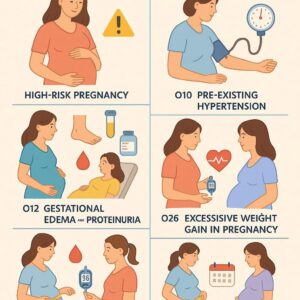
ICD-10 coding in pregnancy
Chapter 1: Demystifying the ICD-10-CM System for Pregnancy
What is ICD-10-CM and Why Does It Matter?
The ICD-10-CM is the official system used in the United States to classify and code all diagnoses, symptoms, and procedures recorded in conjunction with hospital care. It is maintained by the Centers for Disease Control and Prevention (CDC) and the Centers for Medicare & Medicaid Services (CMS). Its primary purposes are multifold:
-
Reimbursement: It forms the foundation of the medical billing process. Diagnoses codes justify the medical necessity of services provided to insurers.
-
Epidemiology and Public Health: It allows for the tracking and analysis of disease prevalence, complications, and outcomes on a local, national, and global scale.
-
Clinical Research: Researchers use coded data to identify patient populations for studies, track the effectiveness of treatments, and discover new correlations between conditions.
-
Quality and Performance Measurement: Healthcare organizations use this data to benchmark their performance, identify areas for improvement in patient care, and meet regulatory requirements.
In the context of pregnancy, this means that the codes assigned during prenatal visits, delivery, and postpartum check-ups collectively paint a detailed picture of maternal health trends across the country.
The Structure of a Pregnancy Code: A Deep Dive into Chapter 15
ICD-10-CM Chapter 15 (Codes O00-O9A) is dedicated exclusively to conditions related to or aggravated by the pregnancy, childbirth, or the puerperium (the postpartum period). A fundamental and unique rule of this chapter is that these codes are never used on a newborn’s record. They are strictly for the maternal record.
A typical pregnancy code in ICD-10-CM is highly specific. Let’s break down the structure using the code O10.012 – Pre-existing essential hypertension complicating pregnancy, first trimester:
-
The Category (O10): The first three characters indicate the general category of the disease. In this case,
O10represents “Pre-existing hypertension complicating pregnancy, childbirth, and the puerperium.” -
The Etiology/Manifestation Convention: The colon (
:) in the Tabular List after O10 indicates this is part of an “includes” note and that additional characters are required. More importantly, it signals that this code includes both the underlying condition (hypertension) and the manifestation (complicating pregnancy). This is a “combination code.” -
The Subclassification (.01): The fourth and fifth characters provide greater detail. Here,
.01specifies “Pre-existing essential hypertension.” -
The Trimester Specificity (.2): The sixth character denotes the trimester. This is a critical component of pregnancy coding.
-
1 = First trimester (less than 14 weeks 0 days)
-
2 = Second trimester (14 weeks 0 days to less than 28 weeks 0 days)
-
3 = Third trimester (28 weeks 0 days until delivery)
-
9 = Unspecified trimester
-
This structure allows for an incredible level of detail, moving from a broad category (hypertension in pregnancy) to a very precise clinical scenario (essential hypertension, complicating pregnancy, in the first trimester).
Chapter 2: The Foundation – Coding for a Normal Pregnancy (Z34 Series)
Not every encounter during pregnancy is for a complication. In fact, the majority of prenatal visits are for the routine supervision of a normal, uncomplicated pregnancy. These encounters are coded from the Z34 series within Chapter 21: Factors Influencing Health Status and Contact with Health Services.
When and How to Use Supervision of Pregnancy Codes
The Z34 codes are used when the sole reason for the encounter is the routine prenatal care of a patient with a confirmed, normally progressing pregnancy. These codes are “status” codes, indicating the state of being pregnant without any attendant complications.
-
Z34.01 – Encounter for supervision of normal first pregnancy, first trimester
-
Z34.02 – Encounter for supervision of normal first pregnancy, second trimester
-
Z34.03 – Encounter for supervision of normal first pregnancy, third trimester
-
Z34.81 – Encounter for supervision of other normal pregnancy, first trimester
-
Z34.82 – … second trimester
-
Z34.83 – … third trimester
-
Z34.90 – Encounter for supervision of normal pregnancy, unspecified, unspecified trimester
-
Z34.93 – … third trimester
Crucial Distinction: If during a routine visit a complication is identified or addressed (e.g., the patient is diagnosed with anemia or has elevated blood pressure), the Z34 code is not the primary code. Instead, the code for the complication from Chapter 15 (O00-O9A) becomes the principal diagnosis, and the Z34 code may be used as a secondary code if the routine supervision is still a component of the encounter. The Z34 code is essentially invalidated by the presence of a complication.
Chapter 3: Navigating the Landscape of Complications (O00-O9A)
This is the heart of pregnancy coding. The complication codes are organized into blocks based on the type of complication.
A. Complications Mainly Related to the Pregnancy (O20-O29, O30-O48)
This block covers conditions that are direct consequences of the pregnant state itself.
-
O20-O29: Other maternal disorders predominantly related to pregnancy
-
O20.- Hemorrhage in early pregnancy: This includes codes for abortion (spontaneous and other types), which require careful attention to the specific week of gestation of the pregnancy.
-
O21.- Excessive vomiting in pregnancy: Differentiates between mild hyperemesis gravidarum (O21.0), hyperemesis with metabolic disturbance (O21.1), and late vomiting (O21.2).
-
O24.- Diabetes mellitus in pregnancy: This is a key category. It distinguishes between pre-existing type 1 (O24.01-O24.03) and type 2 (O24.11-O24.13) diabetes and gestational diabetes (O24.4-). Gestational diabetes requires a 5th digit to specify control:
.0(diet controlled) or.1(insulin controlled). -
O26.- Maternal care for other conditions predominantly related to pregnancy: A broad category for issues like pregnancy-related exhaustion, gestational edema, or other specified conditions.
-
-
O30-O48: Maternal care related to the fetus and amniotic cavity and possible delivery problems
-
O30.- Multiple gestation: This is vital for accurate coding. The 5th and 6th characters specify the number of placentas and amniotic sacs (e.g., O30.031 for Triplet pregnancy with two or more monochorionic fetuses).
-
O32.- Maternal care for malpresentation of fetus: For conditions like breech presentation (O32.1xx) requiring maternal care.
-
O34.- Maternal care for abnormality of pelvic organs: Includes care for issues like uterine scar from previous cesarean (O34.21-).
-
O35.- Maternal care for known or suspected fetal abnormality and damage: Used when a fetal condition is the reason for maternal hospitalization or other obstetric care.
-
O41.- Other disorders of amniotic fluid and membranes: Includes conditions like oligohydramnios (O41.0-) and premature rupture of membranes (PROM) (O42.-).
-
B. Maternal Diseases Affecting Pregnancy (O10-O16, O99-)
These codes are for pre-existing conditions that are complicated by or complicate the pregnancy. The use of combination codes is paramount here.
-
O10-O16: Edema, proteinuria and hypertensive disorders in pregnancy, childbirth and the puerperium
-
This block perfectly illustrates the power of combination codes.
-
O10.- is for pre-existing hypertension.
-
O11 is for pre-existing hypertension with superimposed pre-eclampsia.
-
O13.- is for Gestational [pregnancy-induced] hypertension without significant proteinuria.
-
O14.- is for Pre-eclampsia. This is further broken down into mild (O14.0-) and severe (O14.1-), and HELLP syndrome (O14.2-) is classified under severe pre-eclampsia.
-
O15.- is for Eclampsia.
-
O16 is for Unspecified maternal hypertension.
-
-
O99.- Other maternal diseases classifiable elsewhere but complicating pregnancy, childbirth and the puerperium
-
This is a crucial category for pre-existing conditions not covered by more specific codes. It requires an additional code from another chapter to specify the nature of the disease.
-
O99.0- Anemia
-
O99.1- Other diseases of the blood and blood-forming organs
-
O99.2- Endocrine, nutritional and metabolic diseases
-
O99.3- Mental and behavioral disorders
-
O99.4- Diseases of the circulatory system
-
O99.5- Diseases of the respiratory system
-
Example: A patient at 32 weeks pregnant admitted for an asthma exacerbation. The codes would be O99.513 (Diseases of the respiratory system complicating pregnancy, third trimester) as the principal diagnosis, followed by J45.901 (Unspecified asthma, uncomplicated).
-
The Critical Importance of Trimester Specificity
As seen throughout these examples, the trimester is a mandatory component of most codes in Chapter 15. The coder must rely on the physician’s documentation of the gestational age. If the documentation is unclear, the coder must query the provider. Using an “unspecified” trimester code (.9) should be a last resort, as it can impact reimbursement and data quality.
Common Pregnancy Complications and Their Corresponding ICD-10-CM Code Ranges
Chapter 4: The Finale – Coding the Outcome of Pregnancy (O60-O77, O80-O82)
This section covers the process of labor and delivery itself.
Encounter for Delivery: The O80, O82, and Z37 Conundrum
This is one of the most frequently misunderstood areas in obstetric coding.
-
O80 Encounter for full-term uncomplicated delivery: This code is used only when a patient is admitted for a delivery that is, in fact, full-term, spontaneous, vertex, and without any complications during the delivery process. It is a single code that encompasses the entire delivery. No other codes from Chapter 15 should be used with O80. If any complication is present (e.g., prolonged labor, perineal laceration, fetal distress), O80 is not used.
-
O82 Encounter for cesarean delivery without indication: Similarly, this code is used only for a planned cesarean delivery where no medical indication is documented. It is rarely used, as there is almost always an indication (e.g., previous C-section, breech presentation).
-
Code Z37.0 Outcome of delivery: This code is used as a secondary code on every maternal delivery record to indicate the outcome—i.e., what was delivered. It is never a principal diagnosis.
-
Z37.0 – Single liveborn
-
Z37.1 – Single stillborn
-
Z37.2 – Twins, both liveborn
-
Z37.3 – Twins, one liveborn and one stillborn
-
… and so on.
-
The Correct Sequencing:
-
If the delivery is uncomplicated (O80 or O82), this is the principal diagnosis.
-
If complications are present, the principal diagnosis is the reason for the admission that ultimately led to the delivery. This is often a complication from the O00-O77 range.
-
Z37.0 (or other outcome code) is always added as a secondary code.
Complications of Labor and Delivery (O60-O77)
These codes are used when the delivery is not uncomplicated.
-
O60 Preterm labor: Used when a patient is in labor before 37 completed weeks of gestation. Code O60 requires a 5th digit to specify with (.0) or without (.1) delivery.
-
O62 Abnormalities of forces of labor: Includes codes for primary inadequate contractions (O62.0), prolonged first stage (O63.0), etc.
-
O64 Obstructed labor due to malposition and malpresentation of fetus: For when conditions like breech presentation actually cause an obstruction during labor.
-
O66 Other obstructed labor: Includes shoulder dystocia (O66.0).
-
O70 Perineal laceration during delivery: Highly specific codes from first-degree (O70.0) to fourth-degree (O70.3) lacerations.
Chapter 5: The Postpartum Period and Other Maternal Disorders (O86-O92, O94-O9A)
The coder’s responsibility does not end at delivery. Complications arising in the postpartum period are also coded from Chapter 15.
Defining the Postpartum Period
The ICD-10-CM official guidelines define the postpartum period as beginning immediately after delivery and continuing for the next six weeks (42 days). Any complication during this time that is related to the pregnancy or delivery is coded from Chapter 15.
Coding for Postpartum Complications
-
O86.- puerperal infection: For infections of the genital tract (O86.1-) or urinary tract (O86.2-) following delivery.
-
O90.- Complications of the puerperium, not elsewhere classified: Includes dehiscence of cesarean wound (O90.0) and perineal wound dehiscence (O90.1).
-
O91.- Infections of the breast associated with childbirth: Differentiates between infection of nipple (O91.01-), abscess (O91.12-), and nonpurulent mastitis (O91.23-).
-
O92.- Other disorders of breast and lactation associated with childbirth: Includes retracted nipple (O92.01-), agalactia (O92.3), etc.
-
Postpartum Mood Disorders: A critical category. O90.6 is for Postpartum depression. However, for more severe conditions like postpartum psychosis, the code would be from Chapter 5: Mental and Behavioral Disorders, using a code like F53 (Puerperal psychosis) with the code O99.345 (Other mental disorders complicating the puerperium) sequenced first to explain the obstetric context.
Chapter 6: Beyond the Basics – Sequencing, Combination Codes, and Legal Nuances
The Golden Rule: Code Sequencing in Chapter 15
The ICD-10-CM Official Guidelines for Coding and Reporting state a critical rule: “When a patient is admitted for a condition related to the pregnancy, the code from Chapter 15 should be sequenced as the principal diagnosis.”
This means that if a patient is admitted for pre-eclampsia, the O14.- code is principal. If she is admitted for preterm labor, O60 is principal. The reason for admission drives the sequencing.
Combination Codes: Efficiency and Precision
ICD-10-CM heavily utilizes combination codes that identify both the general medical condition and the specific manifestation. We have seen this with hypertension (O10.-) and diabetes (O24.-). This eliminates the need for multiple codes and ensures data integrity.
The Legal and Reimbursement Implications of Accurate Coding
Inaccurate coding is not a simple error; it has serious consequences.
-
Reimbursement Denials: If the principal diagnosis does not correctly reflect the medical necessity for a procedure (e.g., a cesarean section), the claim will be denied, resulting in significant financial loss for the provider.
-
Audits and Penalties: Both government and private payers perform audits. Inaccurate coding can lead to demands for repayment, fines, and even allegations of fraud.
-
Distorted Public Health Data: As emphasized earlier, inaccurate codes lead to poor-quality data, which can misdirect public health efforts and funding.
Chapter 7: A Practical Walkthrough: Case Studies in Pregnancy Coding
Let’s apply our knowledge to realistic scenarios.
Case Study 1: Gestational Diabetes Managed with Insulin
-
Scenario: A 28-week pregnant patient presents for a routine prenatal visit. Her glucose levels are monitored, and her gestational diabetes, which is controlled with insulin, is managed.
-
Documentation: “Patient at 28 weeks gestation for prenatal follow-up. Gestational diabetes mellitus, stable on insulin regimen. Diet reviewed.”
-
Coding:
-
Primary Diagnosis: O24.414 (Gestational diabetes mellitus in pregnancy, insulin controlled, second trimester).
-
Rationale: The management of the gestational diabetes is the reason for the encounter. The Z34 code is not used because an active complication is being treated.
-
Case Study 2: Pre-eclampsia Leading to Preterm Delivery
-
Scenario: A patient at 34 weeks gestation is admitted to the hospital for management of severe pre-eclampsia. After attempts to stabilize her, a decision is made to induce labor due to the severity of her condition. She delivers a single liveborn infant vaginally.
-
Documentation: “Admitted with severe pre-eclampsia at 34 weeks. Induction of labor performed. Delivered viable male infant. Mother stable post-delivery.”
-
Coding:
-
Primary Diagnosis: O14.13 (Severe pre-eclampsia, third trimester).
-
Secondary Diagnosis: Z37.0 (Single liveborn).
-
Additional Codes: You would also code for the induction of labor (O61.0) and any other procedures or complications of the delivery itself (e.g., if an episiotomy was performed).
-
Rationale: The severe pre-eclampsia was the reason for the admission and the induction. O80 is not used because the delivery was complicated.
-
Case Study 3: Postpartum Encounter for Lactation Mastitis
-
Scenario: A patient, 3 weeks post-vaginal delivery, presents to her OB with a fever, chills, and a painful, reddened breast.
-
Documentation: “Patient 3 weeks postpartum. Diagnosis: Lactational mastitis, right breast. Prescribed antibiotics.”
-
Coding:
-
Primary Diagnosis: O91.233 (Nonpurulent mastitis associated with childbirth, third trimester).
-
Rationale: The condition is associated with childbirth and occurred within the 42-day postpartum period. The “third trimester” descriptor in the code is a holdover from the code’s structure but is used for postpartum conditions. The code is specific to the type of mastitis and the episode of care.
-
Conclusion: The Art and Science of Pregnancy Coding
Mastering ICD-10 coding for pregnancy requires a blend of technical knowledge and clinical understanding. It is a discipline where precision ensures proper reimbursement, safeguards against legal peril, and, most importantly, contributes to the vast knowledge base that protects and improves the health of mothers and babies for generations to come. The coder’s role is not that of a simple data entry clerk but that of a critical data analyst, translating the complex narrative of a patient’s journey into a standardized language that drives our entire healthcare system forward.
Frequently Asked Questions (FAQs)
1. What is the single most important rule in pregnancy coding?
The most important rule is that codes from Chapter 15 (O00-O9A) are used only on the maternal record, never on the newborn record. Furthermore, the reason for the encounter/admission dictates the principal diagnosis sequencing.
2. When do I use a Z34 code versus an O code?
Use a Z34 code only when the encounter is solely for the routine supervision of a perfectly normal, uncomplicated pregnancy. The moment a complication is documented, monitored, or treated, the appropriate O code from Chapter 15 becomes the primary diagnosis.
3. How do I code a pre-existing condition that is managed during pregnancy?
If the pre-existing condition is complicating the pregnancy, you must use a combination code from Chapter 15 if it exists (e.g., O10.- for hypertension, O24.0- for pre-existing type 1 diabetes). If no specific combination code exists, use a code from the O99.- block (e.g., O99.41- for diseases of the circulatory system) as the primary diagnosis, followed by the code from another chapter specifying the condition.
4. What is the difference between O80 and O82?
O80 is for a full-term, uncomplicated vaginal delivery. O82 is for a cesarean delivery performed without any documented medical indication. O82 is rarely appropriate, as there is almost always a reason for a C-section (e.g., prior C-section, breech), which would be coded instead.
5. How long is the “postpartum period” for coding purposes?
The postpartum period, or puerperium, is defined as the six weeks (42 days) immediately following delivery. Any complication during this time that is related to the pregnancy or delivery is coded from Chapter 15.
Additional Resources
-
The Official ICD-10-CM Guidelines for Coding and Reporting: Published annually by the CDC and CMS. This is the definitive source for all coding rules. https://www.cms.gov/medicare/coding/icd10
-
American Health Information Management Association (AHIMA): Offers a wealth of resources, including coding clinics, webinars, and certifications for health information professionals. https://www.ahima.org/
-
American College of Obstetricians and Gynecologists (ACOG): Provides clinical practice bulletins and committee opinions that can help coders understand the clinical conditions they are coding. https://www.acog.org/
-
AHA Coding Clinic for ICD-10-CM/PCS: The official source for coding advice and guidance, published by the American Hospital Association. Its quarterly issues address specific and complex coding scenarios.
Date: October 22, 2025
Author: Dr. Eleanor Vance, MPH, RHIA, CCS
Disclaimer: The information contained in this article is for educational and informational purposes only and is not intended as medical or coding advice. While every effort has been made to ensure accuracy, codes and guidelines are subject to change. Always consult the current, official ICD-10-CM coding manuals, payer-specific guidelines, and clinical documentation for definitive coding and billing decisions.