
In the high-stakes environment of modern healthcare, the seamless integration of clinical practice and administrative precision is paramount. Nowhere is this synergy more critical than in the application of life-supporting respiratory therapies and the subsequent, meticulous process of medical coding. For the healthcare professional, the primary focus is rightly on patient outcomes: stabilizing a patient in acute respiratory distress, managing a chronic pulmonary condition, or supporting a patient through a vulnerable post-operative period. In these moments, a device like a Bi-level Positive Airway Pressure (BiPAP) machine is not merely a piece of equipment; it is a lifeline.
Simultaneously, in the world of health information management, the coder’s task is to translate this complex clinical intervention into a standardized, alphanumeric language that the healthcare system understands: the ICD-10-PCS (International Classification of Diseases, Tenth Revision, Procedure Coding System) code. This code is far more than a bureaucratic checkbox. It is the key that unlocks appropriate reimbursement, fuels vital health data analytics, tracks epidemiological trends, and ensures regulatory compliance. An inaccurate code can lead to claim denials, financial losses for the institution, and a distorted picture of patient care and resource utilization.
This extensive article is designed to be a definitive guide, bridging the gap between the bedside and the coding desk. We will embark on a detailed exploration of the ICD-10-PCS code for BiPAP, deconstructing it character by character, contextualizing it within real-world clinical scenarios, and arming you with the knowledge to navigate common pitfalls. Our goal is not only to ensure coding accuracy but also to foster a deeper appreciation for the clinical realities that these codes represent. Whether you are a seasoned medical coder, a healthcare administrator, a respiratory therapist, or a clinical professional seeking to understand the administrative side of care, this deep dive into the code for BiPAP will provide invaluable insights.
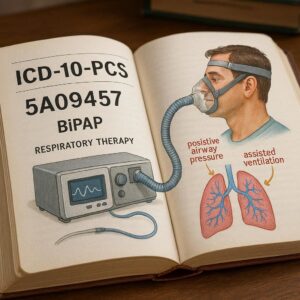
ICD-10-PCS code for BiPAP
Understanding the Fundamentals: What is BiPAP?
Before a single character of a code can be assigned, a fundamental understanding of the procedure itself is non-negotiable. BiPAP is a specific form of non-invasive positive pressure ventilation (NIPPV).
The Physiology of Respiratory Failure
To appreciate BiPAP, one must first understand the two primary types of respiratory failure it is designed to address:
-
Hypercapnic Respiratory Failure (Type II): This occurs when the lungs fail to remove enough carbon dioxide (CO2) from the blood, leading to hypercapnia (elevated CO2 levels). It is often a failure of ventilation. Common causes include Chronic Obstructive Pulmonary Disease (COPD) exacerbations, neuromuscular diseases, and central nervous system depression. The primary clinical sign is an elevated arterial partial pressure of carbon dioxide (PaCO2).
-
Hypoxemic Respiratory Failure (Type I): This occurs when the lungs cannot adequately oxygenate the blood, leading to hypoxemia (low blood oxygen levels). It is a failure of oxygenation. Common causes include pneumonia, acute respiratory distress syndrome (ARDS), cardiogenic pulmonary edema, and pulmonary embolism. The primary clinical sign is a low arterial partial pressure of oxygen (PaO2).
Many patients present with a combination of both types.
BiPAP vs. CPAP: A Crucial Distinction
This is one of the most critical distinctions for accurate coding.
-
CPAP (Continuous Positive Airway Pressure): Delivers a single, constant pressure throughout the entire breathing cycle. It does not assist with ventilation; its primary function is to act as a “pneumatic splint” to keep the airways open, thereby improving oxygenation. It is most commonly used for obstructive sleep apnea.
-
BiPAP (Bi-level Positive Airway Pressure): Delivers two distinct pressure levels:
-
IPAP (Inspiratory Positive Airway Pressure): A higher pressure during inhalation. This pressure supports the patient’s inspiratory effort, reducing the work of breathing and helping to “blow off” excess CO2.
-
EPAP (Expiratory Positive Airway Pressure): A lower pressure during exhalation. This pressure maintains alveolar recruitment and improves oxygenation, similar to CPAP.
-
The fundamental difference is that BiPAP provides ventilatory support, while CPAP primarily provides oxygenation support. This physiological distinction directly informs the choice of the ICD-10-PCS root operation.
Clinical Indications for BiPAP Therapy
BiPAP is a first-line intervention for several acute conditions, often serving as a means to avoid the need for invasive mechanical ventilation (endotracheal intubation).
-
COPD Exacerbation: The cornerstone of treatment for hypercapnic respiratory failure in COPD.
-
Acute Cardiogenic Pulmonary Edema: Effectively unloads the heart and improves gas exchange.
-
Obesity Hypoventilation Syndrome: Provides necessary ventilatory support.
-
Neuromuscular Diseases: Supports weak respiratory muscles (e.g., ALS, Myasthenia Gravis).
-
Post-Extubation Support: Used to prevent re-intubation in high-risk patients.
-
Palliative Care: Provides comfort and relief of dyspnea in patients for whom intubation is not desired.
Navigating the ICD-10-PCS Universe: A Primer for the Procedural Coder
ICD-10-PCS is a multi-axial, seven-character alphanumeric code set. Unlike its diagnosis counterpart (ICD-10-CM), it has no inherent hierarchy or index; coders must build the code from the tables based on the objective of the procedure.
The Structure of a PCS Code: A Seven-Character Mnemonic
Each character in a PCS code represents a specific aspect of the procedure.
-
Character 1: Section – The broadest category (e.g., Medical and Surgical, Measurement and Monitoring).
-
Character 2: Body System – The general body system (e.g., Respiratory, Physiological).
-
Character 3: Root Operation – The objective of the procedure (e.g., Measurement, Alteration).
-
Character 4: Body Part – The specific part of the body system.
-
Character 5: Approach – How the procedure was performed (e.g., External, Open).
-
Character 6: Device – The device used (if applicable).
-
Character 7: Qualifier – Additional information to further specify the procedure.
The Section: “Section 5: Measurement and Monitoring”
This is the first and most important decision point for BiPAP coding. The official ICD-10-PCS Guidelines state that the Measurement and Monitoring section includes “determining the level of a physiological or physical function.” The guideline further specifies that these codes are assigned only once per stay for the duration of the monitoring.
Crucially, the administration of a therapeutic substance (like a medication) or the performance of a procedure whose primary purpose is to treat a condition is not coded in this section. However, BiPAP presents a unique case. While it is therapeutic, its primary function in the context of PCS coding is to measure and monitor the physiological function of breathing. The device provides continuous data on respiratory rate, tidal volume, and leak, all while supporting the function. Therefore, it is appropriately classified in Section 5.
The Body System: “Physiological Systems”
For procedures involving the measurement and monitoring of a physiological function, the appropriate body system is “Physiological Systems,” represented by the character A. This is used instead of a specific anatomical body system like the Respiratory System.
Deconstructing the BiPAP Code: The Anatomy of 5A09357
Let us now build the BiPAP code step-by-step. The complete, correct code for Bilevel Positive Airway Pressure is 5A09357.
Deconstruction of the ICD-10-PCS Code for BiPAP (5A09357)
| Character | Position | Definition | Value for BiPAP | Rationale |
|---|---|---|---|---|
| 1 | Section | The broad category of the procedure | 5 | Measurement and Monitoring |
| 2 | Body System | The general body system involved | A | Physiological Systems |
| 3 | Root Operation | The objective of the procedure | 0 | Measurement (Determining the level of a physiological function) |
| 4 | Body System/Region | The specific body system being measured | 9 | Respiratory System |
| 5 | Function/Device | The function being measured or the device used | 3 | Ventilatory |
| 6 | Qualifier | Further specification of the device or function | 5 | Continuous Positive Airway Pressure |
| 7 | Qualifier | The specific mode of the therapy | 7 | Bilevel |
Character 1: Section (5) – Measurement and Monitoring
As established, BiPAP is coded here because it is a device used to monitor the physiological function of ventilation.
Character 2: Body System (A) – Physiological Systems
The function being measured (ventilation) is a physiological process, not a surgical procedure on an anatomical part.
Character 3: Root Operation (0) – Measurement
The root operation is “Measurement,” defined as “determining the level of a physiological or physical function.” The BiPAP machine continuously measures and displays parameters like respiratory rate, minute ventilation, and tidal volume, making this the correct root operation.
Character 4: Body System/Region (9) – Respiratory
This character specifies that the physiological function being measured is related to the respiratory system.
Character 5: Function/Device (3) – Ventilatory
This character specifies the function being measured. “Ventilatory” refers to the mechanical process of moving air in and out of the lungs. This is the key character that distinguishes BiPAP from simple oxygen administration.
Character 6: Qualifier (5) – Continuous Positive Airway Pressure
This character specifies the general type of device or method used. “Continuous Positive Airway Pressure” is the overarching category for both CPAP and BiPAP.
Character 7: Qualifier (7) – Bilevel
This final character is the most specific, indicating the exact mode of therapy. The qualifier “Bilevel” explicitly identifies the procedure as BiPAP, differentiating it from CPAP (which would be qualifier 6, Continuous Positive Airway Pressure).
Therefore, the complete code is 5A09357: Measurement of ventilatory function of the respiratory system, using continuous positive airway pressure, bilevel mode.
Clinical Scenarios and Coding Applications: From the ER to the ICU
Theory is essential, but application is king. Let’s apply the code 5A09357 to common clinical situations.
Scenario 1: Acute Hypercapnic Respiratory Failure due to COPD Exacerbation
-
Presentation: A 68-year-old male with a history of severe COPD presents to the Emergency Department via ambulance with increased shortness of breath, lethargy, and productive cough. Arterial Blood Gas (ABG) on room air shows: pH 7.25, PaCO2 78 mm Hg, PaO2 45 mm Hg.
-
Intervention: The patient is started on BiPAP with settings of IPAP 12, EPAP 5. He is admitted to the medical floor for continued management.
-
Coding Application:
-
ICD-10-PCS: 5A09357. The code is assigned once for the entire hospitalization to represent the ongoing measurement and monitoring of his ventilatory function via BiPAP.
-
ICD-10-CM (Diagnosis): J44.1 (COPD with acute exacerbation) and R09.2 (Respiratory failure) would be the principal diagnoses. The ABG results and clinical documentation of hypercapnia support this.
-
Scenario 2: Hypoxemic Respiratory Failure due to Cardiogenic Pulmonary Edema
-
Presentation: A 75-year-old female with congestive heart failure presents with acute pulmonary edema. She is tachycardic, tachypneic, and using accessory muscles. Chest X-ray shows bilateral infiltrates. Oxygen saturation is 82% on a non-rebreather mask.
-
Intervention: BiPAP is initiated with settings of IPAP 10, EPAP 8 to improve oxygenation and reduce preload on the heart.
-
Coding Application:
-
ICD-10-PCS: 5A09357. The device is still measuring ventilatory function, even though the primary goal here is to improve oxygenation. The physiological mechanism involves supporting the work of breathing and maintaining open alveoli.
-
ICD-10-CM: J81.0 (Acute pulmonary edema) and I50.9 (Heart failure, unspecified) would be appropriate. The code R09.2 (Respiratory failure) may also be included.
-
Scenario 3: Post-Extubation Support and Weaning
-
Presentation: A patient is extubated after 48 hours of invasive mechanical ventilation for pneumonia. Several hours post-extubation, they show signs of increased work of breathing and rising CO2 levels.
-
Intervention: To prevent re-intubation, the team initiates BiPAP. The patient is gradually weaned off BiPAP over the next 36 hours.
-
Coding Application:
-
ICD-10-PCS: 5A09357. This is assigned once for this episode of care, covering the entire 36-hour period of BiPAP support.
-
ICD-10-CM: The appropriate diagnosis would be J95.821 (Acute respiratory failure following an operative procedure) or a code for the underlying respiratory insufficiency.
-
Scenario 4: The Ambiguous Case – A BiPAP “Trial”
-
Presentation: A patient with pneumonia and hypoxemia is placed on BiPAP. After 2 hours, their condition deteriorates, and they are emergently intubated.
-
Coding Application:
-
ICD-10-PCS: 5A09357 is still assigned. The PCS guideline for Measurement and Monitoring states the code is assigned “for the duration of the procedure.” The BiPAP was used to measure and monitor ventilatory function for a discrete period. The fact that it was unsuccessful does not negate that the procedure was performed. Both the BiPAP and the subsequent mechanical intubation and ventilation would be coded.
-
Common Pitfalls and Expert Coding Strategies
Accuracy in coding is often defined by the pitfalls one avoids.
Pitfall 1: Confusing BiPAP with CPAP
This is the most common error. Using the wrong qualifier in the 7th character will result in an incorrect code.
-
BiPAP = 5A09357 (Qualifier 7, Bilevel)
-
CPAP = 5A09356 (Qualifier 6, Continuous Positive Airway Pressure)
Strategy: Scrutinize the respiratory therapy notes and the physician’s progress notes. Look for keywords like “BiPAP,” “Bilevel,” “IPAP/EPAP,” or specific pressure settings (e.g., IPAP 10, EPAP 5). The mere mention of “CPAP” in a note does not override more specific documentation elsewhere.
Pitfall 2: Misinterpreting the “Duration” of Therapy
A coder might wonder if a short period of BiPAP in the ER “counts.”
Strategy: The official guidelines are clear: the code is assigned only once per episode of care for the duration of the monitoring. Whether the patient is on BiPAP for 4 hours in the ER or for 5 days in the ICU, you assign 5A09357 only one time for that inpatient stay.
Pitfall 3: Incorrectly Coding a BiPAP Trial vs. Mechanical Ventilation
Some coders may be tempted to only code the definitive procedure (mechanical ventilation) if a BiPAP trial fails.
Strategy: Code what was performed. If BiPAP was used, code it. If the patient was subsequently intubated and mechanically ventilated, you would also assign a code from the “Introduction” section of the Medical and Surgical table for “Respiratory System” (e.g., 0BH17EZ, Introduction of Other Therapeutic Substance into Respiratory Tract, Via Natural or Artificial Opening). The two codes can coexist on a claim.
Pitfall 4: Documentation Gaps and Physician Queries
The documentation may simply state “placed on NIPPV” or “started on non-invasive ventilation.”
Strategy: “NIPPV” is a generic term that encompasses both BiPAP and other modes. This is an insufficient level of detail for accurate coding. This scenario necessitates a physician query. A compliant query would be: “The note states the patient was placed on NIPPV. Please clarify if this was Bilevel Positive Airway Pressure (BiPAP) or Continuous Positive Airway Pressure (CPAP) to ensure accurate procedure coding.”
The Role of Documentation: A Partnership Between Clinician and Coder
Accurate coding is impossible without precise documentation. The medical record is the coder’s primary source of truth. Clinicians can support accurate coding by including the following in their notes:
-
Clear Statement of Procedure: “BiPAP initiated,” “Bilevel PAP started.”
-
Specific Settings: Documenting IPAP and EPAP levels.
-
Clinical Indication: The reason for BiPAP (e.g., “for hypercapnic respiratory failure,” “for work of breathing”).
-
Duration: Start and stop times in the flow sheet or narrative.
-
Response to Therapy: Note any improvement in ABG results, work of breathing, or mental status.
Conclusion: Mastering the Code for Optimal Patient Care and Reimbursement
The ICD-10-PCS code 5A09357 precisely captures the essence of BiPAP therapy as a measurement and monitoring procedure for ventilatory function. Distinguishing it from CPAP via the 7th character qualifier is critical for coding integrity. Accurate assignment, supported by robust clinical documentation, ensures proper reimbursement, contributes to valid health data, and ultimately reflects the high-quality care provided to patients in respiratory distress. Mastery of this code is a testament to the vital, behind-the-scenes role that medical coding plays in the healthcare ecosystem.
Frequently Asked Questions (FAQs)
Q1: If a patient is admitted specifically for a BiPAP titration sleep study, is 5A09357 still the correct code?
A: No. In the context of a formal, attended sleep study, the objective is not ongoing therapeutic monitoring but a diagnostic analysis of sleep and breathing. This procedure would typically be coded with a CPT® code (e.g., 95811) for the sleep study itself. The ICD-10-PCS code 5A09357 is for the therapeutic and monitoring application of BiPAP during an inpatient admission.
Q2: How do I code the use of BiPAP in the Outpatient or Observation setting?
A: ICD-10-PCS is primarily used for inpatient procedures. For outpatient and observation services, the services are typically reported using CPT® codes. The application of BiPAP might be bundled into an Evaluation and Management (E/M) code or a critical care code (99291, 99292). You would still report the diagnosis codes reflecting the reason for BiPAP (e.g., respiratory failure), but the procedure itself is not separately coded with PCS.
Q3: What is the code for invasive mechanical ventilation?
A: Invasive mechanical ventilation is coded in the “Introduction” section of the Medical and Surgical table. The most common code is 0BH17EZ, which stands: Introduction of Other Therapeutic Substance into Respiratory Tract, Via Natural or Artificial Opening, Endotracheal Tube. The “Substance” in this case is the air/oxygen mixture provided by the ventilator.
Q4: A patient uses BiPAP at home for sleep apnea. Should this be coded during an inpatient stay for an unrelated issue?
A: No. ICD-10-PCS is used to code procedures performed during the current inpatient admission. The fact that a patient uses a device at home for a chronic condition is not coded as a procedure. It should be documented in the patient’s history and may be coded as a diagnosis (e.g., G47.31, Primary central sleep apnea), but no PCS code is assigned for the home use.
Date: November 16, 2025
Author: Medical Coding Insights Team
Disclaimer: This article is intended for educational purposes and to illustrate professional medical coding principles. It is not a substitute for the official ICD-10-PCS guidelines, coding manuals, or professional clinical advice. Medical coders must use the current year’s official resources and adhere to their facility’s specific policies and the directives of the American Health Information Management Association (AHIMA) and the American Academy of Professional Coders (AAPC).


