
In the intricate ecosystem of modern healthcare, every clinical action has a corresponding administrative footprint. For patients recovering from surgery, neurological events, or debilitating injuries, the journey back to mobility often begins with a simple yet profound device: the walker. The act of a physical therapist guiding a patient, step by tentative step, supporting their weight and rebuilding their confidence, is a powerful image of clinical care. However, beneath this human-centric interaction lies a complex framework of medical coding that translates this therapeutic endeavor into data—data that drives reimbursement, informs quality metrics, and shapes the financial viability of rehabilitation services. The accurate translation of “gait training using a walker” into an ICD-10-PCS (Procedure Coding System) code is not merely an administrative task; it is a critical competency that ensures healthcare providers are justly compensated for their expertise and resources, enabling them to continue delivering this vital care. This article serves as an exhaustive guide, dissecting the code, its application, and its profound implications for medical coders, physical therapists, billers, and healthcare administrators alike. We will embark on a detailed exploration, ensuring that by the end, the process of coding this fundamental rehabilitative procedure is demystified and mastered.
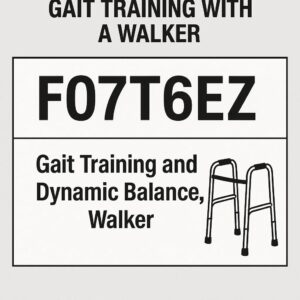
ICD-10-PCS Coding for Gait Training with a Walker
2. Understanding the Foundation: What is ICD-10-PCS?
Before we delve into the specific code, it is imperative to understand the system in which it resides. The International Classification of Diseases, Tenth Revision, Procedure Coding System (ICD-10-PCS) is a wholly American creation, maintained by the Centers for Medicare & Medicaid Services (CMS) and the National Center for Health Statistics (NCHS). Unlike its counterpart ICD-10-CM, which classifies diagnoses, ICD-10-PCS is used exclusively to report inpatient procedures performed in hospital settings.
ICD-10-PCS is renowned for its logical, if complex, structure. Every procedure code consists of seven alphanumeric characters. Each character represents a specific aspect of the procedure, providing a high degree of specificity. This structure allows for the precise identification of the what, where, why, and how of a medical procedure.
The seven characters represent:
-
Section: The general type of procedure (e.g., Medical and Surgical, Placement, Administration, etc.).
-
Body System: The general physiological system the procedure involves.
-
Root Operation: The objective of the procedure—the definitive, qualitative nature of the procedure.
-
Body Part: The specific anatomical site upon which the root operation was performed.
-
Approach: The technique used to reach the site of the procedure.
-
Device: Any device that remains after the procedure is completed.
-
Qualifier: An additional attribute that provides further context about the procedure.
This multi-axial structure is the key to understanding how a therapeutic activity like gait training is represented as a code.
3. The Clinical Imperative: Why Gait Training with a Walker is a Cornerstone of Rehabilitation
Gait training is far more than just “teaching someone to walk.” It is a sophisticated, multi-faceted therapeutic intervention designed to restore a patient’s ability to walk safely and efficiently, or to compensate for permanent impairments. The use of a walker is a fundamental component of this process for a wide range of patient populations.
Who Benefits from Walker Gait Training?
-
Post-Orthopedic Surgery Patients: Individuals recovering from total hip or knee arthroplasty, hip fracture repair, or other major lower extremity surgeries require gait training to relearn proper weight-bearing and movement patterns while protecting the surgical site.
-
Neurological Patients: Those who have suffered a stroke (CVA), traumatic brain injury (TBI), spinal cord injury (SCI), or live with conditions like Multiple Sclerosis or Parkinson’s disease often experience hemiparesis, ataxia, or balance deficits that make walking unsafe without an assistive device.
-
Geriatric Patients: Older adults experiencing general deconditioning, frailty, or balance issues leading to a high fall risk can significantly benefit from the stability a walker provides during reconditioning.
-
Cardiopulmonary Patients: Individuals with severe congestive heart failure or chronic obstructive pulmonary disease (COPD) may use a walker to provide support, thereby reducing the energy expenditure of walking and allowing them to ambulate without becoming severely short of breath.
The Therapeutic Goals of Gait Training with a Walker:
The clinical objectives extend beyond simple locomotion. They include:
-
Improving Balance and Postural Stability: The walker provides a stable base of support, allowing the patient to practice weight-shifting and maintain an upright posture.
-
Restoring Gait Pattern (Kinematics): The therapist guides the patient to achieve a more normalized, efficient walking pattern, correcting issues like circumduction or Trendelenburg gait.
-
Building Strength and Endurance: The act of repeated, supported ambulation helps rebuild muscular strength and cardiovascular endurance.
-
Promoting Proper Weight-Bearing Status: Adherence to post-surgical restrictions (e.g., “toe-touch,” “partial,” or “full” weight-bearing) is monitored and enforced by the therapist.
-
Enhancing Confidence and Reducing Fear of Falling: For many patients, the psychological barrier to walking is as significant as the physical one. The walker and the therapist’s guidance provide the security needed to rebuild confidence.
-
Educating on Safe Device Use: The therapist provides critical education on how to properly adjust the walker, maneuver it through doorways and around obstacles, and safely sit down and stand up.
Understanding these clinical nuances is essential for the coder, as the documentation must reflect the therapeutic nature of the encounter, not just the fact that the patient walked.
4. Deconstructing the Code: The Anatomical and Procedural Nuances
Gait training is classified in the Rehabilitation Section of ICD-10-PCS, specifically under the Physical Rehabilitation Diagnostic and Treatment Procedures subsection. This is a critical distinction from the “Medical and Surgical” section. The Rehabilitation section is designed for procedures that involve “functional assessment” and “treatment to improve or restore function.”
The key to accurately coding gait training lies in correctly identifying the Root Operation. For rehabilitative therapies, there are several root operations, but the one relevant to our discussion is:
-
Root Operation: “Therapy” – This root operation is defined as: “Activities that are intended to produce a change in the patient’s condition as part of their treatment and/or management.”
This definition perfectly encapsulates the goal of gait training. The therapist is not simply observing the patient walk; they are actively applying therapeutic activities (cueing, guarding, correcting form) to produce a change—improved gait, balance, and safety.
Other root operations in the Rehabilitation section, such as Motor Function Assessment or Activities of Daily Living Assessment, are for evaluative purposes and would not be used for the active treatment of gait training.
5. The Central Code: A Deep Dive into the 7-Character Structure for Walker Gait Training
Let us now build the specific ICD-10-PCS code for gait training using a walker, character by character. The correct code is F08P0YZ.
The following table breaks down each character of this code, providing a clear and definitive explanation for its selection.
Deconstruction of ICD-10-PCS Code F08P0YZ – Gait Training with a Walker
| Character Position | Character Value | Definition | Justification for Gait Training with a Walker |
|---|---|---|---|
| 1 (Section) | F | Rehabilitation | Gait training is a rehabilitative and therapeutic procedure, not a medical/surgical one. |
| 2 (Body System) | 0 | None | In the Rehabilitation section, the body system is always “None” (0). The procedure addresses overall functional performance, not a single anatomical system. |
| 3 (Root Operation) | 8 | Therapy | The procedure involves active treatment activities intended to produce a change in the patient’s functional condition. |
| 4 (Type/Modality) | P | Motor Function | Gait training is specifically targeted at improving the motor function of walking. This character specifies the type of therapy being provided. |
| 5 (Equipment) | 0 | None | This is a critical and often misunderstood character. The code F08P0YZ implies the use of a device (the walker) as part of the treatment, but the device itself is not coded in the “Device” character (position 6) in the Rehabilitation section. The “Equipment” character (position 5) refers to equipment used by the provider to deliver the therapy, not the device used by the patient. Since the therapist is not using a machine (like a dynamometer) but their own hands and guidance, this value is “None.” |
| 6 (Qualifier) | Y | Gait Training/Functional Activities | This character specifies the precise activity being performed. The “Y” value encompasses gait training and/or other functional activities. |
| 7 (Qualifier) | Z | No Qualifier | This character provides no further information for this particular procedure. |
Why not a “Device” character?
A common point of confusion arises from the absence of the walker in the code itself. In the Medical and Surgical section, if a device remains after a procedure (e.g., a hip implant), it is specified in the “Device” character (position 6). However, in the Rehabilitation section, the structure is different. The “Device” character is not used. The patient’s use of an assistive device like a walker, cane, or parallel bars is considered an integral part of the therapeutic activity being performed, not a device that is being implanted or inserted. The modality is “Motor Function” and the specific activity is “Gait Training/Functional Activities,” which inherently includes the use of necessary assistive devices.
6. Clinical Scenarios and Coding Applications: From Theory to Practice
To solidify understanding, let’s apply the code to several realistic inpatient scenarios.
Scenario 1: The Post-Total Knee Arthroplasty Patient
-
Patient: A 72-year-old female, post-operative Day 1 from a right total knee replacement.
-
Therapy Note: “Patient seen for physical therapy. Skilled intervention provided for gait training with a front-wheeled walker. Focus on safe ambulation with touchdown weight-bearing on the right lower extremity. Therapist provided continuous contact guard assistance for safety and verbal cues for proper sequencing (walker forward, involved leg, uninvolved leg). Ambulated 25 feet x 2 with moderate assistance.”
-
Coding Analysis: The note clearly describes a therapeutic activity (Root Operation: Therapy) aimed at motor function (Type: Motor Function) specifically for gait training (Qualifier: Y). The use of the walker is an integral part of the session. The correct code is F08P0YZ.
Scenario 2: The Post-Stroke Patient with Hemiparesis
-
Patient: A 58-year-old male admitted after a left-sided ischemic CVA, resulting in right-sided hemiparesis.
-
Therapy Note: “Therapeutic session focused on gait training to address right-sided neglect and decreased proprioception. Utilized a standard walker. Skilled techniques included facilitating right knee extension during stance phase and preventing circumduction. Patient required minimal assistance for balance and maximal verbal cueing for gait pattern. Session also included transfer training from bed to chair.”
-
Coding Analysis: The core of the skilled intervention is gait training. The fact that a walker was used is documented, and the therapeutic intent is clear. The code remains F08P0YZ. If the session was solely for transfer training, a different qualifier might be considered, but here gait training is the primary focus.
Scenario 3: The Distinction – Assessment vs. Therapy
-
Patient: An 80-year-old female admitted after a fall, concerned about balance.
-
Therapy Note (Incorrect for F08P0YZ): “Patient evaluated for ambulation safety. Observed patient ambulating with a rolling walker for 20 feet to assess gait speed, balance, and endurance. No skilled therapeutic interventions provided. Patient demonstrates independent but unsteady gait.”
-
Coding Analysis: This note describes an assessment, not therapy. The therapist is observing and evaluating, not providing treatment to effect a change. The appropriate code for this scenario would be from the Root Operation Motor Function Assessment, likely F02P0YZ (Assessment of Motor Function). Coding this as F08P0YZ would be incorrect and could be considered fraudulent, as it bills for a treatment that was not provided.
7. The Documentation Lifeline: What Must Be in the Patient’s Record
The medical record is the sole source of truth for the coder. Incomplete or vague documentation is the primary cause of coding errors and claim denials. For gait training with a walker to be coded as F08P0YZ, the therapist’s note must be robust and unambiguous.
Essential Elements of Documentation:
-
Statement of Skilled Need: The note must explain why the patient requires the skilled service of a therapist. (e.g., “Due to right hemiparesis and impaired balance post-CVA…”)
-
Specific Procedure: The note must explicitly state “gait training.” Synonyms like “ambulation practice” are acceptable only if the therapeutic context is clear, but “gait training” is the gold standard.
-
Assistive Device: The type of device must be documented (e.g., “standard walker,” “front-wheeled walker,” “rollator”). This justifies the nature of the activity.
-
Therapeutic Interventions: This is the most critical part. The note must describe what the therapist did. Examples include:
-
“Provided contact guard assistance/minimal/moderate/maximal assistance.”
-
“Verbal cues for heel-strike/step length/posture.”
-
“Physical facilitation to prevent knee hyperextension.”
-
“Guarding for loss of balance.”
-
-
Patient Response & Functional Outcome: The note should detail the patient’s performance and any changes. (e.g., “Ambulated 50 feet with contact guard assistance, demonstrating improved step-length symmetry compared to prior session.”)
-
Time: While not always required for the code itself, documenting the total time spent on therapeutic activities is often required for billing units under certain payment systems.
A note that simply says “Walked with walker” is grossly insufficient and would not support the use of code F08P0YZ.
8. Navigating Common Pitfalls and Auditor Scrutiny
Given the specificity of ICD-10-PCS, several common pitfalls can lead to denials or compliance issues.
-
Coding for an Assessment as Therapy: As shown in Scenario 3, confusing an evaluation (Root Operation: Assessment) with a treatment (Root Operation: Therapy) is a fundamental error.
-
Insufficient Documentation: The lack of detail regarding the therapist’s skilled intervention is the most common reason for audit failures. The auditor must be able to see that a therapeutic service was rendered.
-
Confusing the “Equipment” Character: Attempting to code the walker in the “Equipment” (character 5) or a non-existent “Device” character is a structural misunderstanding of the Rehabilitation section.
-
Overcoding Repetitive Sessions: While a patient may receive gait training daily, each session must be individually documented with its own unique details and justification. Copying and pasting previous notes is a red flag for auditors.
-
Lack of Medical Necessity: The patient’s underlying diagnosis (e.g., the total knee replacement or the stroke) must justify the need for gait training. The procedure code and the diagnosis code must align logically.
9. Beyond the Code: The Financial and Operational Impact of Accurate Coding
Accurate coding of F08P0YZ is not an academic exercise; it has direct and tangible consequences for a healthcare facility.
-
Reimbursement Integrity: Under inpatient prospective payment systems like the Inpatient Prospective Payment System (IPPS), procedures are grouped into Medicare Severity Diagnosis-Related Groups (MS-DRGs). The presence and accuracy of procedure codes like F08P0YZ can influence the assigned MS-DRG and its associated payment weight, particularly for rehabilitation-heavy cases. Accurate coding ensures the facility receives appropriate compensation for the intensity of services provided.
-
Compliance and Audit Risk: Incorrect coding exposes the organization to financial penalties, recoupments, and potential legal action under false claims statutes. A robust coding process for rehabilitative services is a key component of a hospital’s compliance program.
-
Data Analytics and Quality Reporting: Accurate procedure data is essential for internal analytics. It helps administrators understand service utilization, therapist productivity, and the clinical profile of their patient population. This data also feeds into national quality and outcome reporting initiatives.
-
Denial Management: Clean, well-documented, and accurately coded claims are processed faster and are far less likely to be denied by payers, improving cash flow and reducing the administrative burden of the appeals process.
10. The Future of Rehabilitative Coding: A Look Ahead
The world of medical coding is perpetually evolving. While ICD-10-PCS provides a detailed structure, there is always a push for greater specificity and alignment with value-based care models. We may see future updates that:
-
Introduce greater granularity in the Qualifier character to distinguish between different types of gait training (e.g., for neuro vs. orthopedic populations).
-
Further integrate functional outcome measures directly into the coding and billing framework.
-
Leverage artificial intelligence to review therapy notes and suggest appropriate codes, though human oversight will remain paramount.
Staying current with official coding guidelines released by CMS and AHA is non-negotiable for anyone involved in this field.
11. Conclusion
The ICD-10-PCS code F08P0YZ for gait training using a walker is a precise representation of a vital rehabilitative service. Its accurate application hinges on a deep understanding of the PCS structure, the clinical nature of the procedure, and the imperative of rigorous documentation. By mastering the interplay between the therapist’s skilled hands and the coder’s meticulous eye, healthcare organizations can ensure the sustainability of services that restore one of life’s most fundamental gifts: the ability to walk independently.
12. Frequently Asked Questions (FAQs)
Q1: Is F08P0YZ used for both physical and occupational therapy?
A: Primarily, yes. The Rehabilitation section does not distinguish between the two disciplines based on the practitioner. The code is assigned based on the procedure performed. In many settings, PTs primarily perform gait training, but if an OT performs it as part of a comprehensive plan, the same code would apply, provided the documentation supports it.
Q2: What if the patient uses a cane or parallel bars instead of a walker?
A: The code F08P0YZ is still typically used. The “Gait Training/Functional Activities” qualifier (Y) encompasses gait training with any appropriate assistive device, including canes, crutches, and parallel bars. The specific device should be detailed in the documentation, but it does not change the PCS code.
Q3: Can I code multiple units of F08P0YZ for a single day?
A: ICD-10-PCS coding is based on the procedure performed, not its duration or “units” in the same way as CPT codes. A procedure is typically coded once per day, regardless of how many sessions or minutes were spent. The billing and reimbursement for the intensity of service are handled through the DRG system and/or charge capture systems, not by reporting the PCS code multiple times.
Q4: How does this code relate to the patient’s diagnosis code?
A: They are intrinsically linked. The diagnosis code (from ICD-10-CM) justifies the medical necessity for the procedure. For example, a diagnosis of M17.11 (Osteoarthritis of right knee, primary) post-arthroplasty or I69.351 (Hemiplegia and hemiparesis following cerebral infarction affecting right dominant side) provides the “why” for the gait training coded with F08P0YZ.
Q5: What is the code for balance training without ambulation?
A: If the therapy session is solely focused on static or dynamic balance activities (e.g., standing on one leg, weight-shifting on a foam pad) without involving actual gait, it may still be coded with F08P0YZ. The qualifier “Y” includes “Functional Activities,” which can encompass balance training. The documentation must clearly describe the activity as therapeutic balance training.
Date: November 24, 2025
Author: The Healthcare Coding Insights Team
Disclaimer: The information contained in this article is for educational and informational purposes only and is not intended as a substitute for professional medical coding advice, diagnosis, or treatment. Always consult the official ICD-10-PCS coding manuals, guidelines, and your organization’s compliance officer for specific coding decisions. The authors are not responsible for any claims or damages that may result from the use of this information.


