
In the intricate symphony of human electrolytes, magnesium plays a crucial, yet often understated, role. It is a cornerstone of enzymatic reactions, a regulator of neuromuscular activity, and a guardian of cardiac rhythm. However, like any powerful element, its balance is precarious. When magnesium levels soar beyond the narrow therapeutic window, the consequence is hypermagnesemia—a condition that can insidiously progress from asymptomatic to life-threatening with alarming speed. For clinical documentation integrity specialists, medical coders, and health information management (HIM) professionals, hypermagnesemia presents a unique challenge that extends beyond diagnosis. The real complexity lies in accurately capturing the procedural interventions undertaken to combat this electrolyte imbalance. The International Classification of Diseases, Tenth Revision, Procedure Coding System (ICD-10-PCS) provides the framework for this task, but navigating its granular structure requires a deep understanding of both clinical medicine and coding principles. This article serves as a definitive guide, delving into the pathophysiology of hypermagnesemia, deconstructing the architecture of ICD-10-PCS, and illuminating the precise pathways to accurate code assignment for the procedures that save lives in the face of this metabolic emergency.
ICD-10-PCS Code for Hypermagnesemia
2. Understanding the Clinical Beast: What is Hypermagnesemia?
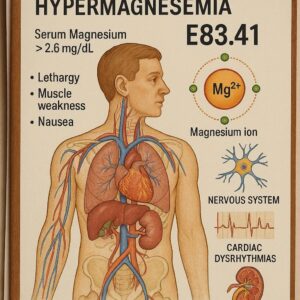
Hypermagnesemia is clinically defined as a serum magnesium concentration exceeding 2.6 mg/dL (1.07 mmol/L). While mild elevations may be well-tolerated, levels above 7.0 mg/dL can precipitate severe neurological, cardiovascular, and respiratory depression, culminating in cardiac arrest. Understanding the etiology and clinical presentation is not merely academic for coders; it provides the essential context for the procedures that will eventually require coding.
Etiology and Pathophysiology: The most common cause of significant hypermagnesemia is iatrogenic, often in the setting of renal impairment. The kidneys are the primary regulators of magnesium homeostasis, excreting any excess absorbed from the diet. When renal function declines, this excretory capacity is compromised. Patients with chronic kidney disease (CKD) or end-stage renal disease (ESRD) are therefore exquisitely vulnerable. Other common causes include excessive magnesium administration, such as:
-
Preeclampsia Treatment: Intravenous magnesium sulfate is a first-line therapy for preventing seizures in preeclamptic and eclamptic women. Careful monitoring is paramount to avoid toxicity.
-
Laxative and Antacid Overuse: Certain over-the-counter medications (e.g., milk of magnesia) contain high levels of magnesium and can lead to toxicity, especially in the elderly or those with compromised bowel or renal function.
-
Lithium Therapy and Adrenal Insufficiency: Certain endocrine and pharmacological disruptions can also predispose individuals to hypermagnesemia.
Clinical Manifestations: The symptoms of hypermagnesemia follow a dose-dependent progression, a critical concept for understanding the urgency of intervention:
-
Mild Elevation (4.8–7.2 mg/dL): Nausea, flushing, headache, lethargy, and diminished deep tendon reflexes.
-
Moderate Elevation (7.2–12.0 mg/dL): Somnolence, significant hyporeflexia (loss of deep tendon reflexes), hypotension, bradycardia, and electrocardiogram (ECG) changes such as prolonged PR and QRS intervals.
-
Severe Elevation (>12.0 mg/dL): Muscle paralysis, complete heart block, respiratory paralysis, and cardiac arrest.
This clinical trajectory underscores why the procedures used to correct hypermagnesemia are not elective; they are emergent, life-sustaining measures. The coder must recognize this acuity, as it influences the context in which a procedure is performed and documented.
3. The Foundation of Procedural Coding: A Primer on ICD-10-PCS Structure
Before addressing hypermagnesemia specifically, one must possess a firm grasp of the ICD-10-PCS system itself. Unlike its diagnosis counterpart (ICD-10-CM), which is modeled on the World Health Organization’s system, PCS was developed by the Centers for Medicare & Medicaid Services (CMS) and the National Center for Health Statistics (NCHS) specifically for the U.S. It is a multi-axial, seven-character alphanumeric code system where each character has a precise meaning. This structure allows for immense specificity and scalability.
The Seven Characters of an ICD-10-PCS Code:
-
Section: The first character identifies the broad section or category of the procedure (e.g., Medical and Surgical, Administration, Measurement and Monitoring).
-
Body System: The second character specifies the general body system (e.g., Central Nervous System, Peripheral Nervous System, Circulatory System).
-
Root Operation: This is the third character and is the cornerstone of the code. It defines the objective of the procedure—what the provider did. Examples include Extraction, Insertion, Administration, and Monitoring.
-
Body Part: The fourth character identifies the specific body part upon which the root operation was performed.
-
Approach: The fifth character describes the technique used to reach the site of the procedure (e.g., Open, Percutaneous, Via Natural or Artificial Opening).
-
Device: The sixth character specifies any device that remains after the procedure is completed. If no device remains, this character is “Z” (No Device).
-
Qualifier: The seventh character provides additional information about the procedure, such as a diagnostic or therapeutic qualifier, or the specific substance involved.
This logical, building-block approach means that to build a code, one must first answer fundamental questions about the documented procedure. For hypermagnesemia, the most critical questions revolve around the Root Operation and the Body Part.
4. Locating the Code: Navigating the ICD-10-PCS Index and Tables
The process of building a PCS code is a two-step dance between the Index and the Tables. It is a common and critical error to use the Index alone. The Index provides a starting point, but the final code must always be selected from the appropriate Table.
Step 1: Consult the Index. Look for the main term of the procedure. For hypermagnesemia, the procedure is not “treat hypermagnesemia,” but rather the specific action taken, such as “Hemodialysis” or “Plasmapheresis.” Under “Dialysis,” you will find subterms for “Renal” and “Other.” The index will direct you to a range of tables, typically starting with “5A1” for renal dialysis.
Step 2: Navigate to the Correct Table. Once you have the table reference from the Index, you must go to that specific table in the Tabular List. The table is a grid that allows you to build the code character by character, ensuring all components are consistent. For example, the table for “Extraction” from the “Circulatory System” will show you all valid combinations for body part, approach, and qualifier.
For hypermagnesemia, the procedural response dictates the Section and Root Operation you will use. There is no single “hypermagnesemia procedure code.” Instead, the code reflects the physical action performed to lower serum magnesium.
5. A Deep Dive into the Root Operation: “Extraction”
The most conceptually direct procedural approach to hypermagnesemia is the physical removal of magnesium from the blood. In PCS terminology, this is captured by the root operation “Extraction.”
Definition of Extraction: “Pulling or stripping out or off all or a portion of a body part by the use of force.” The official definition further clarifies that the body part may be an actual anatomical structure (like a tooth) or a “portion of a body part,” which includes substances like blood, fluids, or, critically, toxins within the blood.
Application to Hypermagnesemia: When a procedure like therapeutic plasmapheresis or therapeutic plasma exchange (TPE) is performed to remove magnesium, the objective is to “pull out” or “strip off” the plasma portion of the blood that contains the excessive magnesium. The force applied is the centrifugal or filtration force of the apheresis machine. Therefore, the correct root operation is Extraction.
Building the “Extraction” Code for Plasmapheresis:
-
Section: 0 – Medical and Surgical
-
Body System: 2 – Circulatory System (as we are working with blood)
-
Root Operation: 9 – Extraction
-
Body Part: This is where nuance appears. We are extracting the plasma, which is a component of the blood. The appropriate body part is P, Peripheral Vein, as this is the typical vascular access point for the procedure. While one might consider “Blood” as a body part, the PCS tables are more specific, and the access site (venous) is typically used.
-
Approach: 7 – Via Natural or Artificial Opening Endoscopic (This describes the process of accessing the circulatory system via a catheter in a vein).
-
Device: Z – No Device (The apheresis kit is not a device that remains after the procedure).
-
Qualifier: X – Diagnostic (This is a crucial character. For therapeutic plasmapheresis, the qualifier is X for Therapeutic. A qualifier of Diagnostic would be incorrect).
Complete Code: 029P0ZX – Extraction of Plasma from Peripheral Vein, Via Natural or Artificial Opening Endoscopic, Therapeutic
This code perfectly and specifically describes a therapeutic plasma exchange procedure performed to remove a substance like excess magnesium.
6. Beyond Extraction: Other PCS Sections and Their Relevance
While Extraction is a direct approach, the most common and definitive treatment for severe hypermagnesemia, especially in patients with renal failure, is renal dialysis. This procedure does not fall under the Medical and Surgical section. Instead, it is found in the “Administration” section, specifically the “Introduction” subsection, or more commonly, within its own specific dialysis codes in the “Extracorporeal Assistance and Performance” and “Extracorporeal Therapies” sections.
a) Extracorporeal Therapies (Section 6)
This section is dedicated to procedures where equipment outside the body is used to perform a therapeutic function. The relevant root operations here are:
-
Dialysis (6A1): This is the most straightforward code for hemodialysis. The objective is to filter the blood and correct metabolic abnormalities, including hypermagnesemia.
-
Building the Code:
-
Section: 6 – Extracorporeal or Systemic Assistance and Performance
-
Body System: A – Physiological Systems
-
Root Operation: 1 – Performance (taking over a physiological function, in this case, filtration)
-
Body Part: Z – None (The equipment, not a body part, is the focus)
-
Duration: 1 – Single Session (or 2 for Multiple)
-
Function: 9 – Filtration
-
-
Complete Code: 6A1Z19Z – Performance of Filtration, Single Session (This is a simplified example; duration is key).
-
b) Administration Section (Section 3) – Introduction
This section is used for procedures where a substance is put into or on the body. For hypermagnesemia, the relevant procedure is the administration of an antidote. The most common pharmacological antidote for hypermagnesemia is calcium gluconate, administered intravenously. Calcium antagonizes the effects of magnesium at the neuromuscular junction.
-
Root Operation: Introduction
-
Body System: Central Venous or Peripheral Vein
-
Substance: Other Therapeutic Substance (Calcium gluconate)
-
Complete Code Example: 3E0G7GC – Introduction of Other Therapeutic Substance into Peripheral Vein, Percutaneous
It is vital to understand that while administering calcium is a critical treatment, it does not remove magnesium from the body. It is a stabilizing measure, often performed while arranging for definitive magnesium removal via dialysis.
7. Clinical Scenarios and Coding Applications: From Theory to Practice
The true test of coding proficiency is applying knowledge to real-world clinical documentation. Let’s explore three distinct scenarios.
Scenario 1: The ESRD Patient with Laxative-Induced Toxicity
-
Presentation: A 62-year-old male with ESRD on hemodialysis (MWF) presents to the Emergency Department with profound weakness, nausea, and bradycardia. He admits to taking magnesium-containing laxatives for constipation over the weekend. Serum magnesium is 10.2 mg/dL.
-
Intervention: He is admitted and given an emergent hemodialysis treatment.
-
Coding: The primary procedure is hemodialysis. The appropriate PCS code would be from the Extracorporeal Therapies section: 6A1Z19Z – Performance of Filtration, Single Session. The fact that it was performed emergently for hypermagnesemia does not change the code; the code describes the procedure itself.
Scenario 2: The Preeclamptic Patient with Iatrogenic Toxicity
-
Presentation: A 28-year-old female at 32 weeks gestation is receiving IV magnesium sulfate for severe preeclampsia. Her deep tendon reflexes become absent, and she develops respiratory distress. Serum magnesium is 9.8 mg/dL.
-
Intervention: The magnesium infusion is stopped immediately. She is given IV calcium gluconate to stabilize her cardiac and respiratory function. Due to the severity and her intact renal function, the clinical team decides to perform therapeutic plasma exchange to rapidly reduce the magnesium load.
-
Coding: Two procedures must be coded.
-
Administration of Antidote: 3E0G7GC – Introduction of Other Therapeutic Substance into Peripheral Vein, Percutaneous (for the calcium gluconate).
-
Therapeutic Plasma Exchange: 029P0ZX – Extraction of Plasma from Peripheral Vein, Via Natural or Artificial Opening Endoscopic, Therapeutic.
-
Scenario 3: The Post-Operative Patient with Renal Insufficiency
-
Presentation: A 75-year-old female with moderate CKD undergoes major abdominal surgery. Post-operatively, she receives magnesium sulfate for electrolyte repletion. She becomes hypotensive and lethargic. Magnesium level is 6.5 mg/dL.
-
Intervention: Supportive care with IV fluids and loop diuretics (e.g., furosemide) to enhance renal excretion. No invasive procedures like dialysis or plasmapheresis are performed.
-
Coding: In this case, there is no ICD-10-PCS code to assign. The administration of IV fluids and diuretics are not typically coded as separate procedures in this context, as they are part of the overall medical management. PCS is for significant surgical, therapeutic, and diagnostic procedures. This scenario highlights the importance of understanding the threshold for what constitutes a reportable procedure.
8. The Critical Link: Documenting for Accurate Code Assignment
The accuracy of any code is entirely dependent on the quality of the clinical documentation. Coders cannot infer or assume. Key documentation requirements for hypermagnesemia procedures include:
-
Procedure Performed: The record must explicitly state the procedure (e.g., “Hemodialysis,” “Therapeutic Plasma Exchange,” “Intermittent Hemodialysis”).
-
Medical Reason: The indication for the procedure should be clear (“for treatment of severe hypermagnesemia,” “for magnesium toxicity”).
-
Specifics for PCS:
-
Approach: Documentation of “via Quinton catheter,” “via central line,” or “peripheral IV” helps determine the approach.
-
Duration: For dialysis, was it a single session or continuous? This is a critical character in the code.
-
Substance: For Administration codes, the specific drug (e.g., “Calcium Gluconate 1g IV”) must be documented.
-
Collaboration between clinicians and HIM professionals is essential to ensure documentation supports the complexity and specificity of the care provided.
9. Tables in Practice: Visualizing the Coding Pathway
The following table provides a clear, at-a-glance summary of the primary ICD-10-PCS coding options for procedures used to treat hypermagnesemia.
ICD-10-PCS Coding Pathways for Hypermagnesemia Management
| Procedure / Objective | ICD-10-PCS Section | Root Operation | Body Part / Character 4 | Approach / Character 5 | Qualifier / Character 7 | Example Code | Clinical Note |
|---|---|---|---|---|---|---|---|
| Therapeutic Plasma Exchange | Medical & Surgical (0) | Extraction (9) | Peripheral Vein (P) | Via N/O Endo (7) | Therapeutic (X) | 029P0ZX | Physically removes plasma containing high magnesium. |
| Hemodialysis (Single Session) | Extracorporeal Therapies (6) | Performance (1) | None (Z) | (See Duration) | Filtration (9) | 6A1Z19Z | The definitive treatment for severe cases, especially with renal failure. Character 6 is “1” for Single. |
| Administration of Calcium Gluconate | Administration (3) | Introduction (E) | Peripheral Vein (G) | Percutaneous (7) | Substance (C) | 3E0G7GC | A stabilizing measure, not a curative one. Does not remove Mg²⁺. |
| Continuous Renal Replacement Therapy (CRRT) | Extracorporeal Therapies (6) | Performance (1) | None (Z) | (See Duration) | Filtration (9) | 6A1Z29Z | Used for unstable patients. Character 6 is “2” for Multiple (Continuous). |
This table is a guide; final code selection must be based on the complete medical record and official coding guidelines.
10. Conclusion
Accurate ICD-10-PCS coding for hypermagnesemia hinges on a dual understanding of its critical clinical presentation and the granular logic of the procedure coding system. There is no single code, but a pathway determined by the therapeutic objective—be it chemical stabilization, mechanical filtration, or direct plasma extraction. Mastery of the root operations of Extraction, Performance, and Introduction, within their respective sections, is paramount. Ultimately, precise code assignment relies on an unwavering partnership between detailed clinical documentation and the coder’s analytical skill, ensuring the medical record accurately reflects the sophisticated interventions used to manage this dangerous electrolyte disorder.
11. Frequently Asked Questions (FAQs)
Q1: Is there a specific ICD-10-PCS code just for “treating hypermagnesemia”?
A: No. ICD-10-PCS does not code diagnoses or reasons for treatment. It codes the specific procedures performed. You must code the procedure itself (e.g., Hemodialysis, Plasmapheresis, IV Calcium administration) based on the documentation.
Q2: If a patient receives a one-time IV dose of calcium gluconate in the ER for hypermagnesemia and is discharged, do I need to code it?
A: This can be institution-specific, but according to the ICD-10-PCS Official Guidelines for Coding and Reporting, you code procedures that are surgical in nature, involve a device, require anesthesia, or require specialized training. A single IV push may not meet this threshold. However, an IV infusion administered in an inpatient setting is more likely to be coded. Always follow your facility’s coding policies.
Q3: How do I code hemodialysis if it’s the patient’s regular, scheduled session, but the note also mentions it will help with their high magnesium level?
A: You would code the hemodialysis as you normally would (e.g., 6A1Z19Z for a single session). The indication (hypermagnesemia) is captured by the diagnosis code (ICD-10-CM E83.41, Hypermagnesemia), not the procedure code. The PCS code describes the procedure, regardless of the specific metabolic abnormality being corrected in that session.
Q4: What is the difference between the “Extraction” code for plasmapheresis and the “Dialysis” code?
A: Conceptually, both remove magnesium, but they do so through different mechanisms and are classified in different sections. “Extraction” (in the Medical/Surgical section) describes the physical act of pulling out plasma. “Dialysis” in the Extracorporeal section describes the performance of a filtration function. The coder’s job is to mirror the documentation: if the provider documents “therapeutic plasma exchange,” you use the Extraction code; if they document “hemodialysis,” you use the Dialysis code.
Date: November 25, 2025
Author: Clinical Coding Insights
Disclaimer: This article is intended for educational and informational purposes only for medical coders and healthcare information professionals. It is not a substitute for the official ICD-10-PCS guidelines, coding manuals, or clinical advice. Code assignment must be based on the complete patient medical record and the most current official coding resources and directives.


