
In the intricate tapestry of human physiology, albumin stands as a silent yet indispensable sentinel. This most abundant plasma protein is a barometer of nutritional status, a regulator of oncotic pressure, and a critical transport molecule. When its levels fall, a condition known as hypoalbuminemia emerges, it is rarely a disease in itself but rather a powerful, ominous sign of underlying pathology. For clinicians, it signals a patient in metabolic distress, often from conditions like chronic liver disease, renal failure, severe burns, or profound malnutrition. For healthcare administrators and data analysts, it is a marker of complexity and resource utilization. And for the medical coder, it presents a unique and often misunderstood challenge within the precise, procedure-oriented world of the International Classification of Diseases, Tenth Revision, Procedure Coding System (ICD-10-PCS).
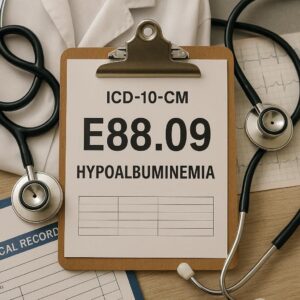
Unlike its diagnostic counterpart, ICD-10-CM, which uses code E88.09 to diagnose hypoalbuminemia, ICD-10-PCS requires a different mindset. It does not classify conditions; it classifies procedures. Therefore, one cannot simply “code for hypoalbuminemia” in PCS. Instead, the coder must translate the clinical interventions performed to treat or monitor this condition into a sophisticated seven-character code. This process demands a deep understanding of both the clinical context—why an albumin infusion was given or why a serum albumin test was ordered—and the rigid, hierarchical structure of PCS.
This article is designed to be the definitive guide for this very purpose. We will embark on a detailed journey, beginning with the science of albumin itself, moving through the clinical scenarios that lead to its deficiency, and culminating in a masterful application of ICD-10-PCS principles. We will dissect the Administration and Measurement sections, build codes character by character, and explore real-world clinical scenarios to solidify your understanding. Our goal is to transform the coding of hypoalbuminemia-related procedures from a point of confusion to an exemplar of accuracy and clinical relevance, ensuring that the data generated truly reflects the sophisticated care provided to some of the most vulnerable patients.
ICD-10-PCS code for hypoalbuminemia
2. Understanding the Patient: The Pathophysiology and Clinical Significance of Hypoalbuminemia
To code a procedure accurately, one must first understand the clinical problem it addresses. Hypoalbuminemia is a complex disorder with far-reaching consequences, and its management is a key component of care in settings from the intensive care unit to the long-term care facility.
What is Albumin? The Multifunctional Workhorse of the Blood
Albumin is a protein synthesized exclusively by the liver hepatocytes. It constitutes approximately 50-60% of total plasma protein content. Its functions are multifaceted and critical for homeostasis:
-
Maintenance of Oncotic Pressure: Albumin is the primary determinant of plasma oncotic (or colloidal osmotic) pressure. This pressure is essential for keeping fluid within the intravascular compartment. A drop in albumin levels reduces this pressure, allowing fluid to leak out into the interstitial spaces, leading to edema (swelling).
-
Transport and Binding: It acts as a carrier for a vast array of substances, including hormones (e.g., thyroid hormones, cortisol), fatty acids, calcium, bilirubin, and many drugs (e.g., warfarin, phenytoin). Low albumin levels can alter the pharmacokinetics of these substances, leading to toxicity or reduced efficacy.
-
Antioxidant and Anti-inflammatory Properties: Albumin has significant free radical scavenging abilities and can bind pro-inflammatory mediators.
-
Nutritional Role: It serves as a source of amino acids for peripheral tissues during periods of fasting or stress.
Defining Hypoalbuminemia: More Than Just a Number
Hypoalbuminemia is typically defined as a serum albumin concentration below 3.5 g/dL (35 g/L). However, the clinical significance is context-dependent. A level of 3.4 g/dL in an otherwise healthy outpatient may be less concerning than the same level in a critically ill septic patient. Severity is often categorized as:
-
Mild: 3.0 – 3.4 g/dL
-
Moderate: 2.5 – 2.9 g/dL
-
Severe: < 2.5 g/dL
Etiology: The Three Pillars of Albumin Deficiency
The causes of hypoalbuminemia can be broadly categorized into three main mechanisms, which often coexist in critically ill patients.
-
Decreased Production:
-
Liver Disease: Chronic conditions like cirrhosis and hepatitis directly impair the liver’s synthetic capability.
-
Malnutrition and Malabsorption: Inadequate intake of protein (Kwashiorkor) or inability to absorb amino acids (e.g., Crohn’s disease, celiac disease).
-
Critical Illness: Systemic inflammation (e.g., from sepsis, major surgery) can downregulate albumin gene expression and shift hepatic protein synthesis towards acute-phase reactants.
-
-
Increased Loss:
-
Protein-Losing Enteropathy: Conditions like inflammatory bowel disease or intestinal lymphangiectasia cause albumin to seep into the gastrointestinal tract.
-
Nephrotic Syndrome: Glomerular kidney diseases damage the filtration barrier, allowing massive amounts of albumin to be lost in the urine.
-
Severe Burns and Exudative Skin Lesions: The denuded skin surface acts as a conduit for albumin loss.
-
-
Increased Catabolism or Dilution:
-
Hypermetabolic States: Major trauma, burns, and cancer can increase the overall breakdown of proteins, including albumin.
-
Volume Overload: In conditions like heart failure, the dilution of plasma volume by retained fluid can cause a relative hypoalbuminemia.
-
Clinical Manifestations: From Edema to Impaired Healing
The symptoms of hypoalbuminemia are a direct reflection of its lost functions:
-
Edema: The most common manifestation, presenting as peripheral pitting edema, ascites (fluid in the abdomen), or pulmonary edema.
-
Muscle Wasting and Weakness: As the body catabolizes muscle for amino acids.
-
Impaired Wound Healing: Due to its role in the inflammatory and proliferative phases of healing.
-
Clinical Complications: Increased susceptibility to medication side effects, worsened outcomes from infection, and overall higher morbidity and mortality.
3. Navigating the System: A Primer on the ICD-10-PCS Structure
Before we can assign a code, we must become fluent in the language of ICD-10-PCS.
The Fundamental Difference: ICD-10-CM vs. ICD-10-PCS
-
ICD-10-CM (Clinical Modification): Used for diagnosing diseases, signs, symptoms, and external causes of injury. It answers the question, “What is wrong with the patient?” For hypoalbuminemia, the code is E88.09 – Other hypoalbuminemia.
-
ICD-10-PCS (Procedure Coding System): Used for classifying procedures performed in inpatient hospital settings. It answers the question, “What was done to the patient?” It is entirely independent of the diagnosis.
The Seven-Character Alphanumeric System: A Code of Precision
Each ICD-10-PCS code is composed of seven characters, each representing a specific aspect of the procedure. The structure is consistent across all sections:
-
Section (1st Character): The broad category (e.g., Medical and Surgical, Administration, Measurement).
-
Body System (2nd Character): The general body system involved.
-
Root Operation (3rd Character): The objective of the procedure (e.g., Introduction, Transfusion, Monitoring).
-
Body Part (4th Character): The specific part of the body the procedure focuses on.
-
Approach (5th Character): The technique used to reach the site (e.g., Open, Percutaneous, Via Natural or Artificial Opening).
-
Device (6th Character): Any device that remains after the procedure.
-
Qualifier (7th Character): Provides additional information about the procedure.
Key Sections Relevant to Hypoalbuminemia Management
For managing hypoalbuminemia, two sections are paramount:
-
Section 3: Administration: For coding the infusion of albumin.
-
Section 4: Measurement and Monitoring: For coding the blood test that measures serum albumin levels.
4. The Core of the Matter: ICD-10-PCS Coding for Hypoalbuminemia Treatment
When a patient’s hypoalbuminemia is severe enough to warrant intervention, the most direct treatment is the intravenous administration of human albumin solution.
Section 3: Administration – The Route for Albumin Infusions
Section 3 contains procedures for putting in or on a therapeutic, diagnostic, nutritional, physiological, or prophylactic substance. The relevant root operation here is Introduction.
Building the Code: A Step-by-Step Walkthrough of 3E0G3GC
Let’s construct the code for an intravenous infusion of human albumin.
-
1st Character – Section: 3
-
Explanation: This identifies the procedure as belonging to the Administration section.
-
-
2nd Character – Body System: E
-
Explanation: This represents the Circulatory System. Since the substance is being introduced directly into a vein, it is administered into the circulatory system.
-
-
3rd Character – Root Operation: 0
-
Explanation: This is the root operation Introduction. The PCS definition of Introduction is: “Putting in or on a therapeutic, diagnostic, nutritional, physiological, or prophylactic substance except blood or blood products.” Note: Albumin is considered a physiological substance, not a blood product in this specific PCS context, which is a critical distinction.
-
-
4th Character – Body Part/Region: G
-
Explanation: This character specifies the Peripheral Vein. This is used when the infusion is administered through a standard IV line in the arm, hand, etc. If the infusion was through a central venous catheter (e.g., a PICC line, subclavian line), the body part would be Central Vein (H).
-
-
5th Character – Approach: 3
-
Explanation: This represents Percutaneous. An IV infusion is performed by puncturing the skin with a needle to access the vein, which is the definition of a percutaneous approach.
-
-
6th Character – Substance: G
-
Explanation: This is the most crucial character for this procedure. The value G stands for Other Therapeutic Substance. According to the ICD-10-PCS Tables, “Other Therapeutic Substance” includes a wide range of agents, and human albumin is explicitly included in this category. It is the correct choice for albumin infusions.
-
-
7th Character – Qualifier: C
-
Explanation: The value C indicates that the substance was introduced via Infusion. This distinguishes it from an injection (bolus), which would use qualifier B.
-
Therefore, the complete ICD-10-PCS code for an intravenous infusion of human albumin into a peripheral vein is: 3E0G3GC
Clinical Scenario 1: Hypoalbuminemia in a Patient with Severe Burns
-
Patient Presentation: A 45-year-old male admitted to the Burn ICU with 40% total body surface area full-thickness burns. His serum albumin on day 3 is 2.0 g/dL. He has significant edema and is hemodynamically unstable.
-
Procedure: The medical team orders a 25% albumin solution to be infused over 4 hours via his existing central venous catheter to draw fluid back into the vasculature.
-
ICD-10-PCS Coding:
-
The procedure is an Administration (Section 3).
-
It is into the Circulatory System (E).
-
The root operation is Introduction (0).
-
The body part is a Central Vein (H), as it’s administered through a central line.
-
The approach is Percutaneous (3) (the central line was placed percutaneously).
-
The substance is Other Therapeutic Substance (G).
-
The qualifier is Infusion (C).
-
Final Code: 3E0H3GC – Introduction of Other Therapeutic Substance into Central Vein, Percutaneous Approach, Infusion.
-
Clinical Scenario 2: Post-Operative Albumin Administration after Major Surgery
-
Patient Presentation: A 68-year-old female post-Whipple procedure for pancreatic cancer. Her post-operative course is complicated by a systemic inflammatory response, and her albumin drops to 2.4 g/dL.
-
Procedure: To support her recovery and wound healing, 5% albumin is administered via a peripheral IV in her right hand.
-
ICD-10-PCS Coding:
-
The code built earlier fits perfectly here.
-
Final Code: 3E0G3GC – Introduction of Other Therapeutic Substance into Peripheral Vein, Percutaneous Approach, Infusion.
-
5. Beyond Treatment: Coding the Measurement and Monitoring of Albumin Levels
Diagnosing and monitoring hypoalbuminemia requires a laboratory test to measure the serum albumin level. This act of performing the test is itself a procedure that can be coded in ICD-10-PCS.
Section 4: Measurement and Monitoring – Capturing the Diagnostic Act
Section 4 contains procedures that determine the level of a physiological or physical function. The relevant root operations are:
-
Measurement: Determining the level of a physiological or chemical function (e.g., measuring the serum albumin level).
-
Monitoring: Determining the level of a physiological function over a period of time (e.g., continuous cardiac monitoring). For a single blood draw, “Measurement” is appropriate.
Building the Code: A Step-by-Step Walkthrough of 4A03XUZ
Let’s construct the code for a serum albumin blood test.
-
1st Character – Section: 4
-
Explanation: This identifies the procedure as belonging to the Measurement and Monitoring section.
-
-
2nd Character – Body System: A
-
Explanation: This represents the Physiological Systems. This is the default body system for most measurement procedures as they are assessing a physiological function, not operating on a specific anatomical site.
-
-
3rd Character – Root Operation: 0
-
Explanation: This is the root operation Measurement. The definition is: “Determining the level of a physiological or chemical function.”
-
-
4th Character – Body System/Function: 3
-
Explanation: This character specifies the function being measured. The value 3 stands for Metabolic. Albumin levels are a key part of the body’s metabolic and nutritional status.
-
-
5th Character – Approach: X
-
Explanation: The value X represents External. This is used for all measurement procedures as the act of measurement is performed externally (e.g., by a lab machine on a blood sample). There is no “approach” to the body for a blood draw in this context; the approach is for the specimen collection, which is a separate procedure.
-
-
6th Character – Function/Device: U
-
Explanation: This character provides more detail. The value U specifies that the measurement is of Circulating Protein. This is the most accurate descriptor for serum albumin.
-
-
7th Character – Qualifier: Z
-
Explanation: The value Z indicates No Qualifier. There is no further specification needed for this measurement.
-
Therefore, the complete ICD-10-PCS code for the measurement of serum albumin is: 4A03XUZ
The Importance of Medical Record Documentation
The coder must rely on the physician’s documentation. The record must clearly state that an albumin infusion was performed or that a serum albumin test was ordered and completed. Phrases like “administered 12.5g of 25% albumin” or “labs show albumin of 2.8” are the triggers for assigning these codes.
6. Common Pitfalls and Prohibited Combinations: What Not to Code
Accuracy in PCS is as much about knowing what to code as it is about knowing what to avoid.
-
The “Not Elsewhere Classifiable” Conundrum: Do not use the “Other” body part or substance codes if a more specific option exists. We used “Other Therapeutic Substance (G)” because it is the specific and correct table entry for albumin. Using a less specific code without justification is incorrect.
-
Misinterfusion vs. Administration: The root operation “Transfusion” (in the Medical and Surgical section) is reserved for blood and blood products. The official guidelines specify that the administration of substances like albumin, clotting factors, and immunoglobulins is not considered a transfusion and is coded in the Administration section. Do not confuse 3E0G3GC with a blood transfusion code.
-
The Diagnosis vs. Procedure Dichotomy: Remember, you cannot assign an ICD-10-PCS code for the condition of hypoalbuminemia. The PCS code describes the action taken. The diagnosis code E88.09 and the procedure codes 3E0G3GC/4A03XUZ work in tandem to tell the complete story of the patient’s encounter.
7. A Practical Tool: Quick-Reference Coding Table for Hypoalbuminemia-Related Procedures
The table below summarizes the key ICD-10-PCS codes discussed.
| Procedure Description | ICD-10-PCS Code | Code Description | Clinical Notes |
|---|---|---|---|
| Albumin Infusion (Peripheral IV) | 3E0G3GC | Introduction of Other Therapeutic Substance into Peripheral Vein, Percutaneous Approach, Infusion | Used for standard IV lines in arms, hands, etc. The substance is Human Albumin. |
| Albumin Infusion (Central Line) | 3E0H3GC | Introduction of Other Therapeutic Substance into Central Vein, Percutaneous Approach, Infusion | Used for infusions via CVC, PICC, subclavian, or jugular lines. |
| Serum Albumin Blood Test | 4A03XUZ | Measurement of Metabolic Circulating Protein, External Approach | Represents the act of performing the laboratory test to determine the albumin level. |
8. The Interdisciplinary Bridge: How Accurate Coding Impacts Patient Care and Healthcare Systems
Precision in coding is not a mere administrative exercise; it is the foundation of a data-driven healthcare ecosystem.
-
Driving Quality Metrics and Reimbursement: Accurate procedure codes are essential for DRG (Diagnosis-Related Group) assignment, which directly determines hospital reimbursement for inpatient stays. Miscoding an albumin infusion could lead to an incorrect DRG, resulting in significant financial loss or audit risk. Furthermore, this data feeds into quality metrics that assess hospital performance and patient outcomes.
-
Supporting Clinical Research and Epidemiological Studies: Aggregated, accurate procedure data allows researchers to study trends. How often is albumin used in septic patients? What are the outcomes for burn patients who receive early albumin supplementation? Reliable PCS data is crucial for answering these questions and advancing evidence-based medicine.
-
The Role of the Coder as a Data Quality Champion: The modern medical coder is a clinical data analyst. By understanding the pathophysiology of hypoalbuminemia and the nuances of PCS, the coder can ensure the medical record is translated into high-fidelity data. This often involves querying physicians for clarification, thereby closing the loop between clinical care and data integrity.
9. Conclusion: Synthesizing Clinical Knowledge with Coding Expertise
Hypoalbuminemia is a significant clinical marker that necessitates precise interventions, from diagnostic measurement to therapeutic albumin infusion.
The ICD-10-PCS system provides the structured language to accurately represent these procedures, using specific codes in the Administration and Measurement sections.
Mastering this process requires a collaborative understanding of both the patient’s clinical story and the rigorous logic of the PCS framework, ensuring data integrity that supports optimal patient care, appropriate reimbursement, and meaningful clinical research.
10. Frequently Asked Questions (FAQs)
Q1: Why is there no specific PCS code for “Albumin” in the table? Why do we use “Other Therapeutic Substance”?
A: ICD-10-PCS is structured around broad categories to maintain a manageable size and logical hierarchy. “Other Therapeutic Substance” is a defined category within the PCS tables that explicitly includes human albumin. Creating a unique code for every possible drug would make the system unwieldy. Using the designated category is the correct and specific method.
Q2: If a patient receives an albumin infusion and has a serum albumin test drawn from the same IV line on the same day, do I code both?
A: Yes, you code both procedures. They represent two distinct objectives: one is a therapeutic administration (3E0G3GC), and the other is a diagnostic measurement (4A03XUZ). Both are reportable and contribute to the complete picture of the patient’s care.
Q3: What is the difference between the Qualifier “B” (Injection) and “C” (Infusion) for an albumin administration?
A: An injection (bolus) is a rapid administration, typically over a few minutes, often pushed by a syringe. An infusion is a slower, controlled administration over a period of time (e.g., 30 minutes to 4 hours) using an IV pump or gravity drip. The medical record should specify the method. Most albumin administrations are infusions.
Q4: My physician documented “albumin 25g IV.” Is this sufficient to code the administration?
A: While brief, “IV” implies intravenous infusion. This is generally sufficient to code 3E0G3GC (assuming a peripheral IV). However, for optimal specificity, documentation that specifies the route (e.g., “via PICC line,” “via left antecubital IV”) is preferred. If the route is unclear, a physician query may be necessary.
Date: November 26, 2025
Author: Dr. Eleanor Vance, CCS, CDIP
Disclaimer: The information contained in this article is for educational and informational purposes only and is not a substitute for professional medical coding, billing, or legal advice. Coding guidelines are subject to change. Always consult the current official ICD-10-PCS code set, Coding Clinic guidelines, and your facility’s compliance officer for definitive coding guidance.


