
In the dynamic theater of modern medicine, few advancements have subtly revolutionized patient care as profoundly as the High Flow Nasal Cannula (HFNC). What was once a niche tool primarily confined to neonatal intensive care units has burgeoned into a first-line therapy for a wide spectrum of respiratory failure etiologies across all patient demographics. From the desperate struggles of a patient with severe COVID-19 acute hypoxemic respiratory failure to the post-extubation support of a cardiac surgery patient, HFNC therapy provides a unique, patient-friendly bridge between conventional oxygen delivery and invasive mechanical ventilation. However, this very efficacy and versatility present a significant challenge in the parallel world of medical coding and reimbursement. The ICD-10-PCS (Procedure Coding System) is a complex, precise language designed to describe these medical interventions, and accurately capturing the essence of HFNC therapy within its rigid structure is paramount. This article serves as a definitive guide, dissecting the anatomy of an HFNC procedure code, illuminating the path to accurate assignment, and empowering HIM professionals, coders, and clinicians with the knowledge to ensure that the clinical care provided is perfectly mirrored in the administrative data.
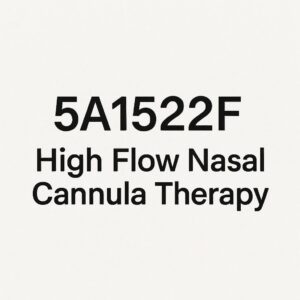
ICD-10-PCS Code for High Flow Nasal Cannula Therapy
2. Understanding the Fundamentals: What is ICD-10-PCS?
Before we can assign a code, we must first understand the system itself. The International Classification of Diseases, Tenth Revision, Procedure Coding System (ICD-10-PCS) is used exclusively in the United States for reporting inpatient procedures. Unlike its counterpart ICD-10-CM (Diagnosis), which is used for describing diseases and conditions, PCS is focused solely on what was done to the patient during their hospital stay.
The power and complexity of PCS lie in its multi-axial structure. Every PCS code is composed of seven alphanumeric characters, each representing a specific aspect of the procedure. This structure allows for an immense level of specificity.
-
Character 1: Section – This broad category defines the type of procedure (e.g., Medical and Surgical, Obstetrics, Placement).
-
Character 2: Body System – This refers to the general physiological system or anatomical region where the procedure was performed (e.g., Respiratory System, Central Nervous System).
-
Character 3: Root Operation – This is the single most important concept in PCS. It defines the objective of the procedure—what the provider intended to accomplish (e.g., Excision, Repair, Insertion).
-
Character 4: Body Part – This specifies the precise anatomical site where the root operation was performed.
-
Character 5: Approach – This describes the technique used to reach the procedure site (e.g., Open, Percutaneous, Via Natural or Artificial Opening).
-
Character 6: Device – This character identifies any device that remains in or on the patient after the procedure is completed. It is crucial for procedures like HFNC.
-
Character 7: Qualifier – This provides additional information about the procedure that is not captured in the other characters. It can specify the type of device, the type of substance, or other procedural details.
Understanding this structure is the key to unlocking the correct code for any procedure, including the application of a High Flow Nasal Cannula.
3. Deconstructing the Device: The Science and Mechanics of High Flow Nasal Cannula
To code a procedure, one must first understand the tool and its mechanism of action. A High Flow Nasal Cannula is not merely a more robust version of a standard nasal cannula; it is an integrated system that delivers heated and humidified oxygen at flow rates that can meet or exceed a patient’s peak inspiratory flow demand. This is a critical distinction.
The system typically consists of:
-
An Air-Oxygen Blender: Precisely mixes medical air and oxygen to deliver a specific, prescribed FiO2 (Fraction of Inspired Oxygen), typically from 21% to 100%.
-
An Active Heated Humidifier: Warms and saturates the gas mixture with moisture, preventing the drying, cooling, and injury to the nasal mucosa that would occur with high flows of cold, dry gas.
-
A Large-Bore Circuit: A reinforced tube that delivers the conditioned gas.
-
The Nasal Cannula Interface: Specially designed with wider-gauge prongs to accommodate the high flow rates with minimal resistance.
The physiological benefits of HFNC are multifactorial and synergistic:
-
Washout of Anatomical Dead Space: The high flow flushes out the carbon dioxide-rich gas from the nasopharynx and oropharynx at the end of exhalation. This “decreases” the anatomical dead space, making the next breath more efficient by delivering a higher concentration of fresh gas, which improves CO2 clearance and reduces the work of breathing.
-
Provision of a Small Level of Positive Airway Pressure: The high flow generates a continuous positive pressure in the pharynx. This pressure is flow-dependent and also relies on the patient keeping their mouth closed. This positive pressure can help stent open the alveoli (preventing atelectasis) and improve oxygenation by recruiting collapsed lung units.
-
Meeting Inspiratory Demand: By providing flows of 40-60 liters per minute (LPM) or more, the system can match what the patient is trying to inhale, eliminating the “air hunger” sensation and the work of pulling air through a standard oxygen system.
-
Improved Comfort and Compliance: The heated and humidified gas is far more comfortable for the patient than cold, dry gas, allowing for better tolerance and longer duration of therapy.
This sophisticated mechanism is what separates HFNC from other, simpler oxygen delivery systems and is the foundation for its unique classification in PCS.
4. The Crucial Question: Is HFNC a Procedure?
This is the fundamental question that must be answered before coding. From a clinical perspective, applying an HFNC may seem like a simple “setup.” However, from a PCS perspective, the answer is a definitive yes.
The application of an HFNC meets the PCS definition of a procedure because it involves the management of a device that is controlling a physiological function—in this case, respiration. The system is not passive; it is actively regulating the temperature, humidity, flow, and concentration of the gas being delivered to the patient. It is a therapeutic intervention intended to treat a disease or injury (respiratory failure) and is managed by clinical staff who monitor its settings and the patient’s response. Therefore, it is reportable in the inpatient setting.
5. Navigating the PCS Tables: A Step-by-Step Code Building Methodology
Now, we will build the ICD-10-PCS code for the initial application of a High Flow Nasal Cannula from the ground up, character by character.
Character 1: Section
The procedure involves the introduction of a device into the respiratory tract. This falls under the broad umbrella of the Medical and Surgical section. Therefore, the first character is 0.
Character 2: Body System
The device is being applied to the upper airways, specifically the nasal passages and pharynx. In PCS, the Respiratory System is a distinct body system. The correct Body System is Respiratory System, represented by the character B.
Character 3: Root Operation
This is the most critical step. We must determine the objective of the procedure. The PCS definitions guide us:
-
Insertion: Putting in a non-biological device that remains in the body after the procedure is completed.
-
Introduction: Putting in a therapeutic, diagnostic, nutritional, physiological, or prophylactic substance (other than a device).
The HFNC system involves placing a device (the nasal cannula) that remains in or on the patient. The gas being delivered is the substance, but the conduit is the device. Therefore, the correct Root Operation is Insertion, represented by the character H.
Character 4: Body Part
Where is the device being inserted? The cannula prongs are placed into the nares (nostrils), but the entire purpose is to deliver gas to the entire upper airway and into the lungs. The most accurate body part for this type of non-invasive respiratory support is Respiratory Tract, Upper. The character for this is 0.
Character 5: Approach
How is the device placed? The nasal cannula is inserted through the natural opening of the nose. In PCS terms, this is Via Natural or Artificial Opening. The character for this is 7.
Character 6: Device
This is the character that specifically identifies the High Flow Nasal Cannula. PCS has a unique device value for this precise equipment. The device is Cannula, High Flow. The character for this is K.
Character 7: Qualifier
For this specific combination of values in the Medical and Surgical section, Insertion root operation, and Respiratory System body system, the qualifier character is used to provide further specification that is not otherwise captured. In this case, the only available and appropriate qualifier is a placeholder, indicating No Qualifier. The character for this is Z.
The Complete ICD-10-PCS Code:
Putting all seven characters together, the code for the initial application of a High Flow Nasal Cannula is:
0BH07KZ
Breakdown:
-
0 – Medical and Surgical Section
-
B – Respiratory System
-
H – Insertion
-
0 – Respiratory Tract, Upper
-
7 – Via Natural or Artificial Opening
-
K – Cannula, High Flow
-
Z – No Qualifier
This code should be assigned only once per admission for the initial application of the HFNC system. It is not intended to be reported daily.
6. Clinical Scenarios and Coding Applications: From Theory to Practice
Let’s apply this knowledge to real-world patient encounters to solidify understanding.
Scenario 1: The Patient with Pneumonia
A 72-year-old male is admitted with community-acquired pneumonia. Despite a standard non-rebreather mask at 15 LPM, his oxygen saturation remains at 88%. The medical team decides to initiate High Flow Nasal Cannula therapy at 40 LPM and 50% FiO2. The respiratory therapist sets up the system and places the cannula.
-
Coding Action: Assign code 0BH07KZ, Insertion of High Flow Nasal Cannula into Upper Respiratory Tract, Via Natural or Artificial Opening. The diagnosis code would be the specific type of pneumonia (e.g., J18.9).
Scenario 2: Post-Operative Support
A 58-year-old female undergoes a coronary artery bypass graft (CABG). Post-operatively in the ICU, she is extubated but has mild pulmonary edema. To provide respiratory support and positive pressure, HFNC is initiated at 35 LPM and 40% FiO2.
-
Coding Action: Assign code 0BH07KZ. The diagnosis code might be the pulmonary edema (J81.0) or a code for the post-procedural respiratory insufficiency.
Scenario 3: The Transition from HFNC
The patient from Scenario 1 improves after 3 days. The HFNC is weaned to 30 LPM and 35% FiO2, and then discontinued. The patient is placed on a 4 LPM standard nasal cannula.
-
Coding Action: The discontinuation or removal of the HFNC is considered an integral part of the procedure’s management. There is no separate PCS code for “removal” of an external device like an HFNC. The initial application code 0BH07KZ remains on the record to reflect that the procedure was performed during the stay.
Scenario 4: Distinguishing from Other Devices
A patient is admitted in respiratory distress and is placed on Bi-Level Positive Airway Pressure (BiPAP) via a full face mask. After 12 hours, they are transitioned to HFNC.
-
Coding Action: This scenario requires two PCS codes.
-
For the BiPAP: 5A09357 (Performance of Respiratory Ventilation, Non-invasive, Continuous Positive Airway Pressure). Note that this is in the Administration section, not Medical and Surgical, as it represents a physiological assistance.
-
For the HFNC: 0BH07KZ.
It is critical to distinguish between the two modalities, as they have entirely different PCS codes and sections.
-
The following table provides a quick-reference guide to differentiate HFNC from other common respiratory support procedures.
ICD-10-PCS Coding for Common Respiratory Support Procedures
| Procedure / Device | ICD-10-PCS Code | Section | Root Operation / Type | Device / Qualifier | Key Differentiator |
|---|---|---|---|---|---|
| High Flow Nasal Cannula (HFNC) | 0BH07KZ | Medical and Surgical | Insertion | Cannula, High Flow | Active delivery of heated/humidified gas at high flow; device is a “cannula.” |
| Mechanical Ventilation | 5A1935Z / 5A1945Z | Administration | Performance of Respiratory Ventilation | Ventilator, < 24 / > 24 hrs | Invasive control of respiration via endotracheal tube or tracheostomy. |
| Non-Invasive Ventilation (BiPAP/CPAP) | 5A09357 / 5A09457 | Administration | Performance of Respiratory Ventilation | Non-invasive, CPAP / BiPAP | Delivers set pressure levels (IPAP/EPAP) via a mask; coded in the Administration section. |
| Insertion of Endotracheal Tube | 0BH17EZ | Medical and Surgical | Insertion | Endotracheal Airway | Invasive tube placed through mouth/nose into trachea to secure an airway. |
| Oxygen Delivery via Simple Mask | Not a reportable procedure | N/A | N/A | N/A | Considered part of the “room and board” and not a separately coded procedure in PCS. |
7. Beyond the Basics: Distinguishing HFNC from Other Respiratory Therapies
A common point of confusion arises in differentiating HFNC from Non-Invasive Ventilation (NIV) like CPAP or BiPAP. While both are non-invasive, their core mechanisms are distinct.
-
HFNC is primarily a flow-based system. It provides a high flow of gas, which generates some positive pressure as a secondary effect. Its primary goals are to improve oxygenation and flush out CO2.
-
NIV (BiPAP/CPAP) is a pressure-based system. It delivers set, prescribed pressures (Inspiratory Positive Airway Pressure – IPAP and Expiratory Positive Airway Pressure – EPAP). Its primary goal is to augment alveolar ventilation and maintain airway patency through set pressure cycles.
This fundamental difference is why they are classified in different Sections of PCS. NIV, as a form of physiological assistance, is coded in the Administration Section (5), whereas HFNC, as the insertion of a device, is coded in the Medical and Surgical Section (0). Coders must rely on clear clinical documentation—”initiated on BiPAP” vs. “initiated on High Flow at 50 LPM”—to make this critical distinction.
8. The Role of Documentation: Ensuring Specificity and Compliance
The accuracy of any PCS code is entirely dependent on the quality of the provider’s documentation. Vague terms like “advanced oxygen” or “high flow oxygen” are insufficient. The medical record must explicitly state the use of a “High Flow Nasal Cannula.”
Ideal documentation includes:
-
“High Flow Nasal Cannula initiated.”
-
“Patient placed on Vapotherm / Optiflow” (brand names are acceptable as they are synonymous with HFNC technology).
-
Documentation of the settings: Flow rate (e.g., 40 LPM) and FiO2 (e.g., 50%).
The coder should query the provider if the documentation is ambiguous and does not clearly differentiate HFNC from a standard nasal cannula or a non-invasive ventilator.
9. Conclusion
The ICD-10-PCS code 0BH07KZ accurately and specifically represents the insertion of a High Flow Nasal Cannula. Mastery of the PCS structure, particularly the Root Operation and Device characters, is essential for correct assignment. Clear clinical documentation is the indispensable foundation upon which accurate coding is built, ensuring proper reimbursement and, most importantly, a true reflection of the sophisticated care provided to the patient.
10. Frequently Asked Questions (FAQs)
Q1: Do I code HFNC application every day the patient is on it?
A: No. ICD-10-PCS codes for procedures like this are assigned only once per admission for the initial application. It represents the procedural event itself.
Q2: What if the patient is switched from HFNC to BiPAP and then back to HFNC?
A: You would code both the initial HFNC application (0BH07KZ) and the initial BiPAP application (5A09357 or 5A09457). If the HFNC is removed and then re-applied later in the same admission, current coding guidance typically supports reporting the insertion code again, but facility policy should be consulted. The key is that each distinct procedural event is captured.
Q3: Is there a separate code for the removal of an HFNC?
A: No. The removal of an external device like an HFNC is not considered a separate procedure reportable in PCS. It is part of the overall management of the initial procedure.
Q4: How is HFNC different from a standard nasal cannula in terms of coding?
A: The use of a standard nasal cannula or simple face mask is not considered a separately reportable procedure in ICD-10-PCS. It is considered a part of routine care. HFNC is coded because it is a more complex, managed therapeutic intervention involving a specific device.
Q5: What is the most common mistake when coding for HFNC?
A: The most common mistake is confusing it with Non-Invasive Ventilation (BiPAP/CPAP) and incorrectly assigning a code from the Administration Section (5A09357, etc.). Always verify the device name and mechanism from the documentation.
Date: November 28, 2025
Author: Healthcare Coding & Reimbursement Institute
Disclaimer: This article is intended for educational and informational purposes only and is based on the ICD-10-PCS coding system as of the 2025 fiscal year. It does not constitute official coding advice. Medical coders must consult the current official ICD-10-PCS guidelines, Coding Clinic updates, and facility-specific policies for definitive code assignment. The ultimate responsibility for correct coding lies with the healthcare provider.


