In the vast, intricate universe of modern healthcare, where every symptom, diagnosis, and treatment is meticulously recorded, a single alphanumeric sequence can hold immense power. It can dictate the course of a patient’s care, justify life-saving interventions, unlock critical funding for hospital systems, and fuel groundbreaking population health research. This is the world of clinical classification, governed by the International Classification of Diseases, Tenth Revision, Clinical Modification (ICD-10-CM). Among its thousands of codes, one that frequently emerges from the shadows of routine labs to the forefront of clinical concern is E83.42 – Hypomagnesemia.
At first glance, E83.42 is merely a label for a low serum magnesium level. But to view it as such is to profoundly underestimate its significance. This code is a nexus where clinical biochemistry, patient symptomatology, complex etiology, and healthcare economics converge. It tells a story—a story of a patient potentially suffering from chronic malnutrition, renal wasting, the side effects of powerful diuretics, or alcohol use disorder. It can be a silent contributor to refractory arrhythmias, a confounding factor in persistent hypokalemia and hypocalcemia, or a marker of critical illness.
This article embarks on a comprehensive exploration far beyond the basic definition of E83.42. We will delve into the fundamental biology of magnesium, unravel the myriad causes and dangerous consequences of its deficiency, and master the precise application of its ICD-10-CM code. We will navigate complex coding scenarios, understand its impact on Diagnosis-Related Groups (DRGs) and reimbursement, and examine its role in quality metrics and big data analytics. Our journey will highlight why accurate coding of hypomagnesemia is not a mundane administrative task but a crucial, integral component of high-quality, safe, and financially sustainable patient care. Prepare to see this common electrolyte imbalance, and its corresponding code, in an entirely new light.
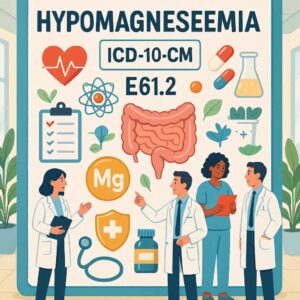
ICD-10-CM code for Hypomagnesemia
Chapter 1: Magnesium – The Unsung Hero of Human Physiology
To appreciate hypomagnesemia, one must first understand the monumental role magnesium plays in the human body. It is the fourth most abundant cation overall and the second most abundant intracellular cation after potassium. This simple element (Mg²⁺) is a cofactor for over 600 enzymatic reactions, positioning it as a central orchestrator of cellular metabolism.
Cellular Energy and Metabolism: Magnesium is fundamentally tied to adenosine triphosphate (ATP), the universal cellular energy currency. ATP must be complexed with magnesium (Mg-ATP) to be biologically active. Therefore, every energy-dependent process—from muscle contraction and nerve impulse transmission to DNA/RNA synthesis and active ion transport—relies on adequate magnesium levels.
Nervous and Muscular System Function: Magnesium acts as a natural physiological calcium channel blocker. At the neuromuscular junction, it modulates the release of acetylcholine and competes with calcium at its binding sites, thereby regulating neuronal excitability and muscle contraction. This calming effect is crucial for preventing excessive nerve firing and muscle spasms.
Cardiovascular Health: In the heart, magnesium is paramount for maintaining normal rhythm and contractility. It stabilizes cardiac myocytes, influences the activity of the sodium-potassium pump (Na⁺/K⁺-ATPase), and helps regulate other electrolytes like potassium and calcium. Its deficiency directly predisposes to arrhythmias, including torsades de pointes, a potentially fatal ventricular tachycardia.
Electrolyte Symphony: Magnesium is the conductor of the electrolyte orchestra. It is essential for the proper function of the renal outer medullary potassium channel (ROMK) and for the activity of parathyroid hormone (PTH), making it critical for potassium and calcium homeostasis. This is why hypomagnesemia often leads to refractory hypokalemia and hypocalcemia—conditions that cannot be corrected until magnesium is repleted.
Bone Integrity and Glucose Metabolism: Approximately 50-60% of the body’s magnesium is stored in bone, contributing to its crystalline structure. It also plays a key role in insulin secretion and action, influencing insulin sensitivity.
The body tightly regulates magnesium balance through intestinal absorption (primarily in the small intestine) and renal excretion. The kidneys are the primary gatekeepers, with the thick ascending limb of the loop of Henle reabsorbing about 70% of filtered magnesium. When intake is low, the kidneys can conserve magnesium, reducing excretion to nearly negligible amounts. This sophisticated regulatory system underscores that clinically significant hypomagnesemia often points to a serious disruption—either profound deficiency, significant renal wasting, or a shift of magnesium from the extracellular to the intracellular space.
Chapter 2: Hypomagnesemia – Etiology, Pathophysiology, and Clinical Manifestations
Hypomagnesemia is defined as a serum magnesium concentration below the laboratory reference range, typically < 1.7 mg/dL (0.70 mmol/L). It is estimated to be present in 2-20% of the general hospitalized population, with rates soaring to 50-60% in intensive care units (ICUs). Its causes are classically categorized into four mechanisms: decreased intake, gastrointestinal losses, renal losses, and redistribution.
Etiology: A Multifactorial Landscape
-
Decreased Intake: Rarely causes isolated deficiency due to renal conservation, but is a contributor in starvation, chronic alcoholism, total parenteral nutrition without adequate magnesium, and severe protein-calorie malnutrition.
-
Gastrointestinal Losses: A common cause due to the gut’s role in absorption. Includes chronic diarrhea, malabsorption syndromes (e.g., Crohn’s disease, celiac disease), fistulas, laxative abuse, and prolonged nasogastric suction.
-
Renal Losses: Perhaps the most clinically significant category in hospitalized patients.
-
Drug-Induced: Loop diuretics (furosemide), thiazide diuretics, proton pump inhibitors (long-term use), aminoglycosides, amphotericin B, cisplatin, cyclosporine, and certain monoclonal antibodies (e.g., cetuximab).
-
Tubular Disorders: Gitelman syndrome, Bartter syndrome, post-obstructive diuresis, acute tubular necrosis (recovery phase).
-
Endocrine/Metabolic: Hypercalcemia, uncontrolled diabetes mellitus (osmotic diuresis), hyperaldosteronism, hyperthyroidism.
-
-
Redistribution: Shift of magnesium into cells. Seen in “refeeding syndrome” (with insulin-driven anabolism), correction of metabolic acidosis, and acute pancreatitis.
-
Other: Chronic alcohol use disorder (multifactorial: poor intake, diarrhea, renal wasting), burns, excessive sweating, lactation.
Clinical Manifestations: From Subtle to Life-Threatening
The symptoms of hypomagnesemia are often non-specific and intertwined with those of concomitant electrolyte abnormalities (hypokalemia, hypocalcemia).
-
Neuromuscular: Hyperexcitability is the hallmark. Symptoms include positive Trousseau’s and Chvostek’s signs (often due to associated hypocalcemia), muscle cramps, fasciculations, tremor, ataxia, and, in severe cases, tetany or generalized seizures.
-
Cardiovascular: This is where hypomagnesemia becomes acutely dangerous. Electrocardiographic (ECG) changes include prolonged PR and QT intervals, widening of the QRS complex, ST-segment depression, and T-wave flattening or inversion. It can precipitate virtually any arrhythmia, most notably atrial fibrillation, ventricular tachycardia, and the polymorphic ventricular tachycardia known as torsades de pointes. It also increases digitalis toxicity.
-
Metabolic: As discussed, it leads to refractory hypokalemia (impaired renal potassium conservation) and hypocalcemia (impaired PTH secretion and end-organ resistance).
-
Neuropsychiatric: Apathy, depression, confusion, delirium, and psychosis have been reported.
Diagnosis is confirmed by serum magnesium level. A 24-hour urinary magnesium excretion or a fractional excretion of magnesium (FE Mg) calculation can help distinguish renal from non-renal causes—a critical piece of information for both treatment and documentation.
Chapter 3: The ICD-10-CM System: A Language of Healthcare
Before we isolate E83.42, we must understand its ecosystem. ICD-10-CM is not merely a billing tool; it is a sophisticated, hierarchical clinical vocabulary adopted in the United States for reporting diagnoses and reasons for encounters. It provides specificity far beyond its predecessor, ICD-9-CM, allowing for detailed coding related to etiology, laterality, and clinical context.
The structure is logical:
-
Categories: Three-character codes representing a single disease or related group (e.g., E83 – Disorders of mineral metabolism).
-
Subcategories: Four or five characters providing greater detail (e.g., E83.4 – Disorders of magnesium metabolism).
-
Codes: The full five, six, or seven characters representing the most specific level of diagnosis (e.g., E83.42 – Hypomagnesemia).
This specificity enables precise tracking of diseases, informs public health initiatives, drives quality improvement projects, and ensures accurate reimbursement based on patient complexity.
Chapter 4: Decoding E83.42 – Specificity, Documentation, and Sequencing
ICD-10-CM Code: E83.42 – Hypomagnesemia
-
Category: Endocrine, nutritional and metabolic diseases (E00-E89)
-
Block: Metabolic disorders (E70-E88)
-
Sub-Block: Disorders of mineral metabolism (E83)
-
Specific Code: E83.42
Coding Instructions and Excludes Notes:
The “Excludes1” note under E83.4 is critical: “Excludes1: drug-induced hypomagnesemia (E83.42)”. This seems counterintuitive but is clarified by the Alphabetic Index. When you look up “Hypomagnesemia, drug-induced,” the index directs you to E83.42. This means drug-induced hypomagnesemia is included in code E83.42. There is no separate code; the etiology is captured through the use of an additional code from the T36-T50 series to identify the drug.
The Imperative of Clinical Documentation:
The code E83.42 is straightforward, but its accurate application hinges entirely on provider documentation. The medical record must clearly state the diagnosis of “hypomagnesemia” or “low magnesium.” Ideally, documentation should also include:
-
The serum level.
-
The suspected or confirmed etiology (e.g., “diuretic-induced,” “due to chronic diarrhea,” “secondary to alcoholism”).
-
Any clinical manifestations being treated (e.g., “hypomagnesemia with ventricular arrhythmia”).
-
The treatment plan (oral vs. intravenous repletion).
This detail supports medical necessity for both the treatment and the code assignment.
Sequencing: The Order of Importance
The order in which diagnosis codes are listed is governed by the Uniform Hospital Discharge Data Set (UHDDS) guidelines. The principal diagnosis is “that condition established after study to be chiefly responsible for occasioning the admission of the patient to the hospital for care.”
-
If hypomagnesemia is the reason for admission (e.g., a patient presents with tetany and seizures found to be due to severe Mg deficiency), then E83.42 would be the principal diagnosis.
-
Much more commonly, hypomagnesemia is a contributing factor or comorbidity that develops during an admission for another condition (e.g., a heart failure patient on high-dose diuretics who develops hypomagnesemia and arrhythmia). In this case, the heart failure (e.g., I50.9) would be principal, and E83.42 would be listed as a secondary diagnosis. Its presence can significantly impact reimbursement by moving the case to a higher-weighted DRG.
Common Etiologies of Hypomagnesemia and Associated ICD-10-CM Codes
| Etiological Category | Clinical Example | Primary Code (Hypomagnesemia) | Additional/Underlying Code(s) | Sequencing Notes |
|---|---|---|---|---|
| Drug-Induced | Loop diuretic use in CHF | E83.42 | T50.1X5A (Adv eff of loop diuretics, init) & I50.9 (CHF) | CHF is likely principal. |
| Gastrointestinal | Chronic diarrhea in Crohn’s disease | E83.42 | K50.90 (Crohn’s dis, unsp) & R19.7 (Diarrhea) | Crohn’s may be principal. |
| Renal/Endocrine | Uncontrolled Diabetes Mellitus | E83.42 | E11.65 (Type 2 DM with hyperglycemia) | DM is likely principal. |
| Redistribution | Refeeding Syndrome | E83.42 | E43 (Unspecified severe protein-calorie malnutrition) & (Code for condition being refed) | Malnutrition is principal. |
| Alcohol-Related | Chronic alcohol use with poor intake | E83.42 | F10.20 (Alcohol depend, uncomplicated) | Alcohol dependence may be principal if for detox. |
Chapter 5: Clinical Scenarios and Coding Case Studies
Scenario 1: The Cardiac Patient
-
Presentation: A 68-year-old female admitted with acute decompensated heart failure (ADHF). She is started on IV furosemide. On day 3, she develops runs of non-sustained ventricular tachycardia (NSVT). Labs show Mg: 1.2 mg/dL, K: 3.1 mEq/L.
-
Documentation: “Patient developed hypomagnesemia and hypokalemia with NSVT, likely secondary to diuretic therapy. Starting IV magnesium and potassium repletion.”
-
Coding:
-
Principal Diagnosis: I50.23 (Acute on chronic systolic heart failure)
-
Secondary Diagnoses:
-
E83.42 (Hypomagnesemia)
-
E87.6 (Hypokalemia)
-
I47.2 (Ventricular tachycardia)
-
T50.1X5A (Adverse effect of loop diuretics, initial encounter)
-
-
-
Rationale: The ADHF occasioned the admission. The hypomagnesemia is a clinically significant complication of treatment that required intervention and monitoring, justifying its coding. The adverse effect code identifies the causative agent.
Scenario 2: The Oncology Patient
-
Presentation: A 55-year-old male receiving cisplatin chemotherapy for bladder cancer is admitted for severe nausea, vomiting, and weakness. Labs reveal Mg: 1.0 mg/dL. He has positive Chvostek’s sign.
-
Documentation: “Severe, symptomatic hypomagnesemia secondary to cisplatin nephrotoxicity. Admitted for IV magnesium repletion and supportive care.”
-
Coding:
-
Principal Diagnosis: E83.42 (Hypomagnesemia)
-
Secondary Diagnoses:
-
C67.9 (Malignant neoplasm of bladder, unspecified)
-
T45.1X5A (Adverse effect of antineoplastic/immunosuppressive drugs, initial encounter) – *Note: Cisplatin is specifically indexed to T45.1X-*
-
R11.2 (Nausea with vomiting)
-
-
-
Rationale: The severe, symptomatic hypomagnesemia is the condition requiring the inpatient admission for aggressive IV therapy, making it the principal diagnosis. The underlying cancer and causative drug are captured as secondary diagnoses.
Scenario 3: The Chronic Malabsorption Patient
-
Presentation: A 30-year-old female with known celiac disease presents with 3 weeks of worsening diarrhea, fatigue, and muscle cramps. Labs: Mg: 1.4, Ca: 7.8, Albumin normal.
-
Documentation: “Hypomagnesemia with associated hypocalcemia due to exacerbation of celiac disease and malabsorption.”
-
Coding:
-
Principal Diagnosis: K90.01 (Celiac disease)
-
Secondary Diagnoses:
-
E83.42 (Hypomagnesemia)
-
E83.51 (Hypocalcemia)
-
R19.7 (Diarrhea)
-
-
-
Rationale: The exacerbation of the underlying chronic condition (celiac) is the driving force, making it principal. The electrolyte disorders are important comorbid conditions that complicate management.
Chapter 6: The Ripple Effect: Coding, Reimbursement, and Healthcare Analytics
The accurate assignment of E83.42 extends far beyond the patient’s chart; it creates ripples across the healthcare system.
Reimbursement (DRG Impact): In the Inpatient Prospective Payment System (IPPS), cases are grouped into Medicare Severity Diagnosis-Related Groups (MS-DRGs) based on principal diagnosis, procedures, and complications/comorbidities (CCs) and major complications/comorbidities (MCCs). Hypomagnesemia (E83.42) is classified as a CC. This means that when reported as a secondary diagnosis alongside many principal diagnoses, it can shift the case from a lower-paying “without CC/MCC” DRG to a higher-paying “with CC” DRG. For example:
-
DRG 308 (Stomach, Esophageal & Duodenal Procedures without CC/MCC) pays ~$X.
-
DRG 307 (Stomach, Esophageal & Duodenal Procedures with CC) pays ~$X + a significant add-on.
This reflects the increased resources required to manage a patient with an additional, clinically significant condition like electrolyte imbalance.
Quality Metrics and Patient Safety: Hypomagnesemia, especially when drug-induced (e.g., from PPIs or diuretics), is tracked as a potential indicator of care quality. Accurate coding allows hospitals to:
-
Identify rates of hospital-acquired hypomagnesemia.
-
Monitor adherence to electrolyte replacement protocols.
-
Conduct drug utilization reviews to minimize adverse effects.
-
Report on conditions like hypomagnesemia-induced arrhythmias as potential patient safety indicators.
Healthcare Analytics and Research: Aggregated, de-identified data from coded diagnoses like E83.42 is the fuel for epidemiological research. Researchers can:
-
Study the prevalence of hypomagnesemia in specific populations (e.g., ICU, heart failure, oncology).
-
Investigate associations between certain drugs and electrolyte disturbances on a large scale.
-
Analyze outcomes for patients with certain conditions who do or do not develop hypomagnesemia.
-
Inform public health guidelines on monitoring and supplementation.
Chapter 7: Common Pitfalls, Audit Triggers, and Compliance
Common Coding Errors:
-
Coding Based on Labs Alone: A coder cannot assign E83.42 solely because a low magnesium level appears on a lab report. The provider must have documented it as a diagnosis or clinical concern. Query may be needed.
-
Misinterpreting the Excludes1 Note: As explained, drug-induced hypomagnesemia is included in E83.42, not excluded from it. The separate T code is used in addition.
-
Incorrect Sequencing: Automatically making hypomagnesemia principal when it is a treatable complication of the reason for admission.
-
Missing Additional Codes: Failing to add the T code for adverse effect or the code for the underlying etiology (e.g., alcoholism, diarrhea) when documented.
Audit Triggers:
-
High volume of E83.42 coding without corresponding documentation of clinical significance (e.g., “Mg 1.6” without symptoms, plan for treatment, or diagnosis statement).
-
E83.42 coded as principal diagnosis for admissions where a more acute, complex condition (e.g., sepsis, major surgery) is clearly the reason for admission.
-
Lack of associated T codes when the record clearly states a drug cause.
Compliance Best Practices:
-
Provider Education: Encourage clinicians to document clearly: “Diagnosis: hypomagnesemia,” along with etiology and plan.
-
Coder Education: Ensure coders understand the includes/excludes notes, sequencing rules, and the necessity of provider documentation.
-
Implement Queries: Have a robust physician query process to clarify ambiguous documentation before code assignment.
-
Internal Audits: Regularly review cases coded with E83.42 to ensure documentation supports code assignment and sequencing.
Chapter 8: The Future of Coding: ICD-11 and Beyond
The World Health Organization (WHO) has already released ICD-11, which will eventually be adopted in the US as ICD-11-CM. While the US timeline is years away, understanding its structure is forward-thinking.
In ICD-11, hypomagnesemia is found under:
5B5A.0 Hypomagnesemia
-
Postcoordinate Parent: Disorders of magnesium homeostasis (5B5A)
-
ICD-11 allows for richer combination coding (post-coordination). For example, 5B5A.0 could be combined with codes for:
-
Causative agent (e.g., drug from the PL00-PL99 chapter).
-
Manifestations (e.g., cardiac arrhythmia).
-
Underlying disease (e.g., malabsorption).
-
This promises even greater specificity and clinical accuracy, potentially allowing a single “cluster” code to tell a more complete story of the patient’s condition. The core concept, however, remains: accurate clinical documentation will always be the foundation upon which any coding system is built.
Conclusion: The Integral Thread in the Clinical Tapestry
The ICD-10-CM code E83.42 for hypomagnesemia is a powerful testament to how a precise clinical vocabulary underpins modern healthcare. It transcends a simple lab value, encapsulating a patient’s physiological distress, guiding complex treatment decisions, ensuring appropriate hospital reimbursement, and contributing to the vast knowledge base that drives medical progress. Mastering its application is not just a technical skill for coders but a shared responsibility for clinicians, auditors, and administrators alike, ensuring that every thread in the complex tapestry of patient care is accurately and meaningfully recorded.
Frequently Asked Questions (FAQs)
Q1: Can I code hypomagnesemia if the magnesium level is just barely below the reference range but the doctor hasn’t mentioned it?
A: No. Coding must be based on provider documentation. You cannot infer a diagnosis from a lab value alone. If it appears clinically relevant, initiate a physician query for clarification.
Q2: Is there a different code for “mild” vs. “severe” hypomagnesemia?
A: No. ICD-10-CM does not provide severity specifics for E83.42. The clinical detail regarding severity (e.g., level, symptoms) should be documented in the narrative but does not change the code.
Q3: How do I code a patient with both hypomagnesemia and hypokalemia?
A: You assign both codes: E83.42 (Hypomagnesemia) and E87.6 (Hypokalemia). Sequence them based on the reason for encounter/clinical focus.
Q4: The patient has hypomagnesemia due to alcoholism. Is F10.20 enough, or do I still use E83.42?
A: You use both codes. The alcoholism (F10.20) is the underlying cause. The hypomagnesemia (E83.42) is the resulting metabolic disorder. The sequencing depends on the reason for admission (e.g., detox vs. treatment of electrolyte disturbance).
Q5: When does “refeeding syndrome” get a code, and how does hypomagnesemia fit in?
A: Refeeding syndrome is coded as E43 (Unspecified severe protein-calorie malnutrition) in ICD-10-CM, as there is no unique code for the syndrome itself. The associated electrolyte disturbances (hypomagnesemia E83.42, hypophosphatemia E83.31, hypokalemia E87.6) are coded separately as additional diagnoses.
Additional Resources
-
Centers for Disease Control and Prevention (CDC) – ICD-10-CM: https://www.cdc.gov/nchs/icd/icd-10-cm.htm
-
American Hospital Association (AHA) Coding Clinic: The official source for ICD-10-CM coding advice and guidelines.
-
American Health Information Management Association (AHIMA): https://www.ahima.org/ (Provides education and resources on clinical coding best practices).
-
National Institutes of Health (NIH) – Magnesium Fact Sheet for Professionals: https://ods.od.nih.gov/factsheets/Magnesium-HealthProfessional/
Disclaimer: This article is for informational purposes only and is not a substitute for professional medical advice, diagnosis, or treatment. Always seek the advice of your physician or other qualified health provider with any questions you may have regarding a medical condition or coding. The author and publisher assume no responsibility for errors or omissions in coding or clinical practice.
Date: December 20, 2025
Author: The Clinical Codist