If you’ve ever looked at a medical bill or a lab order form and felt baffled by the string of numbers and abbreviations, you’re not alone. Medical coding is a language of its own. One of the most common points of confusion revolves around a routine but vital blood test: the Complete Blood Count (CBC) with differential. Patients and healthcare professionals alike often ask, “What is the correct CPT code for a CBC with diff, and why does it matter?”
This article is your clear, comprehensive guide. We’ll demystify the specific CPT code, explain what the test tells your doctor, and navigate the often-overlooked world of medical billing for this essential diagnostic tool. By the end, you’ll have a confident understanding of CPT code 85025 and everything related to it.
CPT Code for CBC with Differential
Understanding the Test: What is a CBC with Differential?
Before we dive into codes and numbers, let’s understand what we’re measuring. A Complete Blood Count (CBC) is one of the most frequently ordered lab tests. It gives your doctor a broad snapshot of your overall health and is crucial for diagnosing conditions like anemia, infection, and many other disorders.
A standard CBC provides counts of your major blood cell types:
-
Red Blood Cells (RBCs): Carry oxygen throughout your body.
-
White Blood Cells (WBCs): Are part of your immune system, fighting infection.
-
Platelets: Help your blood clot to stop bleeding.
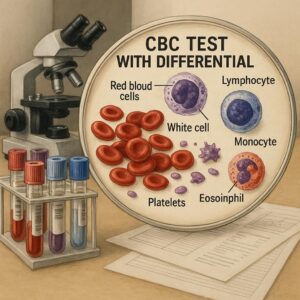
The “differential” (often abbreviated as “diff”) is the critical add-on. It doesn’t just count the total white blood cells; it breaks them down into the five specific types and reports each as a percentage of the total WBC count. This is invaluable because each type of white cell reacts differently to threats.
-
Neutrophils: Fight bacterial infections.
-
Lymphocytes: Fight viral infections and are key to long-term immunity.
-
Monocytes: Clean up dead cells and fight chronic infections.
-
Eosinophils: Respond to allergies and parasitic infections.
-
Basophils: Involved in inflammatory responses.
As Dr. Annette Carter, a board-certified hematopathologist, notes, “The differential is what transforms a simple screening tool into a powerful diagnostic instrument. A high neutrophil count points my investigation toward a bacterial cause, while a spike in lymphocytes suggests something viral. It’s the first clue on the diagnostic map.”
CBC with Differential vs. CBC without Differential
It’s essential to distinguish between these two tests, as they have different codes and clinical uses.
| Feature | CBC without Differential | CBC with Differential |
|---|---|---|
| CPT Code | 85027 | 85025 |
| White Blood Cell (WBC) Data | Reports only the total WBC count. | Reports the total WBC count plus the percentage and absolute count of all 5 WBC types (Neutrophils, Lymphs, Monos, Eos, Basos). |
| Primary Use | General health screening, monitoring known conditions where WBC type isn’t critical (e.g., routine anemia follow-up). | Diagnostic workup for infection, inflammation, leukemia, lymphoma, monitoring chemotherapy, or when a detailed immune response picture is needed. |
| Cost & Complexity | Generally less expensive and less complex. | More detailed, typically more expensive due to the added analysis. |
The Definitive CPT Code: 85025
Now for the answer you came for. The correct, current CPT (Current Procedural Terminology) code for a complete CBC with automated differential white cell count is:
CPT Code 85025 – Blood count; complete (CBC), automated (Hgb, Hct, RBC, WBC and platelet count) and automated differential WBC count.
This single code bundles the automated analysis of all the core components:
-
Hemoglobin (Hgb)
-
Hematocrit (Hct)
-
Red Blood Cell Count (RBC)
-
White Blood Cell Count (WBC) with automated differential
-
Platelet Count
How Billing Works: A Simple Analogy
Think of CPT code 85025 as a “lab test combo meal.” When you order it, you get the entrée (the main CBC) and the side (the differential) as one standard package. You cannot and should not bill for the components separately. Billing both 85025 and a code for just a CBC (85027) for the same blood draw on the same day is considered “unbundling” and is incorrect, potentially leading to claim denials or audits.
Important Note for Readers: Always verify codes with your specific payer (like Medicare or private insurance) and the most current CPT codebook. While 85025 is the standard, payer policies can have unique requirements or local coverage determinations.
When is a Manual Differential Needed? Code 85007 and 85009
Automated analyzers are excellent, but sometimes a human eye is needed. If the automated analyzer flags an abnormality (like unusual cell shapes or a very high count of one cell type), a medical technologist may perform a manual differential.
This involves staining a blood smear slide, examining it under a microscope, and manually counting and classifying 100 white blood cells. This is more time-intensive and requires expert skill.
-
CPT Code 85007: This code is for a manual differential WBC count only (not the full CBC). It’s an add-on code.
-
CPT Code 85009: This is the comprehensive code for a blood count; complete (CBC), automated and manual differential WBC count. It is used when both the automated and a manual differential are performed and reported.
Typically, the lab will bill 85025 for the automated CBC with diff. If a manual diff is added, they will adjust the billing to 85009. You would not bill 85025 and 85007 together.
Flowchart: Which Code to Use?
Navigating Costs and Insurance
The cost of a CBC with differential can vary widely based on:
-
Your geographic location
-
Where the test is performed (hospital vs. independent lab)
-
Your insurance plan’s negotiated rates
A Crucial Point for Patients: If you are getting a routine CBC with diff, it is often fully covered as preventive care under the Affordable Care Act. If it’s for diagnosing a symptom or monitoring a disease, it will apply to your deductible and coinsurance. Always ask your provider about the expected cost and check with your insurance company about coverage.
Steps to Avoid Surprise Bills:
-
Ask for the Code: When your doctor orders the test, ask the office staff for the CPT code they will use.
-
Call Your Insurer: Provide the CPT code (85025) to your insurance company. Ask: “Is CPT 85025 a covered benefit under my plan for diagnostic or preventive care? Which lab is in-network for me?”
-
Use an In-Network Lab: Ensure the blood draw center or lab (e.g., LabCorp, Quest Diagnostics) is in-network for your plan. This is the single biggest factor in controlling your cost.
The Clinical Value: Why This Test is So Common
Understanding the code is useful, but appreciating the test’s value is vital. A CBC with differential is a frontline diagnostic tool. Here’s what abnormal results might indicate:
-
High WBC Count (Leukocytosis): Could signal infection, inflammation, physical stress, or leukemia.
-
Low WBC Count (Leukopenia): May be caused by viral infection, autoimmune diseases, bone marrow problems, or chemotherapy side effects.
-
Differential Shifts:
-
High Neutrophils: Often indicates a bacterial infection.
-
High Lymphocytes: Suggests a viral infection (like mono) or certain leukemias.
-
-
Low RBC Count/Hemoglobin (Anemia): Causes fatigue, weakness, and can be due to iron deficiency, chronic disease, or blood loss.
-
Abnormal Platelet Count: Can lead to easy bruising/bleeding (if low) or clotting risks (if high).
This test provides a wealth of information from a simple vial of blood, guiding treatment decisions for everything from prescribing antibiotics to managing cancer therapy.
Conclusion
The CPT code for a standard CBC with automated differential is 85025. This single code encompasses the full automated analysis of your red cells, white cells (including the five-part differential), and platelets. Understanding this code empowers you to better navigate lab orders, insurance questions, and medical bills. Remember, when in doubt about costs, always communicate with your healthcare provider and insurance company, and ensure you use an in-network laboratory for your blood work.
FAQ: CPT Code for CBC with Differential
Q1: Is CPT 85025 for a CBC with differential?
A: Yes, absolutely. CPT code 85025 is the standard code for a complete blood count (CBC) performed by an automated analyzer that includes an automated differential white blood cell count.
Q2: What is the difference between CPT 85025 and 85027?
A: CPT 85025 is for a CBC with differential. CPT 85027 is for a CBC without differential (it only reports the total white blood cell count, not the breakdown of types).
Q3: Can 85025 and 85007 be billed together?
A: Generally, no. If a manual differential is performed in addition to the automated test, the correct code is usually 85009 (CBC, automated and manual differential). Billing 85025 + 85007 separately may be seen as incorrect unbundling.
Q4: How much does a test with CPT 85025 cost?
A: Costs vary dramatically ($20-$200+) based on location, lab facility, and most importantly, your insurance plan’s negotiated rates. The best way to know your cost is to use an in-network lab and check with your insurer.
Q5: Is a CBC with differential covered by insurance?
A: Often, yes. It is frequently covered 100% as part of an annual preventive exam. When used for diagnosing illness or monitoring a condition, it is typically covered under your plan’s diagnostic benefits, subject to your deductible and coinsurance.
Additional Resources
-
For the most authoritative and current information on CPT codes, visit the American Medical Association’s CPT Professional Edition codebook page: https://www.ama-assn.org/practice-management/cpt (Note: This is a proprietary publication for purchase).
-
For patient-friendly information on understanding your lab results, see the National Library of Medicine’s MedlinePlus guide on CBC: https://medlineplus.gov/lab-tests/complete-blood-count-cbc/
Author: The WebMD Writers Team
Date: FEBRUARY 10, 2026
Disclaimer: This article is for informational and educational purposes only. It does not constitute medical, coding, or billing advice. CPT is a registered trademark of the American Medical Association. Always consult with a qualified healthcare professional for medical advice and a certified medical coder or your payer for definitive coding guidance.