Navigating the world of medical coding can often feel like learning a new language. With its combination of letters and numbers, the ICD-10 coding system is the backbone of how healthcare providers diagnose, bill for, and track diseases and conditions. If you are here, you are likely looking for a specific code: F10.20.
This guide is designed to be your definitive resource for understanding this particular code. Whether you are a medical student, a healthcare professional brushing up on your coding skills, a patient seeking information, or a coder looking for clarification, we will break down everything you need to know about F10.20 in a clear, friendly, and comprehensive way.
We will explore what the code means, how it fits into the larger category of mental and behavioral disorders, how it differs from similar codes, and why accurate coding is so critical for effective patient care. Let’s dive in and demystify F10.20 together.
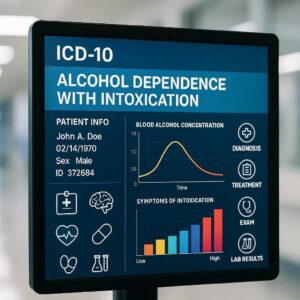
ICD-10 Code for F10.20
Table of Contents
ToggleWhat is ICD-10?
Before we get into the specifics of F10.20, it is helpful to understand the system it comes from. ICD-10 stands for the International Classification of Diseases, 10th Revision. It is a medical classification list created by the World Health Organization (WHO).
Think of it as a universal dictionary for diseases and health conditions. It allows healthcare providers around the world to have a common language. When a doctor in New York diagnoses a patient with F10.20, a specialist in London or a billing department in California knows exactly what that means. This standardization is essential for:
-
Diagnosis and Treatment: It helps doctors pinpoint and record a patient’s specific condition.
-
Epidemiology and Tracking: Public health officials use this data to track disease prevalence, outbreaks, and health trends across populations.
-
Billing and Reimbursement: Insurance companies, including Medicare and Medicaid, rely on these codes to process claims and determine reimbursement for healthcare services.
In the United States, a clinical modification called ICD-10-CM (Clinical Modification) is used for diagnostic coding. The codes we discuss here are part of that system.
Deconstructing F10.20: The Core Meaning
Let’s get straight to the point. The ICD-10 code for F10.20 is formally defined as:
Alcohol dependence, uncomplicated.
At its simplest, this code is used when a healthcare provider has diagnosed a patient with Alcohol Dependence (commonly known as alcoholism) but, at the time of the current encounter, the patient is not experiencing any acute complications directly related to their dependence.
To fully understand this code, we need to break it down into its component parts. The ICD-10 system is hierarchical, meaning each character adds a layer of specificity.
Breaking Down the Code
-
F10: This is the parent category. It covers “Mental and behavioral disorders due to use of alcohol.” Every code that deals with alcohol-related issues will start with these three characters. This includes everything from acute intoxication to withdrawal states and psychotic disorders, all stemming from alcohol use.
-
F10.2: The “.2” specifies “Alcohol dependence.” This is the diagnosis itself. We are no longer talking about just harmful use or intoxication; we are talking about a chronic, progressive condition characterized by a strong desire to drink, difficulty controlling use, and continued use despite harmful consequences. This is the core of the addiction.
-
F10.20: The final “0” at the end designates the condition as “uncomplicated.” This is the modifier that tells the story of the patient’s current state. “Uncomplicated” means that the patient’s dependence is present, but they are not currently experiencing:
-
Withdrawal: They are not going through the physical and psychological symptoms that occur when a person stops or reduces heavy, prolonged alcohol use.
-
Delirium: They are not in a state of severe confusion and altered consciousness, which can occur in severe withdrawal (Delirium Tremens).
-
Psychotic features: They are not currently experiencing hallucinations or delusions as a direct result of their alcohol use.
-
Intoxication: They are not currently under the influence of alcohol at the time of the encounter.
-
So, in essence, F10.20 paints a picture of a patient who is dependent on alcohol, but whose current clinical encounter is for the management of that dependence itself—perhaps an office visit to discuss treatment options, a therapy session, or a routine check-up—rather than for an emergency related to withdrawal or intoxication.
Important Note: The word “uncomplicated” in this context is a technical, clinical term. It does not mean that the patient’s situation is simple or that their alcoholism is not a serious problem. Alcohol dependence is always a significant health issue. It simply means that at this specific moment, the acute, immediate physical complications of withdrawal or intoxication are not the primary reason for the visit.
Clinical Picture: What Does “Alcohol Dependence” Mean?
To use the code F10.20 correctly, one must understand the clinical criteria for alcohol dependence. It is not simply about drinking too much or drinking frequently. According to the Diagnostic and Statistical Manual of Mental Disorders (DSM-5), which aligns closely with ICD-10 coding, Alcohol Use Disorder (which encompasses dependence) is diagnosed based on a cluster of symptoms.
For a diagnosis of dependence (or moderate to severe Alcohol Use Disorder), a patient typically meets at least two or three of the following criteria within a 12-month period:
Key Signs and Symptoms
-
Impaired Control: The individual may find it difficult to stop drinking once they have started. They may also have a persistent desire to cut down or control their drinking, with unsuccessful attempts to do so. They might spend a great deal of time obtaining, using, or recovering from alcohol.
-
Craving: A strong desire or urge to use alcohol. This is a powerful psychological component of dependence.
-
Tolerance: A need for significantly increased amounts of alcohol to achieve the desired effect (intoxication) or a markedly diminished effect with continued use of the same amount of alcohol. The person’s body has adapted to the presence of alcohol.
-
Withdrawal: The characteristic withdrawal syndrome for alcohol (which can include symptoms like anxiety, sweating, nausea, insomnia, and in severe cases, seizures) or using alcohol to relieve or avoid withdrawal symptoms (often called “hair of the dog”).
-
Neglect of Activities: Important social, occupational, or recreational activities are given up or reduced because of alcohol use. A person might stop exercising, skip family gatherings, or miss work.
-
Continued Use Despite Consequences: The individual continues to use alcohol even though they know it is causing or worsening a persistent or recurrent physical or psychological problem (e.g., liver damage, depression, blackouts).
When a patient presents with these symptoms but is not in an active state of withdrawal or intoxication, F10.20 is the appropriate code to capture their baseline condition.
The Critical Role of the Seventh Character
In ICD-10-CM, many codes, especially those for injuries and mental health, require a seventh character to provide more information about the encounter. For the entire F10.2 category, you will see a placeholder “x” used to keep the code structure consistent, followed by a seventh character.
You will often see F10.20 written with these additions:
-
F10.20 (without a 7th character): This is the parent code. It is generally considered unacceptable for billing purposes in most healthcare settings because it lacks the necessary specificity.
-
F10.20x (with placeholder): This shows where the seventh character goes. The “x” acts as a placeholder to keep the code length standard.
-
F10.20xA: This is the complete code for the initial encounter. This would be used when the patient is first seen for the management of their uncomplicated alcohol dependence.
-
F10.20xD: This is the complete code for a subsequent encounter. This is used for follow-up visits while the patient is receiving ongoing care for their uncomplicated alcohol dependence. This is the most common code you will see for routine check-ins, therapy sessions, or medication management appointments related to the dependence itself.
-
F10.20xS: This stands for sequela. A sequela is a condition that is the result of a disease or injury. For F10.20, this is rarely used. It might apply if a patient has a permanent condition resulting from a past complication of alcohol dependence, but the dependence itself is now being managed.
In short, for a typical office visit for someone managing their alcohol recovery, the correct code is most likely F10.20xD.
Comparative Analysis: F10.20 vs. Other Alcohol-Related Codes
One of the most common sources of confusion for new coders is knowing which “F10” code to use. The difference of one digit can completely change the clinical picture. To help clarify, let’s look at a comparison table.
ICD-10 Codes for Alcohol-Related Disorders
| ICD-10 Code | Description | Clinical Scenario | Key Differentiator |
|---|---|---|---|
| F10.10 | Alcohol abuse, uncomplicated | A patient who drinks heavily in a way that causes problems (like a DUI or missing work) but does not meet the criteria for dependence (e.g., no withdrawal, no tolerance). | Harmful use without the hallmarks of addiction (dependence). |
| F10.20 | Alcohol dependence, uncomplicated | A patient with a long-term pattern of dependence (craving, loss of control) is in for a routine therapy session to support their sobriety. | The core code for addiction management. They have the disease, but no acute complications today. |
| F10.21 | Alcohol dependence, in remission | A patient who was previously dependent on alcohol but has not met the criteria for dependence for an extended period (e.g., 12+ months for sustained remission). | A history of dependence, but it is no longer active. |
| F10.22 | Alcohol dependence with intoxication | A patient comes to the ER intoxicated, and they have a history of alcohol dependence. The intoxication is the focus of the visit. | Dependence is present, but the current issue is being drunk. |
| F10.23 | Alcohol dependence with withdrawal | A patient comes to the clinic with nausea, sweating, and anxiety 24 hours after their last drink. They have a history of dependence. | Dependence is present, but the current issue is the physical withdrawal syndrome. |
| F10.24 | Alcohol dependence with alcohol-induced mood disorder | A patient with alcohol dependence is experiencing significant depression that is directly caused by their alcohol use. | The mood disturbance is a direct physiological consequence of alcohol. |
| F10.25 | Alcohol dependence with alcohol-induced psychotic disorder | A patient with alcohol dependence experiences auditory hallucinations or paranoid delusions only during or after heavy drinking. | Hallucinations or delusions are the key feature. |
| F10.26 | Alcohol dependence with alcohol-induced persisting amnestic disorder | A patient with a long history of dependence has developed severe, lasting memory problems (like Korsakoff’s syndrome). | Permanent or long-term memory damage. |
| F10.27 | Alcohol dependence with alcohol-induced persisting dementia | A patient with a long history of dependence has developed a global cognitive decline (dementia) due to alcohol’s neurotoxic effects. | Global brain function decline, not just memory. |
| F10.28 | Alcohol dependence with other alcohol-induced disorders | A catch-all for dependence with other specific alcohol-induced problems not listed above (e.g., alcohol-induced sexual dysfunction). | A less common, specific alcohol-induced condition. |
| F10.29 | Alcohol dependence with unspecified alcohol-induced disorder | Used when it is clear the patient has dependence and another alcohol-induced problem, but the documentation doesn’t specify which one. | Lack of specific documentation. |
This table highlights the importance of precise documentation. Is the patient simply dependent, or are they dependent and currently in withdrawal? The answer dictates the code.
Practical Applications and Real-World Scenarios
Let’s look at how F10.20xD is used in practice through a few realistic scenarios.
Scenario 1: The First Step
The Patient: Mark has finally admitted to his family and his doctor that he has a problem with alcohol. He has tried to quit on his own but experiences intense cravings. He hasn’t had a drink in three days but is not experiencing physical withdrawal symptoms, just a strong urge to drink.
The Visit: He sees his primary care physician for a new patient visit to discuss treatment options. They talk about therapy, support groups, and possible medications like naltrexone.
The Code: The physician diagnoses him with Alcohol Dependence. Since this is the first time he is being seen for this condition, and he is not in withdrawal or intoxicated, the code is F10.20xA (Initial Encounter) .
Scenario 2: The Follow-Up
The Patient: Sarah has been in an outpatient treatment program for six months. She is doing well, attending therapy weekly, and taking her medication as prescribed. She has remained sober for the last four months.
The Visit: She has a 30-minute follow-up appointment with her psychiatrist to check in on her progress, discuss any challenges, and renew her prescription.
The Code: The psychiatrist documents that she is still managing her Alcohol Dependence. This is a routine follow-up for the ongoing condition. The correct code is F10.20xD (Subsequent Encounter) . This is the bread-and-butter code for ongoing addiction management.
Scenario 3: The Routine Physical
The Patient: David has a history of alcohol dependence and has been sober for three years. He comes in for his annual physical. He is healthy, exercises, and his liver function tests are normal.
The Visit: The doctor notes his history in the chart. However, the reason for the visit is the physical, and David’s dependence is currently in remission.
The Code: The correct code for the history of the condition is Z86.59 (Personal history of other mental and behavioral disorders). The active diagnosis of F10.20 would not be used because the condition is not currently active. F10.21 (Alcohol dependence, in remission) would be more appropriate to list as an active diagnosis if the provider is still monitoring the condition, as it is a chronic disease even in remission. This is a nuanced but important distinction.
Why Accurate Coding Matters: Beyond the Billing Office
It is easy to think of ICD-10 codes as just administrative tools for billing. However, using the correct code, like F10.20, has far-reaching consequences for the patient and the healthcare system.
1. Patient Care and Safety
The code on a patient’s chart tells a story to every provider who sees it. If a patient is admitted to a hospital for a broken leg, the code F10.20xD on their record alerts the medical team that they have alcohol dependence. This can be critical information for:
-
Pain Management: They may have a higher tolerance to certain medications.
-
Withdrawal Prevention: The team can monitor them for signs of withdrawal during their hospital stay and intervene early to prevent a severe episode.
-
Surgical Planning: Alcohol use can affect liver function and healing, which is important for surgeons and anesthesiologists to know.
2. Public Health Data
Aggregated, anonymized data from codes like F10.20 helps public health officials understand the true prevalence of alcohol dependence in a community, state, or country. This data is used to:
-
Allocate funding for addiction treatment programs.
-
Design public health campaigns.
-
Track the effectiveness of prevention efforts over time.
3. Research and Development
Researchers use this data to study the causes, progression, and treatment of alcohol dependence. Accurate coding allows for large-scale studies that can lead to new medications, therapies, and a better understanding of the disease.
4. Ethical and Legal Considerations
Using the most specific code is a matter of professional ethics. It ensures that the patient’s health record is an accurate reflection of their condition. It also ensures that healthcare providers are appropriately reimbursed for the complexity of care they provide.
Common Coding Mistakes and How to Avoid Them
Even experienced coders can make errors. Here are some common pitfalls associated with F10.20.
-
Mistake 1: Coding from a Lab Result Alone.
-
The Problem: A coder sees a lab result with an elevated blood alcohol level or a marker for heavy drinking like CDT (Carbohydrate-Deficient Transferrin) and automatically codes F10.20.
-
The Solution: The diagnosis must come from the provider’s documentation. The lab result supports the diagnosis, but it is the provider’s clinical assessment and documentation of symptoms that justifies the code.
-
-
Mistake 2: Using F10.20 for Withdrawal.
-
The Problem: A patient is shaky, nauseous, and tachycardic. The provider diagnoses “Alcohol Dependence.” The coder uses F10.20.
-
The Solution: The provider’s notes describe a patient in withdrawal. The correct code must reflect the complication. The coder should look for terms like “withdrawal” and query the provider if the documentation is unclear. The correct code here is F10.23 (Alcohol dependence with withdrawal) .
-
-
Mistake 3: Forgetting the Seventh Character.
-
The Problem: The coder submits a claim with just F10.20.
-
The Solution: This is an invalid code for billing in the US. Claims will be rejected. Coders must be trained to always include the appropriate seventh character (A, D, or rarely S) based on the encounter type.
-
-
Mistake 4: Confusing Dependence with Abuse.
-
The Problem: A patient drinks heavily and has had several DUIs, but shows no signs of tolerance or withdrawal. The provider diagnoses “alcohol use disorder” and the coder defaults to F10.20.
-
The Solution: The coder must review the documentation for the specific signs and symptoms. Does the patient meet the criteria for dependence (e.g., withdrawal, tolerance, compulsive use) or abuse (harmful use without the hallmarks of addiction)? If it’s the latter, F10.10 (Alcohol abuse) is more appropriate.
-
Frequently Asked Questions (FAQ)
To further clarify the use of F10.20, here are answers to some of the most frequently asked questions.
Q1: Can I use F10.20 if the patient is currently in a detox facility?
It depends on their state. If they are in detox because they are in withdrawal, the primary diagnosis should be F10.23 (withdrawal). If they have completed detox and are now starting a residential rehab program for their dependence, then F10.20xD (subsequent encounter) would be appropriate.
Q2: What is the difference between F10.20 and Z71.41?
F10.20 is the diagnosis of the disease itself (Alcohol dependence). Z71.41 is a code for “Alcohol abuse counseling and surveillance of alcoholic.” This is a “Z code” used to indicate that the reason for the encounter is specifically to receive counseling. It is common and perfectly acceptable to code both together: F10.20xD for the diagnosis and Z71.41 for the counseling service provided during the visit.
Q3: Is F10.20 a billable code?
Yes, but only when used with the appropriate seventh character (F10.20xA, F10.20xD). The code F10.20 by itself is not typically accepted for billing.
Q4: What if the patient has both alcohol dependence and cannabis use?
You would code both. Alcohol dependence would be coded as F10.20xD, and cannabis dependence or abuse would have its own code, such as F12.20 (Cannabis dependence, uncomplicated). Multiple diagnoses can and should be coded if present.
Q5: How does the “uncomplicated” modifier apply to someone with liver disease?
This is a great question. The “uncomplicated” in F10.20 refers to the mental and behavioral disorder itself. It means the patient is not currently intoxicated or in withdrawal. A patient can absolutely have F10.20 and a separate code for alcoholic liver disease, such as K70.9 (Alcoholic liver disease, unspecified). The liver disease is a consequence of the dependence, but it is not the same as being “complicated” by an acute behavioral state.
Additional Resources
Navigating the complexities of coding and addiction can be challenging. For further information, the following resources are invaluable.
-
The Official ICD-10-CM Guidelines: These are the rules of the road. Published by the CDC and CMS, they provide the definitive guidance on how to use all ICD-10 codes.
-
The Substance Abuse and Mental Health Services Administration (SAMHSA): This is the leading US agency for public health information related to mental health and substance use disorders. They offer excellent resources for both professionals and those seeking help.
-
National Institute on Alcohol Abuse and Alcoholism (NIAAA): Part of the NIH, the NIAAA is the primary US agency for research on alcohol use, its effects, and treatment.
-
American Psychiatric Association (APA): The publishers of the DSM-5, which provides the diagnostic criteria that align with ICD-10 codes.
Disclaimer: This article is intended for informational and educational purposes only and does not constitute medical or legal advice. Medical coding standards, guidelines, and payer policies are subject to change. While we strive to provide accurate and up-to-date information, healthcare providers and coders should consult current official coding manuals and guidelines for definitive information. Always refer to the specific documentation from your local authorities and payers. If you are seeking help for a substance use disorder, please contact a healthcare professional or SAMHSA’s National Helpline at 1-800-662-HELP (4357).
Conclusion
The ICD-10 code F10.20, representing “Alcohol dependence, uncomplicated,” is far more than just a string of characters. It is a precise clinical tool that communicates a patient’s diagnosis of alcohol addiction while specifying that they are not currently experiencing an acute complication like intoxication or withdrawal. When paired with the correct seventh character—typically “xD” for ongoing care—it becomes the cornerstone of documentation for the long-term management of this chronic disease. Understanding this code, its place within the broader F10 category, and the clinical reality it represents is essential for accurate billing, informed patient care, and meaningful public health data. By mastering the details of F10.20, we take a small but significant step toward better understanding and treating alcohol dependence.