If you have recently had blood work done, you might have noticed a line on your lab report that says “GGT.” Perhaps your doctor mentioned that this enzyme level was elevated. Now, you are trying to make sense of the paperwork, or maybe you are a medical coding student trying to understand the correct billing procedures.
You might be searching for a single code, but the reality is a bit more nuanced. In the world of medical diagnosis coding, we don’t have a specific code that says “GGT level.” Instead, we have codes that describe why the GGT might be high.
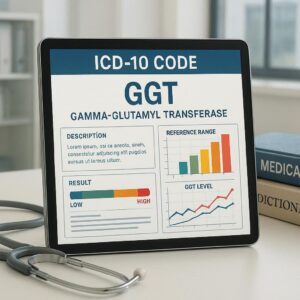
This guide is designed to walk you through everything you need to know about the ICD-10 codes associated with the Gamma-Glutamyl Transferase (GGT) blood test. We will break down the medical jargon, explain the connection between lab results and diagnostic codes, and help you understand what comes next.
ICD-10 Code for GGT
What is GGT and Why Do Doctors Test It?
Before we dive into the codes, let’s take a moment to understand the test itself. Gamma-Glutamyl Transferase (GGT) is an enzyme found in many organs throughout the body, with the highest concentrations found in the liver. It plays a vital role in the metabolism of glutathione, a key antioxidant that helps protect your cells from damage.
Doctors typically order a GGT test for a few specific reasons:
-
To evaluate liver function: It is one of the most sensitive markers for bile duct issues.
-
To check for bile duct obstruction: If bile flow is blocked (a condition called cholestasis), GGT levels often rise significantly.
-
To differentiate between liver and bone issues: Other enzymes, like Alkaline Phosphatase (ALP), can be elevated in both liver disease and bone disorders. Because GGT is not found in bone, a high ALP with a normal GGT usually points to a bone problem. A high ALP with a high GGT points to a liver issue.
-
To monitor alcohol use: GGT is particularly sensitive to the effects of alcohol. Chronic alcohol consumption can induce the liver to produce more of this enzyme.
It is important to remember that while the GGT test is very sensitive, it is not very specific. This means it is excellent at detecting a problem, but it cannot tell you exactly what that problem is. That is where the doctor’s expertise and additional testing come into play.
The Reality Check: There is No Single “ICD-10 Code for GGT”
This is the most important point of this entire article. If you look up “icd 10 code for ggt” in a coding manual, you will not find a specific code that says “Elevated GGT.”
Think of it this way: ICD-10 codes are used to describe the diagnosis or the reason for the encounter. An abnormal lab result, by itself, is not a diagnosis. It is a sign that something might be wrong.
Therefore, when a physician documents a patient encounter, they do not code the lab test; they code the condition that the lab test helped identify, or the symptoms that led them to order the test in the first place.
For example:
-
If the GGT is high because the patient drinks alcohol heavily, the code might relate to alcohol use.
-
If the GGT is high because of a blocked bile duct, the code might be for a biliary obstruction.
-
If the GGT is high but the doctor hasn’t figured out why yet, they might use a code for “Abnormal results of liver function studies” or for the presenting symptom (like jaundice or abdominal pain).
The Correct Codes for Abnormal Liver Function (Including GGT)
So, if you need to code for an encounter where a GGT test was ordered or resulted in an abnormal finding, where do you look? The most accurate place is within the R70-R79 range, which covers “Abnormal findings on examination of blood, without diagnosis.”
Specifically, the code you are looking for is:
R74.8 – Abnormal levels of other serum enzymes
This is the most common code used when a patient presents with an elevated GGT and the underlying cause has not yet been determined. This code captures the objective fact that the lab value is outside the normal range.
Comparison with Related Codes
To help clarify the coding landscape, here is a table comparing the most relevant codes for this scenario.
| ICD-10 Code | Description | When to Use It |
|---|---|---|
| R74.8 | Abnormal levels of other serum enzymes | Best for an isolated high GGT. Use this when the GGT is the primary abnormal finding and the doctor hasn’t made a final diagnosis. |
| R79.89 | Other specified abnormal findings of blood chemistry | This is a broader code for other blood chemistry abnormalities. It could be used if multiple non-specific enzymes or chemistries are off, but R74.8 is more specific to enzymes. |
| R94.5 | Abnormal results of liver function studies | This is a great alternative if the doctor ordered a full liver panel (including ALT, AST, ALP, Bilirubin) and the entire “study” came back abnormal. |
| K76.9 | Liver disease, unspecified | Only use this if the physician has documented a clinical diagnosis of liver disease but hasn’t specified the type. You cannot assume liver disease just from a high GGT. |
| Z01.89 | Encounter for other specified special examinations | This would be used if a patient is coming in specifically to have their GGT checked, perhaps as a follow-up to a previous abnormal result, but they are not currently sick. |
As you can see, the most accurate and honest code for a documented, unexplained high GGT is R74.8.
Common Conditions Associated with High GGT (And Their Codes)
When the doctor determines the cause of the elevated GGT, the coding changes from the “abnormal findings” code (R74.8) to the code for the definitive diagnosis. Here are some of the most common conditions linked to high GGT levels and their corresponding ICD-10 codes.
1. Liver and Biliary Tract Diseases
This is the most common category associated with GGT.
-
Cholestasis (K83.1): This refers to a condition where bile flow is reduced or blocked. Since GGT is highly sensitive to bile duct issues, this is a common correlate.
-
Obstruction of bile duct (K83.1): Often caused by gallstones.
-
Alcoholic liver disease (K70.9): Alcohol is a potent inducer of GGT.
-
Nonalcoholic fatty liver disease (NAFLD) (K76.0): Increasingly common, this condition is linked to obesity and metabolic syndrome.
-
Hepatitis, unspecified (K75.9): Inflammation of the liver from various causes.
-
Cirrhosis of liver (K74.60): Late-stage scarring of the liver.
2. Pancreatic Disorders
Because the bile duct passes through the pancreas, issues here can also affect the liver.
-
Acute pancreatitis (K85.9): Inflammation of the pancreas.
-
Diseases of the pancreas (K86.9): Other unspecified pancreatic issues.
3. Alcohol-Related Disorders
If the high GGT is specifically tied to alcohol consumption, the following codes may be used, often in conjunction with a code for the liver condition itself.
-
Alcohol dependence (F10.20): For patients physically dependent on alcohol.
-
Alcohol abuse (F10.10): For patients who drink in a harmful manner but are not dependent.
-
Mental and behavioral disorders due to use of alcohol (F10.9): An unspecified code for alcohol-related issues.
4. Medication Effects
Some prescription drugs can cause GGT to rise. In these cases, the condition is considered a drug-induced liver injury.
-
Drug-induced liver disease, unspecified (K71.9): This code is used when a medication is the suspected cause of the liver abnormality.
Important Note: Medical coding is complex. The physician’s documentation is the most critical part. The specific words they write in your chart determine which code is ultimately used.
How the GGT Test is Used in Diagnosis
To truly understand the coding, it helps to understand the diagnostic process. The GGT test is rarely used in isolation. It is usually part of a larger diagnostic picture.
The Role of GGT in Liver Panels
Doctors often look at GGT alongside other enzymes. Here’s how they interpret the patterns:
-
High GGT + High ALP (Alkaline Phosphatase): This strongly suggests a problem with the bile ducts, such as an obstruction.
-
Normal GGT + High ALP: This is a classic sign that the high ALP is coming from the bone (e.g., Paget’s disease, healing fracture) and not the liver.
-
High GGT + High ALT/AST (Alanine Aminotransferase/Aspartate Aminotransferase): This points to liver cell damage, which could be caused by hepatitis, alcohol, or fatty liver.
-
Isolated High GGT: This can sometimes be seen with chronic alcohol consumption or as an early sign of liver issues before other enzymes become abnormal.
What is Considered a High GGT?
Normal ranges can vary slightly from one laboratory to another, but a typical reference range for adults is between 5 and 40 U/L (units per liter) .
-
Mild Elevation: 2-5 times the upper limit of normal. Often linked to alcohol use, NAFLD, or certain medications.
-
Moderate to Severe Elevation: More than 5 times the upper limit. Often points to more significant liver damage, bile duct obstruction, or acute hepatitis.
Reader Note: Always discuss your specific lab results with your doctor. The “normal range” on your report is the best guide, as it is calibrated to that lab’s specific testing methods.
A Patient’s Guide to the Diagnostic Journey
If you have been told your GGT is high, you might feel anxious. Let’s walk through what a typical journey looks like, from the initial finding to the final diagnosis.
Step 1: The Discovery
You go for a routine physical or have specific symptoms (like fatigue, yellowing skin, or abdominal pain). Your doctor orders a Comprehensive Metabolic Panel (CMP) which includes liver enzymes. The results come back, and the GGT is flagged as “High.”
Step 2: The Initial Consultation (R74.8)
Your doctor will sit down with you. They will review the result and ask about your history. Do you drink alcohol? What medications or supplements do you take? Do you have a family history of liver disease? At this point, they don’t have a definitive answer. They have a sign. In their notes, they will document “Abnormal liver enzymes.” The corresponding code for this encounter is likely R74.8 (Abnormal levels of other serum enzymes).
Step 3: Further Investigation
The doctor will likely order more tests to figure out the “why.” This could include:
-
Repeat blood work: To confirm the finding.
-
Imaging: An ultrasound of the abdomen is a common next step to look at the liver, gallbladder, and bile ducts for stones, tumors, or fatty changes.
-
More specific blood tests: To check for viral hepatitis (like Hepatitis B or C) or autoimmune liver diseases.
Step 4: The Diagnosis
Based on the results, the doctor can now make a diagnosis.
-
Scenario A: The ultrasound shows gallstones blocking the bile duct. Diagnosis: Obstruction of bile duct. Code: K83.1.
-
Scenario B: The ultrasound shows a “bright” liver consistent with fatty liver, and you have risk factors like obesity and diabetes. Diagnosis: Nonalcoholic fatty liver disease. Code: K76.0.
-
Scenario C: You disclose that you have been drinking heavily. Diagnosis: Alcoholic liver disease. Code: K70.9.
Step 5: Ongoing Management
Once the diagnosis is made, the focus shifts to treatment. Future visits will use the definitive diagnosis code (e.g., K76.0) for follow-up care, rather than the abnormal findings code (R74.8).
Frequently Asked Questions (FAQ)
Here are some of the most common questions people have about GGT and the associated medical codes.
Q1: Is there a specific ICD-10 code for “high GGT”?
A: No. In ICD-10, you code the diagnosis, not the lab result. The closest you can get is R74.8 for “Abnormal levels of other serum enzymes,” which is used when a definitive diagnosis hasn’t been made.
Q2: My blood test says my GGT is high, but my doctor isn’t worried. Why?
A: Sometimes, GGT can be slightly elevated due to things like certain medications (phenytoin, barbiturates) or even just one or two alcoholic drinks the night before the test. Your doctor will consider the degree of elevation, your other lab results, and your overall health to decide if it’s a cause for concern.
Q3: What is the difference between GGT and ALT?
A: Both are liver enzymes, but they signal different things. ALT (Alanine Aminotransferase) is found mainly inside liver cells. When those cells are damaged or inflamed, ALT leaks into the blood. GGT is more associated with the bile ducts and is also sensitive to alcohol. Think of ALT as a marker of liver cell injury and GGT as a marker of bile flow issues or enzyme induction (often by alcohol).
Q4: Can a high GGT be treated directly?
A: You don’t treat a lab value; you treat the underlying cause. If the cause is alcohol, treatment involves stopping drinking. If it’s a blocked bile duct, treatment might involve surgery or an ERCP procedure to remove the blockage. If it’s medication, your doctor might adjust your prescription. The GGT level will naturally return to normal as the underlying condition improves.
Q5: What does it mean if my GGT is high but all other liver tests are normal?
A: This pattern is often associated with chronic alcohol consumption, as alcohol can induce the liver to produce more GGT without necessarily causing immediate cell death (which would raise ALT). It can also be an early sign of liver issues, so your doctor may want to monitor it over time.
Additional Resources
For more detailed information on liver health and specific diseases, the following resources are excellent, authoritative sources:
-
American Liver Foundation: https://liverfoundation.org/
-
National Institute of Diabetes and Digestive and Kidney Diseases (NIDDK): https://www.niddk.nih.gov/
Conclusion
Navigating the world of medical codes can feel like learning a new language. While there is no single “icd 10 code for ggt,” understanding the logic behind the system makes it much clearer. The key takeaway is that R74.8 is the appropriate code for an isolated, unexplained high GGT. However, the ultimate goal of the diagnostic process is to move from this non-specific code to a definitive diagnosis code that accurately describes the underlying health condition.
Disclaimer: This article is for informational purposes only and does not constitute medical advice. Always consult with a qualified healthcare professional for diagnosis and treatment. Medical coding guidelines are subject to change; always refer to the latest official ICD-10 manuals for billing and coding.