Have you ever felt your heart skip a beat, flutter in your chest, or suddenly pound against your ribs? It can be a startling sensation. You might be sitting quietly watching television, and suddenly it feels like a bird is trapped inside your ribcage. This feeling, often described as a heart palpitation, is one of the most common reasons people visit their doctor.
If you are reading this, you are likely trying to understand the official medical terminology behind this feeling. Specifically, you are searching for the “icd 10 code for heart palpitation.” This code is more than just a random string of letters and numbers; it is the universal language that doctors, insurance companies, and health information managers use to describe your experience accurately.
This guide is designed to be your friendly, reliable resource. We will walk through everything you need to know about heart palpitations and their corresponding ICD-10 codes. Whether you are a medical coder looking for precision, a patient trying to decipher your medical chart, or a student learning the ropes, you are in the right place. We will keep things clear, simple, and comprehensive, ensuring you walk away with a solid understanding of the topic.
Let’s demystify the medical jargon together and get to the heart of the matter.
ICD-10 Code for Heart Palpitations
What Are Heart Palpitations? Understanding the Sensation
Before we dive into the specific codes, it is helpful to understand exactly what we are talking about. Heart palpitations are the awareness of your own heartbeat. Normally, you don’t notice your heart beating—it just quietly does its job. But during a palpitation, that changes.
People describe the sensation in many ways:
-
A fluttering feeling in your chest.
-
A very fast or pounding heartbeat.
-
A feeling that your heart has “skipped a beat.”
-
An occasional extra, hard beat.
-
A flopping or thudding sensation, sometimes in your neck as well.
It is important to know that palpitations are a symptom, not a disease itself. Think of them like a fever. A fever tells you that something might be going on in the body, like an infection, but it isn’t the infection itself. Similarly, palpitations tell you that your heart’s rhythm might be temporarily out of step, but they don’t automatically mean you have a serious heart condition.
In many cases, palpitations are harmless and resolve on their own. However, because they can sometimes signal a problem, it is always wise to pay attention to them and seek medical advice, which is where proper diagnosis and coding come into play.
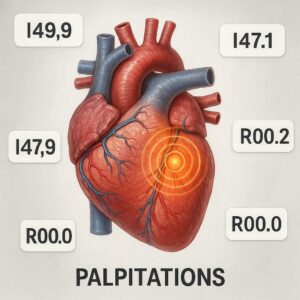
The Primary Code: R00.2 – Palpitations
In the vast library of the ICD-10 (International Classification of Diseases, 10th Revision), there is a specific code designated for the symptom we are discussing. When a patient comes in and says, “Doctor, I feel my heart pounding,” and after examination, the doctor determines it is an awareness of the heartbeat without an immediate, dangerous cardiac event, the primary code used is R00.2.
R00.2 stands for Palpitations.
This code falls under the broader category of “Abnormalities of heart beat” (R00). It is the go-to code when a patient reports the sensation of a rapid or irregular heartbeat, but a more specific diagnosis (like Atrial Fibrillation) hasn’t yet been confirmed or is ruled out at that visit.
Important Note on R00.2:
It is crucial to understand that R00.2 is a symptom code. In the world of medical coding, symptom codes are used when a definitive diagnosis has not been established. If, after running tests like an EKG or a Holter monitor, the doctor discovers a specific arrhythmia, they will replace R00.2 with the more specific code for that condition. We will explore those later in this guide.
Why Is the ICD-10 Code So Important?
You might wonder why we put so much emphasis on a single code. The ICD-10 code serves several critical functions in the healthcare system. It is not just bureaucratic paperwork; it is the backbone of modern medical communication.
Here is why the correct code, like R00.2, matters:
-
For Accurate Billing and Insurance: Insurance companies use these codes to determine coverage and process claims. The code tells them the reason for the visit. If the code is incorrect, the claim can be denied, leading to delays and headaches for both the patient and the provider.
-
For Medical Records and History: Your chart is your health story. The ICD-10 code is a shorthand way of documenting that story accurately. It ensures that any other doctor you see in the future understands what symptoms you were experiencing and what the suspected or confirmed diagnosis was.
-
For Public Health Data and Research: Aggregated data from millions of these codes help researchers track disease patterns, study the prevalence of symptoms, and allocate healthcare resources effectively. For example, a sudden spike in claims with the code R00.2 in a specific region might indicate an environmental factor or a new health trend that needs investigation.
-
For Clear Communication: It eliminates ambiguity. “Heart palpitations” can mean different things to different people, but R00.2 means one specific thing to healthcare professionals worldwide.
Think of it as a postal code for your health information. It ensures that the data gets to the right place for the right purpose.
Beyond the Basics: A Deeper Dive into Palpitations
Now that we know the primary code, let’s look at the bigger picture. Since R00.2 is a symptom code, the doctor’s job is to figure out the “why” behind the fluttering. Understanding the common causes can help you have a more informed conversation with your healthcare provider.
Common Triggers (Not Diseases)
Many palpitations are caused by lifestyle factors or temporary situations. These are often resolved by making simple changes.
-
Stress and Anxiety: This is one of the most frequent culprits. When you are stressed, your body releases adrenaline, which can make your heart beat faster and stronger.
-
Caffeine and Stimulants: That extra cup of coffee, energy drink, or even some teas can overstimulate the heart.
-
Nicotine and Alcohol: Both are stimulants that can trigger palpitations in some people.
-
Hormonal Changes: Pregnancy, menopause, and even menstrual cycles can cause temporary palpitations due to fluctuating hormone levels.
-
Dehydration and Electrolyte Imbalance: Your heart relies on a delicate balance of minerals like potassium, magnesium, and calcium to beat correctly. When you are dehydrated, this balance can be disrupted.
-
Exercise: While generally good for you, intense exercise can cause palpitations during or immediately after the workout.
-
Certain Medications: Some over-the-counter cold medicines containing pseudoephedrine or even some asthma inhalers can cause the heart to race.
When Palpitations Signal a Heart Condition
Sometimes, the palpitations are caused by an actual issue with the heart’s electrical system. In these cases, the symptom code R00.2 will eventually be replaced with a more specific diagnosis code. These conditions are known as arrhythmias.
Comparative Table: Symptom Codes vs. Specific Diagnosis Codes
To make this clearer, let’s look at a table comparing the general symptom code R00.2 with specific diagnosis codes for heart rhythm disorders.
| Code | Description | What It Means | When It Is Used |
|---|---|---|---|
| R00.2 | Palpitations | The patient feels their heartbeat (pounding, fluttering, skipping). | At the first visit, or when tests show no dangerous arrhythmia, but the sensation is present. |
| I48.91 | Unspecified Atrial Fibrillation | The upper chambers of the heart (atria) quiver irregularly instead of beating effectively. | After an EKG confirms an irregular, often rapid, heart rate originating in the atria. |
| I47.2 | Ventricular Tachycardia | A fast, regular heart rate that originates in the lower chambers (ventricles). | This is a serious condition, confirmed by cardiac monitoring, requiring immediate medical attention. |
| I49.9 | Cardiac arrhythmia, unspecified | A general term meaning the heart’s rhythm is abnormal, but the exact type isn’t specified. | Used when an irregularity is detected but its precise nature hasn’t been pinned down. |
| I49.3 | Premature ventricular depolarization | “Extra” heartbeats that begin in the ventricles. Often felt as a “skipped beat” followed by a thud. | A very common, usually benign finding on an EKG or Holter monitor. |
This table highlights the journey of a diagnosis. It often starts with the symptom (R00.2) and moves to a specific condition (like I48.91) once more information is gathered.
How Doctors Find the Correct Code: The Diagnostic Journey
You might be curious about the process a doctor follows to go from “I feel palpitations” to assigning the correct code. It is a step-by-step detective process.
Step 1: The Patient History
The doctor will ask you detailed questions. This conversation is the most important part of the diagnosis. They will want to know:
-
What does it feel like? (Fluttering, pounding, skipping?)
-
When did it start?
-
How long does it last? (Seconds, minutes, hours?)
-
How often does it happen? (Once a day, once a month?)
-
What are you doing when it happens? (Exercising, resting, sleeping?)
-
What makes it stop? (Resting, coughing, deep breathing?)
-
Do you have any other symptoms? (Dizziness, chest pain, shortness of breath, fainting?)
Step 2: The Physical Exam
The doctor will listen to your heart with a stethoscope. They are checking for irregular rhythms, murmurs, or other abnormal sounds. They will also check your pulse, blood pressure, and look for signs of other conditions like an overactive thyroid.
Step 3: Diagnostic Tests
If the history and physical exam suggest a possible arrhythmia, the doctor will order tests.
-
Electrocardiogram (EKG or ECG): This is the primary test for the heart’s electrical activity. It is a snapshot of your heart’s rhythm at that exact moment. The challenge? If you aren’t having palpitations during the test, the EKG may look perfectly normal.
-
Holter Monitor: This is a portable EKG device that you wear for 24 to 48 hours (or even up to 30 days). It records your heart’s rhythm continuously, greatly increasing the chance of capturing a palpitation event.
-
Event Monitor: You wear this device for weeks or months, but it only records when you activate it by pushing a button when you feel a symptom.
-
Echocardiogram: This is an ultrasound of your heart. It creates a moving picture to check the structure of your heart, looking at the chambers, valves, and pumping strength. It doesn’t measure electrical activity but can reveal structural problems that might cause arrhythmias.
-
Blood Tests: These can check for electrolyte imbalances, thyroid problems, or other substances that could affect your heart rhythm.
Only after gathering this information can a doctor confidently move from the symptom code R00.2 to a more definitive diagnosis.
Helpful List: When to Seek Immediate Medical Attention
While most palpitations are harmless, some are accompanied by warning signs that require emergency care. Do not hesitate to go to the emergency room or call for an ambulance if your palpitations occur with any of the following:
-
Chest pain or pressure.
-
Severe shortness of breath.
-
Fainting or losing consciousness (syncope).
-
Severe dizziness or lightheadedness.
Important Note: This list is not a substitute for professional medical advice. If you are ever in doubt about your symptoms, it is always safer to seek immediate medical attention. Trust your instincts.
Related ICD-10 Codes You Might Encounter
The world of cardiology coding is vast. Here are some other related codes that often appear alongside or in place of R00.2 in medical records.
For Specific Arrhythmias:
-
I48.91 – Atrial Fibrillation, unspecified: As mentioned, this is one of the most common arrhythmias diagnosed.
-
I48.2 – Chronic Atrial Fibrillation: When the condition is persistent and long-standing.
-
I49.1 – Atrial premature depolarization: “Extra” beats from the atria. Often benign.
-
I49.3 – Ventricular premature depolarization: “Extra” beats from the ventricles. Also common and often benign.
-
I47.1 – Supraventricular tachycardia (SVT): A rapid heartbeat that starts in the upper chambers.
For Underlying Conditions That Cause Palpitations:
Sometimes, the palpitations are a symptom of another problem entirely.
-
E05.90 – Thyrotoxicosis, unspecified or without storm: An overactive thyroid can cause a rapid heart rate.
-
F41.9 – Anxiety disorder, unspecified: Anxiety is a massive driver of the sensation of palpitations.
-
D50.9 – Iron deficiency anemia, unspecified: Anemia means your blood has fewer red blood cells, so your heart has to pump faster to deliver oxygen.
-
E87.6 – Hypokalemia: Low potassium levels in the blood, which can disrupt heart rhythm.
Living with and Managing Palpitations
If you have been diagnosed with benign palpitations (often using code R00.2), the goal is often management, not a “cure.” You can take an active role in reducing their frequency.
Practical Lifestyle Tips:
-
Stress Less: This is easier said than done, but techniques like yoga, meditation, deep breathing exercises, and spending time in nature can lower your baseline adrenaline levels.
-
Cut the Stimulants: Try reducing or eliminating caffeine, alcohol, and nicotine. Keep a journal to see if palpitations occur after you consume these substances.
-
Stay Hydrated: Drink plenty of water throughout the day, especially if you are active or it is hot outside.
-
Get Enough Sleep: Fatigue can be a major trigger. Aim for 7-9 hours of quality sleep.
-
Eat a Balanced Diet: Make sure you are getting enough potassium and magnesium from foods like bananas, spinach, avocados, and nuts.
-
Check Your Medications: Review your over-the-counter and prescription medications with your doctor. You might find a trigger.
Quotation: A Patient’s Perspective
To bring this all together, let’s hear from a patient who navigated this journey.
“When I first felt my heart flutter, I was terrified. I went to my doctor, and after listening to me, he wrote down R00.2 in my chart. He explained it was the code for ‘palpitations’—the symptom I was feeling. He didn’t just stop there. He sent me home with a Holter monitor for 24 hours. A week later, we got the results. It turned out I had benign extra beats, especially after my morning coffee. Knowing the official code, R00.2, and understanding that it was just a starting point made the whole process feel less scary. It was just the first word in a sentence that ended with a simple lifestyle change.” – Sarah M.
Conclusion
Understanding the “icd 10 code for heart palpitation” is the first step in demystifying a common and often unsettling experience. The code R00.2 serves as the crucial starting point—a flag that signals a specific symptom, paving the way for accurate diagnosis, effective communication between healthcare providers, and proper insurance processing.
Remember, this code is not a final destination but a signpost on the road to better health. Whether your palpitations are a fleeting result of stress or a sign of a manageable heart condition, the ICD-10 system helps ensure your experience is documented, understood, and acted upon with precision. Always work closely with your healthcare provider to interpret what your own heart is telling you.
Frequently Asked Questions (FAQ)
1. Is R00.2 the only code for heart palpitations?
It is the primary symptom code. However, if the palpitations are due to a specific condition like Atrial Fibrillation (I48.91) or Anxiety (F41.9), those codes will be used instead of or in addition to R00.2.
2. What does R00.2 mean on my medical bill?
On a bill, R00.2 indicates that the medical service provided was related to the evaluation or treatment of the symptom of palpitations—the sensation of a pounding, racing, or irregular heartbeat.
3. Can I have palpitations but a normal EKG?
Absolutely. An EKG is just a 10-second snapshot. If you aren’t having palpitations at that exact moment, the EKG will be normal. This is why doctors often use Holter or event monitors for a longer recording period.
4. Are heart palpitations a sign of a heart attack?
Not usually. Palpitations are generally a rhythm issue. A heart attack (myocardial infarction) is typically caused by a blockage in blood flow. However, palpitations accompanied by chest pain, shortness of breath, or nausea could be a sign of a heart attack and require immediate emergency care.
5. How can I explain my palpitations to my doctor to ensure accurate coding?
Be specific. Use descriptive words (fluttering, pounding, skipping). Keep a log of when they happen, what you are doing, and how long they last. Mention any other symptoms, even if you think they are unrelated. The more details you provide, the better your doctor can determine the underlying cause and assign the most accurate code.
Additional Resource
For the most authoritative and up-to-date information on heart health and arrhythmias, we recommend visiting the American Heart Association’s website. They offer patient-friendly resources, research updates, and lifestyle tips.
Visit the American Heart Association
Disclaimer: This article is for informational purposes only and does not constitute medical advice. The information contained herein is not a substitute for and should never be relied upon for professional medical advice. Always talk to your doctor about the risks and benefits of any treatment or for diagnosis of your specific condition. The ICD-10 codes discussed are subject to official coding guidelines and should be applied by certified professionals.