Navigating the world of medical coding can often feel like learning a new language. If you are a healthcare professional, a medical coder, a billing specialist, or even a patient trying to understand a medical chart, you have likely encountered the term “psoriatic arthropathy” and wondered about its specific classification.
In the world of ICD-10 (the International Classification of Diseases, 10th Revision), precision is everything. Using the correct code isn’t just about paperwork; it is about ensuring accurate patient records, justifying treatment plans to insurers, and securing proper reimbursement.
This guide is designed to be your friendly, expert companion in understanding the ICD-10 code for psoriatic arthropathy. We will break down the specifics, explore the nuances of clinical documentation, and provide you with the tools you need to code this condition with confidence. Let’s dive in.
ICD-10 Code for Psoriatic Arthropathy
The Core Answer: What is the ICD-10 Code for Psoriatic Arthropathy?
If you are here for the quick, definitive answer, you will find it below. However, as we will discover throughout this article, the “correct” code often depends on the specific details of the patient’s condition.
The primary ICD-10-CM (Clinical Modification) code used to capture psoriatic arthropathy is:
L40.5
This code falls under the broader category of “Diseases of the skin and subcutaneous tissue” (L00-L99) specifically within the “Papulosquamous disorders” (L40-L45) block, which is where psoriasis and similar conditions are classified.
L40.5 is officially described as Arthropathic psoriasis.
This code effectively bridges the gap between the dermatological condition (psoriasis) and the rheumatological condition (arthritis). It tells the story that the patient has a form of inflammatory arthritis associated with their psoriasis.
Understanding the Terminology: Psoriasis vs. Psoriatic Arthropathy
Before we go deeper into coding, it is helpful to understand the condition itself. This clinical understanding is the foundation of accurate coding.
-
Psoriasis: This is primarily a skin condition. It is an autoimmune disorder that causes skin cells to multiply too quickly, resulting in red, inflamed patches of skin often covered with silvery-white scales. The most common ICD-10 code for plaque psoriasis is L40.0.
-
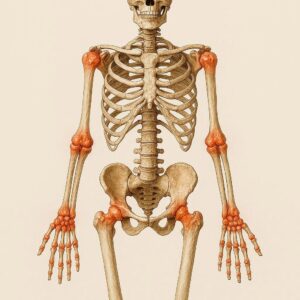
Psoriatic Arthropathy (PsA): This is a form of inflammatory arthritis that affects some people who have psoriasis. It occurs when the body’s immune system attacks its own joints and skin, causing joint pain, stiffness, and swelling. It can affect any part of the body, including the fingertips and spine, and can range from relatively mild to severe.
Think of it this way: a patient can have psoriasis without ever developing psoriatic arthropathy. However, a diagnosis of psoriatic arthropathy implies the presence of, or a history of, psoriasis. The code L40.5 captures this specific, combined condition.
Important Note: While L40.5 is the code for the condition itself, if a patient is being seen for a manifestation or a specific symptom, you may need to code that separately. We will cover combination coding later.
Beyond the Basics: The Clinical Picture of Psoriatic Arthropathy
To code effectively, you need to understand what the clinician is looking for. Psoriatic arthritis is not a one-size-fits-all disease. It can present in several distinct patterns, which can sometimes be specified in the medical record. Knowing these patterns helps you understand the severity and context of the L40.5 diagnosis.
The Five Main Patterns of PsA
-
Asymmetric Oligoarticular PsA: This is the most common form. It typically affects fewer than five joints, and it is “asymmetric,” meaning it might affect a knee on one side and a few fingers on the other. The joints are often swollen and painful.
-
Symmetric Polyarticular PsA: This pattern looks a lot like rheumatoid arthritis. It affects multiple joints on both sides of the body (both wrists, both ankles, etc.). It can be quite disabling.
-
Distal Interphalangeal (DIP) Joint-Predominant PsA: This form primarily affects the small joints closest to the nails in the fingers and toes. It is often associated with nail changes like pitting or crumbling.
-
Arthritis Mutilans: This is a rare, severe, and destructive form of PsA. Over time, it can destroy the small bones in the hands, leading to severe deformity. It is sometimes described as “telescoping” fingers.
-
Spondylitis-Predominant PsA: This form primarily affects the spine (spondylitis) and the sacroiliac joints (sacroiliitis) in the pelvis, causing stiffness and pain in the neck, lower back, and hips.
While your ICD-10 code will likely remain L40.5, the documentation of these patterns provides crucial clinical context that supports the medical necessity of the treatment plan.
The Crucial Role of Clinical Documentation
The ICD-10 code is only as good as the documentation it comes from. For a medical coder, a vague note in a patient’s chart is a red flag. To assign the code L40.5 with confidence, the provider’s documentation should ideally include several key components.
What to Look for in a Provider’s Notes
-
Clear Diagnosis: The provider must explicitly state “psoriatic arthritis,” “psoriatic arthropathy,” or “arthropathic psoriasis.”
-
Link to Psoriasis: The note should confirm that the patient has psoriasis. This might be stated as “patient has a history of psoriasis” or based on a current skin exam showing psoriatic lesions. This connection is the very essence of the L40.5 code.
-
Affected Joints: Which joints are involved? (e.g., “Patient presents with pain and swelling in the left wrist and the proximal interphalangeal joints of the right hand.”)
-
Clinical Findings: Descriptions of symptoms like “morning stiffness lasting more than 30 minutes,” “dactylitis” (sausage-like swelling of a whole finger or toe), or “enthesitis” (tenderness at sites where tendons and ligaments attach to bone, like the Achilles tendon or the bottom of the foot).
-
Impact of the Condition: How does the condition affect the patient’s function? (e.g., “Difficulty gripping objects,” “limping due to ankle pain.”)
-
Treatment Plan: What is being prescribed? (e.g., NSAIDs, DMARDs like methotrexate, or biologics). The treatment plan should logically follow from the documented diagnosis and findings.
Example of Good Documentation:
“The patient, a 45-year-old with a known history of plaque psoriasis (L40.0), presents today with complaints of pain and swelling in the right knee and the DIP joints of the left index finger. Exam reveals synovitis in the right knee and pitting of the fingernails. Morning stiffness lasts for about an hour. Assessment: Asymmetric psoriatic arthropathy (L40.5). Plan: Continue methotrexate and refer for physical therapy.”
This note tells a complete story, justifying the use of L40.5 and any associated procedures or treatments.
Coding Nuances: When to Use L40.5 and When Not To
One of the most common questions is about “combination codes.” In ICD-10, L40.5 is a combination code. This means that a single code is used to represent two interconnected conditions (psoriasis and the arthropathy). This is convenient, but it also means you need to be careful.
The “Code First” and “Use Additional Code” Guidelines
The ICD-10 manual includes specific instructional notes for L40.5.
-
Code First: You will often see the instruction to “Code first” associated with related conditions. For L40.5, the underlying psoriasis is inherently part of the code, so you generally do not code psoriasis separately unless it is a different type or the reason for the encounter. However, always follow your specific coding manual’s guidelines.
-
Use Additional Code: This is where precision is key. L40.5 describes the disease, but it does not describe the manifestations. You are encouraged to “use additional code” to identify:
-
Joint involvement: You can add codes from the M00-M99 series to specify the affected joints. For example, if the patient has psoriatic arthritis of the right wrist, you would use L40.5 for the diagnosis and then an additional code, such as M11.231 (Other specified arthropathy, right wrist), to pinpoint the location. Note: It is crucial to check your local coding guidelines and software, as some payers have specific rules about which manifestation codes are appropriate with L40.5.
-
Other manifestations: If the patient has specific issues like dactylitis or enthesitis, you may also need to code those findings separately if they are addressed during the encounter.
-
When to Code Psoriasis (L40.0) Separately
If a patient with known psoriatic arthropathy comes in for a skin-only concern—for example, a new, severe flare-up of their plaque psoriasis that requires a different treatment—the primary diagnosis for that visit should be the skin condition. In this case, you would code:
-
Primary (for the visit): L40.0 (Psoriasis vulgaris)
-
Secondary (history): L40.5 (Arthropathic psoriasis) – to indicate their underlying condition.
This tells the payer that the main reason for today’s visit was the skin issue, but the patient has a history of the more complex arthritic condition, which is relevant to their overall health.
Comparative Table: L40.5 vs. Other Common Codes
To help you distinguish L40.5 from other similar-looking codes, here is a handy reference table.
| ICD-10 Code | Description | Typical Use Case | Key Differentiator |
|---|---|---|---|
| L40.5 | Arthropathic psoriasis | Patient has confirmed psoriasis and presents with inflammatory joint pain, swelling, and stiffness. | Combination code. Links the skin and joint conditions. |
| L40.0 | Psoriasis vulgaris | Patient has the classic skin plaques but no signs or symptoms of joint involvement. | Skin-only code. No arthritis component. |
| M06.9 | Rheumatoid arthritis, unspecified | Patient has symmetric joint pain and swelling, but no history or signs of psoriasis. Rheumatoid factor may be positive. | Autoimmune, but not linked to psoriasis. A different disease process. |
| M19.90 | Osteoarthritis, unspecified site | Patient has joint pain, typically in weight-bearing joints (knees, hips), worse with use, with minimal morning stiffness. | Degenerative (“wear and tear”) arthritis. Not autoimmune or inflammatory in the same way. No link to psoriasis. |
| M46.90 | Unspecified inflammatory spondylopathy | Patient has inflammation and stiffness in the spine, but the specific cause (like PsA or ankylosing spondylitis) is not yet determined. | Location-specific (spine) but cause unspecified. |
| M07.60 | Enteropathic arthropathies | Patient has arthritis associated with inflammatory bowel disease (Crohn’s or Ulcerative Colitis). | Arthritis linked to IBD, not psoriasis. |
A Step-by-Step Guide to Coding for Psoriatic Arthropathy
Let’s walk through a practical workflow for a medical coder reviewing a chart.
-
Locate the Diagnosis: Find the Assessment and Plan section of the note. What condition has the provider diagnosed?
-
Confirm the Link: Does the note establish a link between the arthritis and psoriasis? Is there a current diagnosis or a clear history of psoriasis?
-
Identify the Encounter’s Focus: Is the patient here primarily for the arthritis, or is it for a skin flare with the arthritis as a background condition? This determines the primary code.
-
Check for Specificity: Does the note describe which joints are affected? Are there specific manifestations like dactylitis or enthesitis that were treated or evaluated? (e.g., “Injected the left second MCP joint for dactylitis”).
-
Assign the Primary Code:
-
If the visit is for arthritis: Assign L40.5 as the primary diagnosis.
-
If the visit is for a skin flare: Assign the specific psoriasis code (e.g., L40.0) as the primary, and L40.5 as secondary.
-
-
Assign Additional Codes: Based on the documentation, assign codes for the specific joints involved or other manifestations (e.g., a code for left wrist pain, a code for dactylitis). Consult your codebook or encoder for the most specific codes available.
-
Review for Medical Necessity: Ensure the services performed (office visit, injections, labs, imaging) are consistent with the documented severity and complexity of the coded conditions.
Important Note for Coders: Always, always follow the official ICD-10-CM coding guidelines for your region and the specific rules of the payer you are billing. This guide is for educational purposes and is not a substitute for official coding manuals.
Common Coding Mistakes to Avoid
Even experienced coders can stumble. Here are some pitfalls to watch out for with psoriatic arthropathy.
-
Coding Psoriasis and Arthritis Separately: A common error is to code L40.0 for the skin condition and then a generic arthritis code like M19.90 for the joints. This fails to capture the critical link between the two, which is the essence of the diagnosis. L40.5 exists specifically to avoid this.
-
Using an Unspecified Code When a Specific One is Available: If the provider documents “arthritis” but the chart clearly states the patient has psoriasis and is on a biologic for “psoriatic arthritis,” you cannot use a generic arthritis code. You must query the provider for a more specific diagnosis to support L40.5.
-
Ignoring the Instructional Notes: The ICD-10 manual is full of “Code also” and “Use additional code” instructions. Ignoring these can lead to incomplete coding and potential claim denials.
-
Poor Documentation Leading to Queries: If the provider simply writes “PsA” in the assessment with no link to the skin or description of joint involvement, the coder may have to send the chart back for clarification, delaying the billing process.
The Impact of Accurate Coding
Getting the code right has real-world consequences for everyone involved.
-
For the Patient: Accurate coding creates a clear and correct health record. This ensures that any future healthcare providers understand their complete medical history. It also helps justify the need for expensive but effective biologic medications to their insurance company, improving their access to care.
-
For the Provider: Correct codes support the medical necessity of their treatment plan. This is crucial for quality reporting (like MIPS) and for demonstrating the complexity of the patients they manage.
-
For the Payer (Insurance Company): Correct codes allow insurers to process claims efficiently, track disease prevalence and treatment outcomes, and manage healthcare costs effectively.
When everyone is on the same page, from the doctor’s note to the final claim, the healthcare system works better for all.
Frequently Asked Questions (FAQ)
Q1: Is L40.5 the only code I need for psoriatic arthritis?
It is the primary code for the condition itself. However, for a complete claim, you will likely need additional codes to specify which joints are affected or to describe specific symptoms like dactylitis that were treated.
Q2: Can I use L40.5 if the patient has arthritis but the psoriasis is currently inactive?
Yes, absolutely. Psoriatic arthritis is a chronic condition. Even if the skin is clear at the moment, the patient still has the underlying diagnosis of psoriatic arthropathy, as long as they have a documented history of psoriasis.
Q3: What is the difference between “psoriatic arthropathy” and “psoriatic arthritis”?
In clinical practice, these terms are used interchangeably. “Arthropathy” is a more general term for any joint disease, while “arthritis” specifically means inflammation of the joint. For coding purposes, both point you to L40.5.
Q4: My doctor documented “Psoriatic arthritis, right knee.” What codes do I use?
You would use L40.5 as the primary diagnosis. Then, you would look up the appropriate code for the specific joint. For a right knee, you might use a code like M11.261 (Other specified arthropathy, right knee), but you must verify the correct manifestation code per your coding system.
Q5: Can a child have psoriatic arthropathy? What code is used?
Yes, children can develop psoriatic arthritis, though it is less common. In the ICD-10 system, there are not separate “adult” and “pediatric” codes for PsA. You would still use L40.5 for the diagnosis.
Conclusion
In summary, the ICD-10 code for psoriatic arthropathy is L40.5, known clinically as Arthropathic psoriasis. This single code powerfully links the dermatological and rheumatological aspects of this complex autoimmune disease. Accurate coding, however, goes far beyond just memorizing a number. It requires a deep understanding of the condition, careful attention to the provider’s clinical documentation, and an awareness of the additional codes needed to capture the full picture of the patient’s health. By mastering these nuances, you ensure accurate records, proper reimbursement, and ultimately, better care for patients living with psoriatic disease.
Additional Resource
For the most up-to-date and official information, always refer to the Centers for Medicare & Medicaid Services (CMS) ICD-10 website. You can find the latest code updates, guidelines, and free lookup tools here:
[CMS.gov ICD-10 Home Page] (https://www.cms.gov/medicare/icd-10/2026-icd-10-cm)
Disclaimer: This article is for informational purposes only and does not constitute medical advice or official coding guidance. Medical coding practices and regulations are subject to change. Always consult with a qualified healthcare provider for medical diagnoses and treatment, and refer to the official ICD-10-CM code set and your specific payer policies for coding and billing decisions.
Author: AI Web Specialist
Date: FEBRUARY 28, 2026