If a patient is asymptomatic and you are checking their vitamin D levels simply as a routine part of a physical or due to risk factors (like living in a northern climate or having dark skin) without any specific complaint, the correct code is:
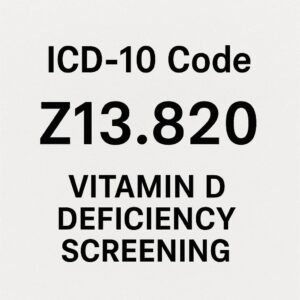
What is the ICD 10 Code for Vitamin D Deficiency Screening?
Z13.29
This code falls under the category: Encounter for screening for other suspected endocrine, nutritional, and metabolic disorders (not elsewhere classified).
However, this is where it gets tricky. In the world of insurance and reimbursement, Z13.29 is often a “red flag” code. Many commercial insurers and even Medicare have specific coverage policies that state routine screening for vitamin D deficiency is not a covered benefit. They will only pay for the test if there is a medical reason to suspect a deficiency.
Therefore, while Z13.29 is the technically correct screening code, it might not be the code that gets the test paid for. This leads us to the more commonly used alternative.
Z13.29 vs. E55.9: The $100 Distinction
To understand the landscape, we have to look at the difference between a “Screening” code and a “Diagnosis” code.
| Feature | Screening Code (Z13.29) | Diagnosis Code (E55.9) |
|---|---|---|
| Description | Encounter for screening for other suspected endocrine, nutritional, or metabolic disorders. | Vitamin D deficiency, unspecified. |
| When to Use | The patient has no symptoms. You are testing “just in case” or due to a non-specific risk factor (e.g., general wellness check). | The patient has symptoms (fatigue, bone pain, muscle weakness) or a known condition that causes deficiency (malabsorption, obesity, etc.). |
| Insurance View | Often considered “not medically necessary” and may be denied. | Usually covered as medically necessary to diagnose a suspected condition. |
| Patient Impact | Patient may receive a bill for the full cost of the test. | Patient is responsible for their standard co-pay/co-insurance based on their plan. |
Important Note: Never use a diagnosis code simply to force insurance to pay for a test. This is considered fraud. You must accurately reflect the patient’s condition and the reason for the encounter in the medical record.
When to Use Z13.29 (The True Screening Scenario)
The ICD 10 code for vitamin D deficiency screening (Z13.29) is reserved for specific, protocol-driven situations. It implies that the patient is not exhibiting any signs of a deficiency, and you are looking for a hidden problem.
You would use Z13.29 if:
-
A patient comes in for an annual physical and requests a “full blood workup,” including vitamin D, with no specific complaints.
-
Your clinic has a protocol to screen all patients over a certain age, regardless of symptoms.
-
A patient is on a medication (like certain steroids) that might eventually cause a deficiency, but they are currently asymptomatic. (In this case, some coders might argue for a “high-risk” code, but Z13.29 is the screening standard).
The Problem with Z13.29
As mentioned, the biggest hurdle with Z13.29 is coverage. Because vitamin D screening is not universally recommended by all major medical bodies for the entire population, many payers view it as a low-value, non-essential test. If you use this code, prepare for the possibility that the test will be denied, and the patient will be left with the bill.
Important Note for Readers: Always check with your specific insurance provider to see if they cover preventive vitamin D screening. You don’t want any unexpected surprises in the mail.
The Diagnostic Alternative: Coding for Symptoms (E55.9)
In the real world of clinical practice, most vitamin D tests are billed using a diagnostic code, not a screening code. This is because the provider is usually responding to a specific patient complaint or a known risk factor.
If a patient has any of the following, you would likely move away from the screening code and toward a deficiency code like E55.9:
-
Symptoms: Complaints of fatigue, chronic muscle aches, bone pain, or weakness.
-
Risk Factors: History of osteoporosis, malabsorption issues (like Crohn’s or Celiac disease), gastric bypass surgery, or chronic kidney disease.
-
Medication History: Long-term use of medications that affect vitamin D metabolism (like anticonvulsants or glucocorticoids).
In these cases, you are no longer “screening.” You are “diagnosing” a suspected illness based on evidence. The medical record must support this with documented symptoms or history.
How to Document for Vitamin D Testing (To Avoid Denials)
Proper documentation is the bridge between a medical service and a paid claim. Whether you are a provider or a patient trying to understand a denial, the logic is the same.
Here is a checklist of what strong documentation looks like:
-
Document the Chief Complaint: Start with the patient’s own words. “I’ve been feeling tired for months” or “My bones ache when I wake up.”
-
List Specific Symptoms: Be detailed. Instead of “malaise,” write “generalized bone pain in legs and hips, lasting 6 weeks.”
-
Note Risk Factors: Explicitly mention relevant history. “Patient has h/o gastric bypass 2019” or “Patient has diagnosed osteopenia.”
-
Connect the Dots: The assessment should logically follow the history. “Fatigue and bone pain, rule out vitamin D deficiency.”
-
The Plan: “Ordered 25-hydroxy vitamin D test to evaluate for deficiency.”
This narrative creates a clear picture of medical necessity, which is the key to getting a claim paid.
Common Risk Factors That Justify Diagnostic Testing
If you are wondering whether your situation calls for a screening or diagnostic code, looking at the list of associated conditions is helpful. If a patient has one of these, it strengthens the case for using a diagnostic code.
-
Obesity (E66.9): Vitamin D is fat-soluble and can be sequestered in adipose tissue, making deficiency common.
-
Malabsorption Syndromes (K90.9): Conditions like Celiac or Crohn’s disease prevent the body from absorbing nutrients properly.
-
Osteoporosis (M81.0): There is a direct link between vitamin D levels and bone density.
-
Chronic Kidney Disease (N18.9): The kidneys are crucial for converting vitamin D into its active form.
-
Status Post Gastric Bypass (Z98.84): This surgery alters the digestive tract, leading to malabsorption.
Frequently Asked Questions (FAQ)
To make this guide as helpful as possible, here are answers to the most common questions we hear about coding for vitamin D.
1. Is Z13.29 the only code for vitamin D screening?
For a general screening, yes. Z13.29 is the most specific code for screening for nutritional disorders. However, some practices might use Z13.89 (Encounter for screening for other disorder), but Z13.29 is more precise for endocrine and metabolic issues.
2. Why was my vitamin D test denied by insurance?
The most common reason is that the test was billed with a screening code (Z13.29) and your insurance plan does not cover preventive screening for vitamin D. The other reason could be that the medical records didn’t support the “medical necessity” of the test (i.e., no symptoms were documented).
3. Can I use E55.9 even if the patient doesn’t have symptoms?
Generally, no. E55.9 is a diagnosis code for a deficiency that is suspected or confirmed. To use it to order a test, there must be a suspicion based on symptoms or a condition known to cause deficiency. Using it without supporting documentation is considered upcoding.
4. What if the screening test shows a deficiency?
Excellent question! If you order a test using the screening code Z13.29 and the result comes back showing a severe deficiency, you cannot simply keep the screening code. The encounter is no longer a screening. The correct coding protocol is to change the diagnosis to the confirmed condition (e.g., E55.9) for the test itself. The office visit might still be a preventive visit (Z00.00), but the lab work is now diagnostic.
5. What is the difference between Z13.29 and Z01.89?
Z01.89 is for “Encounter for other specified special examinations.” While it could potentially be used, Z13.29 is the more specific and therefore better code for a nutritional screening. In coding, specificity is always the goal.
Additional Resources
For the most up-to-date coding guidelines and payer-specific policies, it is always best to consult the official sources.
-
[Link to CMS.gov (Centers for Medicare & Medicaid Services)]: Check the National Coverage Determination (NCD) for Vitamin D testing.
-
[Link to the AMA (American Medical Association)]: For the official CPT and ICD-10 code sets.
-
[Link to your local payer’s medical policy]: Most major insurance companies publish their “Medical Coverage Policies” online. Search for “Vitamin D Testing Medical Policy” on your insurance provider’s website.
Conclusion
Finding the right ICD 10 code for vitamin D deficiency screening requires more than just looking up a number. It requires understanding the clinical context. While Z13.29 is the textbook answer for a screening, the practical reality of insurance reimbursement often makes a symptom-based diagnosis code like E55.9 the more appropriate—and successful—choice for getting a test covered. Accurate documentation of symptoms and risk factors is the key to bridging the gap between clinical intent and paid claims.
Disclaimer
The information provided in this article is for general informational purposes only and does not constitute legal, medical, or professional coding advice. All coding and billing decisions should be made based on the specific facts of each case, official coding guidelines (ICD-10, CPT), and the policies of individual payers. While we strive for accuracy, codes and regulations are subject to change. Always consult with a qualified professional for guidance on medical coding and billing.